

Luxury bedroom interior design starts with comfort, useful space, and details that feel considered. An oversized bed or expensive chandelier cannot rescue a layout that makes everyday routines difficult. Plan the bed, storage, lighting, and privacy together, then choose finishes that support that plan. A room can feel refined without filling every corner.
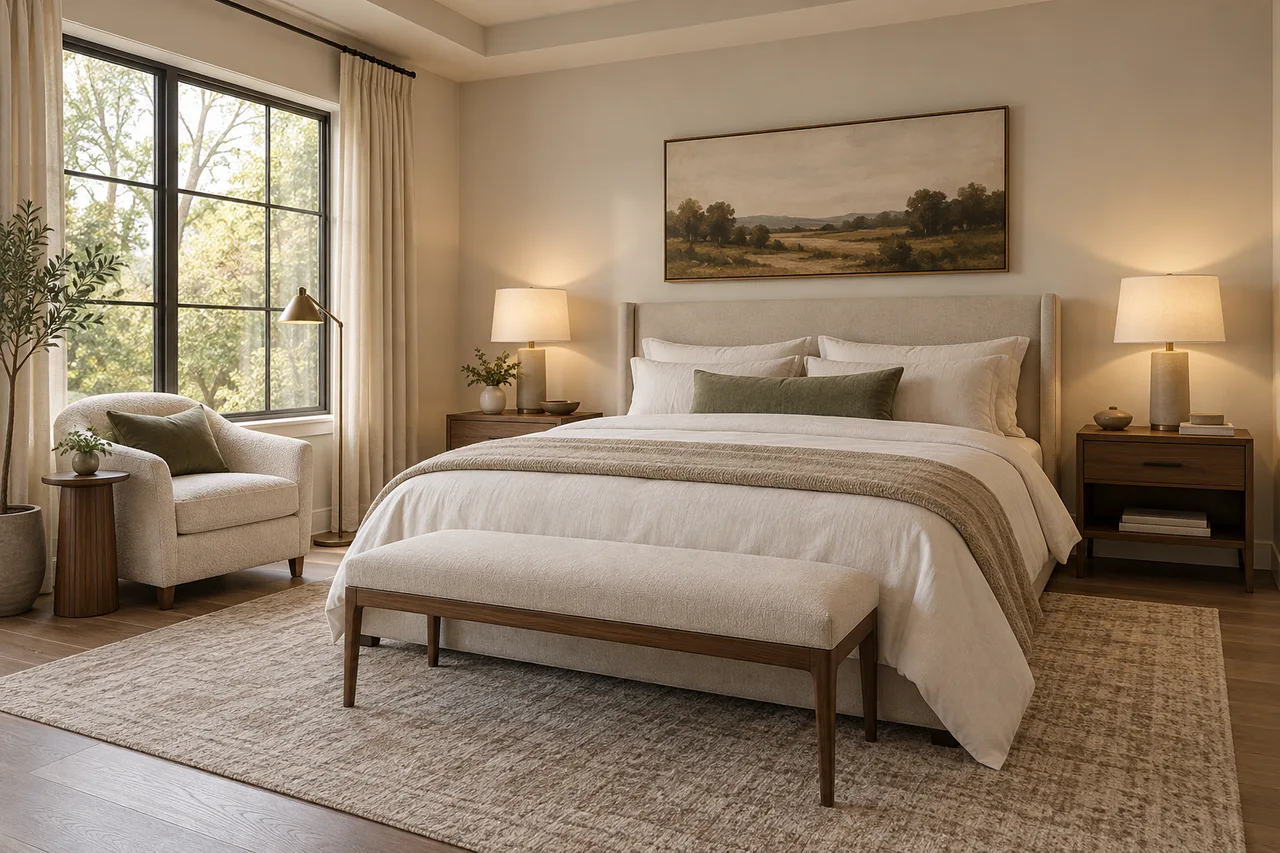
Decide what luxury means in your room
List the experiences you want rather than starting with products. You might want a quiet place to read, bedside lighting that your partner can control independently, or a dresser that does not block the closet. These needs give the design a purpose and separate useful upgrades from decorative purchases.
Choose two or three priorities. A bedroom that also serves as a home office has different demands from a sleeping-only retreat. If space is limited, decide whether a reading chair, vanity, or larger bed matters most. Trying to include everything can make the room feel less restful.
Use our space planning interior design guide to record the room and test furniture footprints. Here, the focus is on turning a bedroom plan into a comfortable, coordinated retreat.
Fit the bed to the actual room
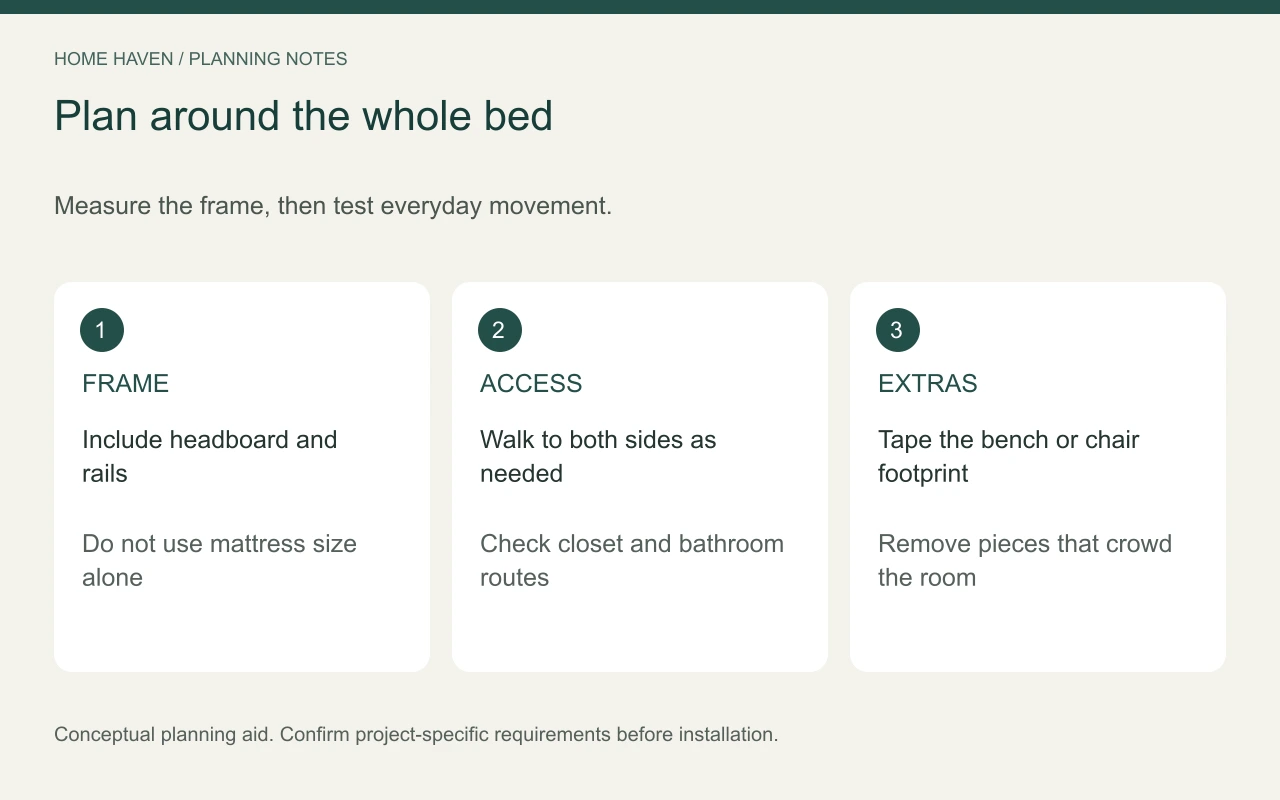
Measure the complete bed frame, including its headboard, side rails, and projecting footboard. Mattress dimensions alone do not tell you how much floor space the furniture will occupy. Compare bed sizes using the specific manufacturer’s measurements, then include nightstands and any bench in the drawing.
Place the bed where both users can approach it comfortably, if the room and household needs allow. Check the route from the entry and access to windows, closets, and the bathroom. A centered bed often creates balance, but a usable arrangement matters more than perfect symmetry.
Test the foot of the bed
A bench looks attractive in many bedroom photographs, yet it adds another obstacle. Tape its footprint on the floor and walk past it while carrying a laundry basket. If the room feels tight, try a smaller ottoman elsewhere or omit the bench. Empty floor space can contribute to the sense of ease.
Make bedside storage work for real routines
Choose nightstands around what they need to hold: a lamp, glasses, water, books, or a charging device. Check the usable surface after placing the lamp base. Drawers can hide small items, while an open shelf can hold a book without crowding the top.
Compare nightstand height with the top of the actual mattress. There is no single ideal height for every sleeper or bed. Try reaching from a seated and lying position before committing. Keep charging cables away from walking routes and moving furniture.
Two nightstands do not need to be identical to feel coordinated. Similar heights, related finishes, or matching lamps can connect different pieces. This flexibility can help a room accommodate an existing heirloom without buying an entire matching furniture suite.
Layer lighting around activities
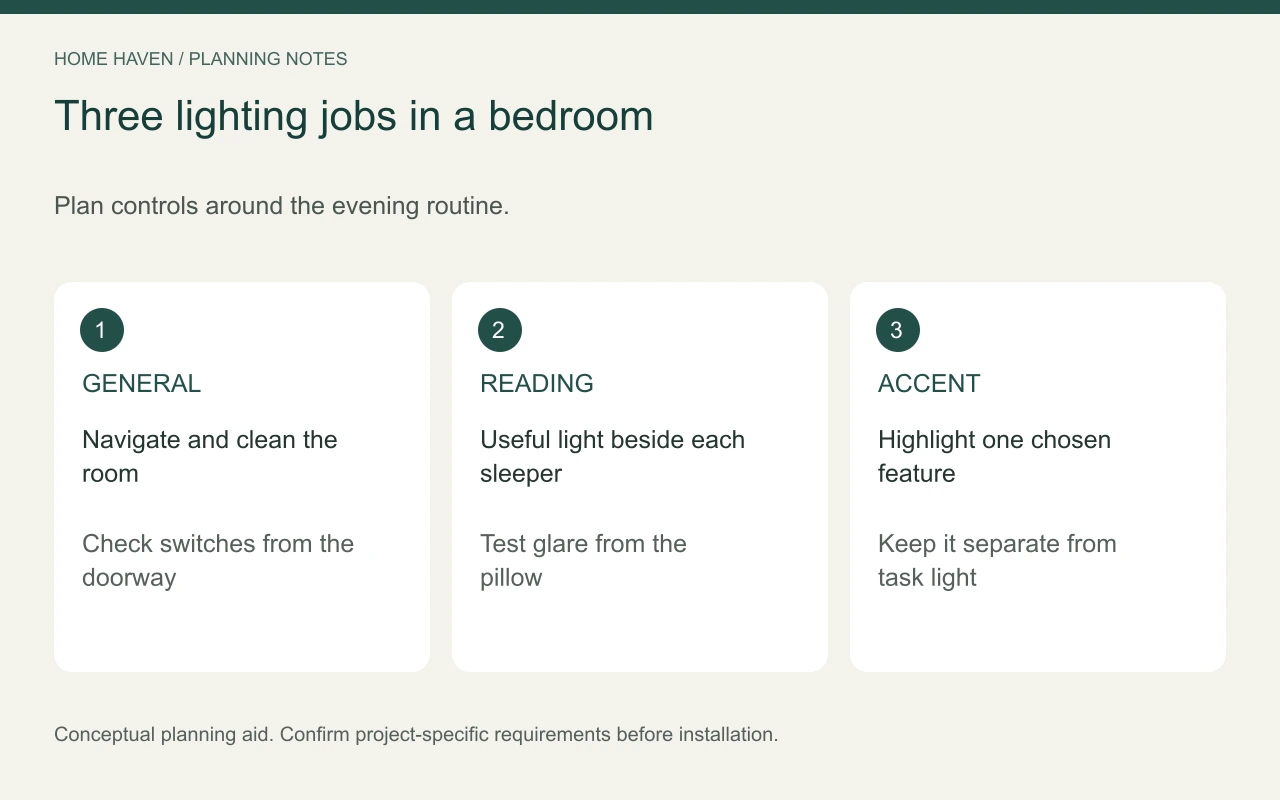
Plan separate lighting for getting dressed, reading, and settling down. General lighting helps you navigate and clean; bedside task lighting supports reading; a restrained accent can highlight a textured wall or artwork. Control layers independently when the electrical setup allows it.
Check fixture positions from the bed. A wall light may shine directly into someone’s eyes, and a pendant may interfere with an open closet door. Place temporary lamps first when possible, then use those observations to brief an electrician about permanent changes.
Allow for daylight control and privacy. Review how curtains or shades operate around furniture, vents, and windows. Choose treatments appropriate to the household, including cordless options where child safety is relevant. Do not block required escape openings to create a symmetrical backdrop.
Build a restrained material palette
Choose one main wood tone, a small family of wall and fabric colors, and a limited number of metal finishes. Contrast can come from texture: smooth bedside furniture, woven curtains, a soft headboard, and crisp bedding. Repeat selected elements rather than introducing a new finish with every purchase.
Inspect samples in the bedroom during daytime and evening. A pale beige can look warmer under one lamp and grayer near a window. Compare wall samples with flooring, headboard fabric, and bedding together. This check can prevent a repaint after installation.
Treat maintenance as part of the design. Ask how upholstery cleans, whether covers come off, and how the wood finish handles everyday use. A delicate surface may be appropriate for one household and frustrating for another. Choose for the person using the room.
Plan dressing before adding decor
Draw dressers and closet doors in their open positions. Check where someone stands while selecting clothes and where laundry goes at day’s end. If the bedroom lacks a separate dressing space, a simple hamper and useful mirror can solve more than another occasional chair.
Follow furniture installation and anchoring instructions. The CPSC Anchor It! campaign provides guidance on preventing furniture and television tip-overs. Secure storage furniture matters, particularly where children may enter or climb.
Compare two hypothetical room plans
Consider a hypothetical 13-by-15-foot bedroom. In one option, a larger bed leaves room for small nightstands but crowds a reading chair near the closet. In another, a smaller bed allows a comfortable chair and clearer dressing area. Neither option is universally better; household priorities decide.
Test both plans with tape and existing furniture before ordering. Include the bed frame rather than the mattress alone, and open every drawer during the test. These example dimensions are planning illustrations, not bedroom-size requirements or accessibility guidance.
Allocate the budget to lasting comfort
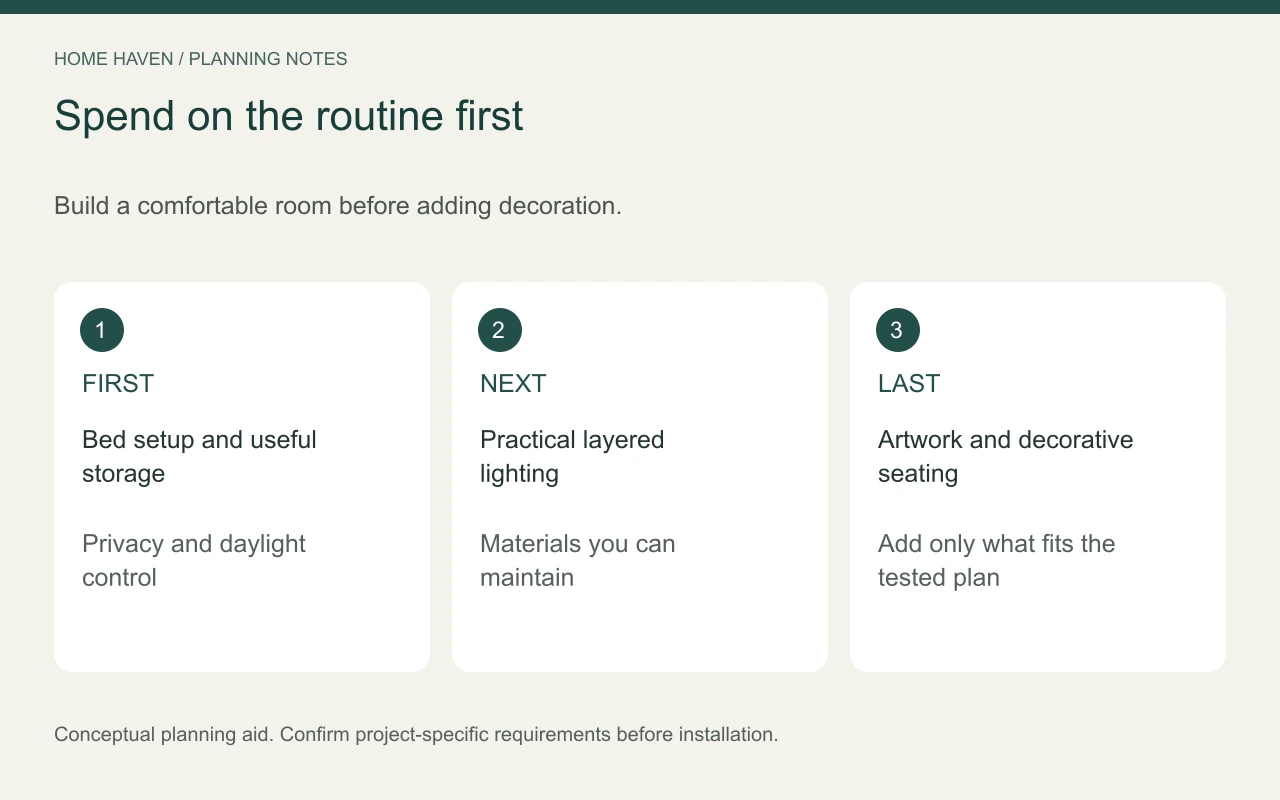
Start with the bed setup, effective window treatments, useful lighting, and storage. Then consider wall treatments, artwork, and decorative seating. Ask for itemized USD quotes identifying installation, delivery, removal, and electrical work separately. That makes it easier to adjust the design without losing valued features.
Frequently asked questions
Can a small bedroom feel luxurious?
Yes. A well-fitted bed, coordinated materials, practical lighting, and uncluttered surfaces can create a considered room. Avoid oversized furniture purchased only to imitate a larger suite.
Is symmetry necessary?
No. Symmetry can create visual order, but doors, windows, and personal needs may call for another arrangement. Aim for balanced proportions and easy use rather than forced matching.
Should the bedroom have a television?
That depends on your routine. If you include one, check viewing position, cable management, and mounting requirements. Do not sacrifice essential storage or movement just to add another screen.
Finish with the nightly routine
Walk through the room as you would at bedtime: close the shade, set down your phone, switch on the reading light, and reach your storage. Refine whatever feels awkward. Luxury becomes more convincing when the room supports ordinary moments with little effort.