

Introduction
Stucco has clad homes for centuries, and it remains one of the most recognizable exterior finishes around—that smooth or textured, sun-baked look you see on everything from Mediterranean villas to modern suburban buildings.
It’s popular for good reason: done well, it’s durable, energy-efficient, and endlessly adaptable in style. 1,
But exterior stucco wall construction is more than just a finish; it’s a layered system, and how well you build that system determines whether your walls stay watertight for decades or start cracking within a few years.
This guide walks through how contractors actually build stucco walls, what makes the material durable, where the costs come from, and what upkeep you can expect once it’s on your home.
How Exterior Stucco Wall Construction Works
The Layered System Behind the Finish
Stucco isn’t a single coat slapped onto brick or timber framing—it’s a three-part system built in stages. Each layer plays a distinct structural role, and skipping or rushing any one of them is where most stucco failures begin.
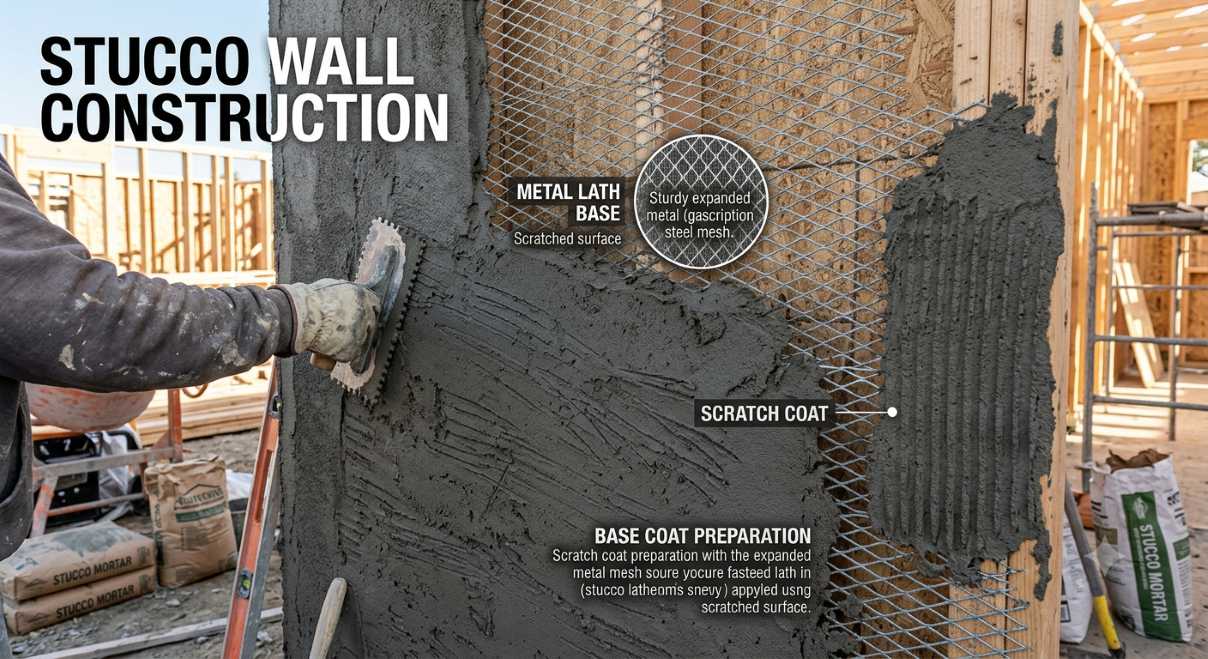
The Scratch Coat
Contractors apply the first layer, known as the scratch coat, directly over a moisture-resistant barrier and a metal or fiberglass lath. While still wet, they score it with horizontal grooves — hence the name — giving the next layer something to mechanically grip onto. This coat does the heavy lifting for structural bond strength.
The Brown Coat
Next comes the brown coat, a leveling layer that builds thickness and creates a flat, even surface for the finish to sit on. It’s typically left to cure for at least a week before the final coat goes on, allowing the wall to stabilize and reducing the risk of cracking later.
Traditional vs. Synthetic Stucco
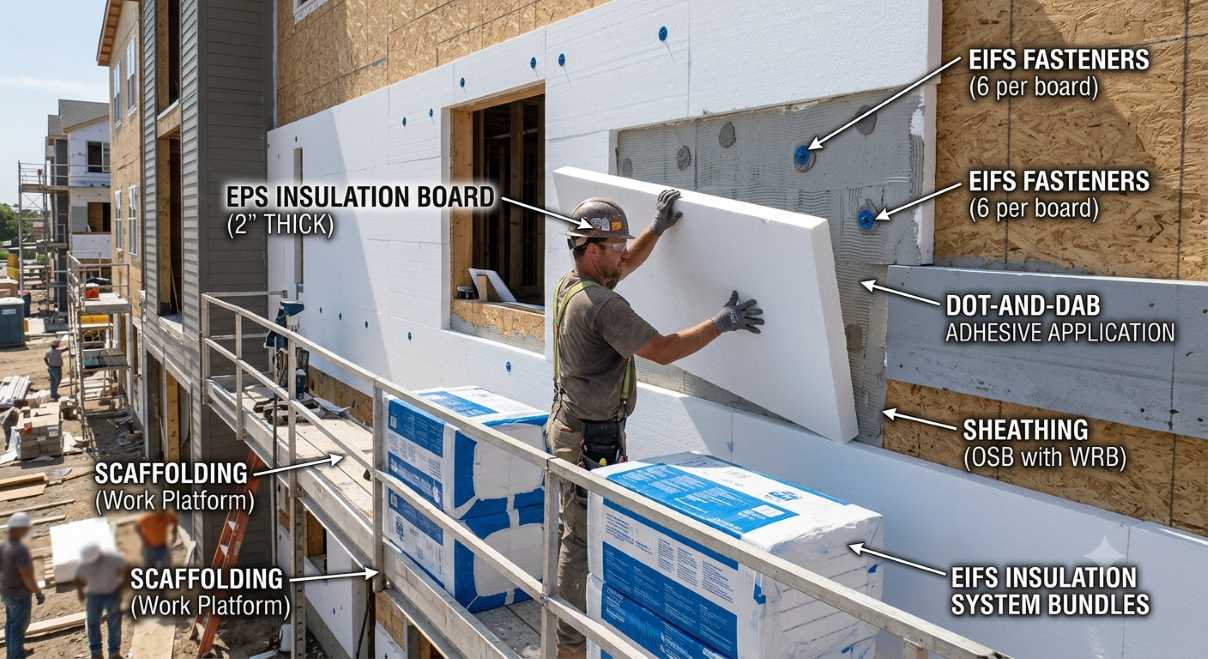
Traditional stucco is a cement-based mix of sand, lime, and water, prized for its breathability and long track record. Synthetic stucco, often called an Exterior Insulation and Finish System (EIFS), swaps the rigid cement base for a foam insulation board topped with an acrylic finish.
It offers better insulation values and more color flexibility, but it manages moisture very differently—trapping rather than releasing it—which means installation quality matters even more than with traditional systems.
Modern Approaches to Exterior Stucco Wall Construction
One-Coat Stucco Systems
Faster Installation
One-coat systems combine the scratch and brown coats into a single application, cutting labor time and project schedules significantly compared to traditional three-coat methods. For builders working to tight timelines, this can shave days off a job without sacrificing much in the way of performance.
Where It Falls Short
The trade-off is thickness and long-term resilience. One-coat systems are generally thinner than traditional three-coat stucco, which can make them more prone to hairline cracking in regions with significant temperature swings or ground movement. They tend to suit milder, more stable climates better than harsh or shifting ones.
Integrally Coloured Finish Coats
Reduced Maintenance
Rather than painting stucco after it cures, many modern installations mix pigment directly into the finish coat. Because the color runs through the material rather than sitting on the surface, chips and minor surface damage are far less noticeable, and repainting cycles stretch out considerably longer.
Design Flexibility
Integrally colored finishes also open up a wider palette and texture range—from smooth Santa Barbara finishes to heavily textured dash coats—giving homeowners more control over the final look without needing a separate painting step.
Benefits of Getting Stucco Wall Construction Right
Weather Resistance and Longevity
A properly constructed stucco wall creates a durable, weather-resistant skin that can last fifty years or more with reasonable care. Its dense cement composition stands up well to wind-driven rain, UV exposure, and general wear, particularly in dry to moderate climates where it originally became popular.
Where things go wrong almost always traces back to construction quality rather than the material itself—a missing or damaged weather-resistant barrier, inadequate flashing around windows and doors, or a lath installed without proper fasteners all create pathways for water to get behind the stucco and cause hidden damage.
Energy Efficiency and Thermal Performance
Traditional cement stucco has meaningful thermal mass, helping buffer indoor temperatures against outdoor swings in much the same way brick does.
Synthetic EIFS systems go a step further, incorporating a dedicated insulation layer that can noticeably improve a home’s overall energy performance, particularly in climates with cold winters.
Either way, a well-built stucco assembly contributes to a tighter building envelope, which reduces strain on heating and cooling systems and can translate into real savings on utility bills over the life of the home.
Aesthetic Versatility
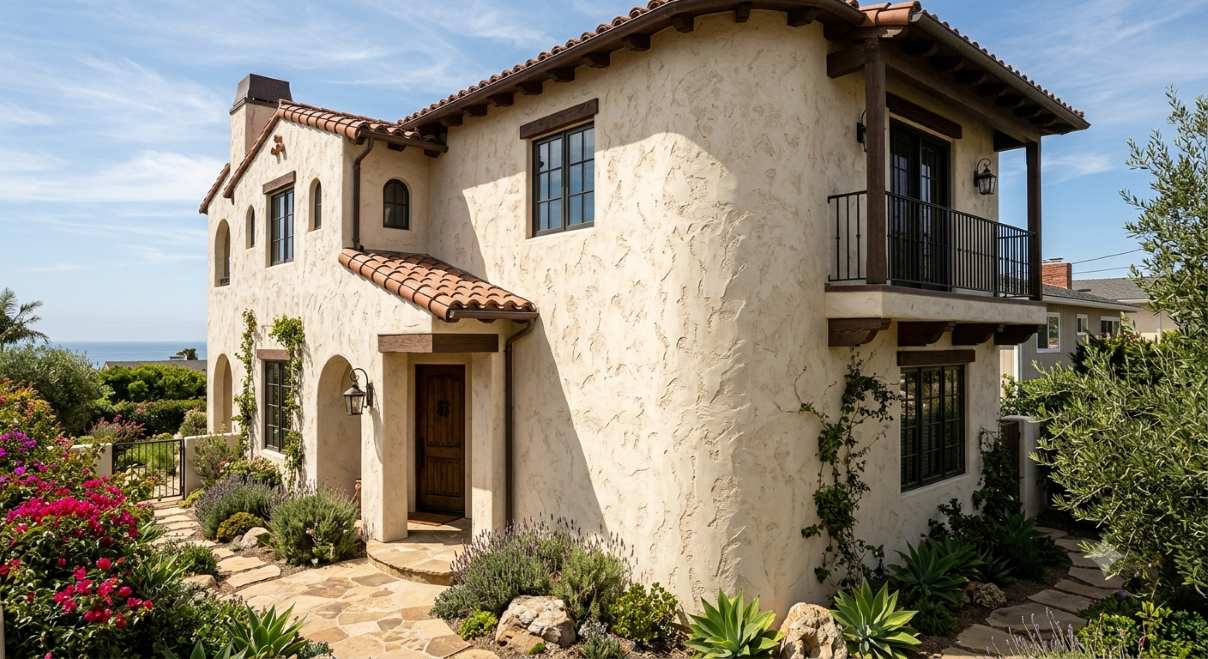
Few exterior materials offer the same range of textures and finishes as stucco. From smooth, minimalist surfaces favored in contemporary architecture to heavily textured, old-world finishes suited to Mediterranean or Spanish Colonial styles, stucco adapts to almost any design language. Combined with integral color options,
It gives architects and homeowners considerable creative freedom without switching materials.
Cost and Maintenance Considerations
Upfront and Long-Term Costs
Traditional three-coat stucco installation tends to cost more upfront than vinyl or fiber cement siding, largely due to the labor-intensive, multi-stage application process and the skilled tradespeople it requires. One-coat and synthetic systems can bring costs down somewhat, though often at the expense of some durability or moisture management.
Long-term, well-installed stucco is relatively economical to maintain, particularly compared to timber cladding, since it doesn’t require regular repainting or resealing when properly finished.
What Ongoing Maintenance Looks Like
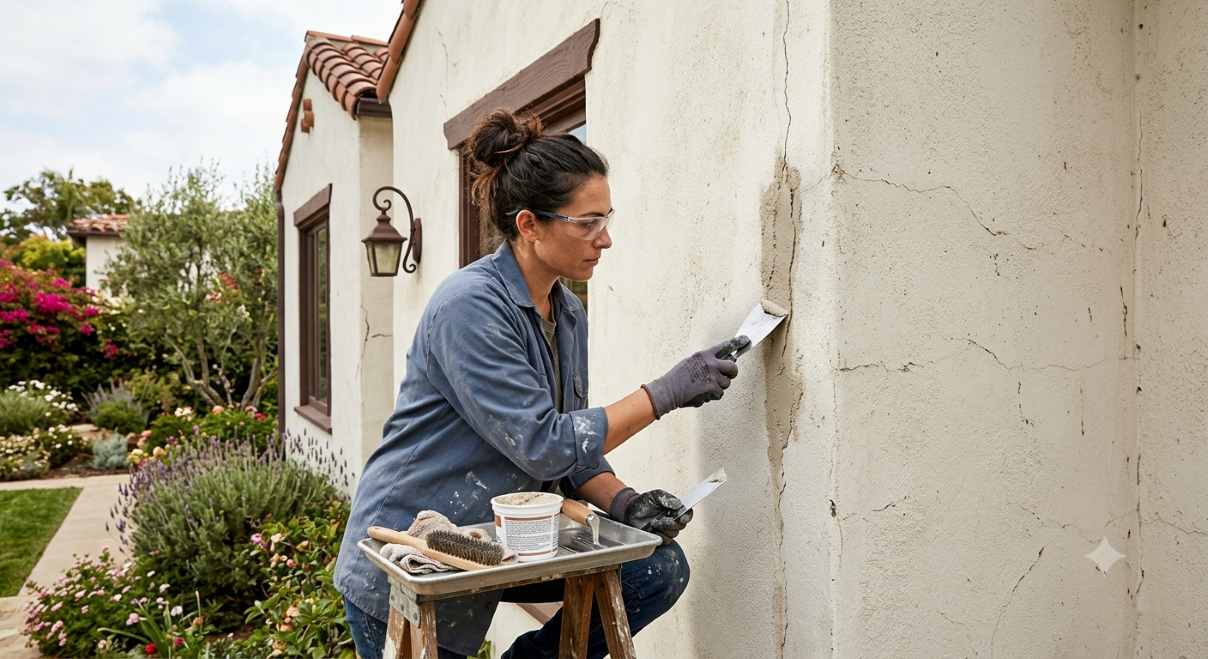
Stucco isn’t maintenance-free, but its needs are modest. Periodic inspection for hairline cracks — and prompt sealing when they appear — prevents small issues from becoming major water intrusion problems. Keeping gutters clear and grading away from the foundation also helps limit the amount of water stucco walls are exposed to over time.
Homeowners with synthetic EIFS systems should be particularly vigilant, since trapped moisture behind these systems can cause significant hidden damage before any visible signs appear on the surface.
Conclusion
Exterior stucco wall construction rewards attention to detail. When the layered system — barrier, lath, scratch coat, brown coat, and finish — is installed correctly, stucco delivers decades of durable, low-maintenance, energy-efficient protection with striking aesthetic range. Cutting corners at any stage, however, is where most stucco problems originate.
Whether you’re drawn to traditional three-coat stucco for its proven longevity, a one-coat system for faster installation, or a synthetic EIFS system for extra insulation, the material can serve your home well provided it’s installed by experienced tradespeople who understand moisture management.
Ask any contractor you’re considering about their approach to flashing, weather barriers, and lathe fastening before signing off on a quote—those details matter more to your wall’s lifespan than the finish coat you eventually choose.
If you’re weighing stucco against other exterior options, a conversation with a local builder familiar with your region’s climate and building codes is the best next step toward getting it right.