

Introduction
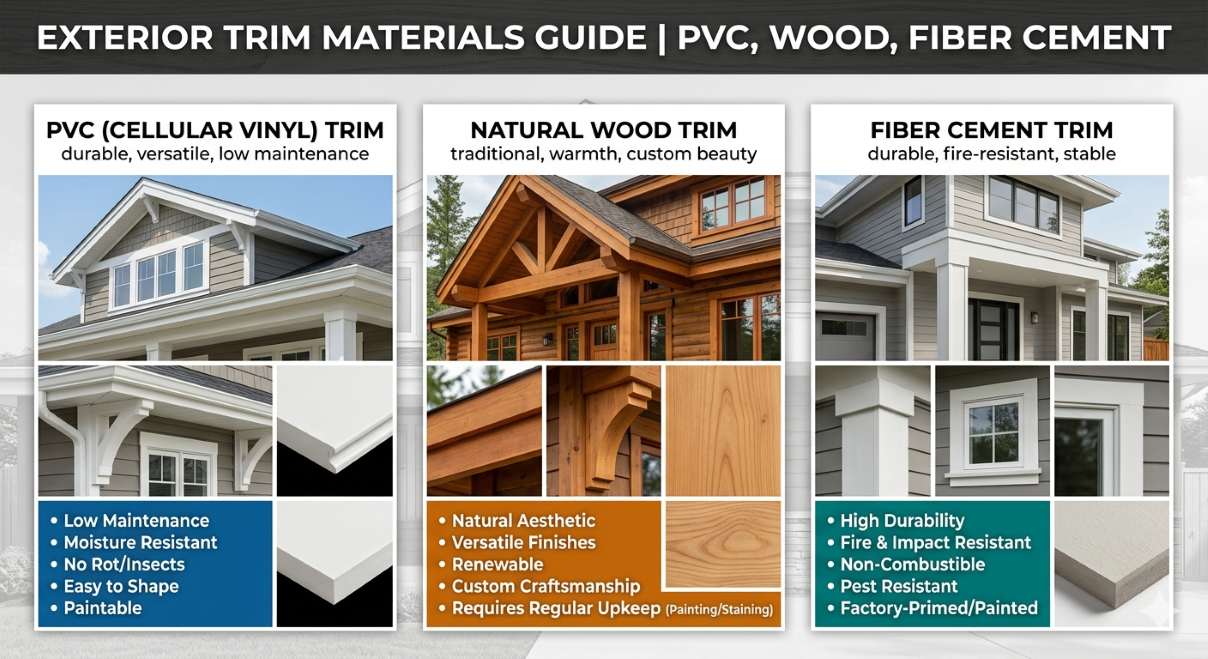
Your home’s trim does more than look pretty. It seals gaps, prevents water damage, and frames your house beautifully. Choosing the rightexterior trim materials protects your investment and boosts curb appeal. This guide explains the most popular options in plain English.
Learn more about exterior wall materials in our complete guide for homeowners.
Why Your Choice of Exterior Trim Materials Matters
Many homeowners focus only on siding or roofing. However, your exterior trim materials affect both durability and aesthetics. Poor trim leads to rot, peeling paint, and expensive repairs.
Good trim offers three main benefits. First, it seals joints between different building materials. Second, it directs water away from vulnerable areas. Third, it creates crisp, clean lines that make your home look finished. Therefore, picking the right exterior trim materials is a smart investment.
5 Popular Exterior Trim Materials You Should Know
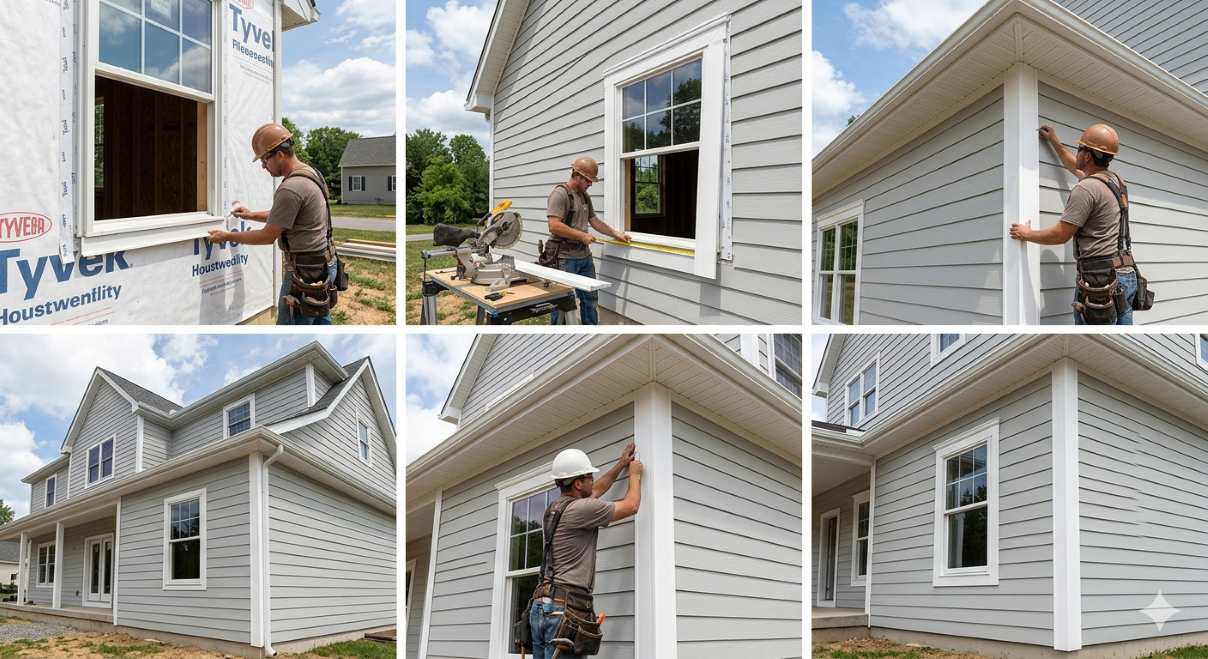
Let us explore the top exterior trim material types used in residential construction today.
1. PVC Trim
PVC trim is one of the most popular exterior trim materials on the market. Manufacturers make it from cellular polyvinyl chloride. It comes in boards, sheets, and custom profiles.
PVC trim never rots, warps, or cracks. It resists moisture, insects, and mold completely. You can cut it with standard woodworking tools. Moreover, PVC holds paint well, though many homeowners leave it white. The material costs more than wood upfront, but it lasts much longer.
For exterior window trim material options, PVC is an excellent choice. It handles direct rain and sun exposure without deteriorating.
2. Wood Trim
Wood trim offers timeless warmth and character. Cedar, pine, and redwood are common choices for exterior trim materials. Wood can be painted any color or stained for a natural look.
However, wood requires regular maintenance. You must paint or seal it every three to five years. Moisture leads to rot if you skip upkeep. Termites and carpenter bees also love wood. Therefore, wood works best in dry climates or for historic home restorations.
3. Fiber Cement Trim
Fiber cement trim combines sand, cement, and cellulose fibers. This exterior trim material looks like wood but lasts much longer. It resists fire, rot, and insects completely.
Fiber cement holds paint for 12 to 15 years. It handles humidity, freeze-thaw cycles, and salt air very well. On the downside, fiber cement weighs more than PVC or wood. Cutting it creates silica dust, so installers must wear masks. Professional installation is highly recommended.
4. Engineered Wood Trim
Engineered wood trim uses wood fibers bonded with resins and waxes. Brands like LP SmartSide lead this category. This exterior trim material costs less than fiber cement but offers better durability than natural wood.
Engineered wood resists moisture and insects better than traditional lumber. It comes in primed form, so painting is easy. However, it is not as durable as PVC or fiber cement. Consequently, it works best in moderate climates with low moisture exposure.
5. Aluminum Trim
Aluminum trim is a less common but still viable option. Manufacturers roll aluminum into coils and custom-bend it on site. This exterior trim material never rots or peels.
Aluminum is lightweight and fireproof. It also resists insects completely. On the downside, aluminum dents easily. It also conducts heat and cold, so thermal breaks are necessary. Paint adhesion can be tricky without proper primers.
Exterior Window Trim Material Options You Will Love
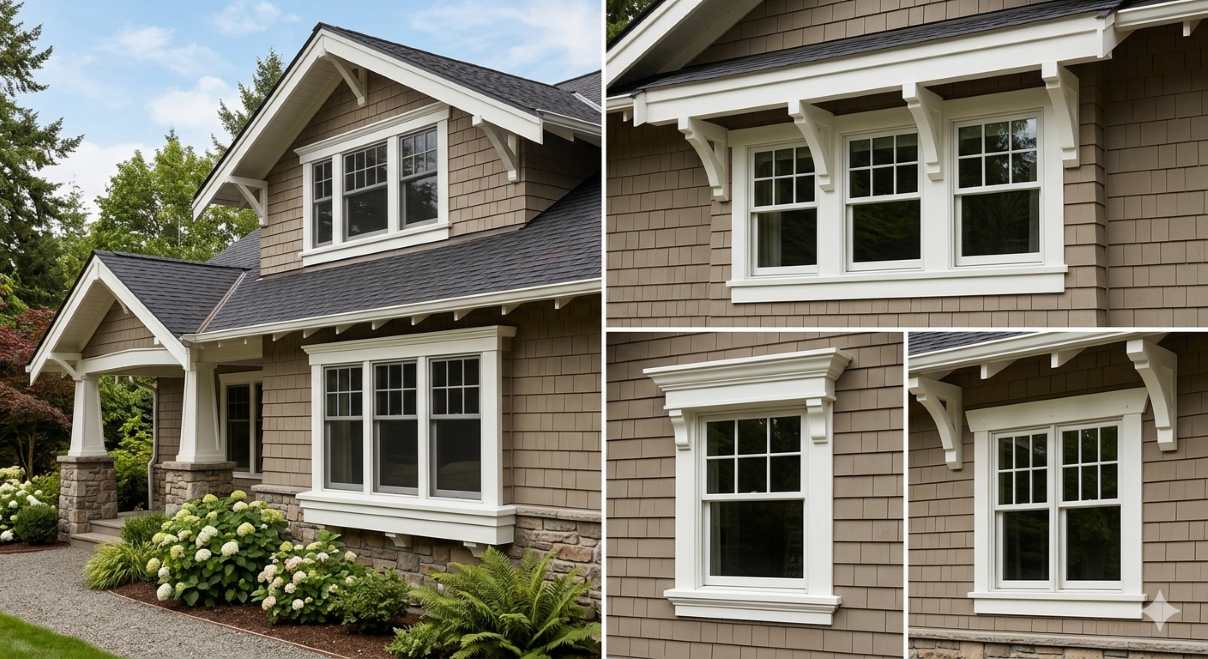
Your windows deserve special attention when selecting exterior trim materials. Here are the best exterior window trim material options for different situations.
PVC Window Trim
PVC is the top choice for window trim. It never rots, even with direct rain exposure. It also resists the sun’s UV rays when properly formulated. PVC window trim comes in many profiles, including flat boards, brick mold, and casing styles.
Fiber Cement Window Trim
Fiber cement works well for window trim in fire-prone areas. It holds paint beautifully and resists cracking. However, fiber cement is heavy, so proper fastening is critical. Use corrosion-resistant screws or nails for installation.
Wood Window Trim
Wood window trim offers unmatched beauty for traditional homes. Cedar and redwood are excellent choices because they resist rot naturally. However, you must seal all end cuts and keep paint in good condition. Otherwise, moisture enters through cracks and causes decay.
Exterior Window Trim Ideas to Transform Your Home
Looking for exterior window trim ideas? These five styles will inspire your next project.
1. Classic Craftsman Trim
Craftsman-style trim features wide, flat boards with clean lines. Add a headboard above the window with decorative blocks at each end. Use square or tapered columns for the sides. This style works beautifully with bungalow and farmhouse homes.
2. Modern Minimalist Trim
Modern homes look great with simple, narrow trim. Use flat PVC boards just 2 to 3 inches wide. Keep the trim the same color as your siding for a seamless look. Alternatively, use black or dark gray for sharp contrast.
3. Rustic Wood Trim
For cabins or rural homes, rustic wood trim adds character. Use rough-sawn cedar or reclaimed barn wood. Leave the wood natural or apply a clear sealer. Wide, chunky boards work best for this look.
4. Victorian Gingerbread Trim
Victorian homes feature ornate, decorative trim. Scalloped boards, spindles, and brackets are common elements. PVC is an excellent material for this style because it can be routed into complex shapes. Paint it in two or three colors for maximum impact.
5. Board and Batten Trim
Board and batten trim uses wide vertical boards with narrow battens covering the seams. This exterior window trim idea works well on modern farmhouses and barn-style homes. Extend the battens above and below the window for a cohesive look.
Low-Maintenance and Durable Trim Choices
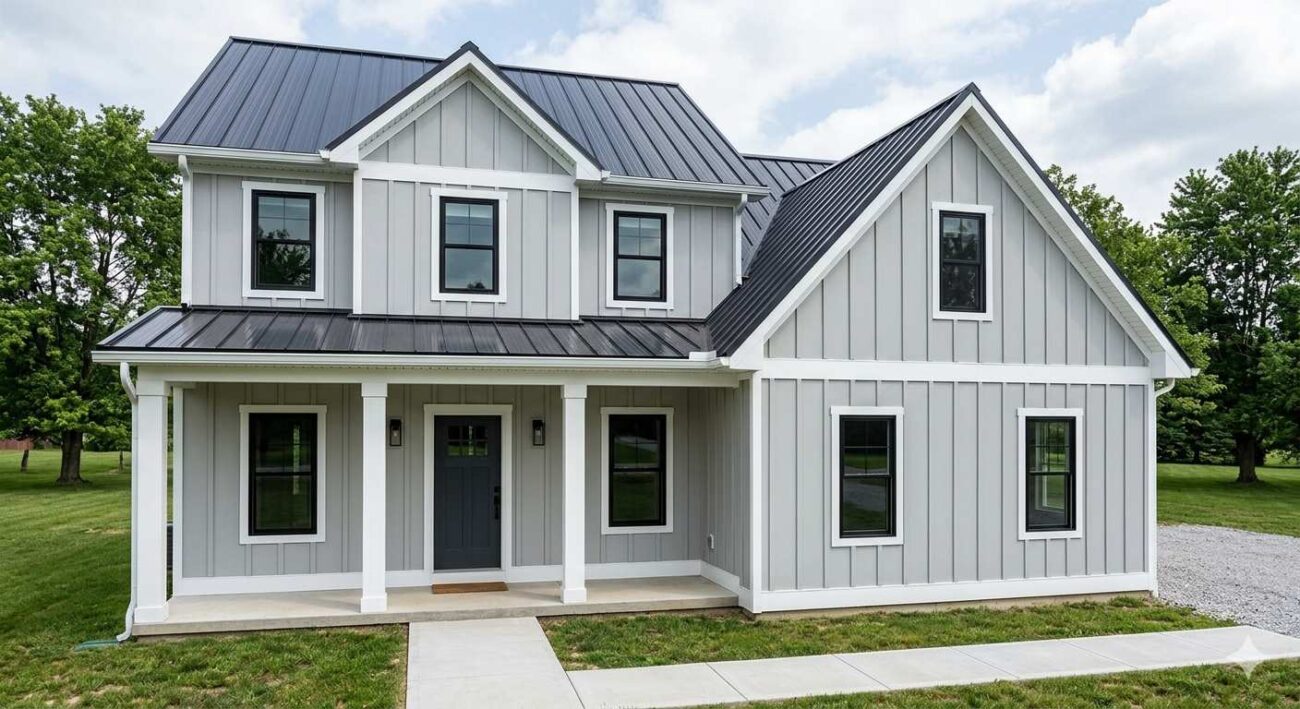
Not everyone wants to scrape and paint trim every few years. Fortunately, several exterior trim materials require very little care.
PVC trim is the best low-maintenance choice. It never needs painting, though you can paint it if you want. A simple wash with soap and water keeps it looking new. PVC lasts 30 to 50 years with zero upkeep.
Fiber cement trim needs repainting only every 12 to 15 years. It will not rot or warp like wood. It also resists insects and fire completely.
Aluminum trim, when properly finished with baked-on paint, lasts 20 to 30 years. The painted finish eventually fades, but it never peels or bubbles.
For exterior window trim material options that minimize maintenance, choose PVC or fiber cement. Both products withstand rain, sun, and temperature swings without failing.
If you wonder where you can find durable and low-maintenance exterior trim options, look for brand names like Azek, Versatex, and Kleer. Local building supply yards and major home centers carry these products.
How to Choose the Best Exterior Trim Materials for Your Home
Follow these five simple steps to make the right choice.
Step 1: Assess your local climate. Wet, dry, hot, or cold? Each material suits different weather patterns.
Step 2: Set a realistic budget. Include installation and long-term maintenance, not just upfront costs.
Step 3: Match your home’s architecture. Victorian homes need ornate trim, while modern homes look best with simple lines.
Step 4: Consider your window trim style. Review the exterior window trim ideas above and pick one that fits your home.
Step 5: Order samples. View your top three exterior trim materials on your house at different times of day.
Frequently Asked Questions (FAQ)
What is the best exterior trim material?
PVC trim is widely considered the best overall choice. never rots, warps, or cracks. It resists moisture, insects, and mold. That also requires almost no maintenance.
What is the cheapest exterior trim material?
Wood trim is usually the cheapest upfront. Pine boards cost $1 to $3 per linear foot. However, wood requires regular painting and eventual replacement. Over time, PVC or fiber cement is more cost-effective.
Can I paint PVC trim?
Yes, you can paint PVC trim. Use 100% acrylic latex paint in a satin or semi-gloss finish. Avoid dark colors, because dark paint absorbs heat and can warp the PVC. Light or medium colors work best.
What are the most popular exterior window trim ideas right now?
Classic craftsman trim and modern minimalist trim are the most popular styles today. Craftsman works for traditional homes, while minimalist suits new construction. Board and batten trim is also trending for modern farmhouses.
Conclusion
Choosing the right exterior trim materials protects your home and adds beauty. PVC offers zero maintenance and exceptional durability. Fiber cement provides fire resistance and long paint life. Wood delivers natural warmth but needs regular care. Engineered wood and aluminum fill specific niches.
Start by understanding your climate and budget. Then match those needs to the material that fits your home’s architecture. Review the exterior window trim ideas above for inspiration. For the best exterior window trim material options, choose PVC or fiber cement for low maintenance.
Ready to update your home’s trim? Talk to a local contractor. Ask for samples of your top three exterior trim materials. View them on your house at different times of day. Then make your choice with confidence. Your future self will thank you every time you pull into the driveway.
Learn more about exterior wall materials in our complete guide for homeowners.
For official installation guidelines, visit the James Hardie website or Azek’s product library.