

Zero-waste apartment living does not require a backyard, a large kitchen or a cabinet full of special products. The most effective starting point is to prevent waste you can control: plan purchases, use what you own, sort recycling according to local rules, and find a safe route for food scraps if your building or community offers one. A small space can make clutter visible quickly, so a simple routine usually works better than buying more storage bins.
This guide adapts low-waste habits for apartments, dorm rooms and other compact homes. It also includes a short note for camper-van living, where water, storage and waste rules differ. For the full household framework, start with our Zero Waste Living beginner guide.

Start with the waste your household actually makes
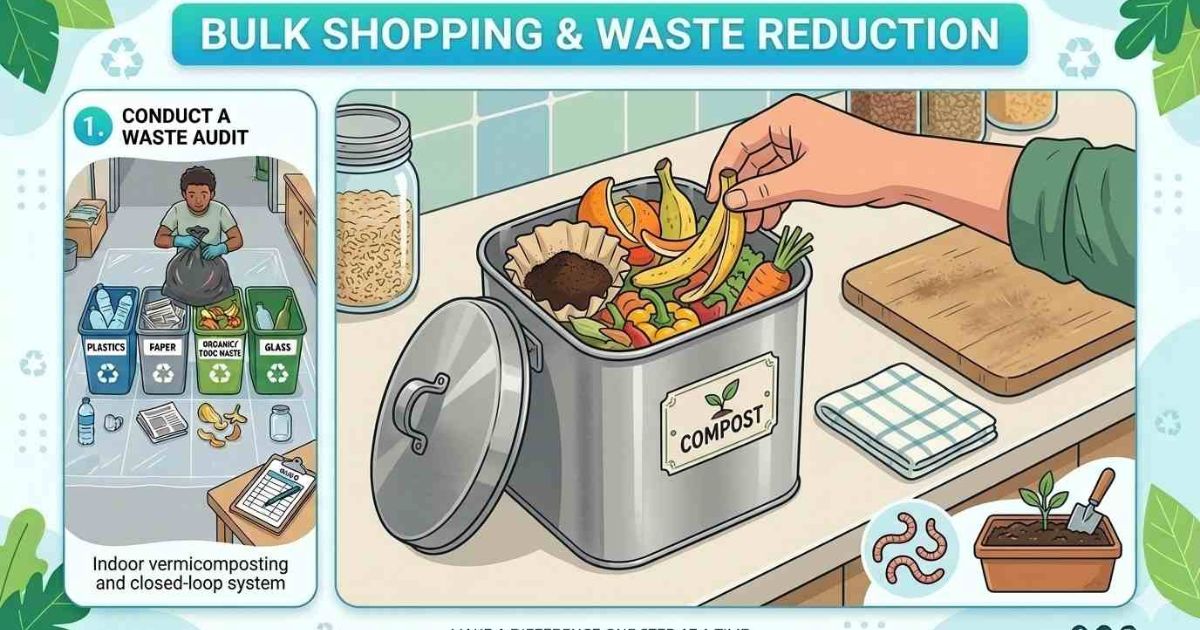
For one week, notice what fills your trash and recycling. You do not need a scale or a perfect audit. Write down the repeat items: food scraps, delivery packaging, paper towels, disposable cups, mail or worn-out small goods. Pick one category that is easy to change. If food scraps dominate, plan meals and check community compost options. If delivery packaging is the issue, consolidate orders or choose pickup when convenient. If you keep forgetting a reusable bag, store one by the door rather than buying a new organizer.
Use compact, simple waste stations
In a small apartment, several large bins can take over the kitchen. Start with the streams your local program accepts, then use a small lidded container for trash and a separate washable or recyclable tote for accepted recycling. Flatten cardboard and take it to the building’s collection area promptly if that is allowed. Keep batteries, bulbs, medications and electronics out of ordinary bins when local guidance calls for special collection. Check building rules before storing anything in a hallway or shared area.
Handle food scraps without creating odor
First check whether your building has a compost collection, a neighborhood drop-off or a municipal organics service. If it does, follow its accepted-material rules; programs differ. The U.S. EPA notes that people without yard space can look for community composting options. If no collection exists, you do not need to buy a countertop machine. Meal planning, freezing scraps until drop-off day where appropriate, and using leftovers can prevent waste before composting becomes necessary.
If you choose indoor composting, select a method that fits your space and the materials you can manage. Vermicomposting, bokashi and small collection pails have different requirements. Some countertop appliances dry or grind food scraps but do not create finished compost by themselves; check the manufacturer’s explanation and your local program’s acceptance before investing. A small, sealed collection container should be emptied and cleaned on a schedule that prevents leaks or odors.
Save space by buying less and choosing flexible items
Before buying a zero-waste product, ask where it will live and what it will replace. A reusable bottle, lunch container or cloth can be useful if you reach for it regularly. Buying a full matching kit before you know your habits may add clutter. Keep multifunctional containers you already own, borrow occasional-use tools from a neighbor or library, and choose products that nest, fold or stack only when they solve a real storage problem.
For shared kitchens, label your own food and reusable containers, agree on a shelf for recycling and avoid placing compost scraps where roommates do not expect them. A small household agreement can prevent contamination and frustration. In a dorm, check residence-hall recycling rules and whether food-scrap collection is allowed before keeping a bin in the room.

Make small-space habits easy to repeat
- Keep a reusable bag beside keys or a work bag.
- Use a refillable bottle and one washable cup that fits your daily routine.
- Set a weekly “use what is open” meal before shopping again.
- Choose digital receipts and statements when they are convenient and secure.
- Store donation items in one small box and give them away when it is full.
- Check your building and local recycling instructions before sorting unusual packaging.
What changes in a dorm or camper van?
In a dorm, shared facilities and residence rules set the limits. Use a compact recycling tote, take it to the designated area regularly, and avoid storing food scraps unless the building has a collection plan. For college life, a small reusable lunch kit and secondhand school supplies often make more difference than specialty products.
In a camper van, water capacity, safe waste disposal and campsite rules become central. Carry only the reusable items you can wash and store safely, plan refills, and use authorized dump or recycling facilities. Do not release wastewater or waste into nature. The same “buy less, reuse what fits” idea applies, but the infrastructure and rules are different from an apartment.
Renters can make progress without drilling, permanent fixtures or a large collection of special products. Use a small caddy for recycling, washable cloths in a drawer, and a lidded container for food scraps only if your building or local program accepts them. Check lease rules before adding a balcony composter, installing a bidet or changing a faucet. In shared spaces, agree on simple labels and cleaning responsibilities so that a waste-sorting system does not become a source of conflict. If collection options are limited, focus first on prevention: plan meals, store food visibly, borrow rarely used items and choose refills when convenient. Track what actually leaves the apartment for a week, then adjust one habit at a time. A compact routine that works with the building’s facilities is more useful than a perfect-looking setup that takes up space or is difficult to maintain.
Frequently asked questions
Can I live zero waste in an apartment without composting?
Yes. Composting is one possible waste diversion method, not a requirement for making progress. Prevent food waste, reuse items, and use the recycling options available in your community.
What is the best first step for a small apartment?
Choose one repeating waste source you can reduce without buying a lot of new equipment. Meal planning, a reusable shopping bag or a simple recycling setup can be a practical start.
Do countertop food recyclers make compost?
Some appliances reduce moisture and volume but do not produce finished compost. Read the product description and follow your local program’s guidance for the resulting material.
Make the home fit the habit
Small-space zero-waste living works when the routine fits the room, the building and the people who share it. Start with observation, use existing items first and check local collection rules before adding a new waste stream. For more step-by-step ideas, continue to our Zero Waste Living guide.
Further reading: U.S. EPA: Composting at Home · American University: Composting in small spaces · Consumer Reports: Apartment composting options.