

Japandi Interior Design Living Room offers ideas for combining distinctive materials, colors and furniture with everyday comfort. Explore its defining features and learn practical ways to adapt the look to your home.
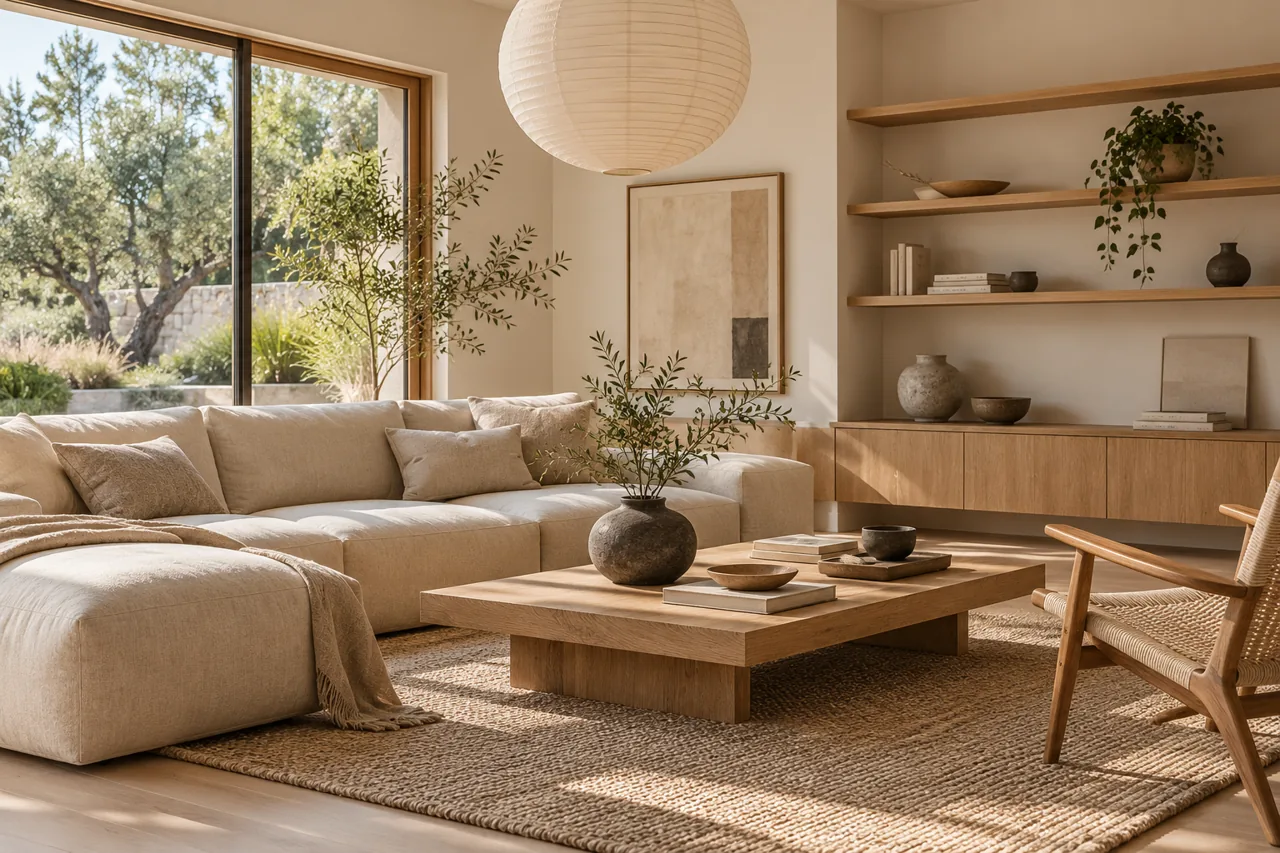
What Makes a Japandi Living Room?
A Japandi living room combines Japanese-influenced simplicity with Scandinavian warmth and everyday practicality. Rather than buying a matching set, build a calm space around good proportions, useful furniture and tactile natural materials. A low wood coffee table, comfortable neutral sofa and thoughtful lighting can establish the look. The room should still work for reading, entertaining and family life. Leave clear walking routes and keep storage accessible. Japanese and Scandinavian design traditions are diverse, so treat Japandi as a contemporary hybrid decorating approach rather than a historically fixed style. Choose a few design ideas you enjoy and adapt them to your home’s architecture and budget.
Japandi Living Room Color Palette
Use warm white, oatmeal, pale oak, stone gray, taupe and muted charcoal as the base for a Japandi living room. A small olive or clay accent can add depth without overwhelming the calm atmosphere. If you have dark flooring, choose lighter upholstery and curtains to maintain balance. Test paint in both morning and evening light; warm whites can look yellow under some bulbs, while gray can feel cool in shaded rooms. Repeat one wood tone or neutral accent across the coffee table, picture frames and storage. A limited palette creates visual unity, but texture keeps the room from appearing flat.
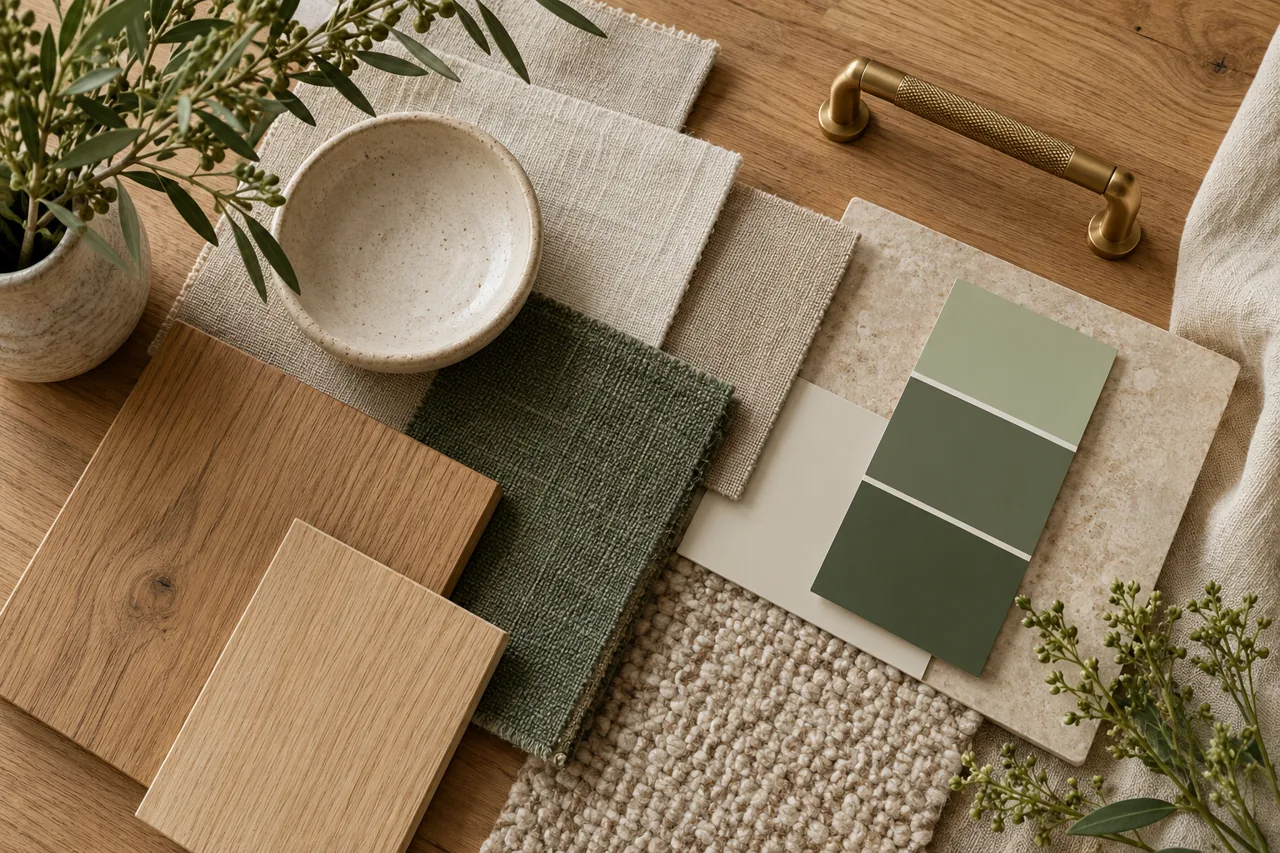
Best Japandi Living Room Materials
Natural wood, linen, cotton, wool, woven fibers and ceramics are useful materials for this style. A light oak coffee table paired with a soft wool rug and textured linen cushions creates warmth without excess decoration. Mix smooth and tactile finishes: matte pottery beside a timber shelf, or a woven basket near a simple sofa. Choose materials that suit your household; washable slipcovers may be more practical than delicate fabric in a busy home. If you have an existing wood cabinet, refinishing it may be better than replacing it. Natural materials look most convincing when their grain and texture remain visible rather than hidden by elaborate ornament.
Sofa, Coffee Table and Seating Layout
Start with a comfortable sofa that fits the room. A low-profile shape can feel visually calm, but seat height should suit the people who use it. Position the coffee table within reach and allow space to walk around the seating area. A rounded or gently rectangular wood table can soften straight furniture lines. Add one simple armchair if you need more seating, then use a rug large enough to connect the grouping. Avoid pushing every item against the wall automatically; a conversation-friendly layout may work better. Closed cabinets or baskets can keep chargers, remotes and toys accessible without crowding visible surfaces.
Three Japandi Living Room Layouts
For a small rectangular living room, place a compact sofa opposite a low wood console and use one slim side table. In a larger open-plan room, anchor seating with a generous rug and use a low shelf to distinguish the lounge from dining space. For a cozy reading-focused room, arrange a sofa and single armchair around a small table, with a floor lamp near the chair. In each layout, preserve clear routes to doors and windows. Use a limited palette and one focal object such as a ceramic vase or framed print. Japandi works best when the arrangement supports the activities that happen in the room.
Japandi Living Room Textiles and Soft Furnishings
Soft furnishings prevent a minimalist living room from feeling cold. Choose a textured wool or cotton rug, a few linen cushions and curtains that filter daylight. Layering does not mean piling up many accessories. Two complementary cushion fabrics and a single throw can add enough variation. Avoid rugs that are too small for the seating area, since they make furniture look disconnected. If your sofa is dark, choose lighter textiles to balance it. Natural fibers may require specific care, so check labels before buying. Soft materials also help absorb sound in rooms with hard floors and large windows.
Coffee Tables, Shelves and Practical Storage
A Japandi coffee table should feel useful and proportionate rather than merely sculptural. Light oak, ash or walnut are good options, depending on your existing furniture. Keep the tabletop clear enough for drinks, books and daily activities. A simple sideboard can hide electronics and supplies, while a few open shelves display favorite ceramics or books. Use baskets for loose items if they genuinely help you stay organized. In a shared living and dining room, repeat wood tones or a muted accent color across the two zones. Storage that works well is more important than an empty-looking shelf.
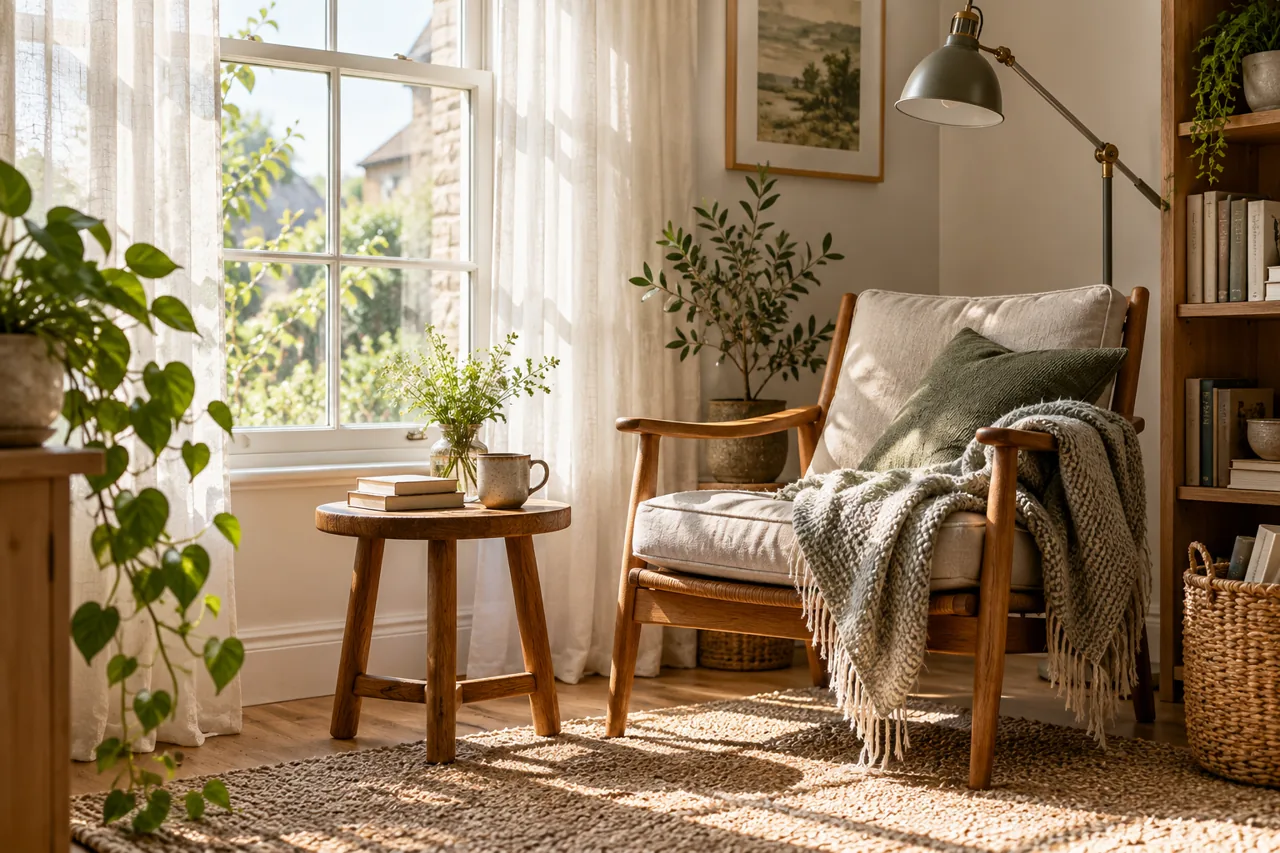
Japandi Living Room Lighting Plan
Use daylight as a starting point, then layer ambient and task lighting. A paper-inspired pendant or simple ceiling fixture can provide general light, while a floor lamp beside a chair supports reading. Warm lamps create a comfortable evening mood, but avoid making the room too dim for practical tasks. Consider glare on televisions and computer screens when positioning lamps. If windows face a busy street, light-filtering curtains can provide privacy while preserving daylight. One soft accent light may highlight a ceramic object or timber texture. The goal is a room that feels gentle and functional at different times of day.
Wall Art, Ceramics and Accessories
Choose a small number of meaningful objects rather than buying many generic ‘Zen’ accessories. A single framed abstract print, handmade ceramic bowl or sculptural branch can provide visual interest. Keep picture frames simple and place artwork at a comfortable viewing height. On shelves, vary object height while leaving open space around favorites. If you display plants, choose species suited to the room’s light and your care routine. Avoid treating Japanese cultural objects as interchangeable decoration; learn about their origins and select items thoughtfully. A few personal details make a Japandi living room feel lived in rather than staged.
Small Japandi Living Room Ideas
Small living rooms benefit from furniture with a clear purpose and a restrained palette. Use a compact sofa with visible legs, a modest coffee table and vertical storage rather than several bulky pieces. Choose one substantial artwork instead of many tiny wall decorations. A light rug and curtains that blend with the wall color can reduce visual fragmentation. Keep the route between doors clear, especially in narrow rooms. If you work or eat in the living room, consider a folding or nesting table that can be stored easily. Japandi’s emphasis on function and uncluttered space makes it adaptable to apartments without requiring expensive renovation.
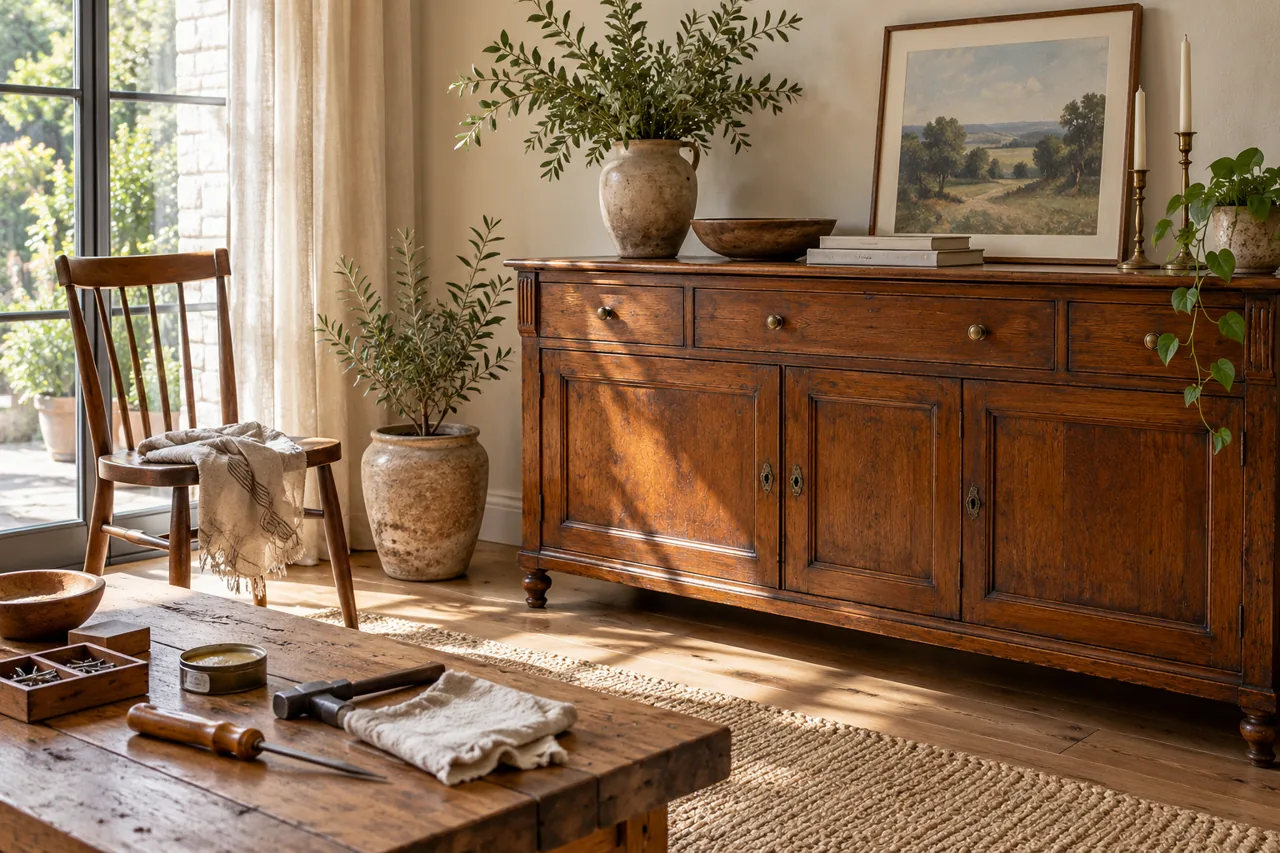
Affordable Japandi Living Room Updates
Begin by rearranging your existing furniture and removing items that block movement. If you already have a neutral sofa, add one textured throw and a wood side table rather than buying a new suite. Secondhand wood furniture can be refinished if it is structurally sound. Replace busy cushion covers with simple linen-look fabrics and improve lighting with an affordable reading lamp. A neutral rug may have more impact than several decorative accessories. Use artwork or ceramics you already own when they fit the palette. Spend gradually, checking each addition against the room’s comfort, storage and layout needs.
Japandi Living Room Mistakes to Avoid
A common mistake is making the room so empty that it no longer supports everyday life. Another is choosing low furniture without considering comfort or accessibility. Avoid covering every surface in identical beige: vary wood grain, textiles and subtle tonal contrast. Too many plants, baskets and small ornaments can undermine the intended visual calm. Check that the rug is appropriately sized and that lamps provide enough light for reading. Do not assume you need expensive imported furniture or cultural props to achieve the style. A well-planned room with practical storage and comfortable seating is more convincing than a showroom imitation.
Step-by-Step Japandi Living Room Checklist
First, measure the room and identify the main activities it must support. Second, choose a warm neutral palette that works with your flooring. Third, position the sofa and coffee table so conversation and movement are comfortable. Fourth, add one or two natural materials, such as a wood table and wool rug. Fifth, plan ambient and reading lights. Sixth, organize storage for everyday objects. Seventh, add a small number of meaningful accessories. Finally, evaluate the room in daylight and evening light before purchasing anything else. This sequence helps avoid unnecessary spending and creates a space that feels balanced.
Japandi Living Room FAQs
Can I create a Japandi living room with a dark sofa? Yes. Balance it with lighter textiles and natural wood. What wood works best? Oak, ash and walnut can all work; consistency matters more than a particular species. Do I need a low sofa? No. Comfort and accessibility are more important than a specific height. Can Japandi work in a small apartment? Yes. Choose compact furniture and practical storage. How many accessories should I use? Enough to make the room personal without crowding surfaces.
Final Thoughts
A Japandi living room should feel calm, welcoming and genuinely useful. Focus on a good seating layout, natural materials, layered lighting and thoughtful storage before adding decoration. You can adapt the approach with furniture you already own and improve the room gradually. For the broader design philosophy and other rooms, explore our Japandi interior design guide and our interior design aesthetics pillar. For design journalism and room inspiration, visit Architectural Digest.