
Grandmillennial interior design brings decorative traditional elements into a home used for contemporary life. Patterned fabric, older wood furniture, ceramics, needlework, and personal collections can all contribute. The most livable version combines those layers with comfortable seating, clear circulation, and useful storage.
The label does not require a room to look like a preserved family sitting room. Choose the elements you enjoy and edit the rest. Our interior design aesthetics guide explains how this approach relates to other traditional and eclectic interiors.
Grandmillennial Interior Design: Give Pattern Room to Breathe
Grandmillennial interior design mixes traditional patterns and collected pieces with a more current point of view. Choose one hero print, repeat one or two colors elsewhere, and keep larger furniture comfortable and useful. Edit accessories so the room does not become a costume; the goal is personal layering that still works for everyday routines.
Choose the traditional details you actually like
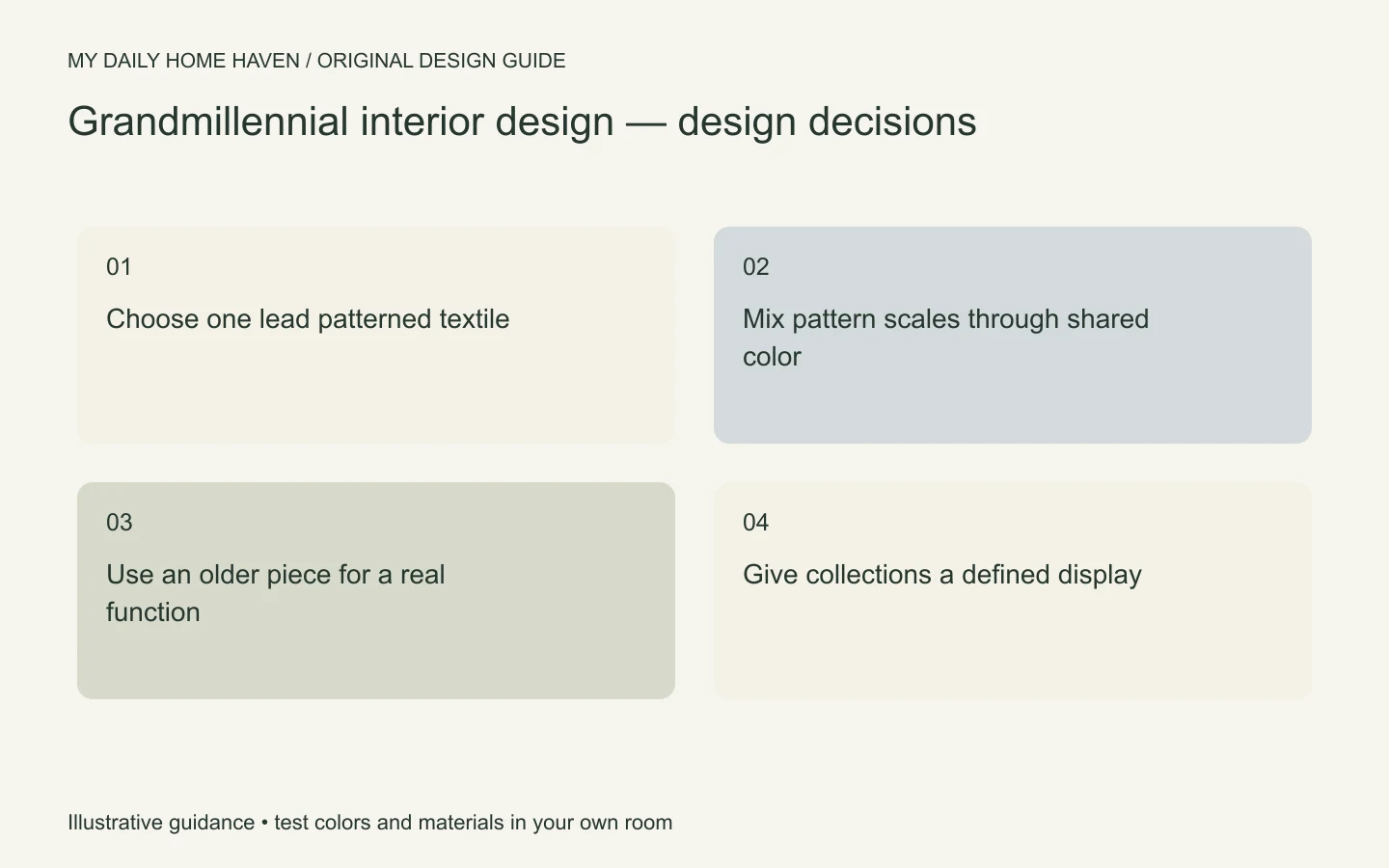
Start with one category: a floral textile, an older chest, a collection of ceramics, or a decorative lampshade. Do not assume you need every recognizable feature of the look. A room with one strong patterned curtain can still carry the idea.
For a contemporary practitioner’s perspective, Two Hands Interiors discusses grandmillennial style. Use such descriptions as context, then make choices around your own home rather than chasing a complete list of motifs.
Personal connection can make the scheme more convincing. An inherited table or a piece of needlework you enjoy gives you a starting point with meaning. If you are buying new, choose for quality, proportion, and use rather than an appearance of invented family history.
Let one fabric organize the palette
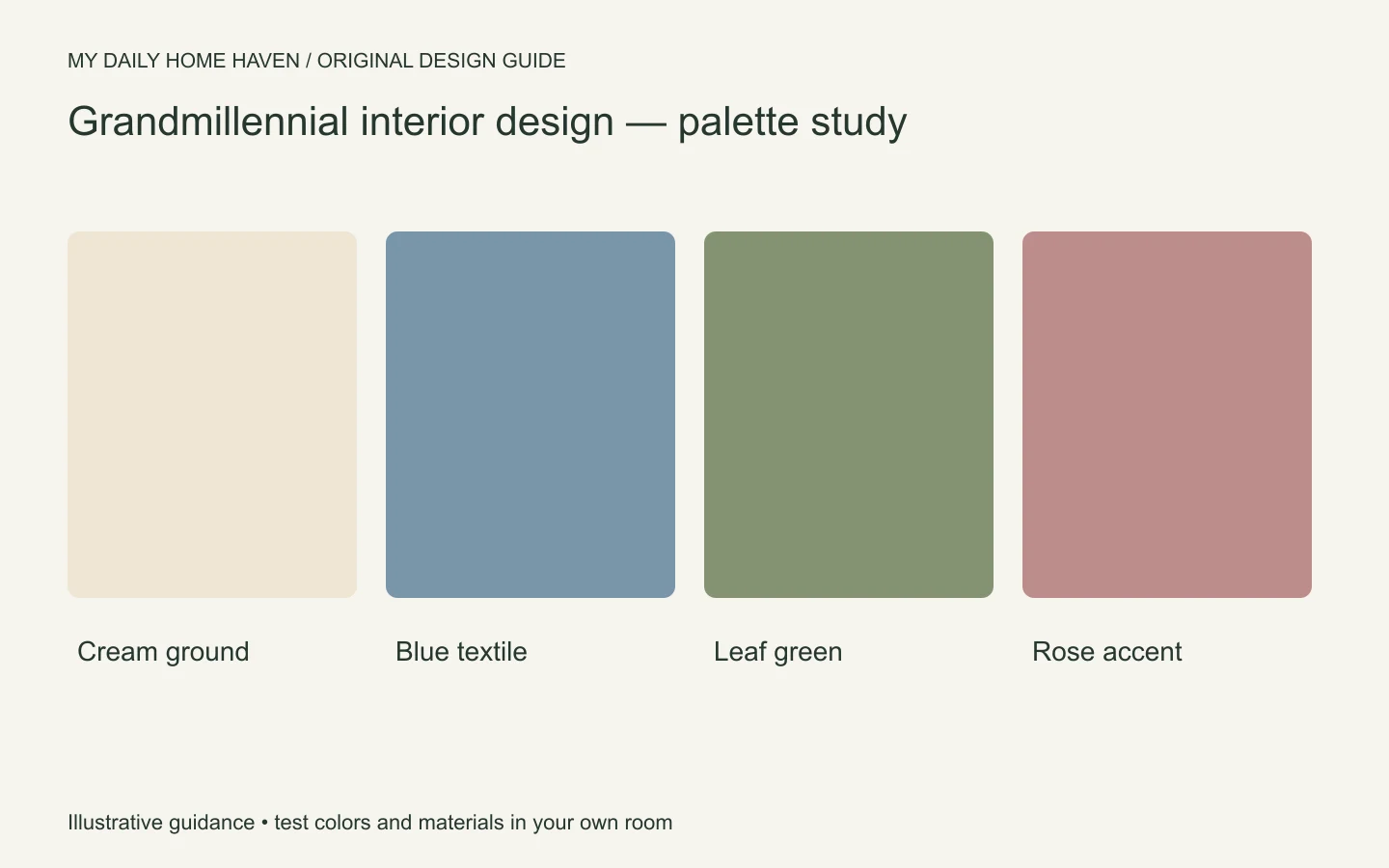
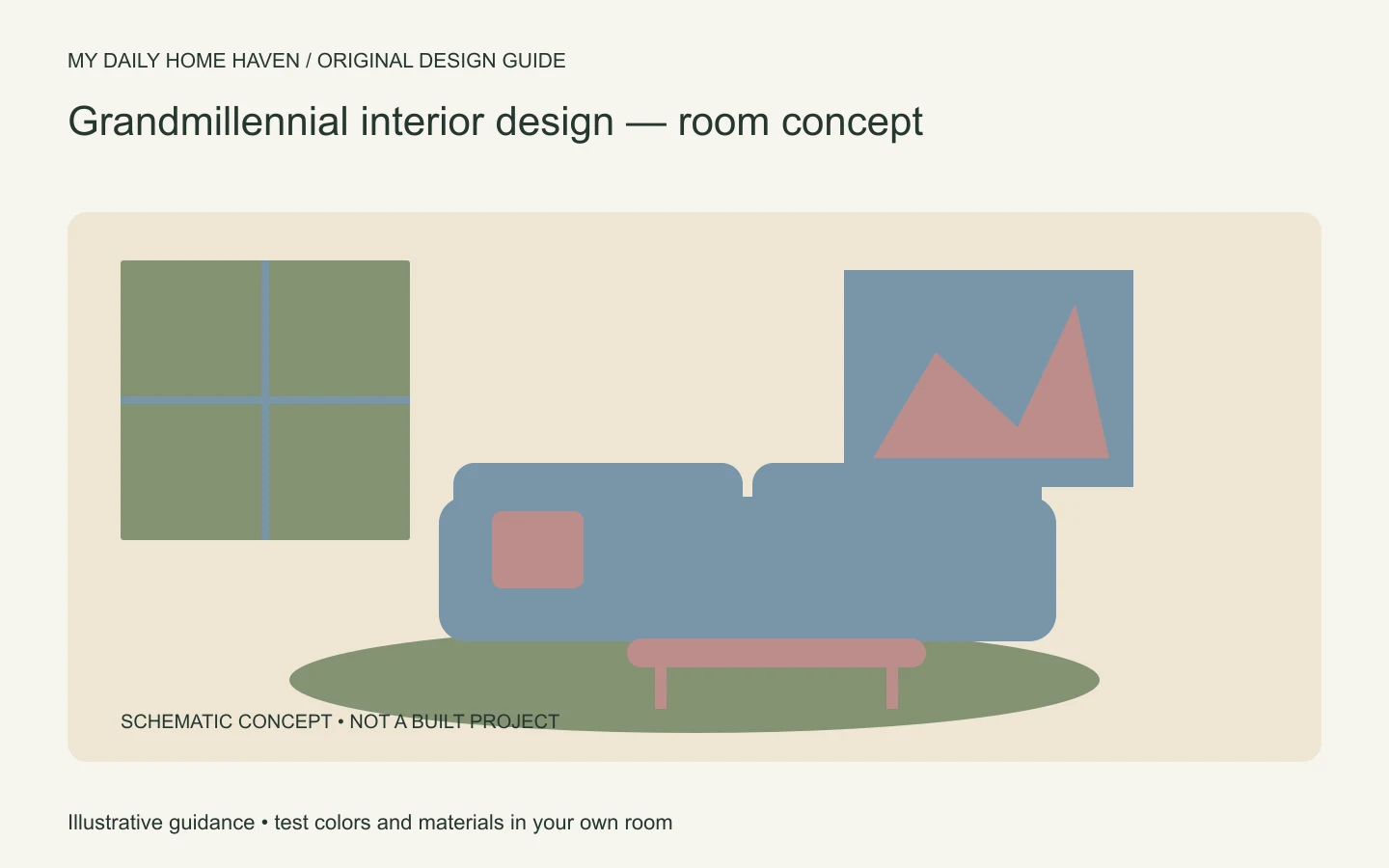
Pick a lead pattern with colors you can repeat elsewhere. A floral curtain might connect a plain sofa, a smaller check, and one solid cushion. The shared colors provide structure while the different scales keep the scheme from looking like a matching set.
Ask to see enough of the fabric to understand the repeat. A small sample can hide a large motif, especially on curtains or a sofa. Consider how the design will fall across seams and whether the finished item needs pattern matching.
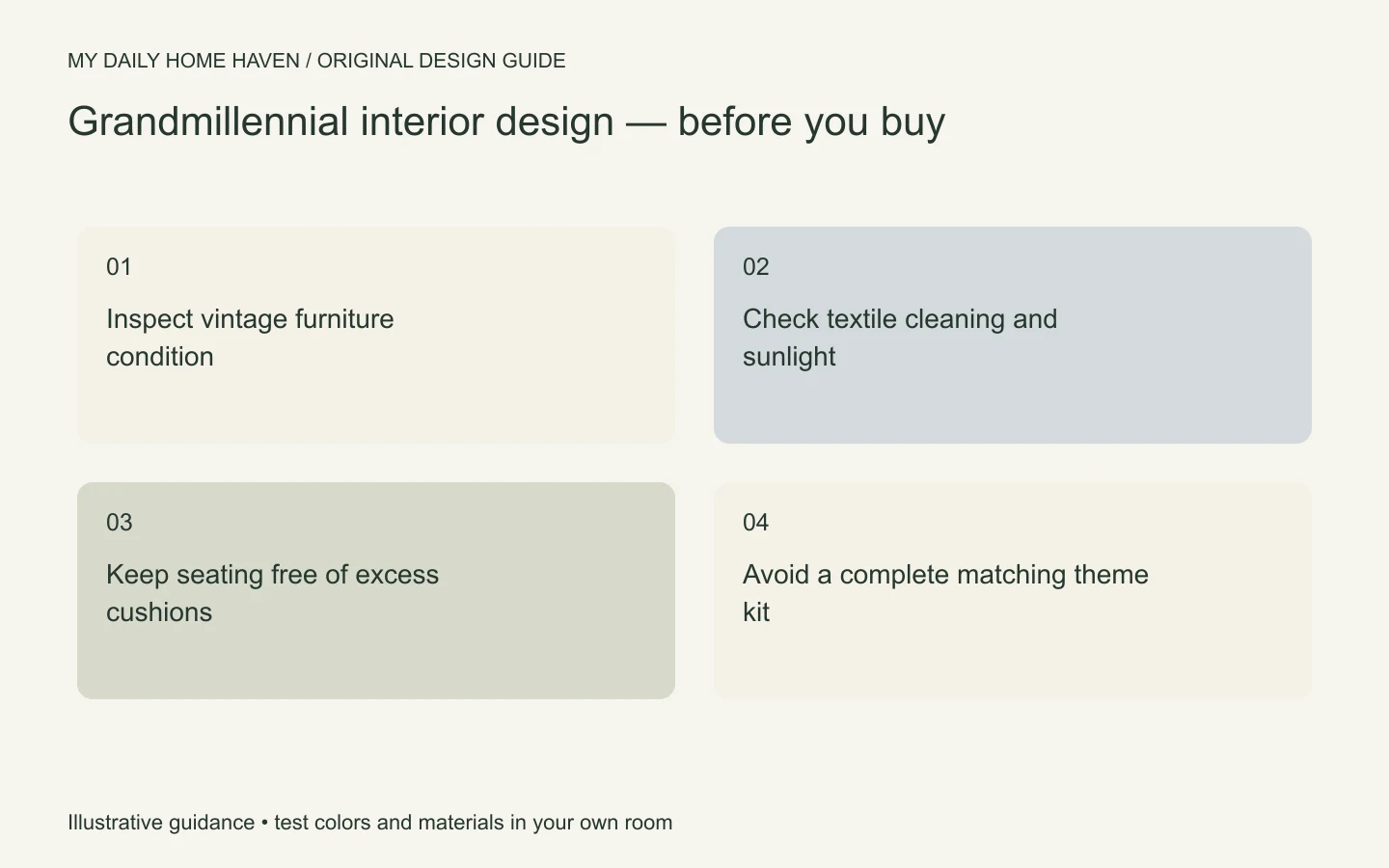
Check practical performance too. Cleaning, fading, snagging, and pet hair matter more in a busy living room than the style name. A washable smaller layer may be a better first step than committing to an expensive patterned sofa.
Mix patterns without filling every surface
Use different scales and leave plain areas between them. A large floral, small stripe, and quiet solid can work together when they share a palette. If the rug, wallpaper, curtains, and upholstery are all dense patterns, the room may become difficult to read.
You do not need a numerical rule for how many patterns are allowed. Look at the room from the entrance and the main seat. If there is no clear focal point, simplify one large surface before introducing another pattern.
Texture can provide interest without another motif. A woven plain fabric, timber grain, or simple shade may give the room enough variation. Our principles of interior design guide helps assess rhythm and emphasis.
Use older furniture as practical anchors
A chest can store paperwork, a small desk can support occasional work, and a sideboard can organize dining items. Choose a piece with a real role so it earns its space. Decorative age alone does not make a room more useful.
Inspect condition before buying. Check stability, drawers, veneer, previous repairs, and delivery access. Factor any necessary work into the budget. An inexpensive piece can become costly if the repair or transport is more complicated than expected.
Mix older wood with comfortable new upholstery or simpler contemporary lighting. The contrast can keep the room from feeling like a period display. Coordinate the scale and palette while allowing each piece to retain its character.
Display collections in groups
Ceramics, books, framed needlework, and family photographs can make the room personal. Give each collection a defined area rather than spreading small objects across every useful surface. A cabinet or shelf group can create a clearer display and simplify cleaning.
Keep daily functions visible in the plan. There should still be somewhere for a drink, a reading lamp, and the items the household uses every evening. An overfilled coffee table or a sofa covered in cushions may look layered but feel awkward.
Use suitable fixings for plates, shelves, and heavier framed pieces. A decorative arrangement needs to be stable and appropriate for the wall and the people using the space. Do not improvise support based on appearance alone.
Begin with a manageable refresh
Keep the best existing furniture and add one lead textile. Repeat a color from it in a plain layer, then introduce one older piece if it solves a storage or surface need. Group the personal objects you already own before buying more.
Test the room through ordinary use. Remove cushions that get moved to the floor every day, relocate a display that blocks a lamp, and simplify a pattern that competes with the focal point. Editing does not weaken the look; it helps the chosen layers remain enjoyable.
If the room still feels too formal, add a simpler shape or more relaxed upholstery. If it feels unrelated, repeat one color or material more clearly. Solve the specific issue rather than purchasing an entire coordinated collection.
Make room for ordinary technology
Grandmillennial interior design does not need to pretend that laptops, chargers, and remote controls do not exist. Give them sensible storage near the places where they are used. A small drawer, cable route, or closed box can keep practical items accessible without allowing them to dominate a decorative surface. Check that the arrangement does not create heat or cable strain for devices. When the room is shared, make the system easy for everyone to use. A comfortable contemporary routine can sit naturally beside patterned fabric and older furniture, which is more useful than hiding everything only when guests arrive.
Frequently asked questions
Is this the same as maximalism?
They can overlap, but grandmillennial usually refers to particular traditional decorative references. A restrained room with one patterned textile and a useful older piece can still use the approach.
Do I need genuine antiques?
No. New furniture, reproductions, inherited pieces, and secondhand finds can all contribute. Describe age and origin accurately and prioritize function and condition.
Can the look work with children or pets?
Yes. Choose cleanable textiles, stable furniture, and protected displays where needed. The practical requirements of the household should guide how and where you use delicate pieces.
\n\n