

Tricorn Black exterior paint can give a home a clear, confident outline, whether you use it on the walls, trim, or front door. The important choice is where that contrast belongs. A black door on a pale house and an entirely black façade produce very different results, even when both use Sherwin-Williams SW 6258.
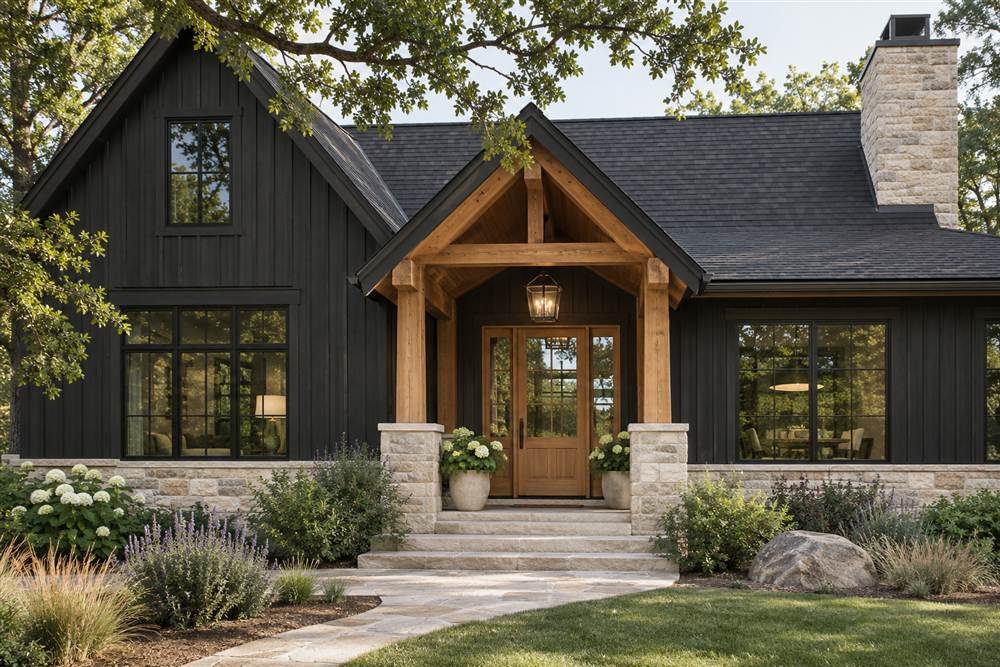
This guide explains the color, offers 12 exterior combinations, and helps you check materials, exposure, sheen, and samples before ordering paint. Images are AI-generated design concepts inspired by a deep neutral black palette. They are not completed projects or exact Tricorn Black color proofs.
Quick answer: where should Tricorn Black exterior paint go?
Start with a door or a small set of accents if you want a clear focal point while keeping the main walls lighter. Choose black trim when the window proportions and surrounding colors support a strong outline. Consider full black walls only after comparing a large sample, the fixed roof and masonry, and the coating requirements of the actual surface.
For the wider material decision, use our exterior materials for homes guide. A color name does not establish whether a coating is suitable for wood, metal, masonry, vinyl, or a factory-finished door.
What color is Tricorn Black SW 6258?
Sherwin-Williams identifies Tricorn Black as a neutral black with almost no apparent undertone in its official guide to shades of black. That makes it a useful comparison point when another dark sample looks brown, blue, or green beside your house. It does not mean the appearance stays identical in every setting.
The manufacturer’s Tricorn Black product listing reports an LRV of 2.849, commonly rounded to about 3. LRV describes visible-light reflectance. It is not a stand-alone measure of solar reflectance or a prediction of your wall temperature.
Deep black can appear softer in bright light, stronger beside white, and less distinct against a dark roof. Gloss, texture, reflected planting, and the size of the painted area also affect what you see. Use physical samples rather than a screen value to approve the result.
Choose walls, trim, or doors before choosing the palette
| Placement | Visual purpose | First check |
|---|---|---|
| Main walls | A continuous dark body with a clear entrance | Substrate approval, large samples, roof relationship |
| Trim and shutters | Selected outlines and repeated accents | Existing window finishes and credible shutter proportions |
| Front door | A focused contrast at the entrance | Door material, exposure, storm door and coating instructions |
| Garage door | A large supporting plane | Exact door model, color restrictions and approved finish |
Avoid treating every paintable feature as an accent. When the door, garage, fascia, gutters, shutters, and window surrounds all compete, a small house can feel busier rather than more polished. Decide which architectural feature deserves attention and let the remaining elements support it.
Our home exterior before-and-after guide can help separate a color improvement from changes to the entry, planting, windows, and lighting. Paint should work with the whole composition.
12 Tricorn Black exterior paint combinations to sample
These combinations are design starting points. Named whites and other colors need their own outdoor samples. The existing roof, paving, brick, mortar, and window finish should remain part of every comparison.
1. Tricorn Black trim with warm white walls
A warm white body keeps the overall house light while black establishes a small number of edges. Begin at the front door and selected window details rather than automatically outlining every board. Check whether your existing window frames are warm white, bright white, bronze, or another factory finish.
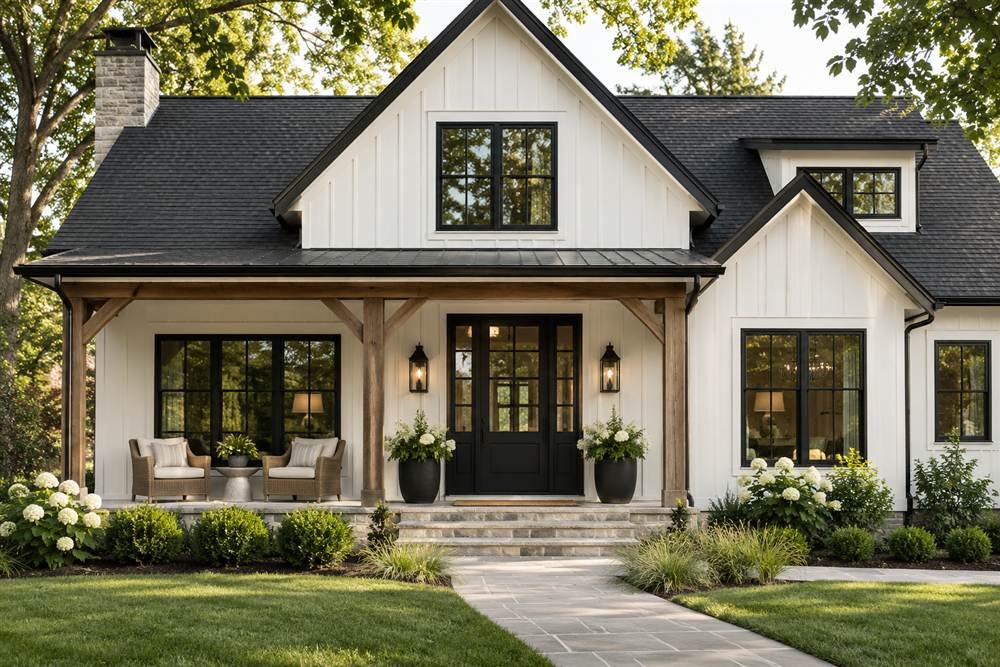
Use our warm white exterior paint colors guide to narrow the body direction. A creamier white can look very different beside black than it does on its own.
2. Tricorn Black exterior paint with crisp white accents
Crisp white can make black walls look graphic and sharply defined. Try Extra White or Pure White as sample candidates, then judge the group beside the roof. Keep the white limited to details that deserve emphasis. Large contrasting garage surrounds can draw more attention than the front entry.
This direction suits a deliberate high-contrast scheme. If the sample feels too stark, compare a softer white or reduce the number of white details before abandoning the entire idea.
3. Natural red brick with a black door and shutters
Black accents can update red brick without coating the masonry. Test the black against both the brick faces and the mortar, because those two colors may pull the scheme in different directions. Keep shutter sizes and placement credible; decorative shutters should suit the windows they frame.
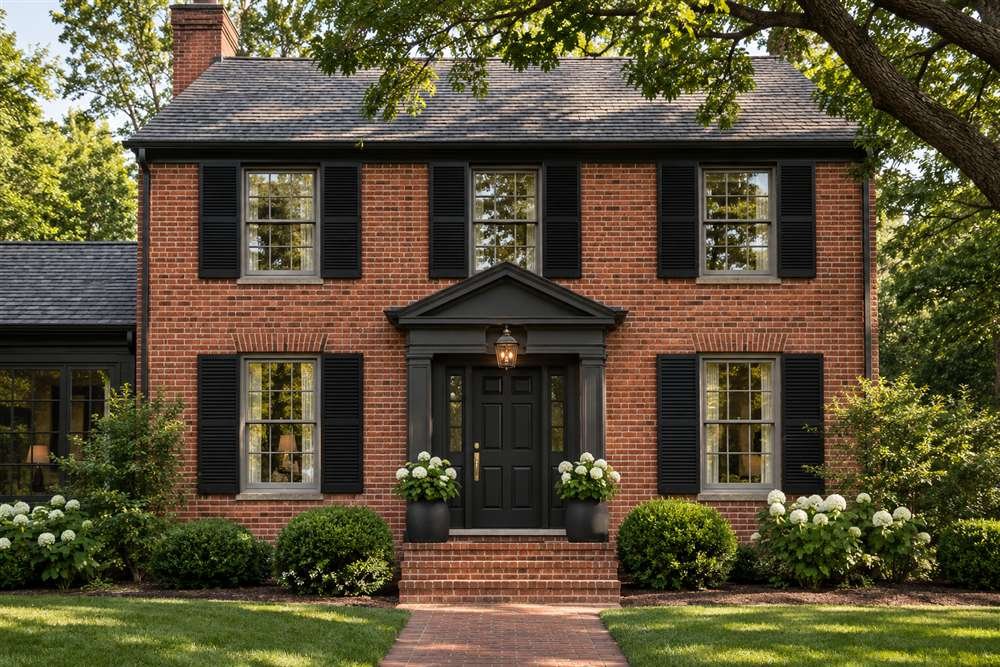
For a broader decision about leaving brick natural or changing its finish, see our painted brick homes guide. A trim refresh may provide the contrast you wanted without painting the wall.
4. A Tricorn Black front door with brass hardware
A black door is a focused way to introduce the color. Brass or bronze hardware gives it a visible point of warmth, while a restrained surround keeps the entrance legible. Evaluate the door from the sidewalk, not only at arm’s length, and check the evening view with the entry lights on.
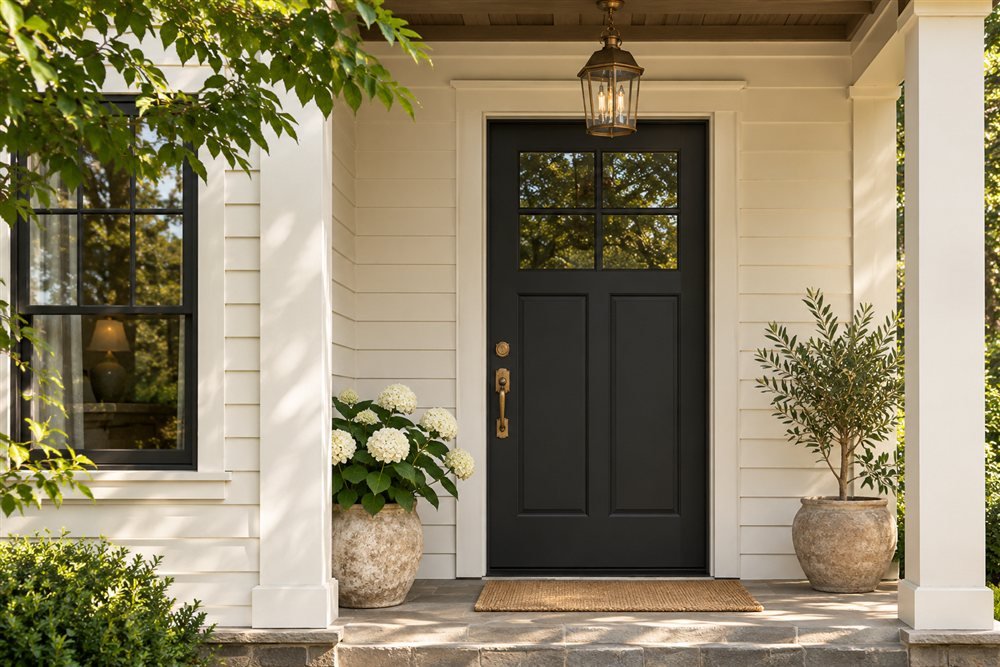
Confirm the door material, existing coating, exposure, and manufacturer’s finishing instructions before choosing a product. The door’s appearance and its approved coating system are separate decisions.
5. Black walls with natural wood at the entry
Wood can distinguish a recessed entrance from dark walls without adding a bright trim color. Keep the wood detail purposeful: a door, a small porch ceiling, or a clear entry surround is often enough. Compare the timber tone with the roof and paving rather than choosing it from an isolated inspiration image.
Remember that stained wood and painted siding have different care requirements. Include both in your maintenance plan so the palette remains intentional as the materials age.
6. Tricorn Black exterior paint with warm stone
Natural stone brings its own pattern, variation, and undertones. Pull the black sample close to the stone and inspect the combination in shade and sun. Keep mortar visible in the decision. A stone that seemed beige on screen may read pink, gray, or yellow against a deep black field.
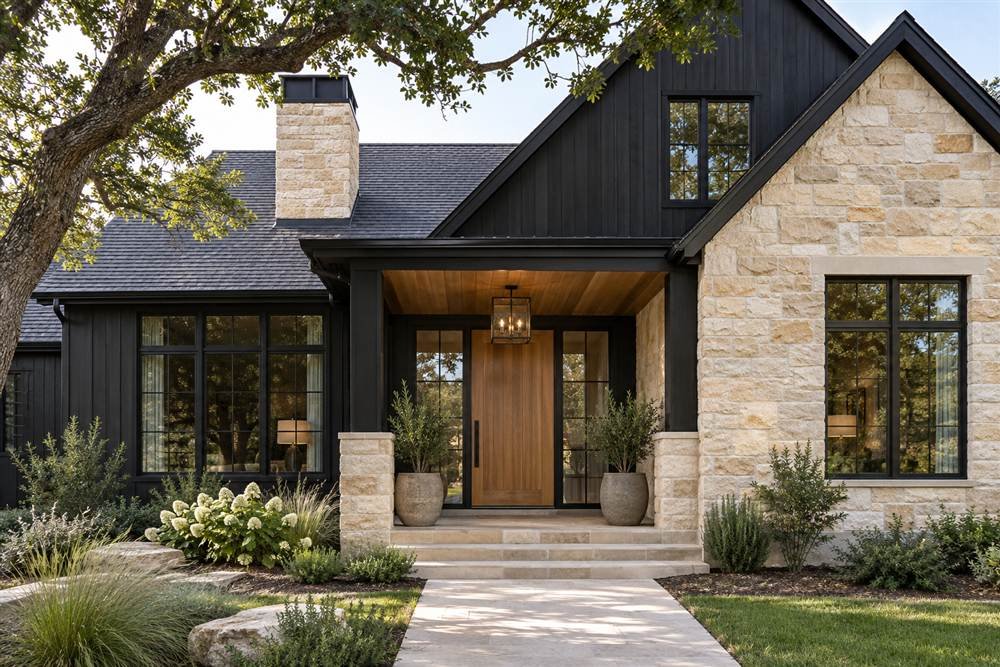
Avoid assuming that the stone must be coated to make the scheme work. It may be the material that keeps a dark exterior from feeling flat.
7. Sage green walls with restrained black accents
A muted sage body and black door can create a quieter contrast than white and black. Repeat the dark accent selectively so the entry does not look detached from the rest of the façade. Check the green beside existing brick and roof tones before deciding how much trim should be dark.
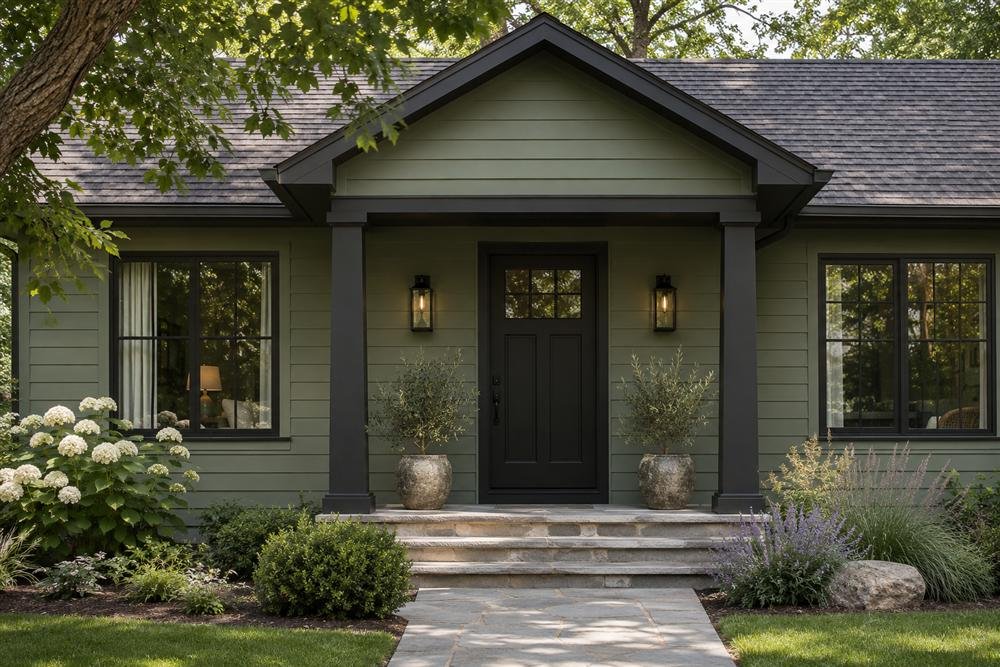
Our sage green house exterior ideas offers more ways to organize a green palette. Treat the illustrated green as a direction, not a confirmed product match.
8. A black ranch exterior with a warm entrance
On a long, low house, dark siding can create a calm horizontal field. Give the entrance a readable path, balanced lighting, and enough material contrast to keep it from disappearing. Avoid turning every roofline and window edge into a contrasting stripe.
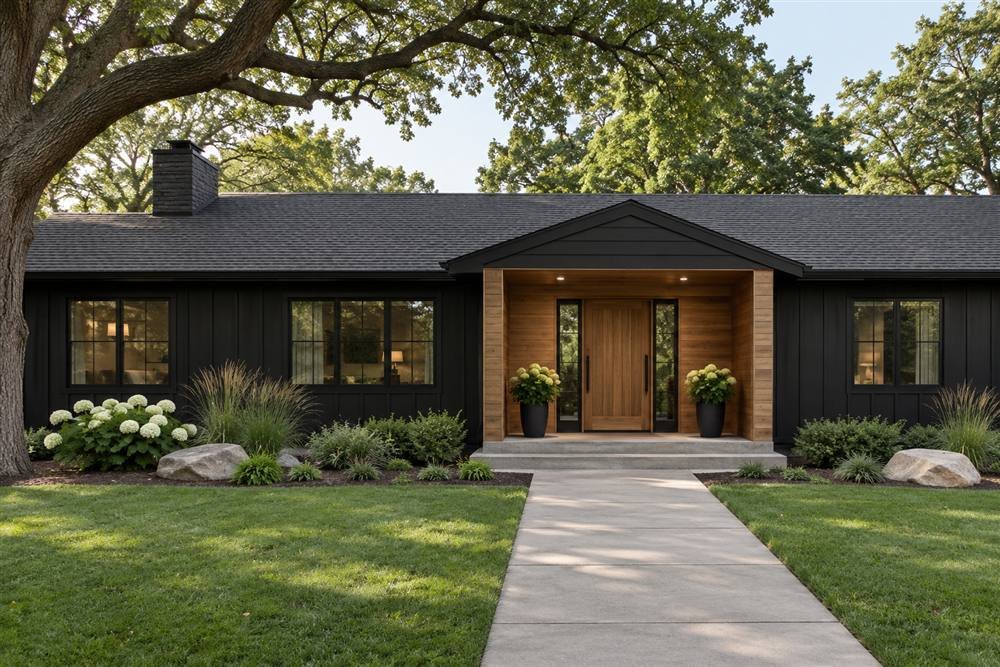
See our modern ranch house exterior ideas for proportion and renovation planning. A black finish cannot compensate for an unclear entrance or poorly placed fixtures.
9. Cream walls, black shutters, and a brown roof
A warm roof does not automatically rule out black accents. Cream walls can provide a bridge between brown shingles and a dark door. Compare the cream against the roof and paving, then decide whether shutters add useful structure or simply more contrast.
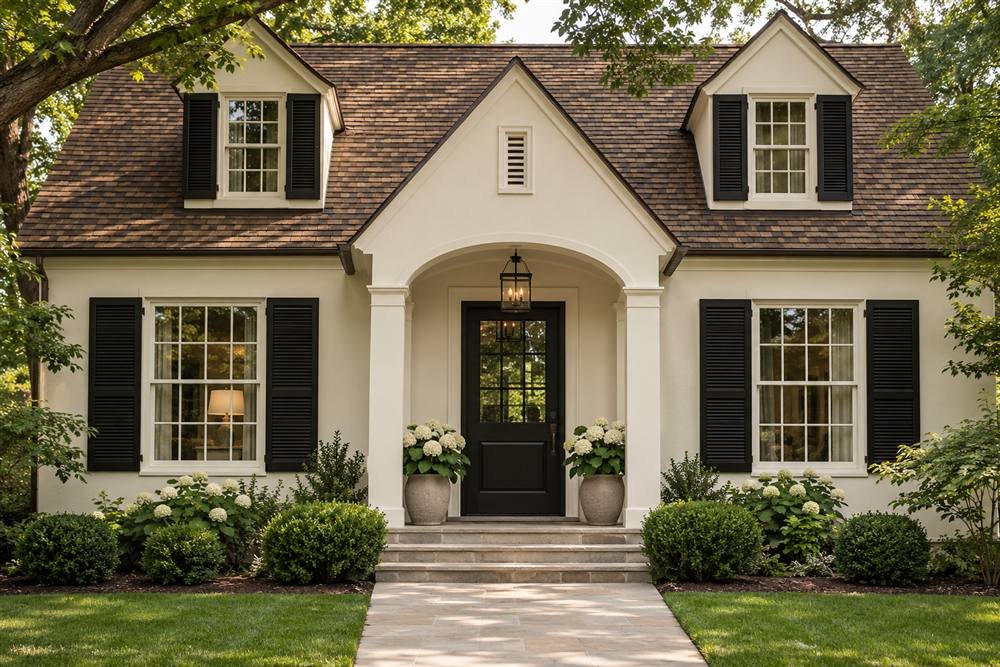
If the roof will remain for years, make it part of the first sample review. Choosing the walls first and trying to reconcile the roof afterward usually makes the decision harder.
10. Pale limewashed brick with black details
Black hardware, selected trim, or a door can define a pale textured wall. Match the amount of dark detail to the character of the masonry. A heavily varied finish may need fewer contrasting edges than a quiet, fuller coating.
Our limewash brick house guide explains surface checks and sample planning. Do not use black accents as a reason to choose a masonry treatment that does not suit the wall.
11. A softer neutral body with black trim
A light beige or warm gray body can moderate the contrast without making the house monochromatic. Use a larger sample than a small chip, especially when the body has a subtle undertone. View the two colors beside windows, stone, and the driveway.
Keep one trim hierarchy: dark at the features you want to emphasize, quieter at service elements. Not every downspout needs to become a graphic line.
12. A black door while keeping the existing body color
When the body paint is sound and the palette already works, a door-only change can be the most focused project. Start with the sample and compatible product, then assess lighting, hardware, and the condition of the surrounding trim.
Our small front porch ideas can help complete the entry. A clear walkway and appropriate lighting may add more to the result than extending black onto additional surfaces.
Sheen changes how Tricorn Black exterior paint reads
Do not choose sheen only from a photograph. A flatter appearance can soften reflections on broad walls, while a more reflective finish can emphasize the shape of a door or trim. Those reflections may also draw attention to surface texture and preparation.
Ask which sheens the selected exterior product offers and which are appropriate for your substrate and exposure. Brand names such as satin and low-lustre are not interchangeable specifications across all product lines.
If you are comparing sheens, sample the actual intended product where practical. A color sample in another finish helps with the palette but does not reproduce the final gloss, application texture, or substrate response. Record both color and product when approving the work.
Check vinyl, PVC, doors, and factory finishes first
Sherwin-Williams warns that darker paint can cause vinyl siding to warp or buckle, and its VinylSafe information describes a specifically formulated palette for suitable substrates. Do not assume a standard Tricorn Black formula is approved for your siding or trim simply because it is an exterior paint.
For a garage door, consult the exact model’s finishing requirements. Clopay’s Color Blast guidance explains that some products require solar-reflective technology for dark colors. That factory system is not equivalent to an ordinary retail coating.
A storm door can change exposure conditions at an entrance. JELD-WEN’s maintenance guidance notes heat buildup between doors and greater risk with a dark exterior door. Check the instructions for your own door and storm-door assembly rather than applying that advice as a universal warranty rule.
For other trim, identify the material before choosing preparation or paint. Our exterior trim materials guide helps organize that check. Get written approval when a manufacturer restricts dark colors or field-applied coatings.
Sample Tricorn Black exterior paint in a useful way
Pick one large sample location near a fixed material and another in a different exposure. Include the proposed body, trim, and door colors together. A black chip held against a white kitchen wall does not answer how the exterior group will look beside your roof.
Review samples in morning light, afternoon light, and shade. Stand at the curb as well as near the wall. Keep the comparison conditions consistent, and do not use a heavily edited phone photograph as the final reference.
Before approval, record the exact color code, coating product, sheen, substrate, preparation, and areas included. If two samples look different, check those variables before deciding that one formula is wrong. Different textures and light can create a visible mismatch without a different color name.
Choose a sample method suitable for the substrate and product. A movable sample board is useful for comparing positions, but it cannot prove adhesion or final texture on the actual wall. Resolve compatibility separately.
Compare Tricorn Black with other dark options
Tricorn Black is useful when you want a neutral deep-black reference. If it feels too severe on a large wall, compare a softer charcoal direction such as Iron Ore instead of trying to make the same black behave like gray.
Sherwin-Williams describes Black Magic as having a subtle warm-brown direction and Inkwell as gray-blue in its shades-of-black guide. Put those physical samples beside Tricorn Black only if those differences help your existing materials.
A neighboring color in an online grid is not an exact substitute. Keep the same proposed sheen and view the group outdoors. Avoid adding four new dark colors when you have not yet decided whether the body or only the door should be black.
Maintenance and quote planning
Dark paint does not automatically hide all dirt. Pale dust, pollen, water marks, and scuffs can contrast strongly with black. Ask for cleaning instructions for the chosen coating, and test any cleaning method discreetly before applying it widely.
Keep product and application records for touch-ups. Aging, exposure, and differences in sheen can make a small patch visible. Follow the manufacturer’s guidance rather than assuming leftover paint will produce an invisible repair years later.
For comparable quotes, specify the surfaces, repairs, preparation, coating system, color, sheen, access, protection, and cleanup. A door-only refresh and whole-house repaint are different projects. Do not use a general online price as a guaranteed local cost.
If work on a pre-1978 home will disturb existing paint, follow EPA lead-safe renovation guidance. Keep the decorative decision separate from the safe preparation plan.
Tricorn Black exterior paint FAQs
Is Tricorn Black a warm black or a cool black?
The manufacturer presents it as a neutral black with almost no apparent undertone. That is a useful reference, but reflections, adjacent materials, texture, and sheen still influence the appearance. Approve the actual outdoor sample.
What is the LRV of Tricorn Black?
The manufacturer listing checked for this guide gives 2.849, approximately 3. Small numerical differences across online reviews should not replace the current physical sample and product information.
Can I use Tricorn Black exterior paint on the entire house?
Potentially, if the substrate and selected coating system permit it. First compare the full palette, exposure, entrance visibility, and maintenance expectations. Verify restrictions on vinyl, PVC, doors, and other factory-finished products.
Which white should I pair with Tricorn Black?
A crisp white creates a stronger graphic contrast; a warmer white can soften the relationship with warm masonry or roofing. Sample both directions beside the fixed materials. No white is universally best on every exterior.
Should the front door and garage door both be black?
They can be, but matching them is not a requirement. Judge which element becomes most prominent from the street. Confirm each door’s material and finishing approval separately before copying the same specification.
Will black exterior paint hide dirt?
Not reliably. Light dust and residue can stand out against a dark finish. Choose the coating and care method for the surface and exposure, and plan for realistic maintenance.
Can I paint existing vinyl windows Tricorn Black?
Do not assume permission. Check the exact window manufacturer’s coating, color, and warranty requirements. Advice for a paintable wood surround does not establish that the window frame itself can be painted.
Do these images show the exact paint color?
No. They are labeled design concepts. Screens, image generation, lighting, and display settings cannot verify a purchased coating. Use current physical samples and the specified product to make the final choice.
Conclusion: give the black a clear role
The strongest Tricorn Black exterior paint scheme starts with a simple decision: should the dark color define the entrance, frame selected details, or cover the main walls? Let the roof, masonry, and windows guide that choice.
Choose a compatible coating, sample the complete palette, and document the approved product and sheen. When the contrast has a purpose and the material checks are settled, the finished home is easier to understand, maintain, and enjoy.