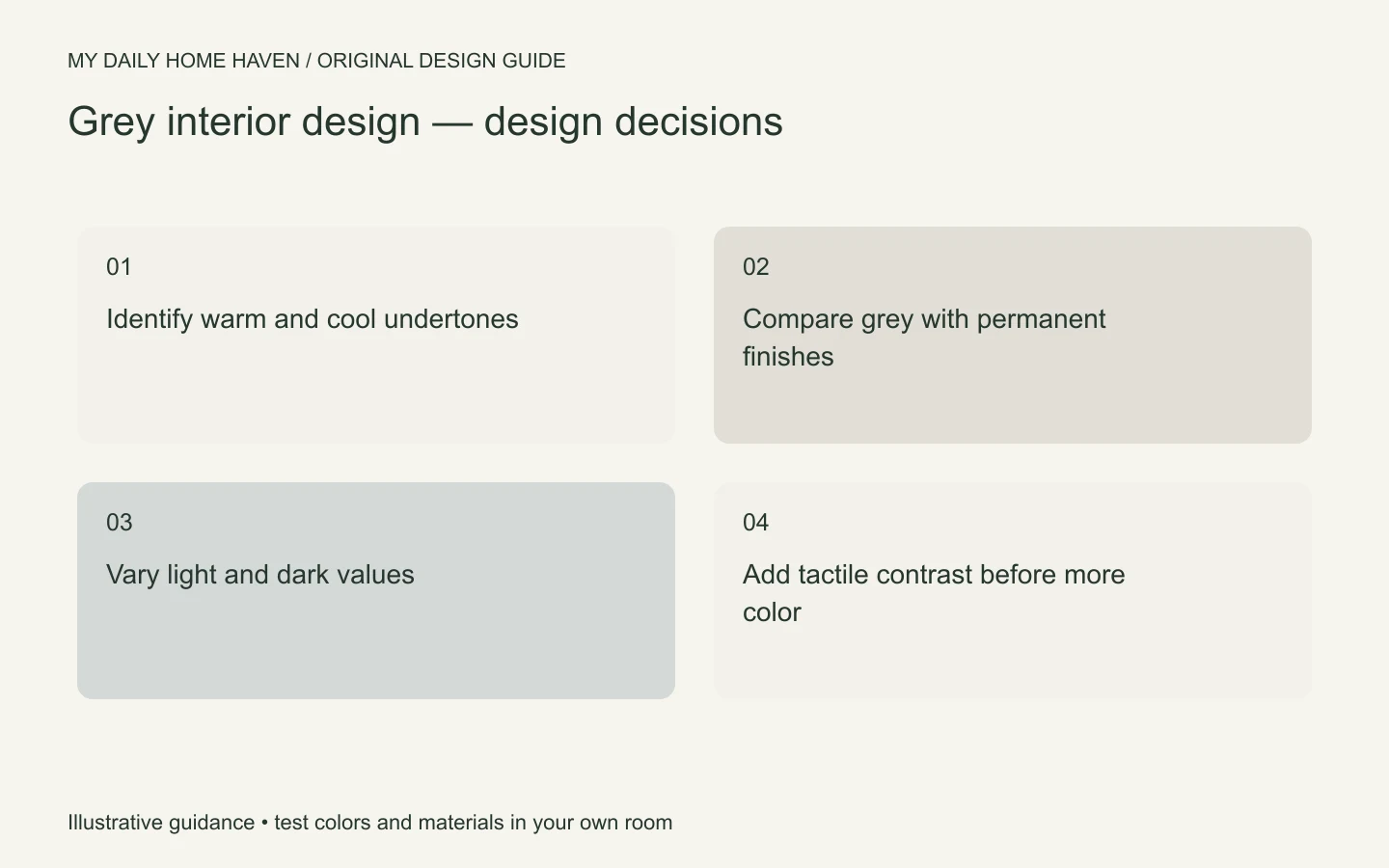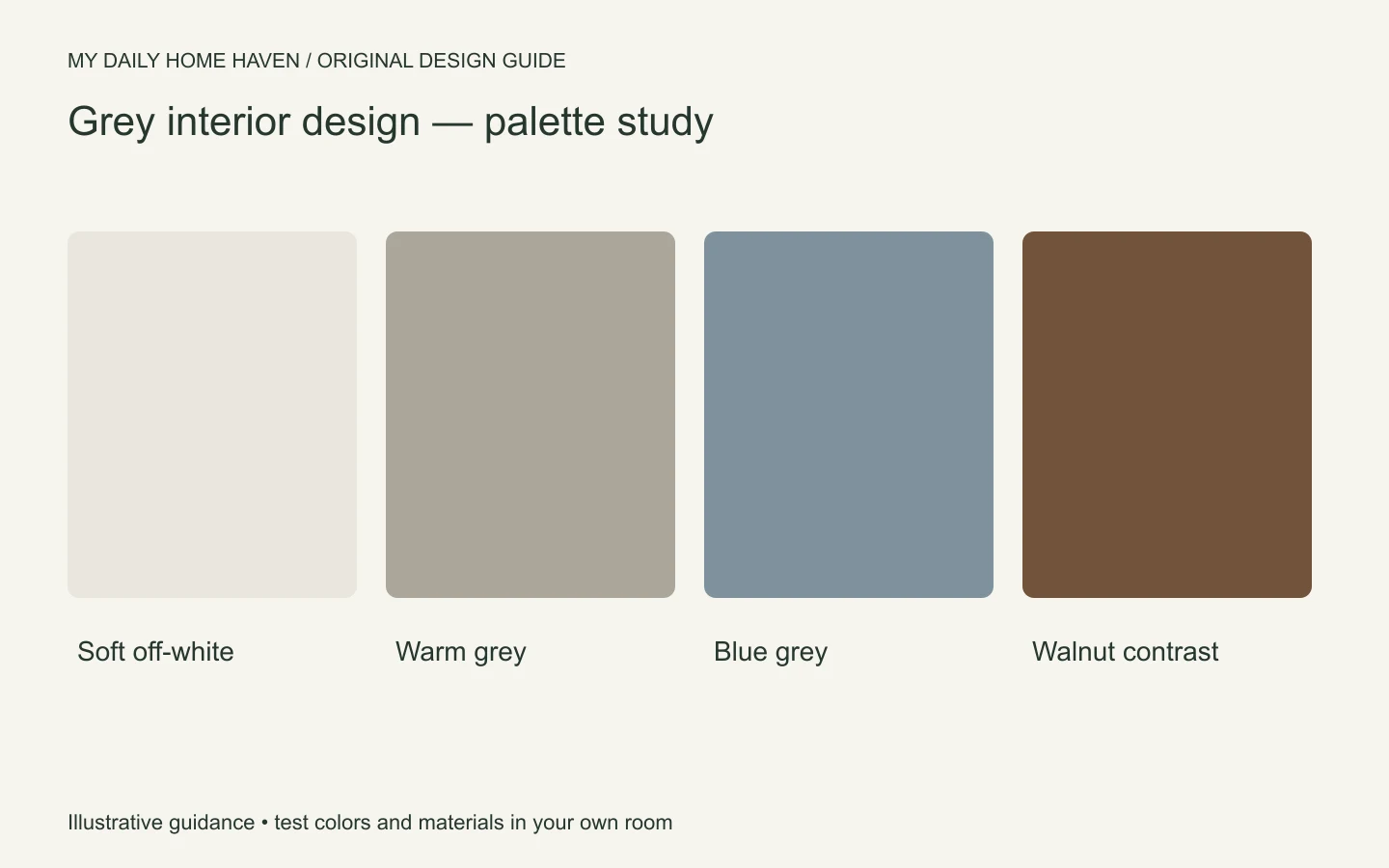
Grey interior design succeeds when you coordinate undertones, value, and texture rather than treating every grey as the same neutral. Some shades lean blue, green, violet, or warmer brown. A grey sofa, floor, and wall can therefore clash even when their labels sound almost identical.
The solution is not automatically to remove grey from the room. Work out what you already have, then choose supporting colors and materials deliberately. This guide uses grey and gray interchangeably; both spellings refer to the same color family. Our interior design aesthetics guide covers broader style directions.
Grey Interior Design: Check Undertones Before You Paint
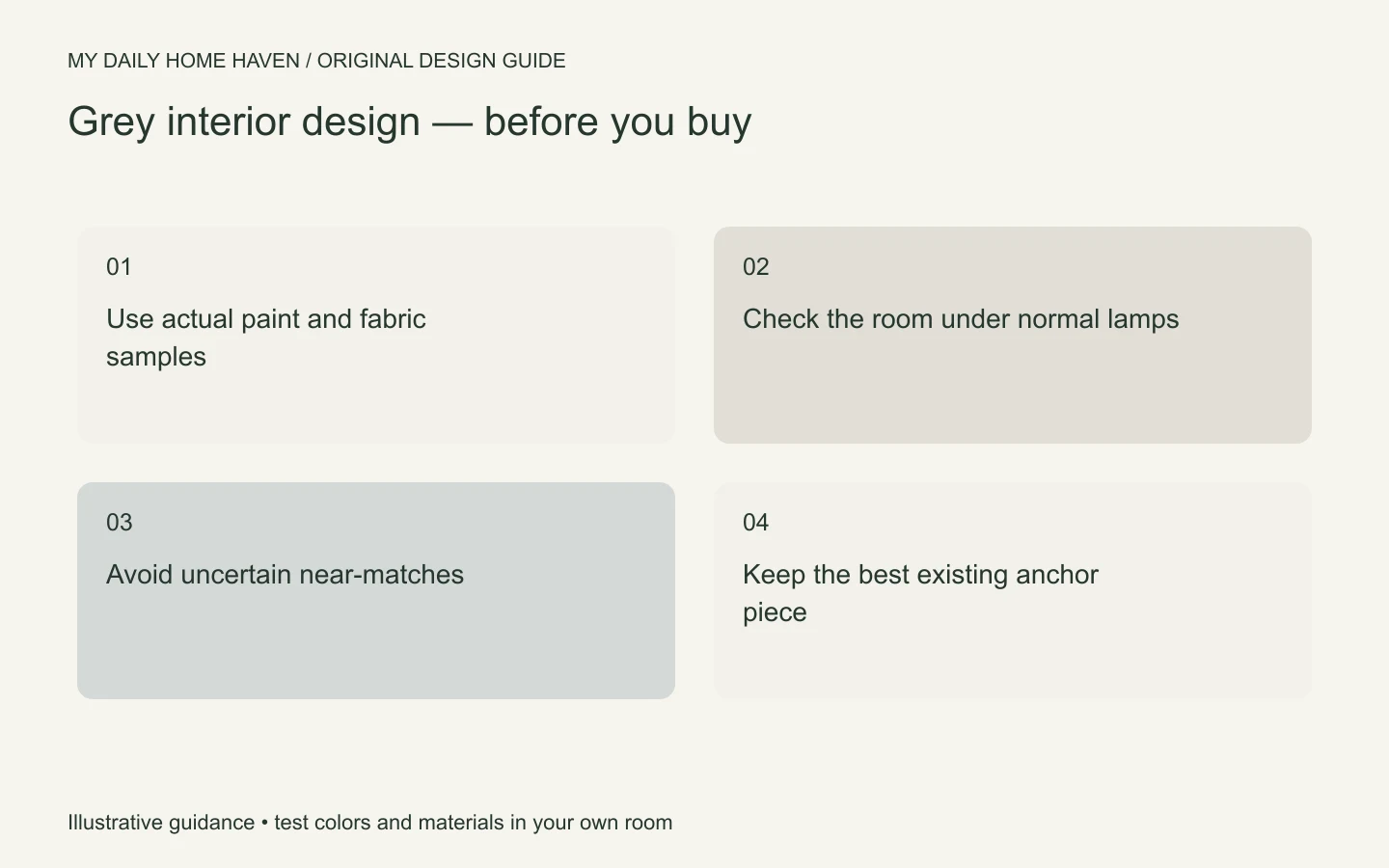
Grey interior design can shift blue, green, violet, or warm depending on light and adjacent finishes. Place large samples beside the actual floor and fabrics, and compare them in morning and evening conditions. Use texture and a deliberate accent color to prevent a neutral palette from feeling flat; avoid selecting from a tiny chip alone.
Identify the fixed grey first
Start with the grey element that is hardest to change: tile, stone, flooring, or a large sofa you intend to keep. Compare it with several sample cards or fabrics in the actual room. Notice which comparisons make it look warmer, bluer, or more violet.
Do not rely only on a photograph. Cameras, editing, and screens can alter subtle neutral relationships. Keep a physical sample or a well-lit reference of the fixed finish with you when comparing new materials, then check them again at home.
Sherwin-Williams’ Great Grays guide recommends considering existing elements such as flooring, cabinetry, wood trim, and stone when choosing a grey. That is a better starting point than selecting a popular shade in isolation.
Choose contrast instead of chasing an exact match
A room with several almost-matching greys can look less coherent than one with a clear difference between them. Pair a mid-grey sofa with a distinctly lighter wall, for example, or place a darker table against a pale rug.
Value describes how light or dark a color appears. Varying it helps define the room’s parts even when the palette remains restrained. Texture and sheen can add further distinction, but they do not always replace the need for a visible value difference.
If the room feels flat, identify two adjacent surfaces that merge together. Change one through a textile, rug, or furniture finish before deciding to repaint every wall. A small adjustment may solve the larger visual problem.
Add warmth through materials
Timber, woven fabric, warm metal, and soft upholstery can make a grey room feel less stark. Choose them in relation to the existing undertones. A very orange wood may compete with some blue-greys, while another timber tone may provide a more comfortable contrast.
Warmth does not require filling the room with beige accessories. A substantial wood table or a textured curtain can have more impact than many small objects. Select a few material changes with clear roles.
Check care requirements as carefully as appearance. A soft-looking rug may be difficult to clean in a busy room, and a pale curtain may need a lining for privacy. Practical suitability helps the room remain pleasant after the initial decorating work.
Coordinate an existing grey sofa
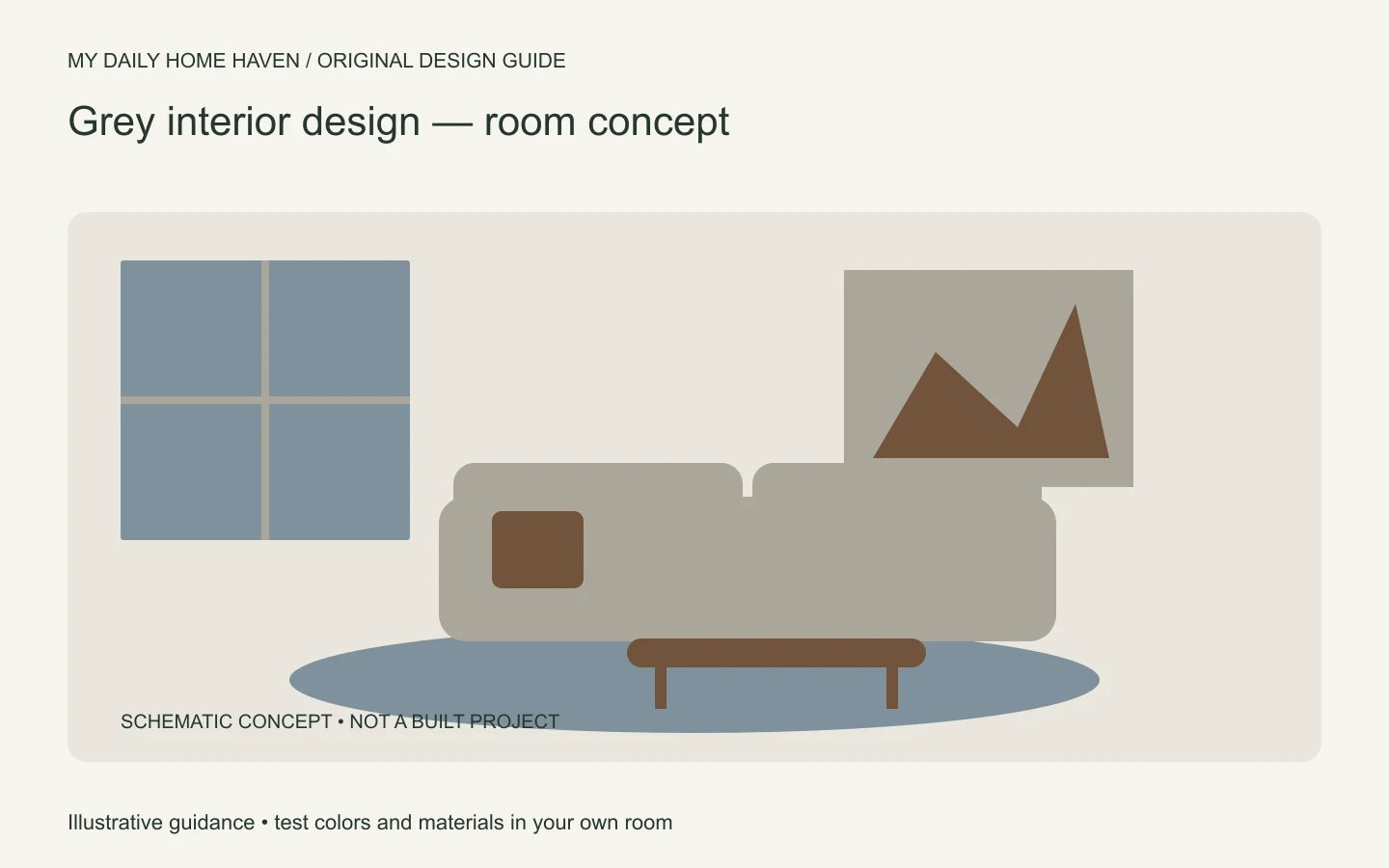
Keep the sofa as the anchor and compare rug, curtain, and wall samples beside it. If the fabric has a cool cast, try both a related cooler neutral and a warmer contrast to see which suits the room. There is no need to guess from the sofa’s product name.
Use cushions to test an accent before buying a large item. Muted blue, green, rust, or dusty pink may work in different schemes, but introducing all of them can make the room less focused. Choose one main direction and repeat it selectively.
Place a useful lamp and side table near the seat you use most. A well-coordinated palette can still feel uncomfortable if lighting and furniture placement are poor. Our space planning guide helps connect the visual choices to daily use.
Test grey paint under real conditions
Paint a large sample using the product’s recommended method. Place it near the fixed finishes and inspect it on more than one wall. Daylight from a window and artificial light in a darker corner can make the same shade appear different.
Compare the intended trim color at the same time. A crisp white may emphasize the grayness of a wall, while a softer off-white may create a gentler transition. Test the combination rather than assuming white is a neutral constant.
Keep a note of the exact color, product, and finish. Sheen and surface condition affect the result, so a sample in a different coating may not be a perfect preview. Follow manufacturer guidance for preparation and application.
Make the room feel intentional
Give the room a focal point, whether that is art, a fireplace, a view, or a furniture group. Grey can provide a supporting background rather than becoming the only subject. Leave some areas visually quiet so the stronger elements can be appreciated.
Edit repetitive accessories. Several small grey objects do not necessarily make the palette more coherent. A clearer contrast in shape or material can provide more interest while keeping the room restrained.
If you want a change, retain the most useful anchor and update the layers around it. Replacing a serviceable sofa simply because a color trend has shifted may not be the best use of the budget.
Separate the layers before replacing them
If a grey interior design scheme feels uncomfortable, identify which layer causes the problem. The wall may be too close in value to the sofa, the curtain may introduce an unrelated undertone, or the room may need better evening light. Test one change at a time using a sample or borrowed item. Replacing several elements together makes it harder to know what improved the result and can increase unnecessary spending. Keep the parts that work, especially useful furniture in good condition. A coordinated update can be smaller and more effective than removing every grey surface in the room.
Frequently asked questions
Can I combine warm and cool greys?
Yes, if the contrast is deliberate and the room has a connecting element. Test them together with the floor and lighting; avoid relying on the words warm and cool alone.
Is grey automatically dated?
No color is a complete design verdict. Furniture scale, materials, lighting, and the quality of the overall scheme affect how a room feels. Update the relationships rather than following a blanket rule.
What if my grey looks blue after painting?
Compare it under different lights and beside the surrounding finishes. Before repainting, test alternatives in the same conditions. A sample chosen elsewhere may repeat the same problem.
\n\n