

Old world interior design is a loose decorating label for rooms that emphasize age, craftsmanship, substantial materials, and a sense of history. It may draw from several European or Mediterranean references, but it is not one documented period style. A successful interpretation chooses its references carefully and keeps the home comfortable for present-day use.
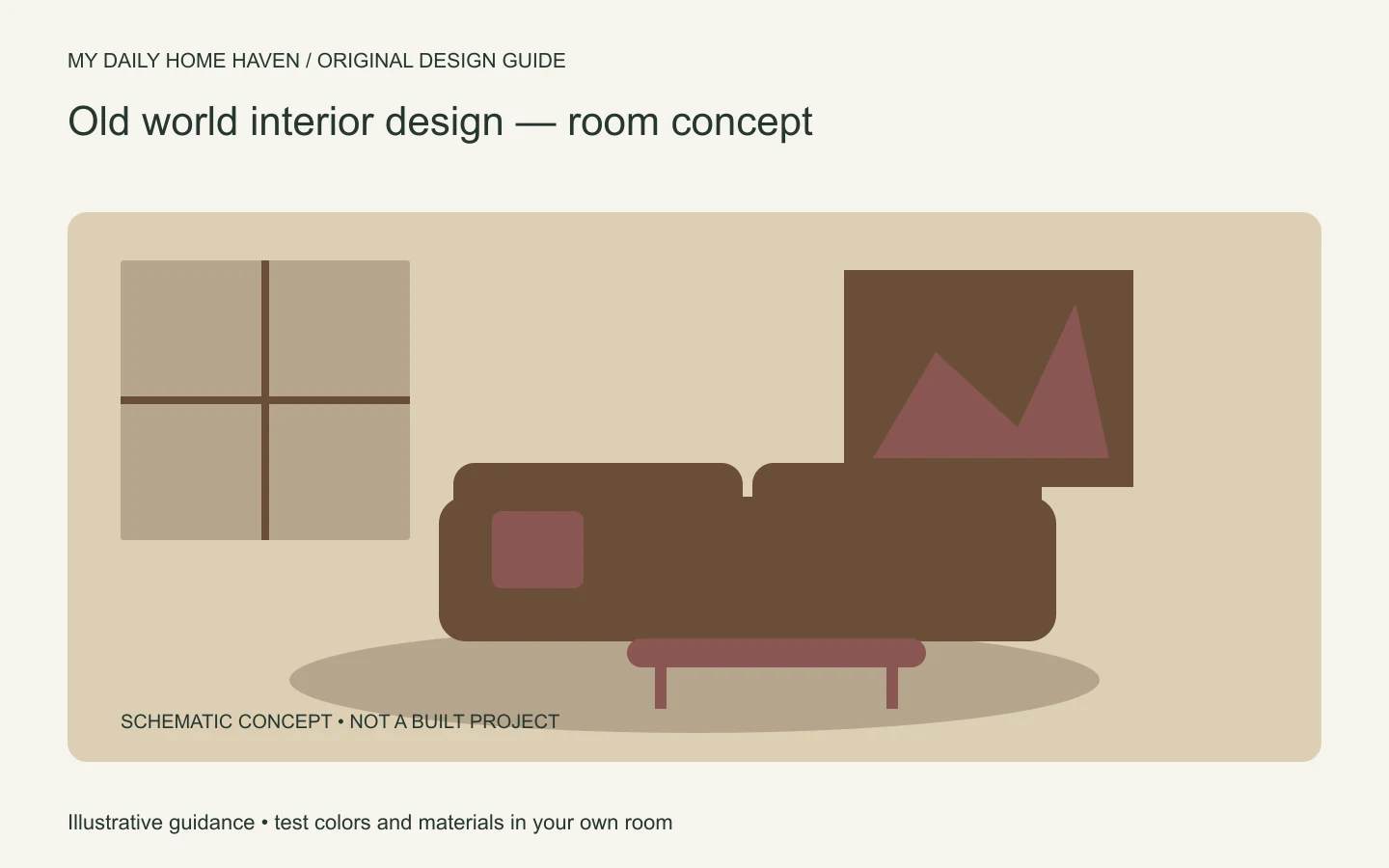
Warm timber, textured walls, stone, patterned rugs, and older furniture can contribute. You do not need all of them, and you do not need to make a newer house look artificially ancient. Our interior design aesthetics guide helps separate this approach from more specific regional styles.
Old World Interior Design: Choose Details with Context
Old world interior design is a broad decorating label, not one fixed historical style. Identify the specific period or regional reference you mean, then use durable materials and a small number of aged or handcrafted details. Keep modern lighting, comfortable seating, and clear circulation in the plan; patina should add depth, not imply that every object is antique.
Choose a reference rather than a generic age effect
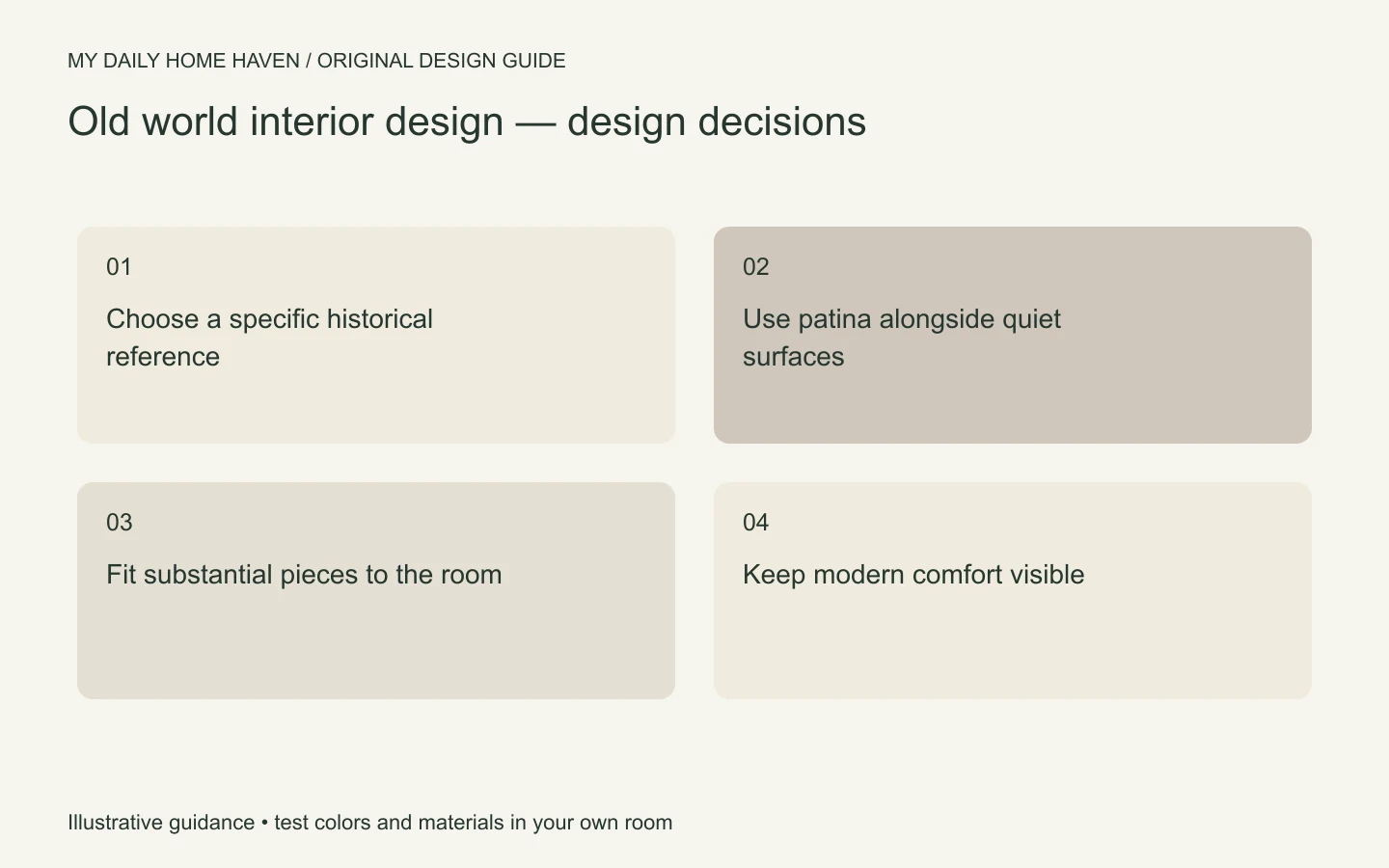
Decide what you admire: the restrained furniture of a particular room, a stone-and-plaster material combination, or the craftsmanship of an older cabinet. A specific reference gives you better direction than buying anything described as antique-looking.
The National Trust’s interior design history overview demonstrates how different historical rooms can be. Use it to recognize distinctions rather than merging centuries of architecture into one decorative formula.
Describe your adaptation honestly. A room with new furniture and a textured paint finish can be historically inspired without being a restoration. That distinction is especially important when discussing old buildings or valuable objects.
Work with the architecture you have
Look at ceiling height, window proportions, trim, and the existing floor. A heavy cabinet can overwhelm a small room, while an oversized imitation beam may feel unrelated to the building. The scale of a reference image often matters more than the individual object shown in it.
If your home has genuine older features, document them before making changes. Repair or conservation advice may be more appropriate than replacement. For major work, consult someone qualified to assess the building rather than relying on a decorating photograph.
In a plain modern room, use furniture and textiles to introduce character. A well-scaled wood chest, textured rug, and quieter wall color can suggest depth without unnecessary architectural additions.
Let materials show variation
Timber grain, stone veining, woven fabric, and worn finishes can create richness without many small accessories. Balance them with calmer surfaces so the variations remain readable. If every item has a busy pattern or a distressed finish, the room can become visually noisy.
Choose patina you actually like, and inspect what it represents. Surface wear may be harmless character, but loose joints, water damage, or unstable veneer need a different evaluation. Age is not proof of quality or suitability.
Avoid distressing sound furniture simply to make it look old. Existing wear can carry history; manufactured damage is a decorative choice, not a requirement. A clean contemporary piece can provide useful contrast beside a genuine older object.
Build a warm palette without muddying the room
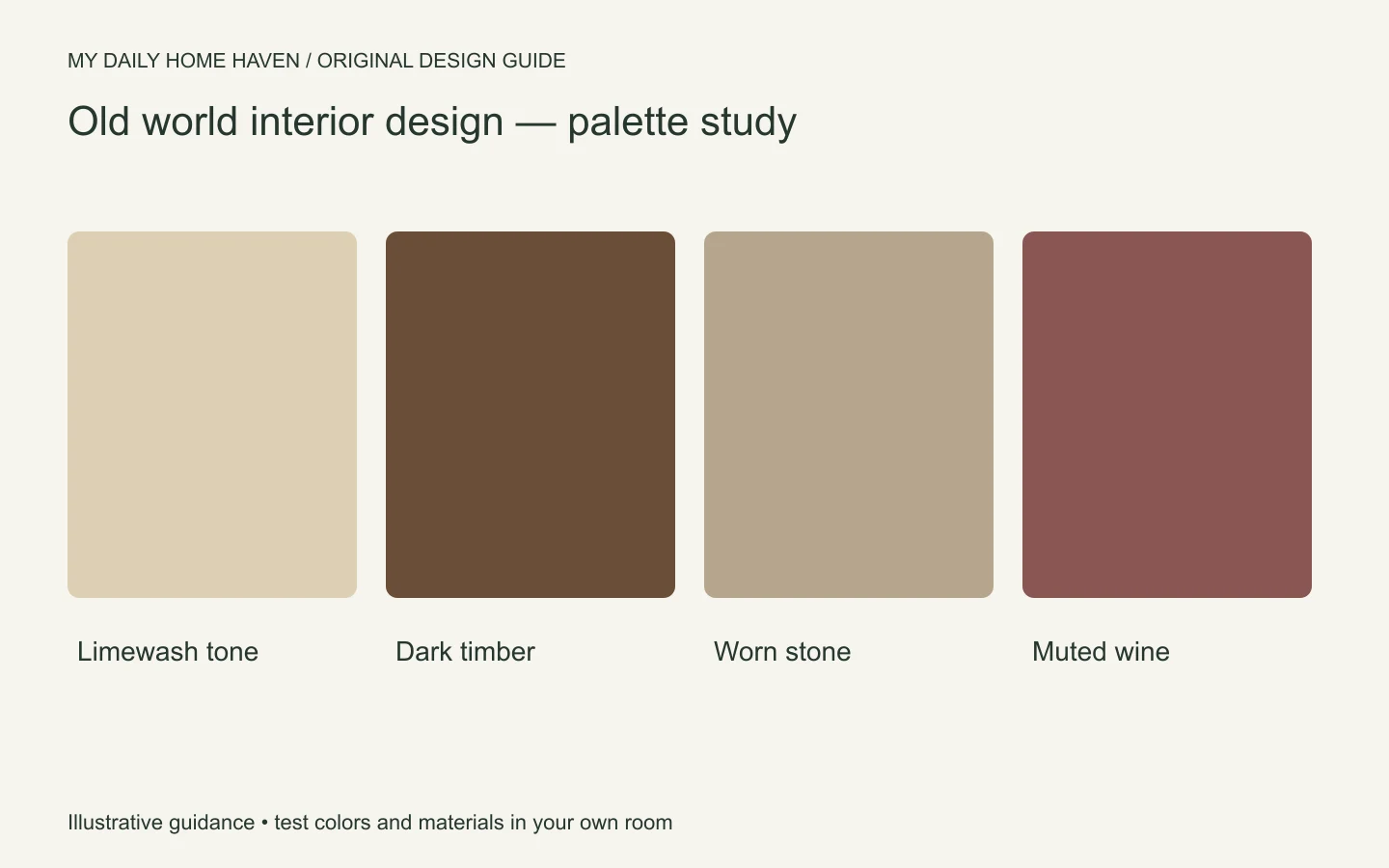
Cream, muted clay, brown, stone, and wine can form a starting palette. Keep enough difference between the floor, walls, and main furniture for each to be visible. Several similar mid-tone browns may merge unless texture or light separates them.
Add a quieter pale textile if the room feels heavy. Alternatively, a deeper accent can define a very light scheme. Test samples beside the existing finishes rather than relying on labels such as Tuscan, aged, or heritage.
Patterns can come from a rug, curtain, or chair. Let one pattern lead and keep the others smaller or quieter. You can achieve a layered effect without repeating ornate motifs on every surface.
Choose antiques and stone for real life
Older storage furniture can be both useful and distinctive. Check drawer access, stability, delivery routes, and the cost of any repair before buying. Ask what the seller can document about age and origin; do not repeat uncertain claims as fact.
Stone also needs a practical assessment. The Natural Stone Institute’s consumer care resources are a useful starting point for questions about cleaning and maintenance. Ask the supplier about your exact stone and finish rather than assuming every natural surface behaves the same way.
For a busy household, a smaller stone-topped side table may be easier to live with than a large delicate surface. The material should fit your tolerance for marks, cleaning, and upkeep as well as the visual scheme.
Keep modern comfort in the plan
Use supportive upholstery, useful task lighting, and accessible storage. A room can refer to older craftsmanship while supporting laptops, reading, and family life. There is no need to hide every sign that people live in the present.
In an illustrative living room, pair a simple sofa with a patterned rug and an older wood chest. Add a reading lamp where it is needed and leave the chest top partly clear. One substantial piece with visible character can do more than a collection of imitation antique accessories.
Check the finished arrangement through a normal week. If the room is difficult to clean or navigate, simplify it. The principles of interior design help assess proportion, balance, and emphasis without making the space rigid.
Budget for repair and fitting
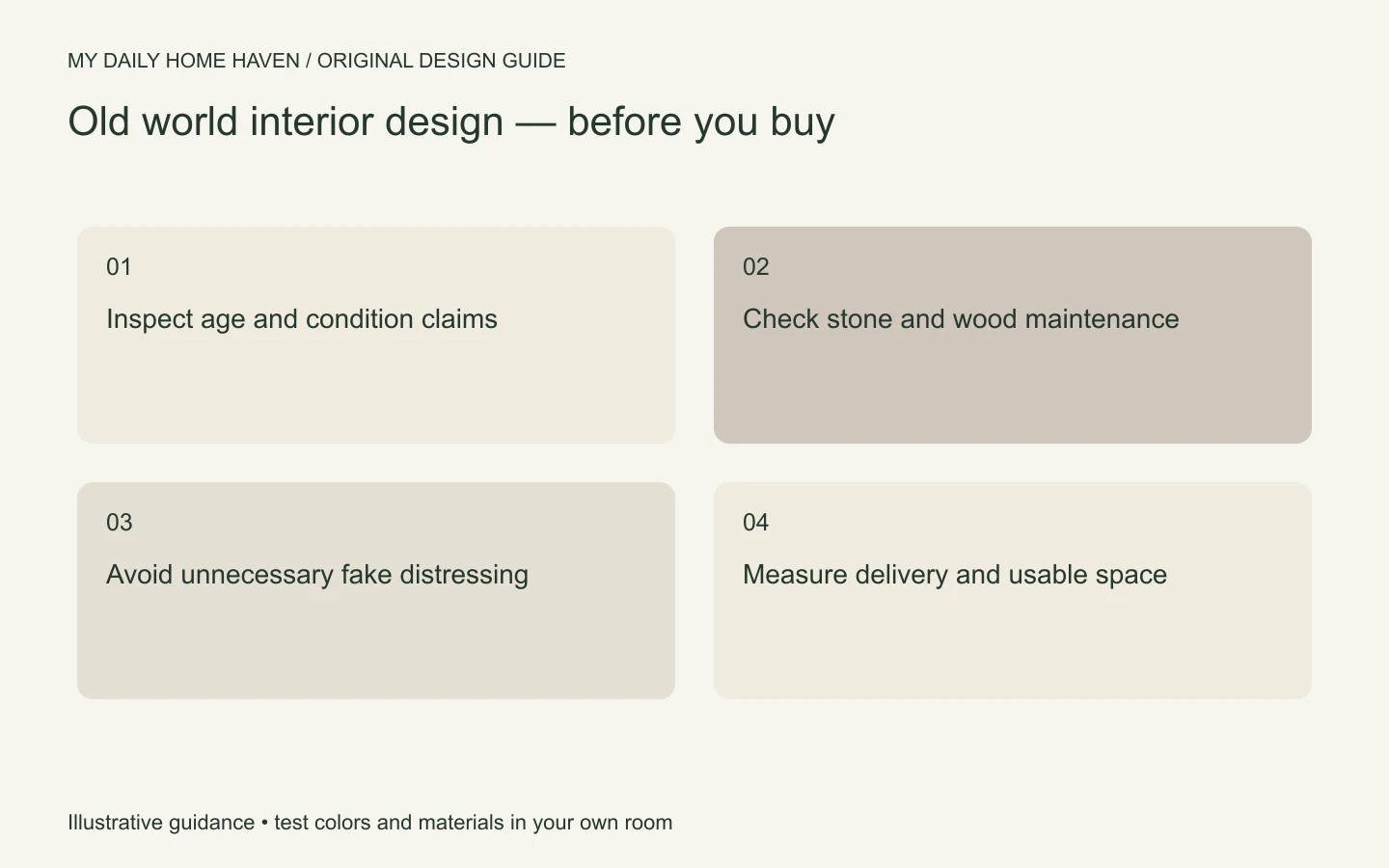
An old world interior design project can involve costs beyond the object itself. Ask about delivery, conservation or repair, suitable wall support, and any fitting needed before approving an older or heavy piece. Keep a simpler alternative on the shortlist if the total becomes unrealistic. You can still create depth through a well-chosen textile or artwork while saving for a more substantial purchase later. Avoid spending the entire budget on a dramatic cabinet and leaving no room for the repairs that make it usable. A smaller sound piece often serves the room better than a larger compromised one.
Frequently asked questions
Is old world the same as traditional style?
They overlap, but old world often emphasizes aged materials and historical atmosphere. Traditional is broader and may include more tailored, polished, or period-specific approaches.
Must I use dark wood?
No. Lighter timber and pale plaster-like colors can work. Choose contrast and material relationships that suit your room rather than treating darkness as proof of age.
Can new furniture belong in the room?
Yes. New pieces can provide comfort, storage, and a quieter contrast. Coordinate scale and materials while allowing the older pieces to retain their individual character.