

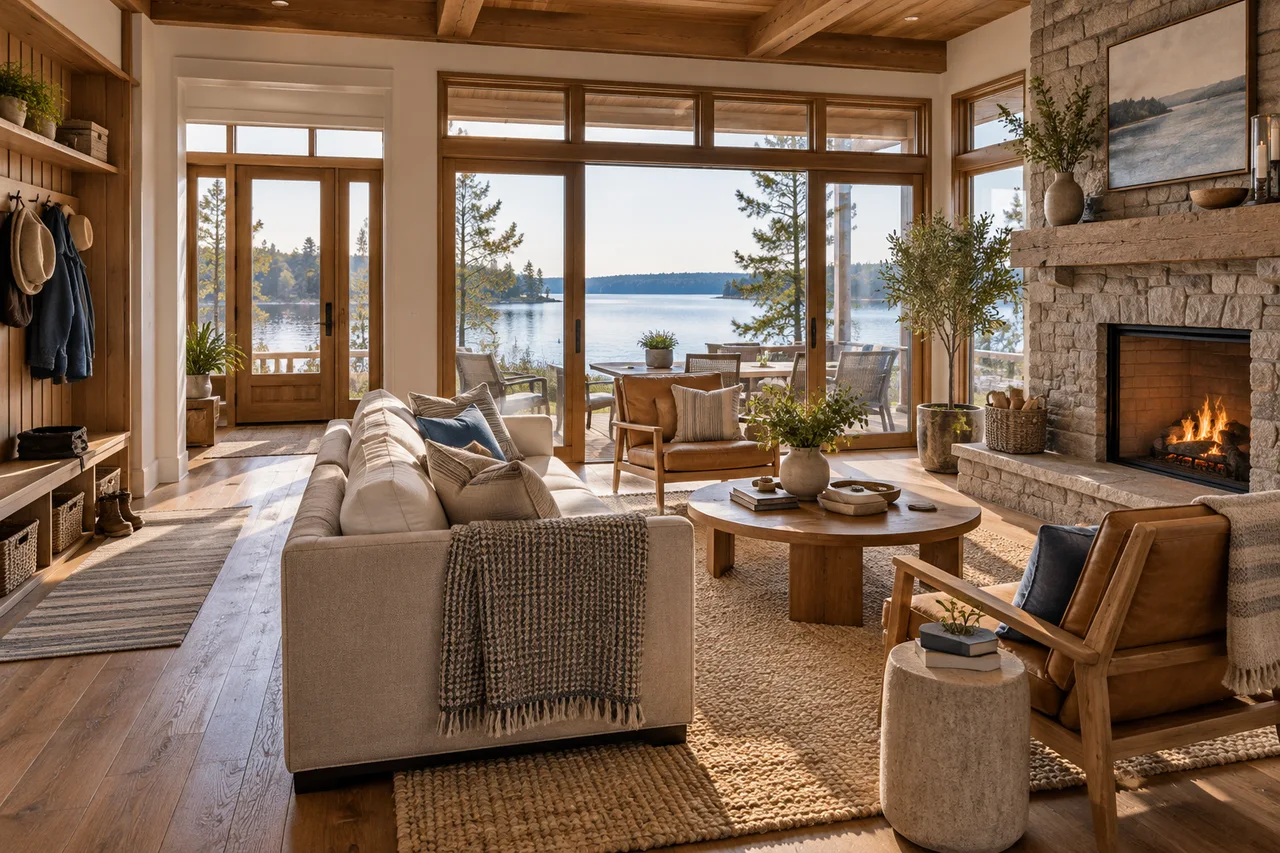
Lake house interior design ideas work best when they respond to how the property is used. Start with arrivals, outdoor gear, meals, quiet evenings, and guests. Then arrange seating and storage around those routines and the view. A relaxed retreat should remain practical when the weather changes or several people arrive with bags.
Describe the real visit
Record whether the home is occupied year-round, used on weekends, or shared with guests. Include the number of people arriving together and the belongings they bring. A room furnished for two quiet residents may not handle a family weekend without adjustments.
List the activities that need space: eating, reading, games, remote work, and storing outdoor items. Rank the daily needs before occasional gatherings. This makes it easier to choose which furniture deserves a permanent place.
Use our space planning interior design guide to draw the actual room. This guide adds lake-house considerations without treating every waterfront property as the same building or climate.
Begin lake house interior design ideas at the entrance
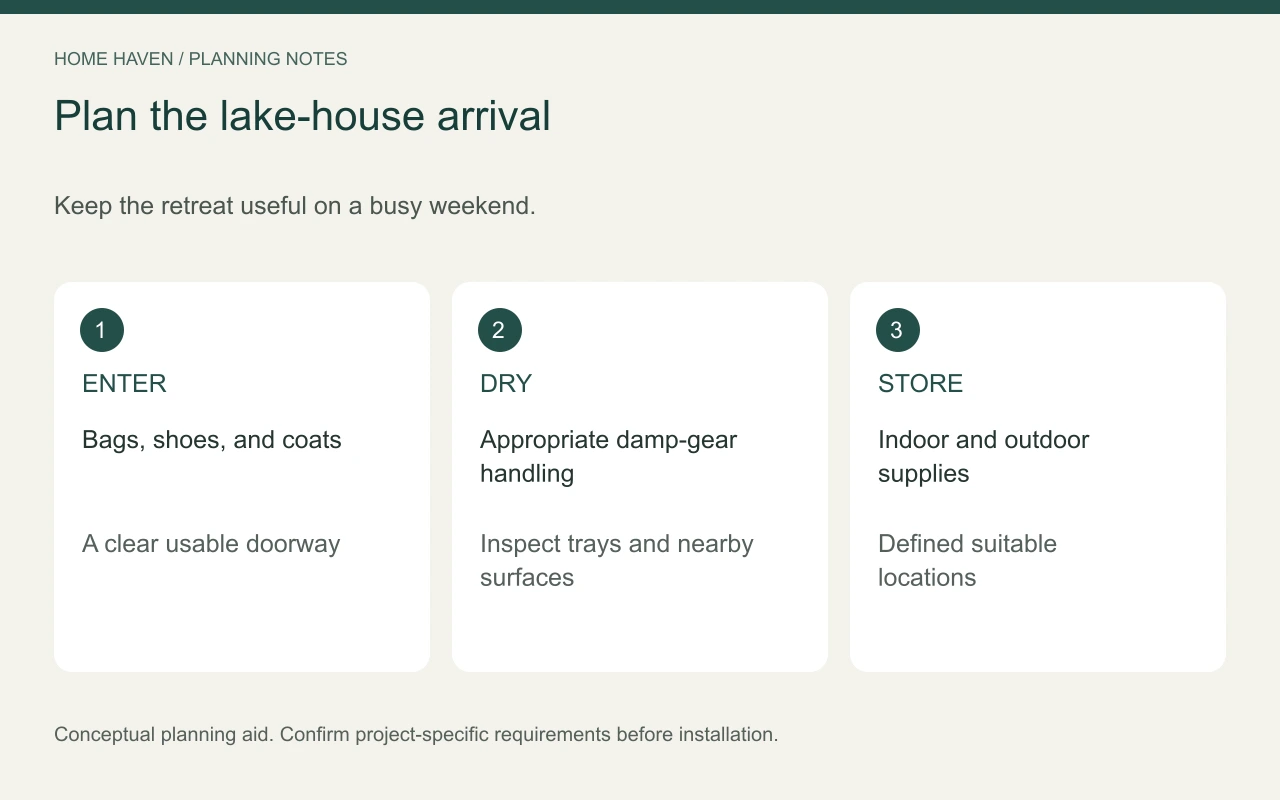
Identify the door people use after outdoor activities. Give shoes, bags, coats, and relevant equipment defined places near that arrival point. Keep storage outside the door’s operation and essential route.
Plan how damp belongings will be handled and dried appropriately. A decorative basket is not a complete care process. Review the floor beneath trays or stored gear and keep the arrangement inspectable.
Separate indoor and outdoor supplies
Decide which items belong inside the living space and which need another suitable storage location. Do not fill the sitting room with equipment simply because it is near the outdoor door. A useful transition reduces repeated cleanup and clutter.
Enjoy the view without sacrificing the room
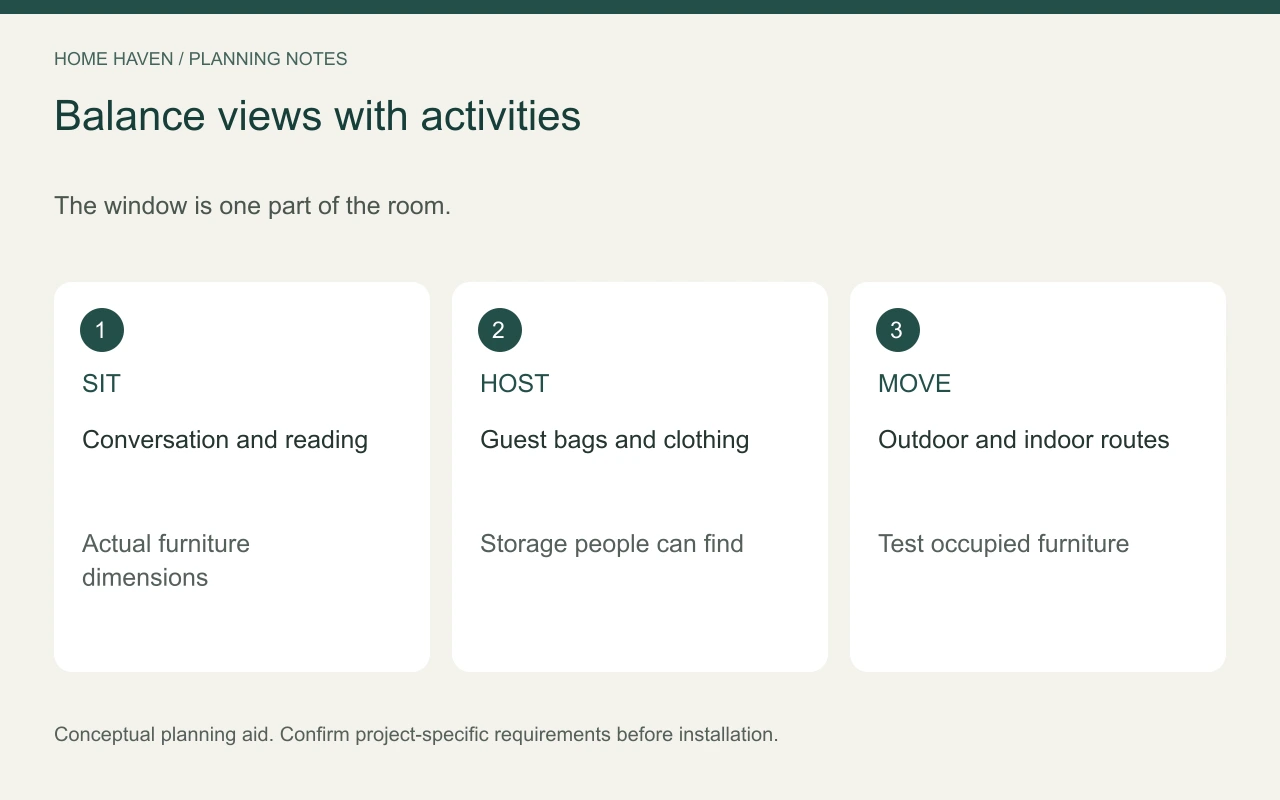
Choose the main activity before facing every seat toward the window. Conversation, reading, and watching the landscape can share a room when the furniture has a useful relationship. A view alone does not decide where every item belongs.
Keep access to windows, doors, and treatments practical. Check the room with seating occupied and outdoor belongings in use. Avoid placing a deep chair where people must constantly move it to reach the patio.
Compare actual furniture dimensions, including arms and projecting parts. A compact sofa with movable chairs may suit the room better than a large sectional. Test the arrangement at full size before ordering.
Make guest use understandable
Give guests obvious places for luggage, clothing, and chargers. Keep spare linens in a location people can find without searching through private storage. A simple room guide may help in a shared property.
Check bedrooms with bags open and drawers extended. Furniture that fits an empty room can become awkward during a stay. Choose the bed and storage according to the actual room rather than an advertised sleeping-capacity goal.
Use flexible extra seating only when it has a practical storage location. Folding pieces do not save useful space if they remain stacked in the main route. Plan the everyday arrangement first.
Select finishes for the care you can provide
Ask how fabrics, wood finishes, rugs, and flooring clean and maintain. Check the intended use and warranty information. A natural appearance or performance label does not explain every condition the material can tolerate.
Consider removable or replaceable components where they suit the household. Confirm how covers actually clean and whether replacements are available. A product is more manageable when its care fits the people responsible for it.
For lake house interior design ideas, durability should relate to the location. An entry bench and a reading chair face different demands. Specify item by item rather than assuming one material is best throughout the home.
Address moisture and building issues first
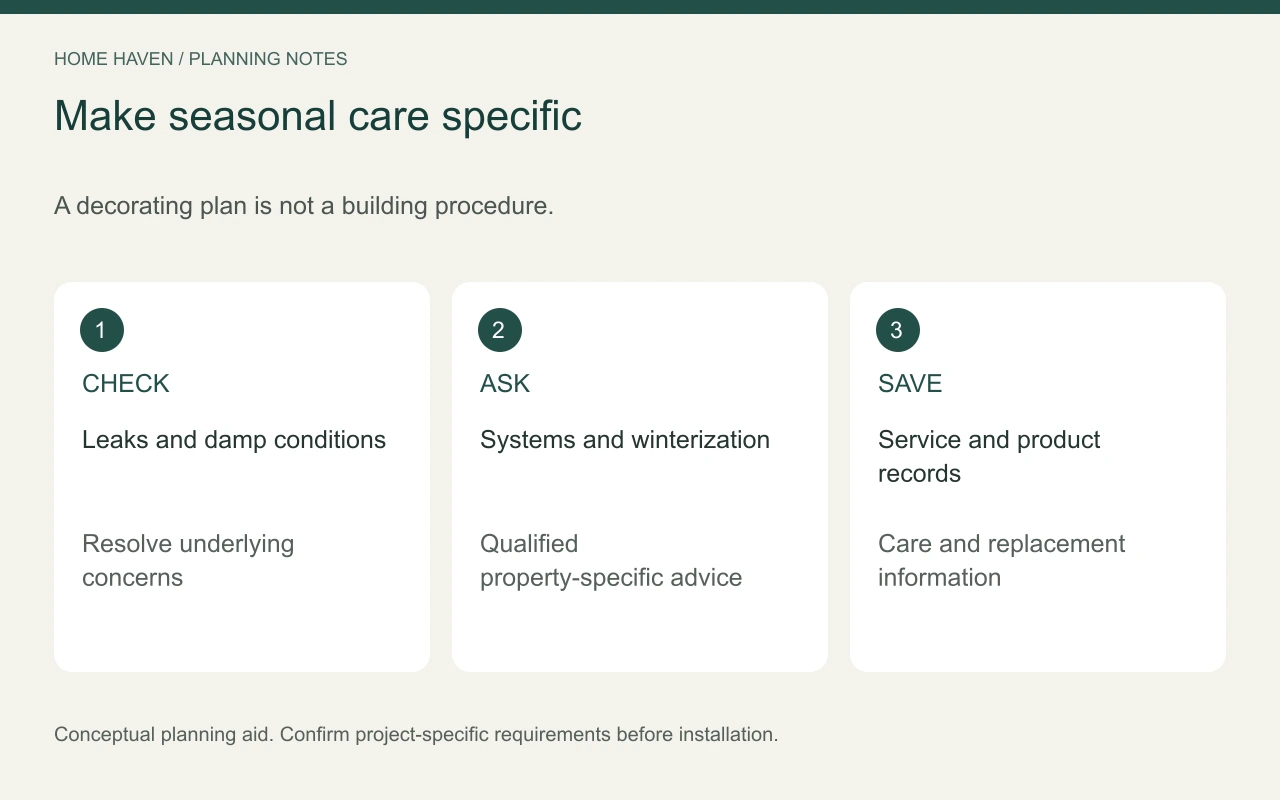
Investigate leaks, damp odors, and persistent condensation before adding new finishes. The EPA’s mold and moisture guide emphasizes resolving moisture sources. Decorating should not conceal an unresolved condition.
Ask appropriate professionals about ventilation, seasonal operation, and building-system needs. A strategy suitable for one property or climate may not suit another. Follow equipment instructions and site-specific advice.
Do not describe ordinary furnishings as flood protection. If the property has storm or flooding exposure, get qualified site-specific guidance for construction and systems. Keep those decisions separate from a decorative refresh.
Plan the evening as carefully as daylight
Review the room after dark. Place useful light at reading seats, games or dining surfaces, and arrival points. A bright window during the day does not replace appropriate evening lighting.
Check controls and cord routes from the final furniture positions. Have permanent electrical work appropriately designed and installed. Avoid requiring someone to cross a dark room to operate a lamp hidden behind furniture.
Choose window treatments for privacy, operation, and the actual exposure. Keep required openings and equipment access usable. Test samples with the existing finishes before making a whole-house order.
Build a seasonal care record
Write down the property’s relevant service contacts, product instructions, and inspection routines. Ask the responsible professionals about shutdown or reopening procedures where applicable. Interior styling alone cannot determine how to winterize building systems.
Compare USD quotes that include delivery access, assembly, removal, and installation where relevant. Confirm the supplier can reach the actual property. Remote delivery conditions can affect the practical purchase even when the furniture itself is suitable.
Before final approval, test:
- Arrival with bags and outdoor belongings.
- Seating and dining in their occupied positions.
- Guest access to storage.
- Evening lighting and window controls.
- Cleaning and seasonal inspection access.
Frequently asked questions
Does a lake house need blue decor?
No. Use colors that suit the light, existing finishes, and household. A connection to the setting can come through views and texture without a compulsory palette.
Is rustic furniture necessary?
No. Choose useful proportions and suitable materials. Modern and older pieces can work together when their functions and scale fit the room.
What should you improve first?
Start with the biggest recurring problem, such as gear storage, crowded movement, or poor evening light. A practical improvement can make the whole visit easier.
Test the retreat in ordinary conditions
Review the room after a busy arrival and during a quiet evening. Keep the pieces and open areas that support those moments. A thoughtful lake house feels ready for a real stay rather than only a sunny photograph.