

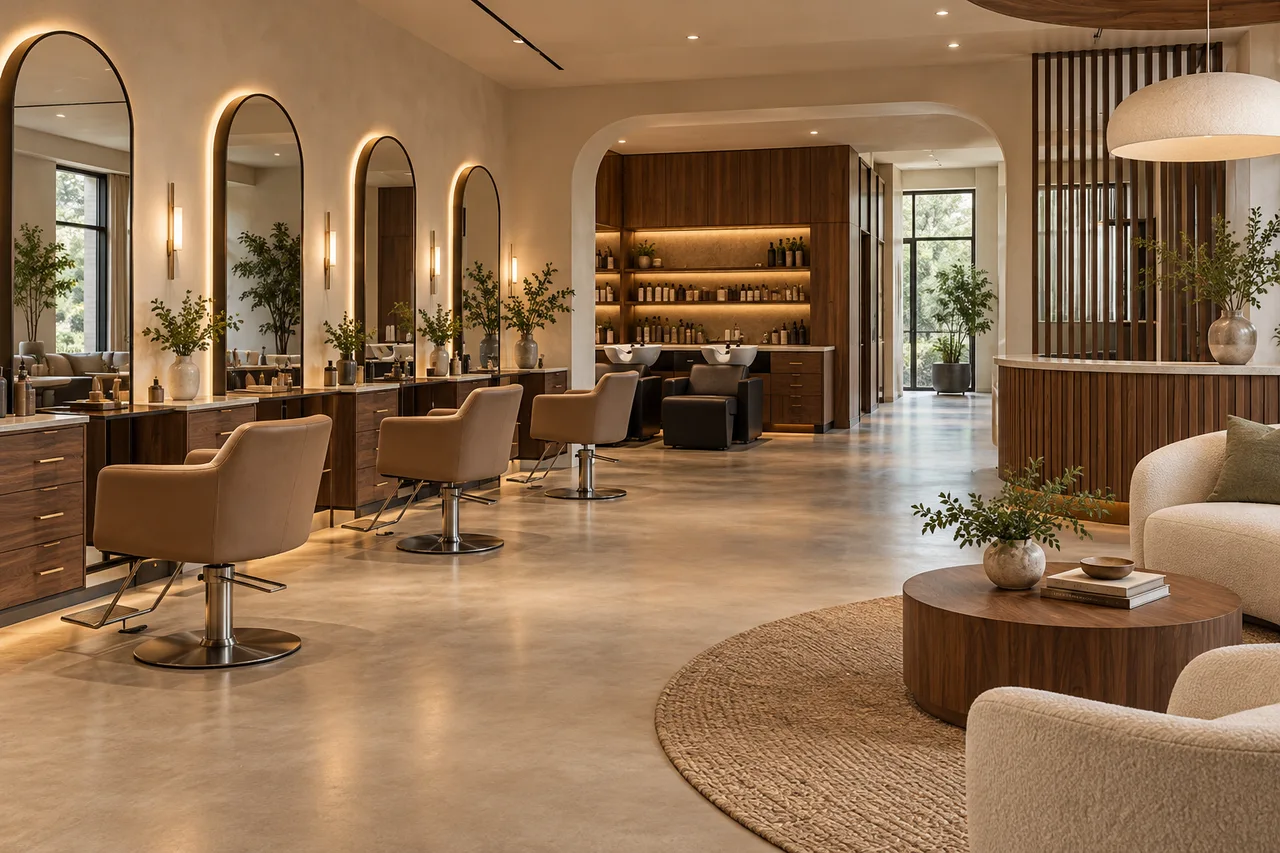
Luxury salon interior design feels refined when the appointment works smoothly and the details support one another. Start with the service, staff movements, and client needs before selecting statement mirrors or expensive finishes. Then develop a coordinated material and lighting plan. A polished salon should remain practical during a busy day, not only in opening photographs.
Define the experience through specific tasks
Describe what a client encounters from arrival to departure. Include consultation, belongings, waiting, the service, payment, and any retail browsing. Identify where the current experience feels rushed, crowded, or confusing.
Ask staff which working conditions need improvement. A more attractive station may still be frustrating if supplies are difficult to reach. Luxury should include useful equipment and dependable support for the people delivering the service.
Use our space planning interior design guide to test furniture and activity space. Our salon interior design guide covers the broader workflow, while this article focuses on refined detailing and consistent operation.
Make luxury salon interior design coherent
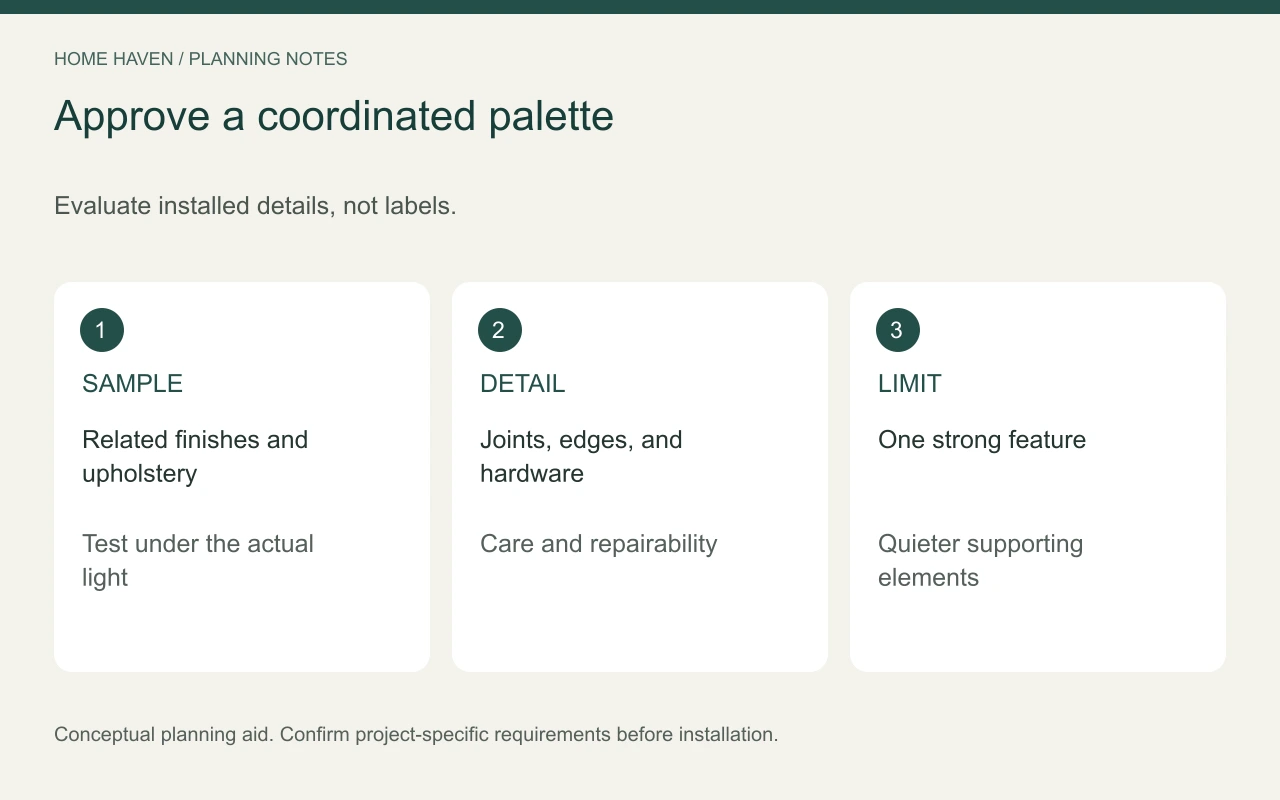
Select a limited palette of materials, colors, and hardware. Repeat those choices across reception, stations, and storage while allowing each area to serve its purpose. Matching every object is less important than related proportions and a clear visual order.
Compare real samples under the proposed lighting. A metallic trim, wood finish, and upholstery fabric can look different beside one another than on separate screens. Review them as an installed group.
Choose one strong feature
An expressive mirror wall or carefully detailed reception point can establish character. Let supporting elements remain quieter. Several competing focal points may make a small room feel busier rather than more considered.
Refine the station around the appointment
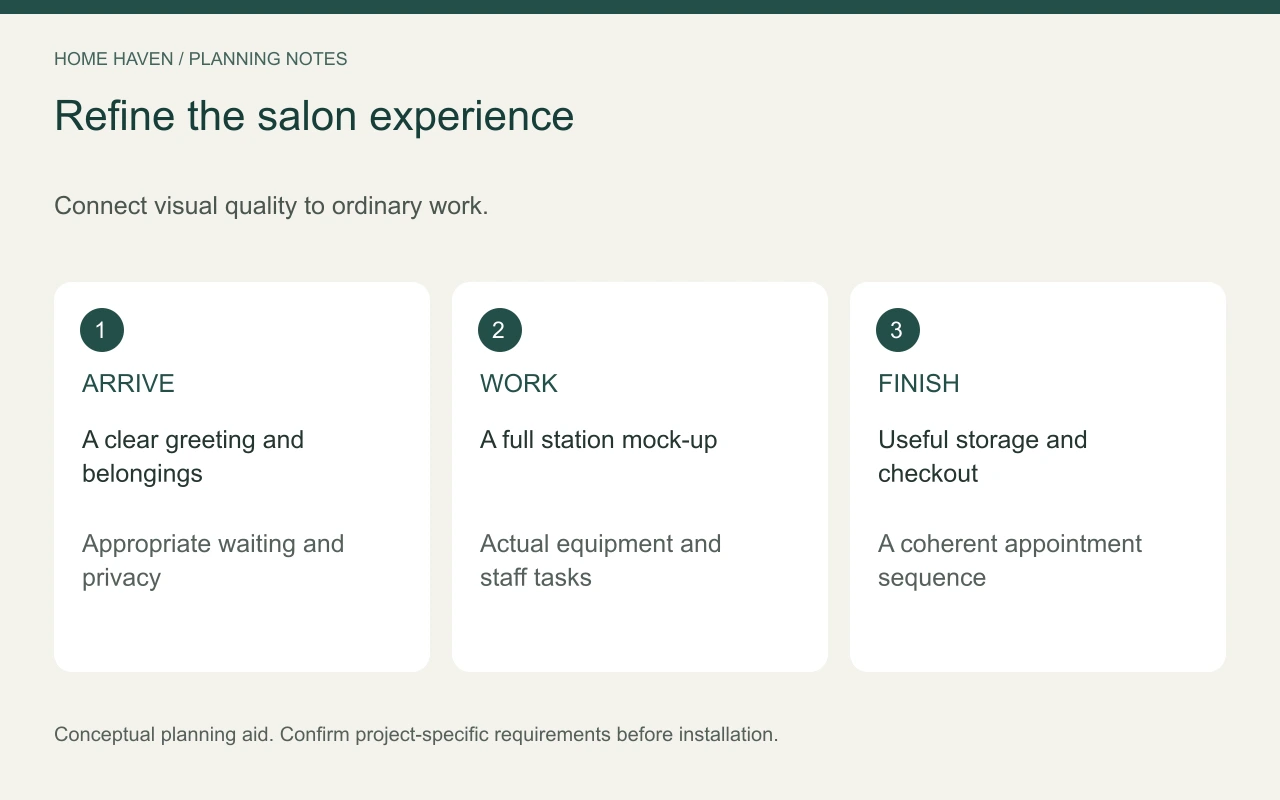
Use actual chair, mirror, trolley, equipment, and supply dimensions. Include staff movement and the client’s belongings in the mock-up. Check the station while cabinets are open and tools occupy the intended surface.
Ask the stylist to simulate ordinary tasks before ordering several stations. A generous counter is useful only if its location supports work. Avoid placing decorative objects on the area needed for service.
Confirm equipment adjustment, maintenance, installation, and replacement needs. A premium appearance is not proof of appropriate working function. Keep manufacturer information and relevant professional assessments in the purchasing record.
Make arrival comfortable without oversizing it
Provide a clear greeting point and appropriate waiting seats. Decide where coats, bags, and other belongings go. Keep reception furniture outside the entrance and main service routes.
A restrained checkout arrangement can feel refined when the equipment, privacy needs, and storage are well resolved. A large desk may reduce useful space without improving the interaction. Test the actual tasks before choosing its scale.
Review consultation privacy and the transition to service. A client should not need to stand in another station’s working area to discuss an appointment. Operational clarity contributes to a more considered experience.
Layer lighting without losing working visibility
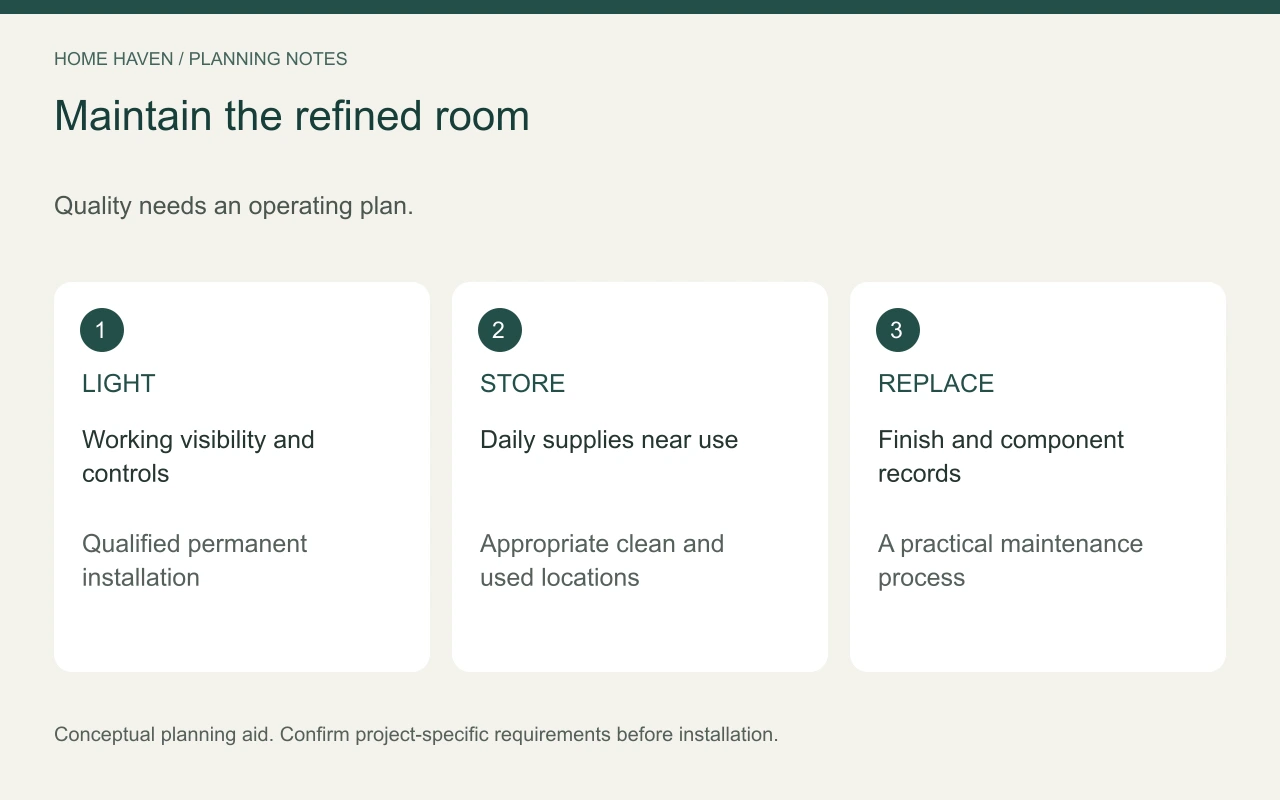
Coordinate station lighting, general room light, reception tasks, and cleanup. Test mirrors and finish samples from client and staff positions. Decorative pendants should support the concept without becoming the only useful light.
Check glare, shadows, and reflections in the actual arrangement. A strongly reflective finish may complicate visibility even when it looks attractive. Have appropriate lighting and electrical professionals review permanent work.
For luxury salon interior design, useful controls matter as much as fixture appearance. Staff need to understand which lights serve each task. Include maintenance and replacement components in the specification.
Select finishes through the care process
Ask whether counters, chairs, floors, and cabinetry tolerate the intended cleaning and product exposure. Review instructions and samples rather than relying on a luxury label. Some attractive materials may suit reception but not an active station.
Pay attention to edges, seams, joints, and access beneath furniture. Fine detailing becomes more useful when it remains cleanable and repairable. Confirm how damaged components can be replaced.
The OSHA hair-salon guidance also highlights product-related workplace concerns. Coordinate necessary controls and technical needs with qualified professionals; an elegant finish package does not establish suitable working conditions.
Use storage to protect the visual order
Inventory what each area needs daily and what belongs in reserve storage. Keep frequently used supplies conveniently placed. Otherwise, staff may leave them on the decorative surface the design intended to keep clear.
Plan appropriate locations for clean items, used items, cleaning supplies, and waste according to the operation’s procedures. Coordinate doors and drawers with occupied workstations. Closed fronts do not solve an inconvenient storage location.
For glamorous luxury beauty salon interior design, avoid letting ornament compete with these practical functions. A clear surface and well-detailed storage can contribute more than another decorative accessory.
Budget for the complete installed quality
Compare itemized USD proposals that include furniture, relevant building work, installation, delivery, samples, and care assumptions. Ask which details are included and which remain allowances. A high product price alone does not describe the installation quality.
Approve a trial or sample detail before repeating custom work. Confirm finish, hardware, dimensions, and responsible installers. Record changes so procurement and installation teams work from the same information.
A final review can ask:
- Does the appointment sequence work?
- Can staff use and maintain every station?
- Do actual samples coordinate under the light?
- Are technical requirements resolved?
- Can worn components be repaired or replaced?
Frequently asked questions
Does a luxury salon need expensive stone?
No. Choose materials for their suitability, detail, care, and visual relationship. A restrained, well-installed finish can serve better than a delicate expensive surface.
Can a small salon feel high-end?
Yes. Appropriate proportions, a limited palette, thoughtful lighting, and a calm working arrangement can make a modest room feel considered.
Should you buy decor before equipment?
Confirm essential equipment and the layout first. Decorative purchases should fit the tested plan rather than consume the space and budget it needs.
Keep the quality consistent in use
Review the room during appointments, cleanup, and restocking. Adjust details that create clutter or unnecessary effort. A refined salon earns its atmosphere through the way the whole appointment works.