

An interior design receiving warehouse accepts project deliveries and provides agreed services before items reach the property. Depending on the provider and contract, those services may include inspection, documentation, storage, consolidation, and final delivery. Define exactly what is included before shipping purchases there. Receiving is a coordinated project service, not simply an empty place to leave boxes.

Understand the service you actually need
List the items ordered, suppliers, delivery methods, expected arrival periods, and installation date. Include fragile pieces, unusually large items, and anything requiring special handling. A receiver needs useful information before freight arrives.
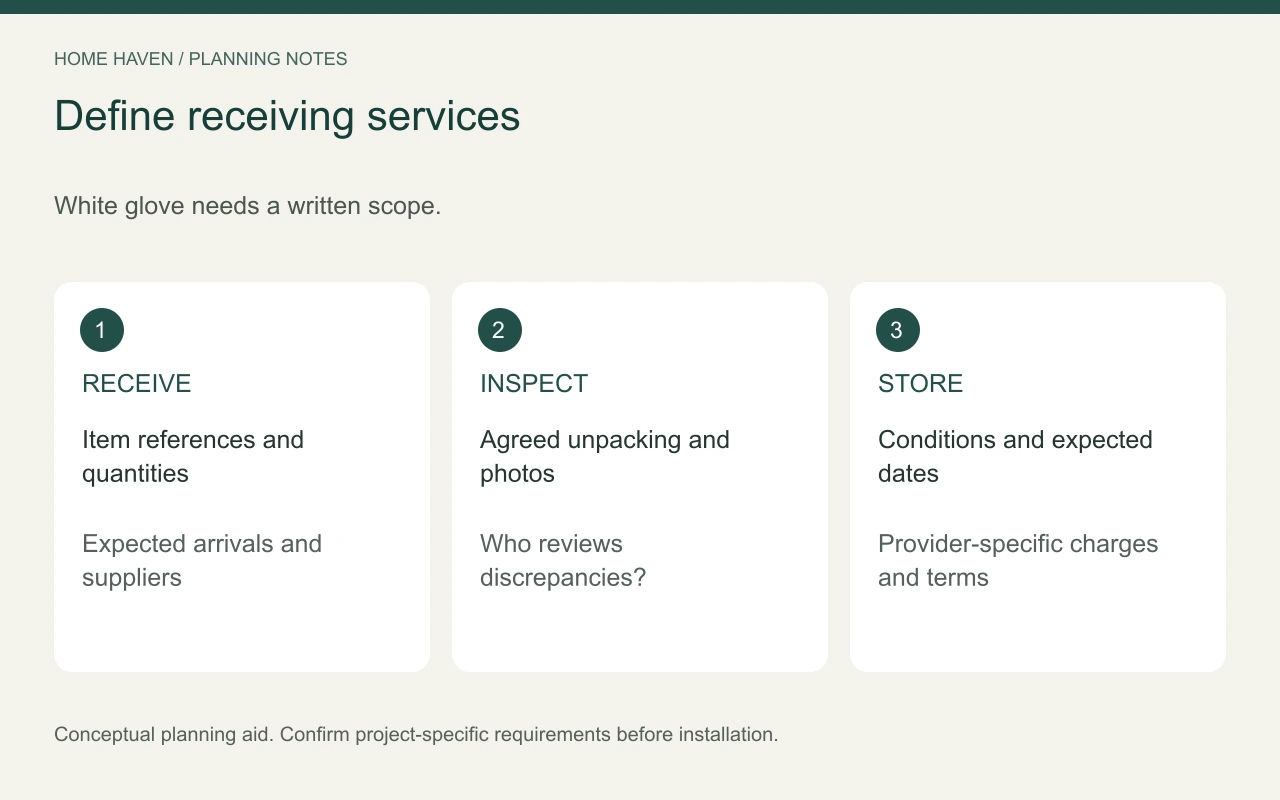
Identify which services the project requires. Some providers inspect only external packaging unless instructed otherwise; others offer specified unpacking and condition reporting. Do not assume every receiving arrangement includes assembly or installation.
For an example of how a provider describes its own service, see Hilldrup’s interior design receiving and delivery information. Use provider descriptions to form questions, not as proof that every warehouse offers the same terms.
Choose an interior design receiving warehouse by scope
Ask where items will be received and stored, who handles them, and how the project is identified. Confirm service coverage for the final address. A nearby building may not provide the handling or delivery arrangements the project needs.
Review inspection, photography, inventory, storage, delivery, and installation as separate tasks. Ask which the quote includes and which need additional authorization. A label such as white glove should not replace a written service description.
Our space planning interior design guide helps establish final furniture locations. Share the approved layout and delivery constraints with the receiving and installation team when relevant.
Agree on inspection before the first shipment
Confirm which packaging is opened, how condition is recorded, and what happens when damage or a discrepancy appears. Ask how quickly the project team receives a report. The appropriate process depends on the purchase and service agreements.
Document who decides whether to accept, hold, return, or further inspect an item. Review vendor and carrier terms with the responsible parties. Do not assume the receiver automatically manages or resolves every claim.
Keep purchase orders, item descriptions, finish information, and quantities organized. A clear reference makes it easier to distinguish similar cartons. Ask the provider how it handles deliveries that arrive without adequate identification.
Make inventory understandable
Request a record that identifies each item and its project status. Useful information may include arrival, inspection findings, location, and readiness for delivery. Confirm the actual reporting method rather than assuming a particular software platform.
Choose who reviews the records and reports discrepancies. An inventory system is only helpful when the project team uses it. Keep updates tied to the same item references used in purchasing.
Distinguish received from ready
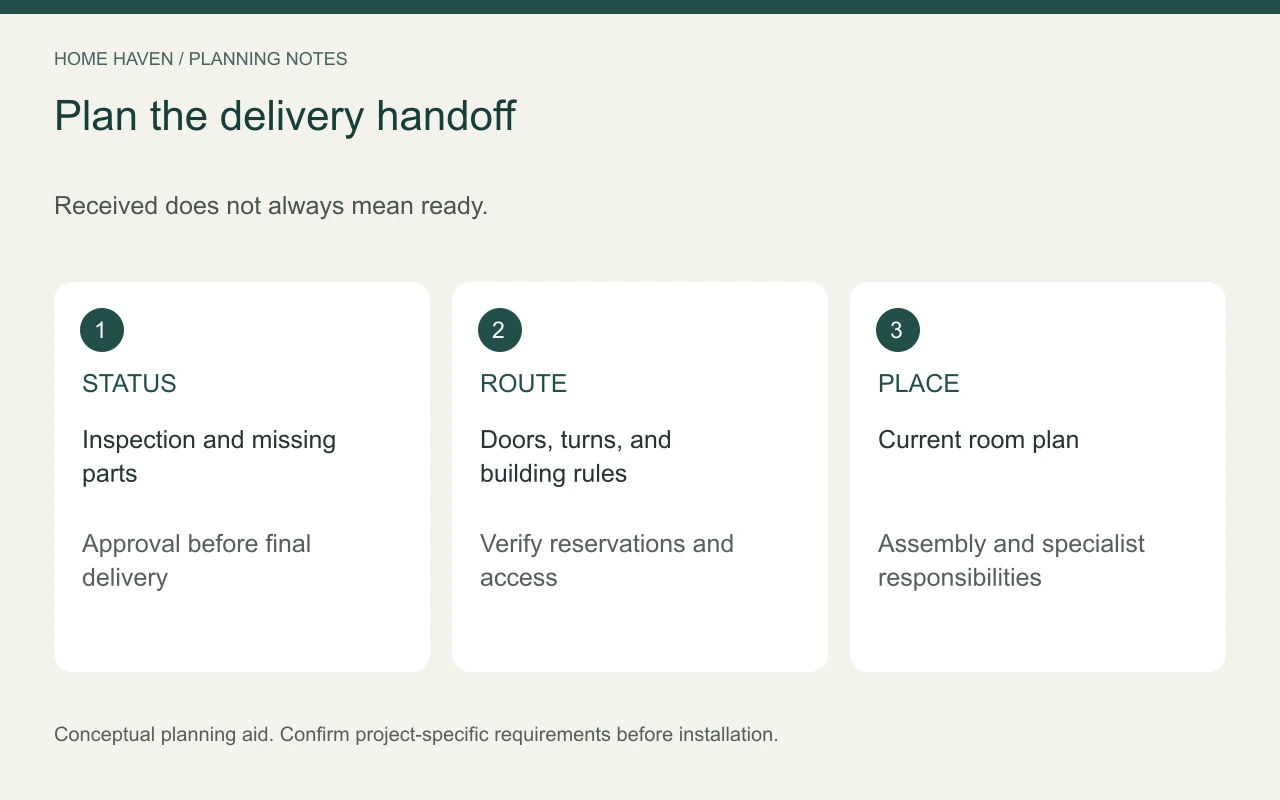
An item can arrive without being ready for installation. It may need inspection, a missing component, an approved repair, or another decision. Ask for statuses that reflect the actual process rather than treating every delivery as complete.
Review storage conditions and charges
Discuss conditions appropriate to the items and the provider’s service. Ask about access, handling, security arrangements, and any limitations. Do not infer climate control or specialist care from the appearance of warehouse shelving.
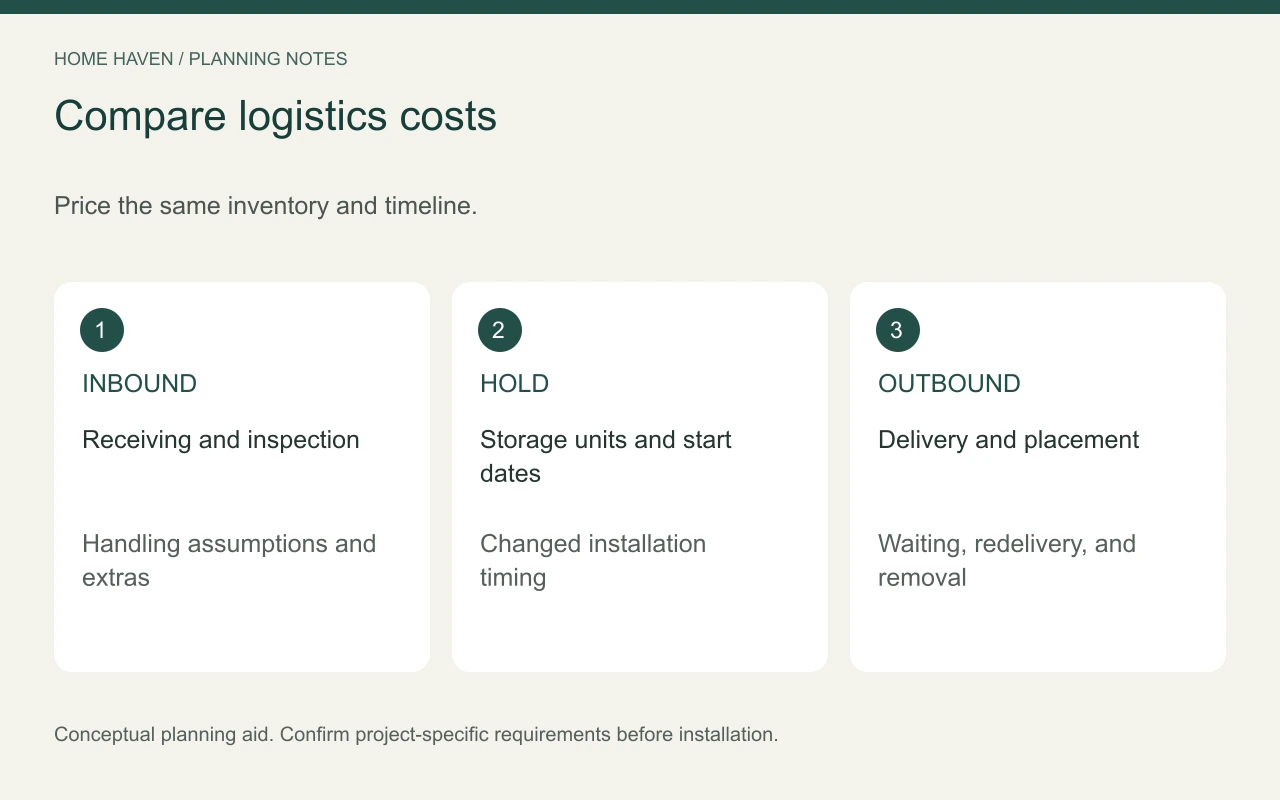
Understand when storage charges begin and how they are calculated. Providers may use different units and minimums. Compare itemized USD terms for the expected holding period and ask what happens if the installation date moves.
Review the agreement’s responsibility and insurance provisions with the appropriate advisers where needed. Confirm what is covered, excluded, or subject to a separate process. Marketing language alone does not define the allocation of risk.
Coordinate the final delivery route
Measure the route into the property and share relevant building procedures. Include doors, turns, elevators or stairs, delivery reservations, and work-hour limits where applicable. Confirm who obtains any necessary permissions or documentation.
Ask how the delivery team handles unpacking, placement, assembly, attachment, and packaging removal. Those are different tasks and may not all be included. Specialist installation should be assigned to appropriately qualified providers.
For an interior design receiving warehouse near me search, compare the entire route and scope rather than distance alone. A closer warehouse can still be unsuitable if it does not serve the final delivery requirements.
Prepare the property and layout
Confirm that the rooms and required works are ready before scheduling final placement. Delivering furniture into an unfinished space can create repeated handling and protection needs. Coordinate the date with the responsible project parties.
Provide a clear placement plan and identify who can approve decisions on site. Label rooms in a way the team can understand. Avoid asking installers to infer locations from a mood board.
Check the plan against current product dimensions. Substitutions can affect fit and delivery even when they look similar. Inform the receiver and installation team about relevant changes before the truck is loaded.
Compare the full logistics price
Request separate information for receiving, inspection, storage, redelivery, installation, and other stated charges. Ask about additional handling, failed delivery, waiting time, and changed dates. Compare scenarios using the same item list.
A receiving brief can include:
- Project address and named decision-makers.
- Purchase-order and item information.
- Agreed inspection and reporting scope.
- Storage assumptions and expected dates.
- Delivery route and building procedures.
- Placement, assembly, and final sign-off responsibilities.
Frequently asked questions
Is a receiving warehouse always necessary?
No. It depends on purchases, delivery timing, property readiness, and the services needed. Compare direct delivery with a receiver using the complete project requirements.
Does receiving include damage claims?
Only if the agreement provides that service. Confirm documentation and responsibility before shipping items.
Can the receiver install every item?
Do not assume so. Ask exactly what installation means and assign specialist work appropriately.
Make the handoff explicit
Agree on services, records, charges, and responsibilities before the first delivery. Keep the receiver informed as the project changes. A well-planned logistics process connects purchasing decisions to the room where each item will finally be used.