

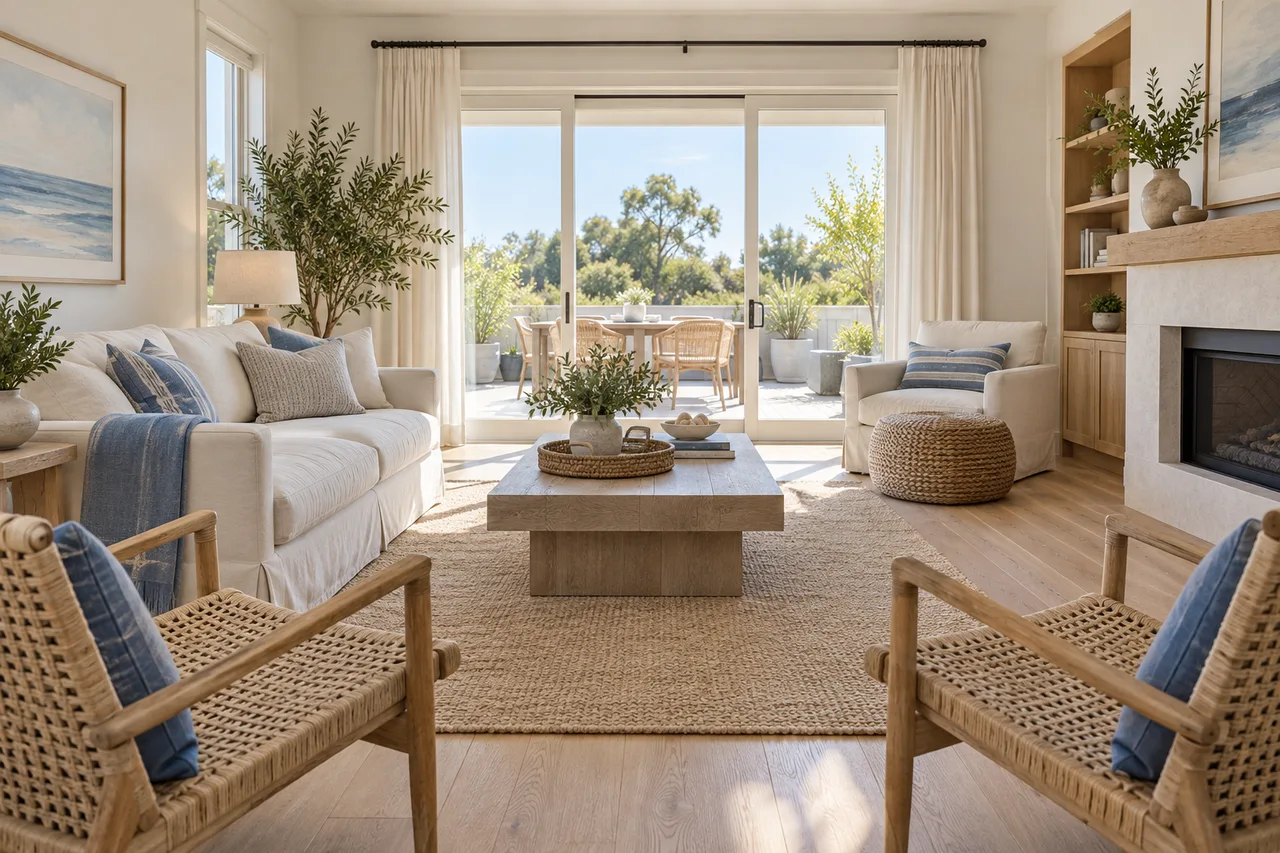
Beach house interior design works best when relaxed style meets the realities of sand, damp gear, sun, and visiting guests. Plan the route from the entrance to the living area and outdoor spaces before choosing decorative accessories. Then select furniture and finishes you can maintain. A coastal room can feel connected to its setting without a collection of nautical props.
Start with how the house gets used
Decide whether the home serves full-time residents, occasional family visits, or short-term guests. The number of people arriving, eating, and sleeping changes what the room needs. List the items that come with them, including bags, beach towels, footwear, and outdoor equipment.
A rental property also needs a clear turnover routine and replacement plan. A personal retreat may prioritize familiar furniture and a smaller guest setup. Neither approach requires filling every room with the largest possible seating arrangement. Match capacity to the building and its actual use.
Begin with the measurements in our space planning interior design guide. This beach house guide focuses on the additional demands of arrival, outdoor access, materials, and seasonal care.
Create an arrival zone for sandy belongings
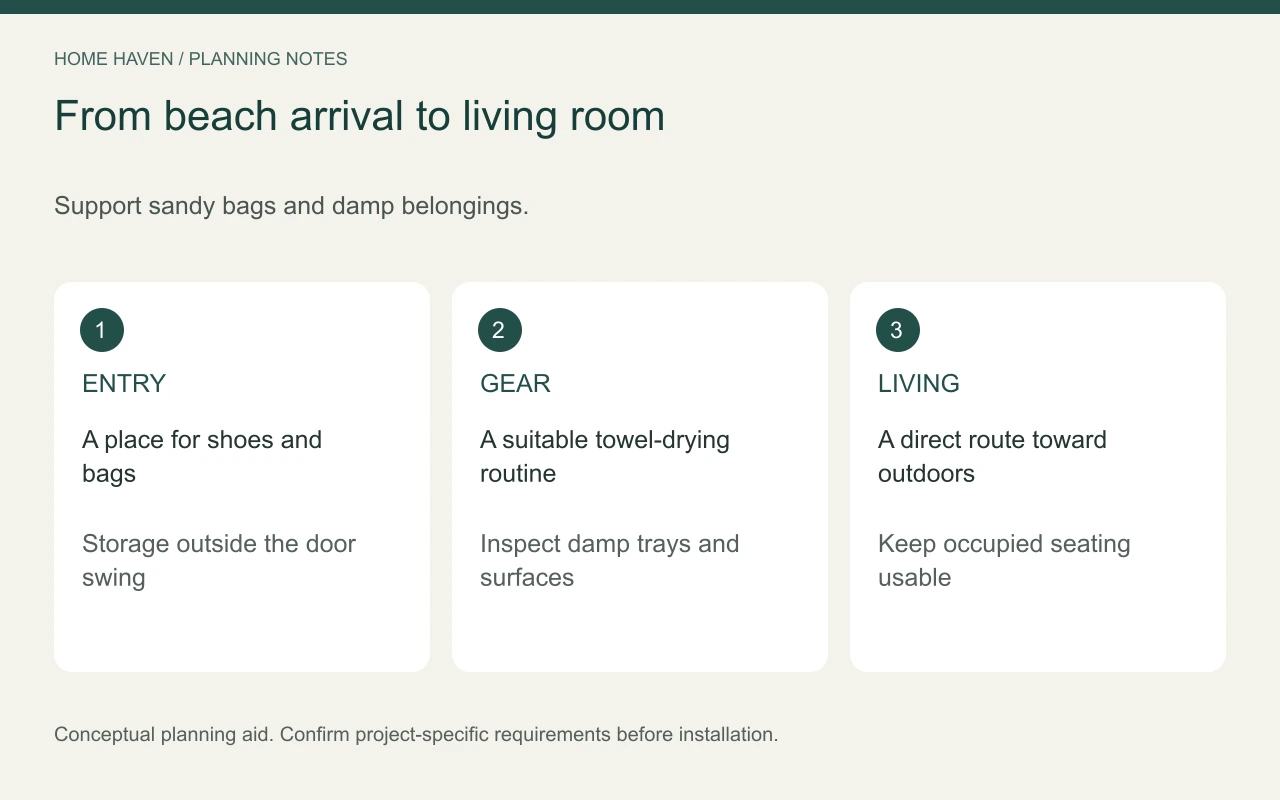
Put a place for shoes and bags near the entrance people actually use. A bench, hooks, and a removable tray may be enough. Check the entrance with the door fully open and someone seated on the bench. Storage should not become a barrier at the busiest point.
Provide a designated place for damp towels that supports drying and cleaning. Do not push wet textiles into a closed decorative basket and forget them. Ask where items will go after a rainy beach day, not just after the ideal sunny visit.
If outdoor access runs through the living room, leave a route that does not cut between the television and seating. Position movable pieces so people carrying bags can pass without shifting a coffee table. A clear route often matters more than an extra occasional chair.
Arrange seating around views and conversation
Choose the room’s main activity before orienting every seat toward a window. If people gather to talk, create a conversation group that also enjoys the view. If the room combines dining and lounging, preserve practical access to both zones.
Use furniture dimensions rather than showroom impressions. A deep sectional can dominate a modest room, while a smaller sofa and movable chairs may adapt to different group sizes. Test chairs in their occupied positions and include access to sliding doors and window treatments.
Keep the outdoor transition usable
Measure the space needed to open doors, operate shades, and move outdoor cushions. Keep indoor rugs and tables from interfering with door operation. Review threshold and access needs with a qualified professional when alterations are involved, especially where accessibility is part of the project.
Ask specific questions about materials
Avoid relying on terms such as coastal, performance, or weather-resistant without reading the product details. Ask what the fabric resists, how it cleans, and what the warranty excludes. Indoor upholstery should not automatically be treated as outdoor furniture.
Consider removable covers when they suit the household and cleaning routine. Check whether covers can actually be washed at home or require professional cleaning. A practical fabric is one whose maintenance you can follow, not simply one marketed with reassuring adjectives.
For wood, metal, and woven pieces, review the manufacturer’s recommended location and care. Salt exposure, moisture, direct sun, and cleaning products can affect finishes differently. Choose based on the conditions in the specific room rather than assuming all natural-looking materials behave alike.

Keep the palette connected and restrained
Start with existing flooring and the light entering the house. Warm whites, sand tones, muted greens, and blues are options rather than rules. Repeat selected colors across a few textiles and accessories, leaving room for personal objects or local artwork.
Add contrast through texture instead of a different coastal motif on every surface. A woven chair, plain curtains, and a textured rug can establish character. Inspect samples in strong daylight and evening light before ordering a whole room.
Avoid treating pale colors as an automatic maintenance solution. A darker accent may suit an entry better, while a washable light cover may work on a sofa. Make the decision item by item and consider who handles cleaning between visits.
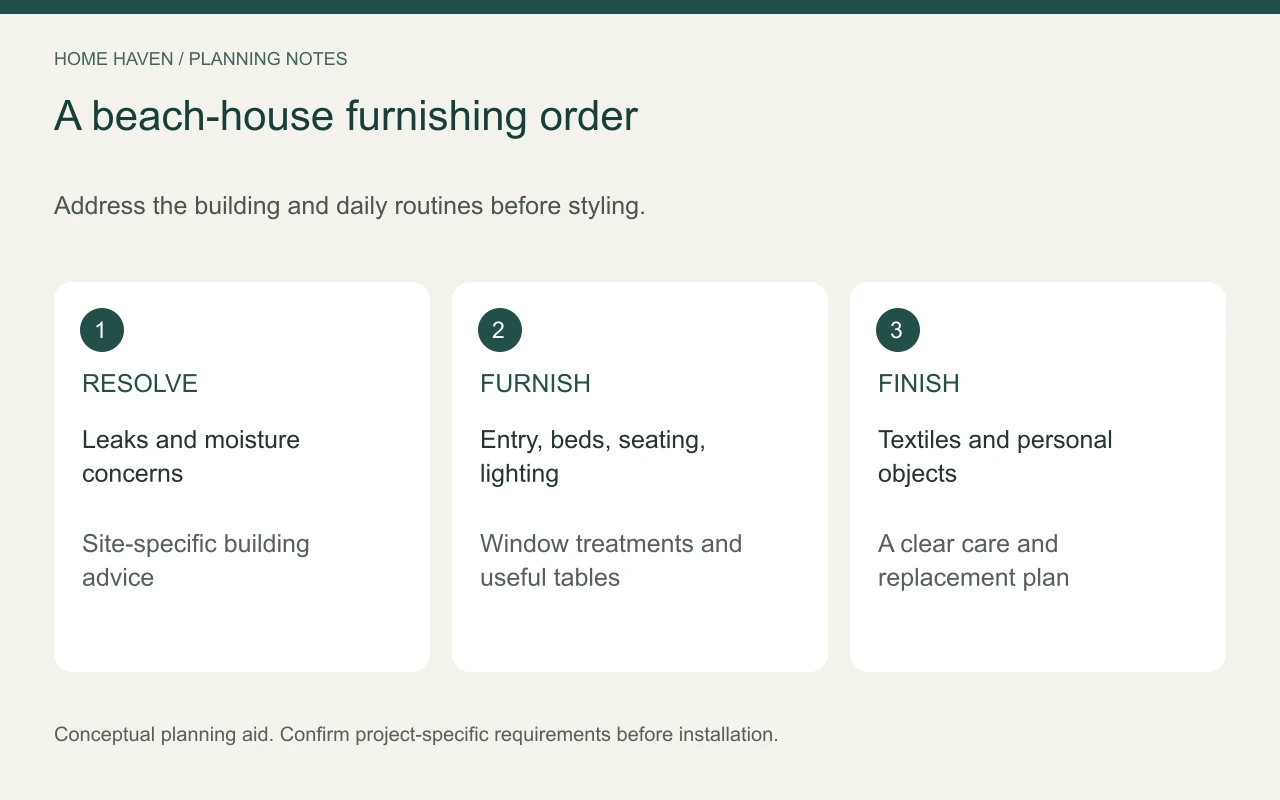
Address moisture before covering surfaces
Investigate leaks, damp smells, and condensation before installing new finishes. The EPA’s mold and moisture guide explains why controlling the source of moisture matters. Decorative wall coverings and fresh paint do not resolve an underlying water problem.
Review ventilation, building condition, and seasonal operation with appropriate professionals. Leaving windows open is not a universal humidity strategy in every coastal climate. Choose procedures that fit local conditions, building systems, and the equipment instructions.
Interior decorating also does not establish flood resilience. If the property faces flooding or storm exposure, get site-specific advice before selecting construction materials or altering building systems. Keep a furnishing refresh separate from claims about structural or flood protection.
Plan bedrooms and shared storage for guests
Give guests obvious places for luggage, clothing, and charging devices. A clear dresser top or luggage bench can keep bags away from walking routes. Label shared storage discreetly so visitors can find spare linens without searching every cabinet.
Choose spare bedding and replacement items with a consistent specification. This makes care easier without requiring every bedroom to look identical. Test the room with a suitcase open and drawers extended; a room that photographs well may still be inconvenient during a stay.
Build a realistic furnishing sequence
Start with entry storage, essential seating, beds, lighting, and window treatments. Then add tables, rugs, and decor. Ask for USD quotes that separate delivery, assembly, removal, and any specialist installation. Check whether the supplier serves the property location before placing the order.
Frequently asked questions
Does a beach house need blue and white decor?
No. Coastal character can come from the setting, relaxed proportions, and natural textures. Choose colors that suit the existing finishes and your preferences rather than following a mandatory palette.
Is outdoor furniture a good choice indoors?
Sometimes, but it still needs to be comfortable, appropriately sized, and suitable for the room. Check floor contact points, upholstery care, and the product’s intended use instead of assuming outdoor means maintenance-free.
What is the most useful small upgrade?
Often it is a better entry routine: a place for bags, shoes, and damp gear that does not obstruct the door. Identify the household’s actual friction point before choosing.
Design for the day after the beach
Imagine everyone returning with towels, bags, and tired feet. Check where belongings land, how people move, and what needs cleaning. A successful beach house interior makes that ordinary moment feel as considered as the view from the sofa.