

Rococo Interior Design combines recognizable colors, materials and furniture details with everyday comfort. This guide explains how to adapt the look to your own home, including living rooms, bedrooms, kitchens and budget-friendly updates.
Understanding the Style
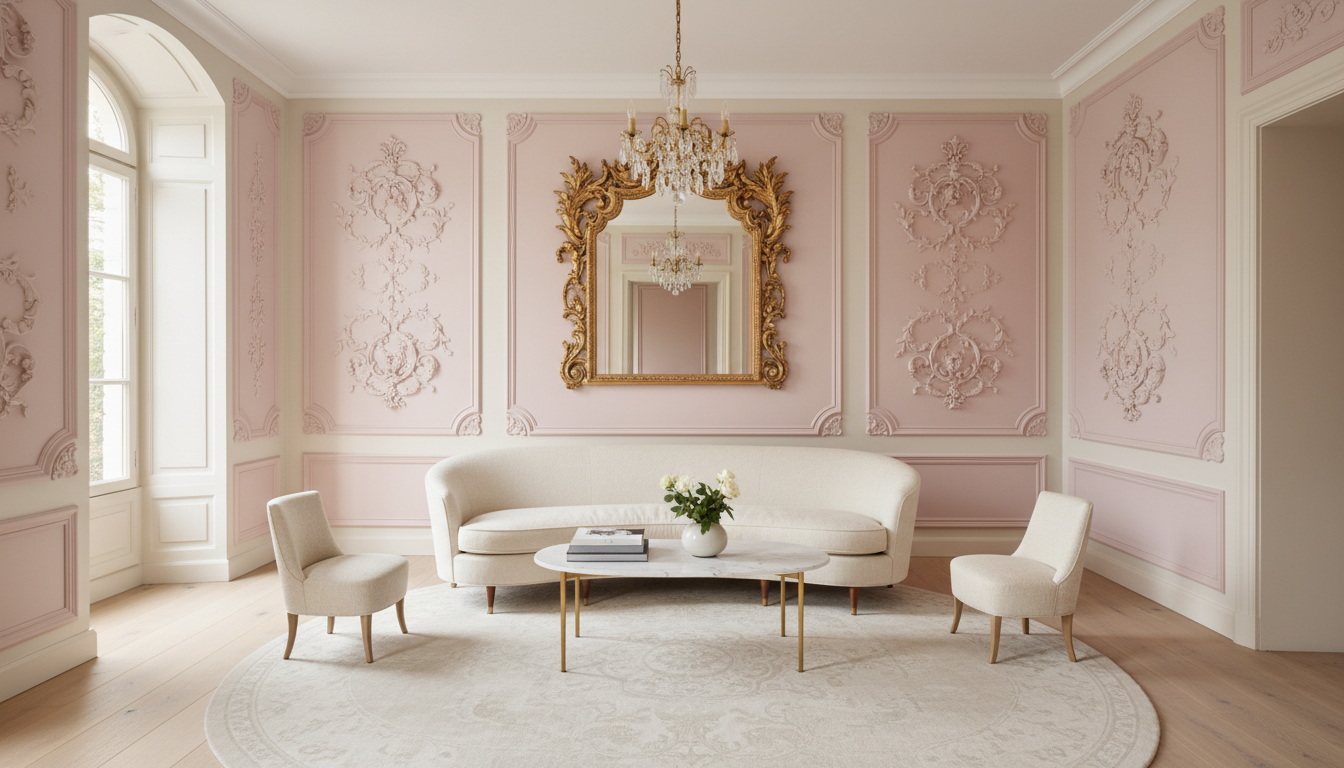
Rococo emerged in eighteenth-century Europe and is especially associated with French interiors that favored movement, ornament and graceful asymmetry. Curving lines, delicate floral motifs, carved furniture and gilded details are more characteristic than rigid geometric layouts. A contemporary home does not need a palace-sized room to borrow these ideas. One carved mirror, a curved upholstered chair or a small ornamental wall panel can introduce the atmosphere. Keep practical furniture comfortable and let a few expressive details become the focal points. Rococo should be distinguished from heavier Baroque interiors: it often favors a lighter, more playful effect. Historical rooms vary, so treat the style as inspiration rather than a strict decorating rule.
Signature Colors and How to Combine Them
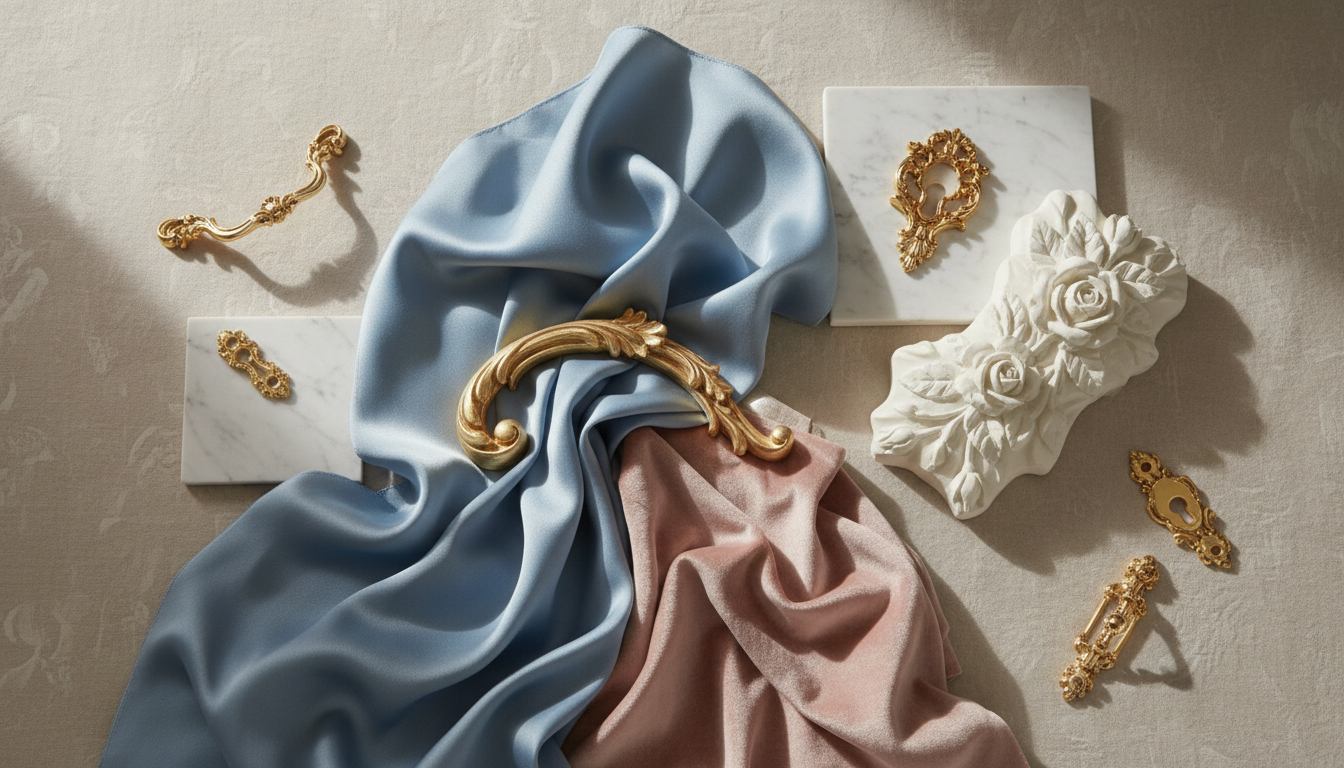
Soft powder blue, pale blush, ivory, cream, mint and muted gold suit a Rococo-inspired palette. For a small room, choose one pale wall color and repeat a complementary accent in upholstery or curtains. Gilding works best as a detail on a mirror, frame or furniture edge rather than covering every surface. Test paint samples in daylight and evening light, because cool pastels may appear gray in a north-facing room. A darker accent can help prevent an overly sugary effect: consider warm walnut, charcoal artwork or aged brass. If you already have neutral modern furniture, pastel cushions and a carved gold frame may provide enough stylistic character without an expensive renovation.
Materials and Textures That Create the Look
Rococo interiors often feature carved wood, decorative plaster, silk-like textiles, velvet, marble and gilded finishes. Choose materials based on how you actually use the room. Washable upholstery can be more practical than delicate silk, while an ornate mirror provides visual interest without creating maintenance problems on every wall. Modern lightweight mouldings can echo historical plasterwork when installed carefully. A pale marble-look surface may suit a tabletop, but avoid overly glossy materials that create glare. Mix a smooth upholstered chair with one carved table and restrained metallic accents. Quality craftsmanship and good proportions matter more than the number of decorative objects.
Furniture Shapes and Room Layout
Look for cabriole-style legs, gently curved chair backs, carved wooden frames and petite accent tables. Rococo furniture can be highly decorative, but it should still be stable and comfortable. A pair of curved chairs around a small oval table creates a recognizable mood without blocking movement. If the room is narrow, use one expressive accent chair rather than a bulky sofa with an ornate frame. Measure doorways, clearances and seat heights before buying antique furniture. A modern sofa can work beside a Rococo-inspired mirror or side table, especially when upholstery colors are coordinated. The aim is an inviting room with a touch of elegance, not a crowded period display.
Living Room Decorating Ideas
Begin with a comfortable cream or blush sofa and an elegant carved mirror above a console or fireplace. Add a curved accent chair and one floral or botanical print. If the walls have decorative mouldings, keep accessories sparse so the details remain visible. A small chandelier can reinforce the style, but add floor or table lamps for useful reading light. Use a rug large enough to connect the seating rather than a tiny decorative mat. Keep electronics discreet without compromising ventilation or access. When mixing old and new furniture, repeat one metal finish or pastel shade across the room to make the combination intentional.
Bedroom Decorating Ideas
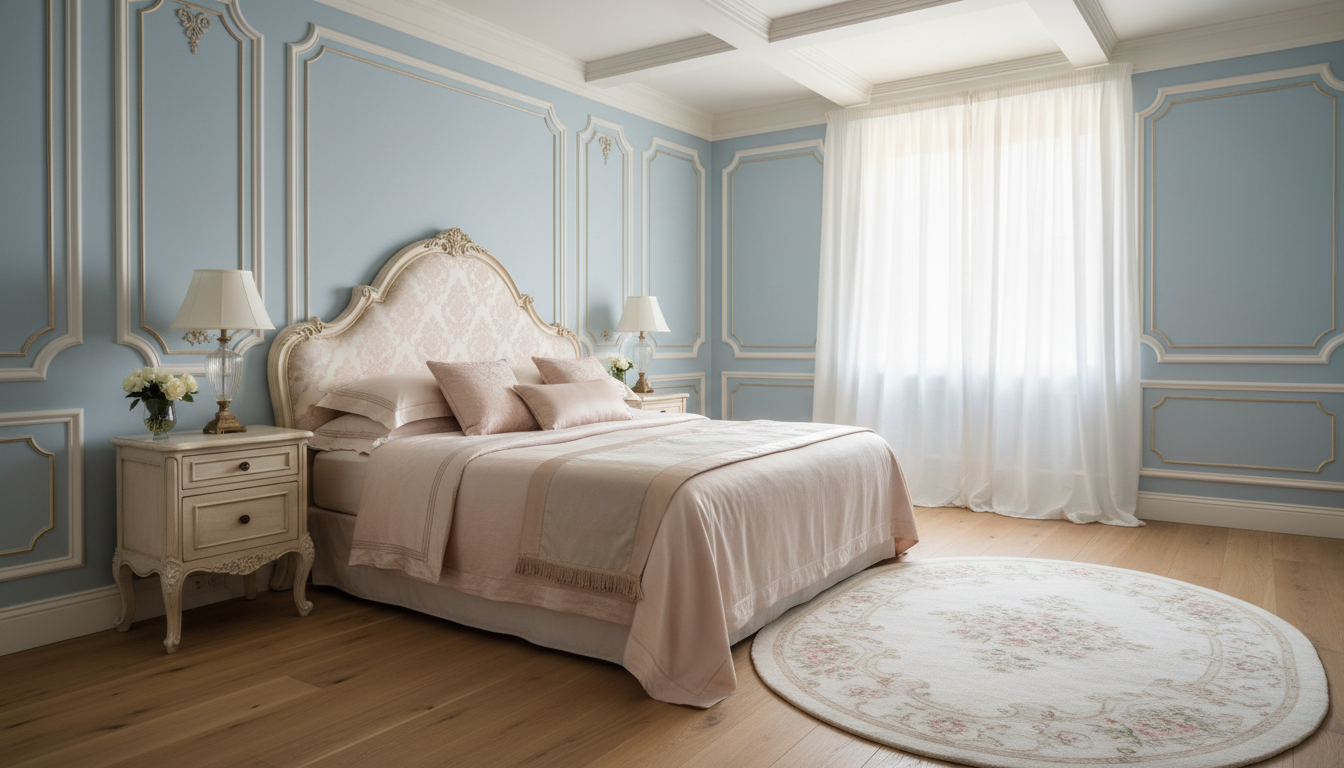
A Rococo-inspired bedroom can feel calm with pale blue walls, a curved upholstered headboard and soft ivory bedding. A carved bedside table or small gilded mirror is often enough to establish the look. Add texture with a velvet cushion or draped curtains, but choose fabrics you can clean comfortably. If the bedroom is small, avoid oversized ornate bed frames that restrict movement. A decorative wall panel behind the bed can create a focal point without occupying floor space. Use warm bedside lamps for reading and curtains that provide the privacy and light control you need. A restrained palette keeps the bedroom restful rather than theatrical.
Kitchen and Dining Room Ideas
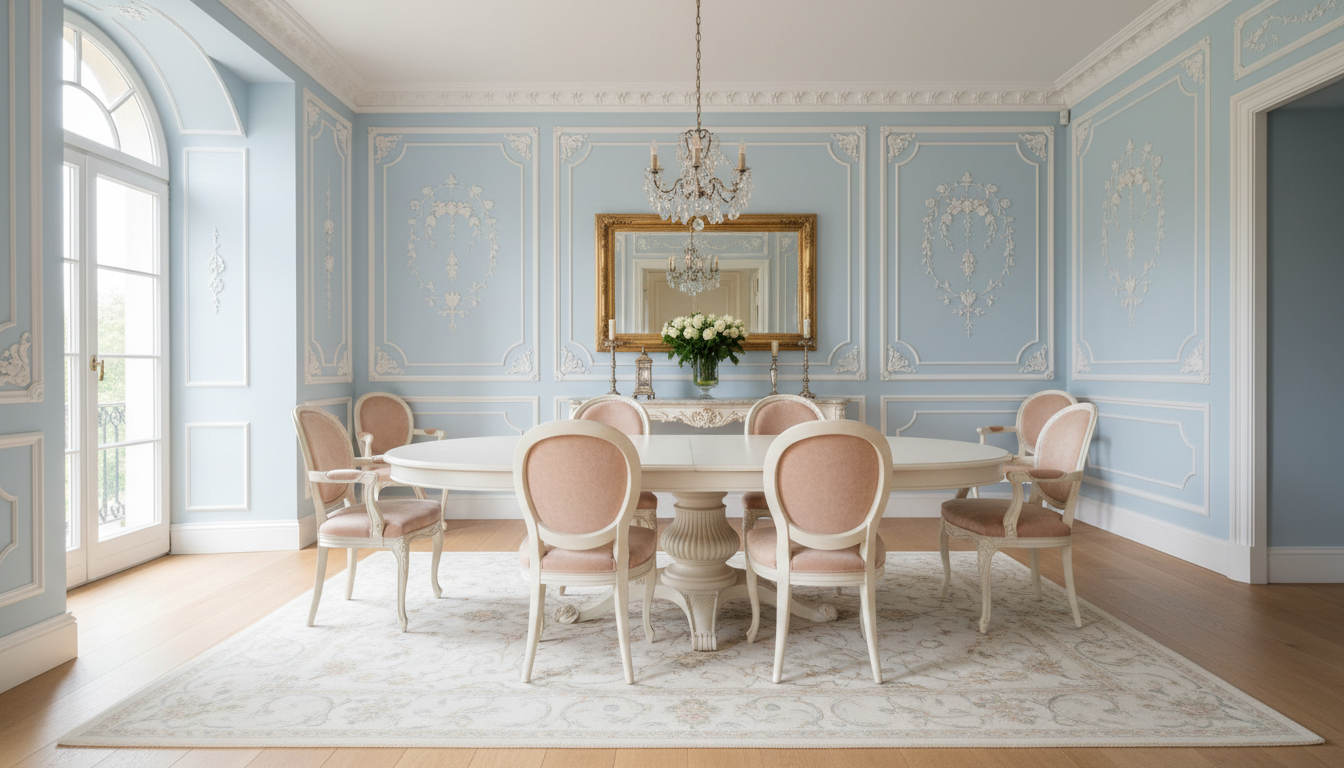
Rococo influences work best in dining rooms through curved chairs, an oval table, delicate mouldings and a single chandelier. A pale painted sideboard can provide storage while supporting the look. In kitchens, use a small decorative touch such as a carved-framed mirror outside splash zones, ornate but practical hardware or a soft pastel cabinet accent. Do not sacrifice cleanable surfaces or sufficient task lighting for decoration. Dining chairs should remain comfortable for long meals, and a chandelier should hang at a height that does not obstruct sightlines. Keep table settings simple so the room’s decorative furniture and wall details can stand out.
Lighting for Atmosphere and Function
A Rococo-inspired chandelier should suit the room’s ceiling height and the furniture beneath it. Use it for atmosphere while retaining practical reading or work lighting. If an elaborate fitting would crowd the room, a smaller shaded lamp can introduce a curved or decorative base instead. Have electrical installation checked by a qualified professional and keep fabric shades clear of heat sources.
Walls, Artwork and Accessories
For a restrained Rococo reference, hang one curved mirror or artwork above a plain piece of furniture and leave surrounding wall space open. Repeat a small detail, such as a soft colour or rounded edge, elsewhere in the room. A useful porcelain dish can join the display without becoming a collection. Verify hanging weight and fixings before installing a large decorative frame.
How to Achieve the Style on a Budget
Start a Rococo-inspired update with a single decorative detail that can move with you: a framed print, curved mirror or small upholstered chair. Inspect secondhand frames for damage and compare repair costs with the value of the piece. Keep larger existing furniture simple. Limiting ornament lets one attractive detail make an impact and avoids paying for a room full of fragile decorative surfaces.
Mistakes to Avoid
The easiest way to overwhelm a Rococo-inspired room is to use gilding, carved furniture, floral wallpaper and crystal accessories everywhere. Select two or three recognizable details and balance them with simple upholstery and functional storage. Another mistake is confusing historical inspiration with historical accuracy; modern replicas may combine elements from different periods. Avoid antique pieces with unstable joints or damaged finishes unless restoration is feasible. Heavy chandeliers need proper mounting, and decorative plaster should be installed with care. Pastel colors also require thoughtful lighting. A restrained, livable interpretation usually looks more sophisticated than filling every surface with ornament.
A Simple Step-by-Step Decorating Plan
First, define the atmosphere you want in three words. Second, measure the room and decide what furniture stays. Third, choose a limited palette inspired by powder blue, blush, cream and gilded accents. Fourth, identify one focal point, such as a sofa, dining table or artwork. Fifth, introduce appropriate materials such as curved wood, decorative plaster, mirrors and luxurious textiles. Sixth, improve lighting and storage before buying additional décor. Seventh, add a few personal accessories and photograph the room again. Wait several days before deciding what else is needed. This gradual approach reduces unnecessary purchases and helps the finished space feel coherent.
Frequently Asked Questions
Can rococo interior design work in a small apartment? Yes. Use appropriately scaled furniture, a limited palette and efficient storage. Do I need to renovate? Usually not. Textiles, lighting, artwork and furniture arrangement can make a meaningful difference. Should all furniture match? No. Repeated colors, materials and compatible proportions can create cohesion without identical pieces. How do I keep the room practical? Preserve clear walkways, useful surfaces, durable finishes and accessible storage. Where should I start? Begin with the room’s layout and the pieces you already own before purchasing new décor.
Final Thoughts
Rococo interior design can inspire a home with a distinctive atmosphere, but the most important decisions are personal and practical. Choose a few defining elements, use them consistently, and allow enough space for comfort and daily life. For a broader comparison of styles, explore our interior design aesthetics guide. For additional architecture and decorating inspiration, see Architectural Digest.