

Introduction

Zero waste sounds intimidating at first. Most people picture a life with no trash at all. That’s not the real goal.
Zero-waste living is about making small, mindful choices. It’s a mindset shift, not a strict rulebook. Anyone can start today, wherever they are.
What Does Zero Waste Really Mean?
Zero waste means reducing what you send to landfills and incinerators. It focuses on refusing, reducing, reusing, and recycling, in that order. The goal is to keep materials in use for as long as possible.
This isn’t about perfection. It’s about progress. Even small changes create real impact over time.
The Difference Between Zero Waste and Recycling
Recycling is one small piece of the puzzle. Zero waste starts before recycling even enters the picture.
Recycling deals with waste after it’s created. Zero waste tries to prevent that waste in the first place. That’s a key distinction many beginners miss.
Why Zero Waste Matters Today
Landfills are filling up fast. Plastic pollution affects oceans, wildlife, and even our food supply. Because of this, more households are rethinking their daily habits.
Consumers, brands, and even governments are paying attention. Companies like Loop and Package Free Shop now offer refill and reuse systems. This shift shows that zero waste isn’t a fringe idea anymore. It’s becoming mainstream.
How to Start Living Zero Waste: Step-by-Step Tips
Getting started doesn’t require buying anything new. In fact, the best first step is simply using what you already own.
Here’s a practical roadmap for beginners:
- Audit your trash. Spend one week noting what you throw away most. This reveals your biggest waste sources.
- Refuse single-use items. Say no to plastic bags, straws, and disposable cutlery whenever possible.
- Swap disposables for reusables. Cloth bags, glass containers, and metal water bottles last for years.
- Buy in bulk. Bulk bins reduce packaging waste significantly, especially for pantry staples.
- Compost food scraps. Composting keeps organic waste out of landfills and enriches soil.
- Repair before replacing. Fixing clothes, electronics, or furniture extends their life.
- Shop secondhand first. Thrift stores and marketplaces reduce demand for new production.
These steps work together. Start with one or two, then build from there. Consistency matters more than speed.
For a deeper dive into cutting plastic specifically, check out our related guide on reducing plastic waste at home.
Example: A Real Household Reduces Waste by 80%
The Johnson family, a well-known example in the zero-waste community, cut their household trash to fit in a single mason jar per year. They started small, with reusable bags and bulk shopping. Over three years, they refined their habits into a full lifestyle change.
Their story proves that zero waste isn’t about willpower alone. It’s about building better systems at home
Common Mistakes Beginners Make
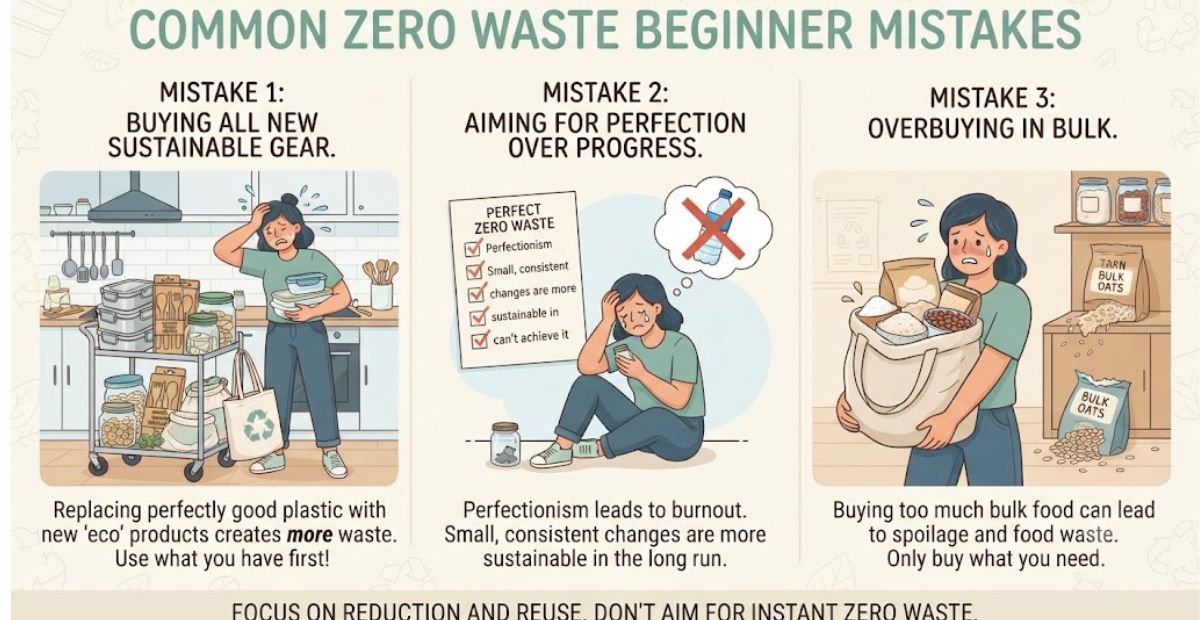
Many people quit early because they aim for perfection. That’s the biggest mistake of all. When you try to force your entire life into a single mason jar overnight, burnout is almost guaranteed.
To set yourself up for long-term success, watch out for these common beginner pitfalls:
- Buying Too Many “Zero Waste Products”: It’s easy to get caught up in the aesthetic of aesthetic glass jars, matching bamboo utensils, and branded organic cotton bags. However, buying new items to replace perfectly functional plastic ones defeats the purpose.
- The most sustainable item is always the one you already own. Use up your plastic tupperware, old toothbrushes, and dish sponges completely before upgrading to eco-friendly alternatives.
- Trying to Overhaul Everything Overnight: Going zero waste is a marathon, not a sprint. Attempting to change your grocery shopping habits, kitchen routine, bathroom products, and wardrobe all in one weekend will leave you feeling overwhelmed and defeated.
- Pick one room or one small habit—like switching to a reusable water bottle—and master it before moving on to the next.
- Ignoring Food Waste: Many beginners focus entirely on plastic packaging while completely ignoring what goes into their trash can. Food waste is actually one of the largest contributors to household waste and greenhouse gases in landfills. Simple habits like meal planning, understanding “best by” dates, and starting a backyard or apartment compost bin can cut your environmental footprint in half.
- Feeling Guilty Over Occasional Plastic Use: We live in a world built on convenience and plastic packaging. Sometimes, buying something wrapped in plastic is unavoidable—whether it’s medical supplies, a quick snack on a hectic day, or a gift. Feeling paralyzed by eco-guilt will only drain your motivation.
Zero waste is a direction, not a destination. Progress beats perfection every time.
Tips for Staying Motivated
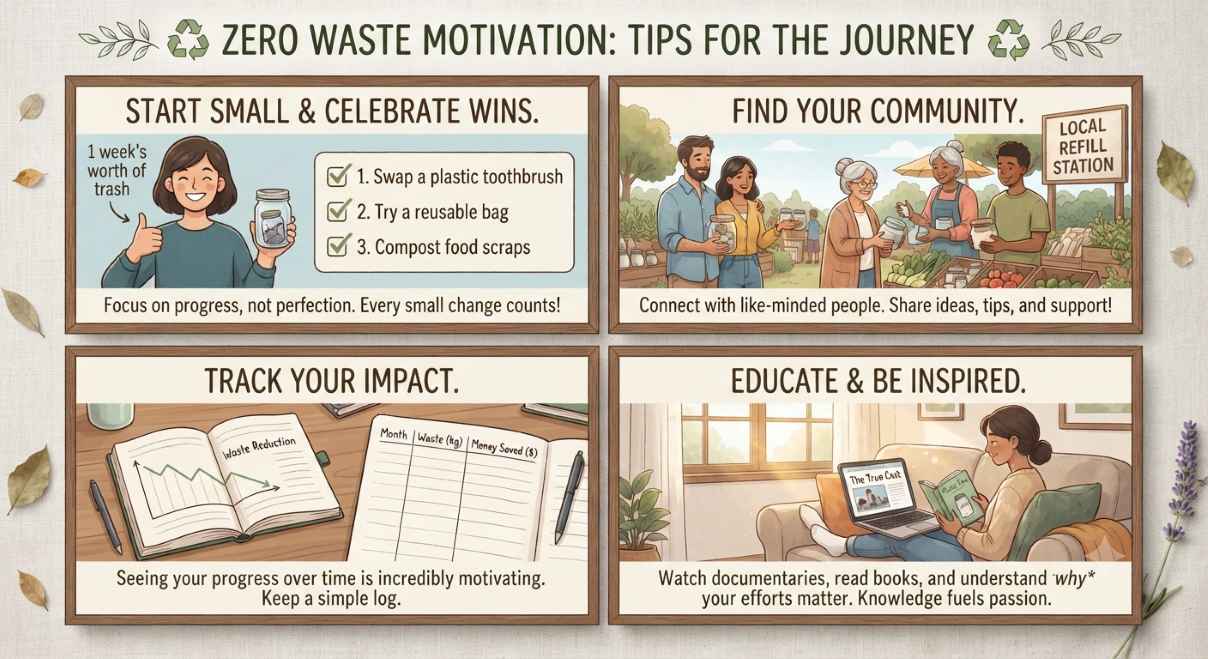
Consistency is easier with community support. Therefore, joining local zero-waste groups can help.
Here are extra tips to stay on track:
- Follow zero-waste creators for daily inspiration
- Set small monthly goals, like “no paper towels this month”
- Track your progress visually, such as with a jar of trash
- Celebrate small wins instead of focusing only on setbacks
According to the EPA’s guidance on sustainable materials management, reducing waste at the source is more effective than recycling alone. This reinforces why prevention should always come first.
Frequently Asked Questions
Is zero-waste living expensive? Not necessarily. Many zero-waste swaps, like using cloth napkins or repairing items, actually save money over time.
Can I live zero waste in an apartment? Yes. Composting services, bulk stores, and reusable containers all work well in small spaces too.
How long does it take to go zero-waste? There’s no fixed timeline. Most people take months or years to build lasting habits, and that’s completely normal.
Conclusion
Starting a zero waste lifestyle doesn’t require perfection or expensive gear. It simply asks for awareness and small, steady changes.
Begin with one habit this week. Maybe it’s refusing a plastic bag or composting food scraps. Over time, these small choices add up to something meaningful, for you and for the planet.
Ready to take the next step? Start your zero-waste journey today, one simple swap at a time.