

Introduction — Why Fireplace Efficiency Matters More Than Ever
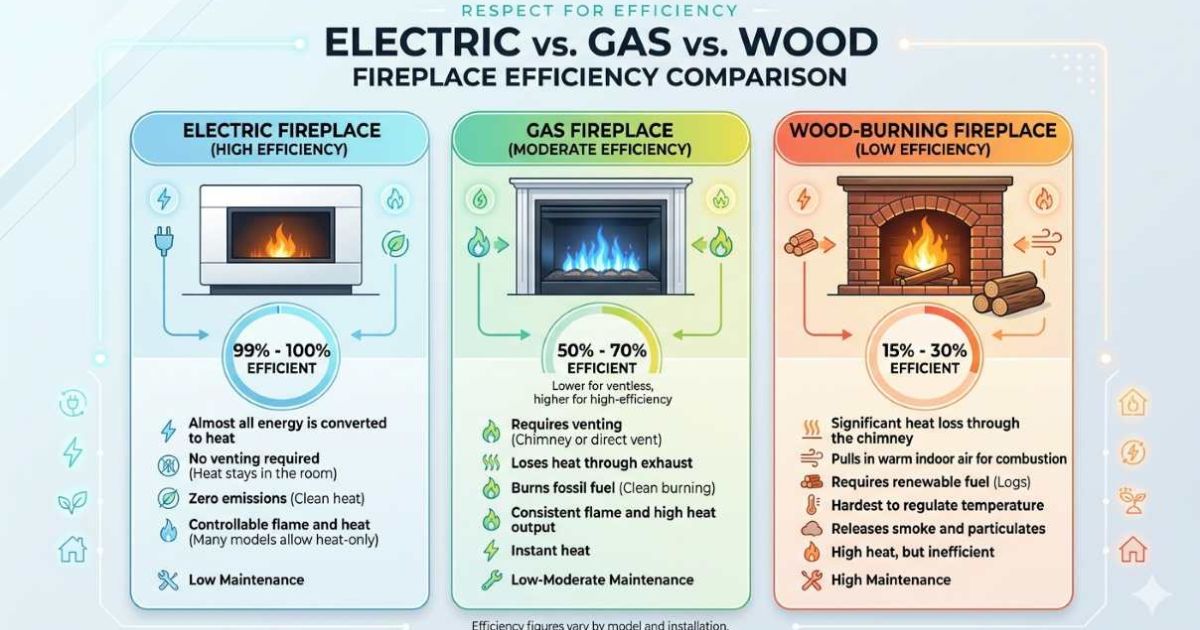
Energy bills keep rising. So, more homeowners are asking: are fireplaces energy efficient? It is a smart question. The answer, however, depends entirely on the type of fireplace you choose. Some models waste most of their heat. Others deliver warmth with almost zero energy loss. Understanding the difference saves you real money every single month.
The Big Problem With Traditional Fireplaces
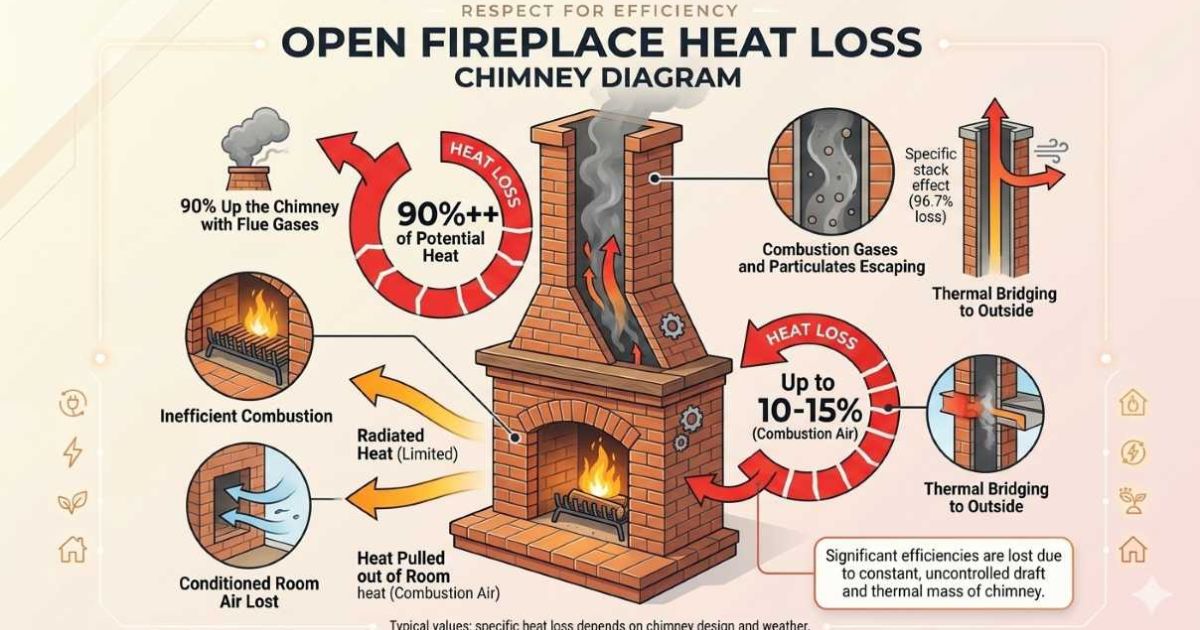
Old-fashioned open-hearth fireplaces look beautiful. Unfortunately, they perform terribly when it comes to energy efficiency. In fact, a traditional wood-burning fireplace loses up to 90% of its heat straight up the chimney. That means for every $10 you spend on firewood, only $1 worth of heat actually warms your room.
Moreover, open fireplaces create a backdraft effect. They pull warm air out of your home while the fire burns. So instead of heating your space, they can actually make the rest of your house colder. That is a serious efficiency problem most people never consider.
Fortunately, modern fireplace options solve this completely. Electric fireplaces, gas inserts, and pellet stoves all deliver far better performance. Let’s break each one down clearly.
Are Electric Fireplaces Energy Efficient?
How Electric Fireplaces Work — And Why They Are So Efficient
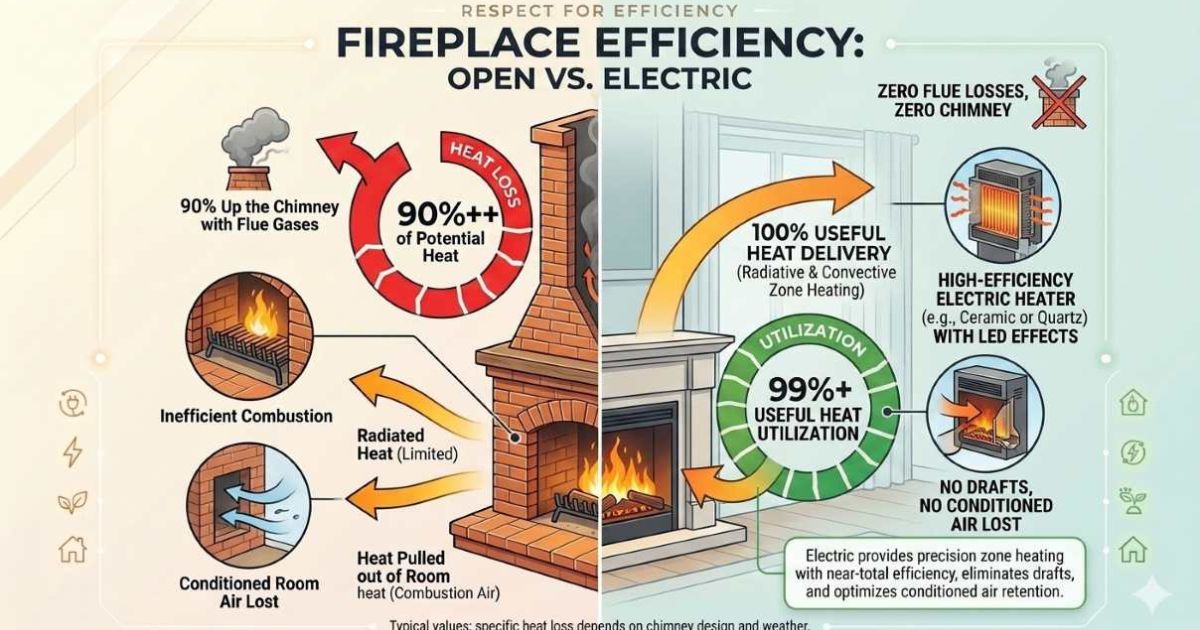
Electric fireplaces convert nearly 100% of electricity into usable heat. There is no chimney, no combustion, and no heat loss through venting. Every watt you pay for goes directly into warming your room. That is about as efficient as any heating device can get.
Top brands like Dimplex, ClassicFlame, and PuraFlame design their units with built-in thermostats and zone-heating technology. Zone heating means you warm only the room you are using. Meanwhile, you lower the central thermostat for the rest of the house. This simple strategy cuts your annual heating bill by 10%–15%, according to the U.S. Department of Energy.
Additionally, modern electric fireplaces use LED flame technology, which uses a fraction of the electricity older infrared bulb models consumed. Look for units with Energy Star certification for maximum savings.
However, one thing to keep in mind — electricity costs more per BTU than natural gas in most U.S. states. So while electric fireplaces waste almost nothing, running costs still depend on your local electricity rate. For zone heating a single room, though, they remain one of the smartest and cleanest choices available.
Are Electric Fires the Best Option for Apartments and Small Homes?
Absolutely. Electric fireplaces require no venting, no gas line, and no professional installation in most cases. You simply plug them in. This makes them ideal for apartments, condos, rental units, and small homes where gas installation is impractical or not allowed.
Furthermore, they are the safest fireplace option for families with young children or pets. There is no open flame, no carbon monoxide risk, and no hot glass surface in many newer models.
Are Gas Fireplaces energy efficient?
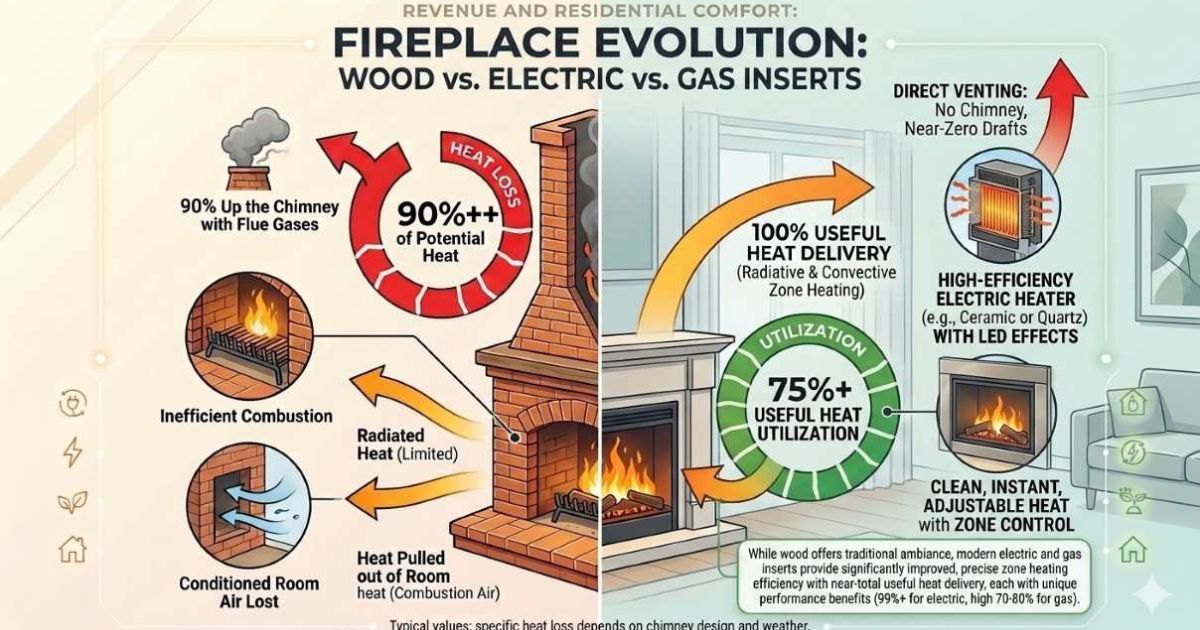
Gas fireplace inserts reach 70%–85% AFUE (Annual Fuel Utilization Efficiency ). That is far better than any open wood-burning fireplace. Brands like Napoleon, Regency, and Valor produce high-efficiency gas inserts that heat a room quickly and consistently.
Natural gas also costs less per BTU than electricity in most regions. So even though gas fireplaces are technically less efficient than electric models, they are often cheaper to run. For homeowners who want a realistic flame appearance with strong heating performance, gas inserts hit the sweet spot perfectly.
Are Swamp Coolers Energy Efficient?
Swamp coolers — also called evaporative coolers — take a completely different approach to home comfort. Instead of using refrigerant-based compression like traditional AC, they cool air by pulling it through water-soaked pads. Evaporation does the heavy lifting.
In dry climates, swamp coolers use up to 75% less electricity than standard air conditioning units. That is a dramatic saving. They work best in low-humidity regions like Arizona, Nevada, and parts of California. In humid areas like Florida, however, their performance drops sharply because humid air cannot absorb more moisture effectively.
So the answer is yes — swamp coolers are highly energy efficient, but only in the right climate. Choose wisely based on where you live.
Energy-Efficient AC in Lakewood Ranch — What Residents Should Know
Lakewood Ranch, Florida sits in a hot, humid subtropical climate. That means swamp coolers are not a practical choice there. Instead, residents need a high-SEER air conditioning system.
Look for units with a SEER rating of 16 or higher. Leading brands like Lennox, Trane, and Carrier offer Florida-ready models built for humid, high-heat conditions. Pairing your AC with a smart thermostat — such as the Nest or Ecobee — adds another layer of efficiency. Studies show smart thermostats reduce cooling energy use by 10%–12% on average.
Also, seal your ductwork and add proper attic insulation. These two upgrades alone can reduce your overall energy consumption by 20%–30% annually. In a climate like Lakewood Ranch, that adds up to significant savings fast.
Quick Efficiency Comparison — All Fireplace Types at a Glance
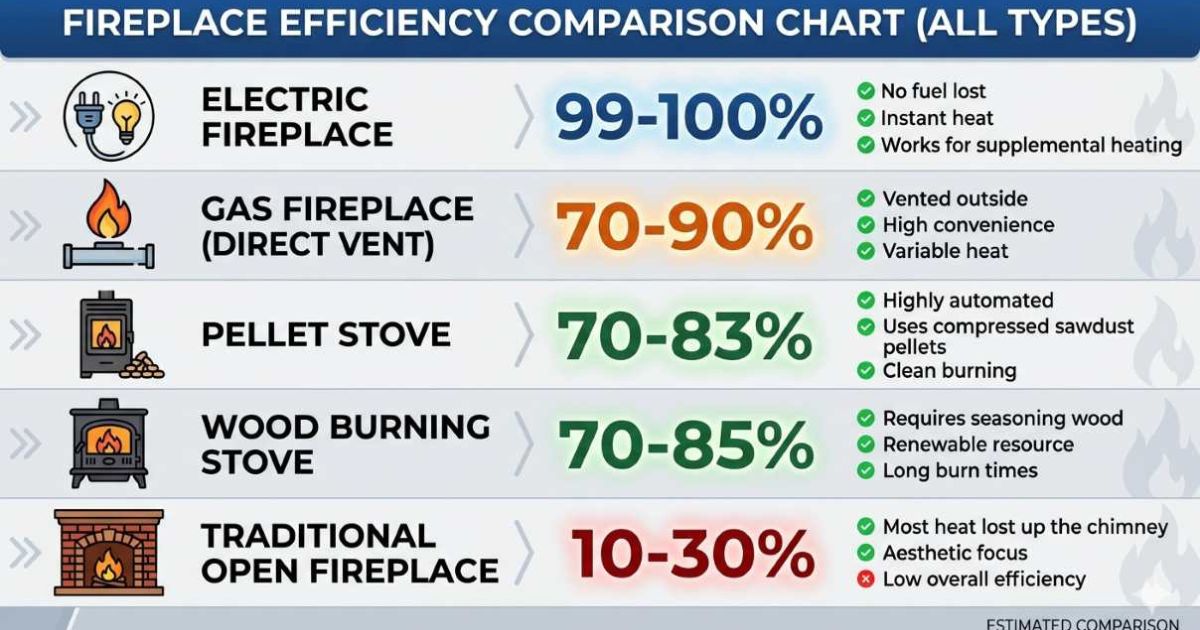
| Fireplace Type | Efficiency Rating | Best Use Case |
|---|---|---|
| Open Wood-Burning | 10%–30% | Ambiance only |
| Wood Insert | 60%–80% | Rural areas with wood access |
| Gas Insert | 70%–85% AFUE | Reliable heat, realistic flame |
| Electric Fireplace | ~100% | Zone heating, apartments, safety |
| Pellet Stove | 75%–90% | Eco-conscious, renewable fuel |
| Swamp Cooler | 75% less than AC | Dry climates only |
As this table shows, electric fireplaces lead on raw efficiency. Gas inserts win on running cost in most states. Pellet stoves offer a strong eco-friendly middle ground.
Real Data — Zone Heating Saves Up to $135 Per Year
The U.S. Department of Energy confirms that lowering your central thermostat by 10°F while using a zone heater can reduce heating costs by 10%–15%. For the average U.S. household spending around $900 per year on heating, that equals $90–$135 in annual savings — just from one smart habit.
U.S. Department of Energy — Home Heating Systems
How to Choose the Most Energy-Efficient Heating System for Your Home
FAQ — Your Top Questions Answered
Q1: Are electric fireplaces efficient enough to replace central heating?
Electric fireplaces are nearly 100% efficient as devices. However, they work best as zone heaters — not whole-home replacements. Use them to heat the room you occupy most, and dial down your central system. That combination delivers the best efficiency and the lowest monthly bill.
Q2: Do gas fireplaces actually save money compared to electric ones?
In most U.S. states, natural gas costs less per BTU than electricity. So despite having a lower efficiency rating, gas fireplaces often cost less to run daily. The right choice depends on your local utility rates — always compare both before deciding.
Q3: Are swamp coolers a good alternative to AC in humid climates?
No. Swamp coolers lose their efficiency quickly in humid conditions. They rely on evaporation, which slows dramatically when the air already holds a lot of moisture. In climates like Florida or the Gulf Coast, a high-SEER air conditioner is always the better investment.
Conclusion — Heat Smarter, Spend Less
So, are fireplaces energy efficient? Yes — but only when you choose the right type. Electric fireplaces deliver near-perfect efficiency for zone heating. Gas inserts offer strong performance at a lower running cost. Traditional open fireplaces, on the other hand, waste almost everything they burn.
If you live in a dry climate, a swamp cooler can slash your cooling costs dramatically. If you are in a humid area like Lakewood Ranch, invest in a high-SEER AC system with a smart thermostat instead.
The bottom line is simple. Stop settling for inefficient heating. Audit your current setup, compare your options honestly, and make the upgrade that fits your climate and budget. A smarter fireplace choice today means lower bills — and a more comfortable home — for years to come.