

Introduction: Understanding the Global Impact of American Waste
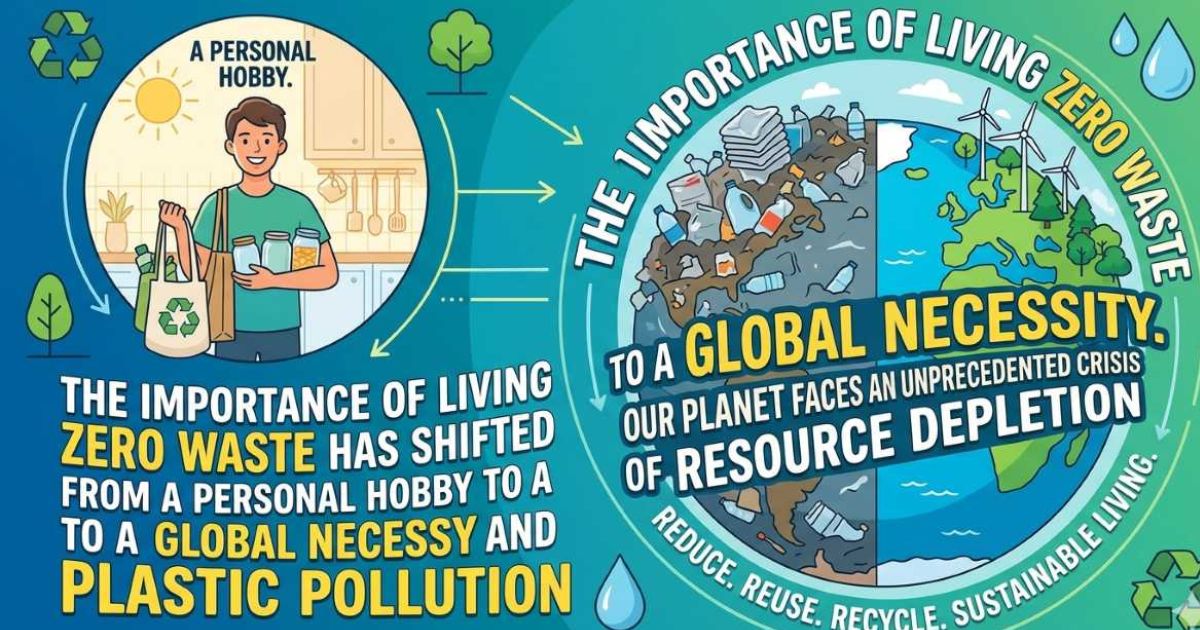
The importance of living zero waste has shifted from a personal hobby to a global necessity. Specifically, our planet faces an unprecedented crisis of resource depletion and plastic pollution.
Here is the American reality. The United States generates more waste than any other country on Earth. With just 4% of the world’s population, we produce 12% of the world’s municipal solid waste—roughly 4.9 pounds per person daily .
Every piece of trash we send to a landfill contributes to a system that the Earth can no longer sustain. However, by making small changes, we can collectively reduce the pressure on our natural ecosystems.
For foundational knowledge, explore our comprehensivezero waste living definition and 2026 guide to understand the core principles before diving deeper.
The Environmental Shield: Protecting America’s Natural Heritage
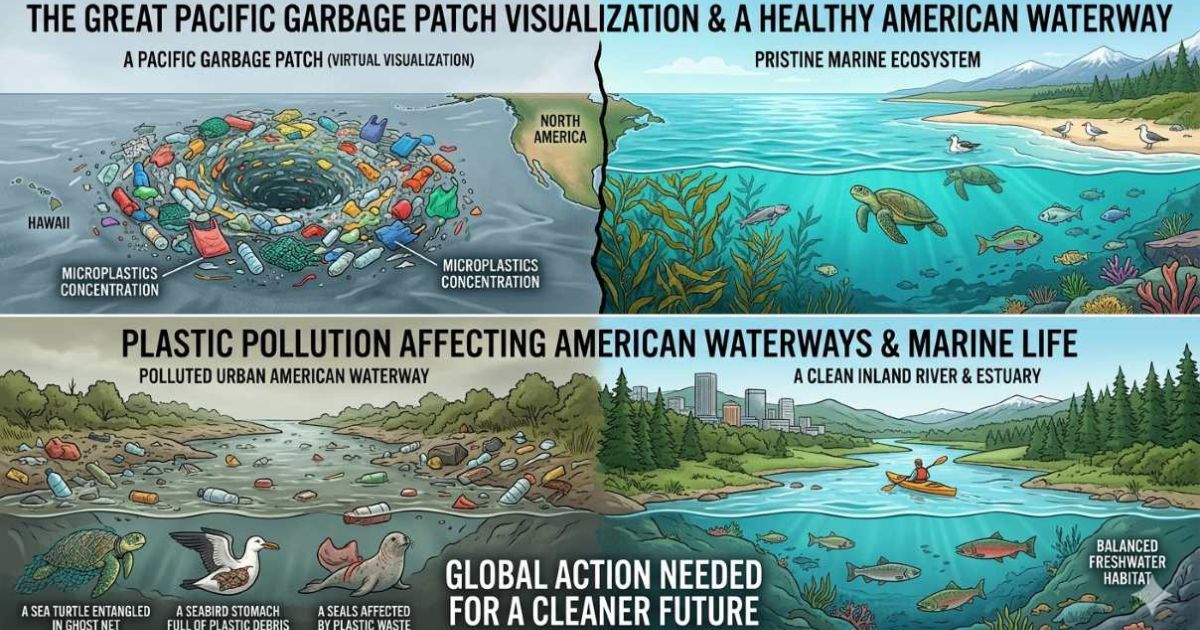
One of the primary reasons to embrace this lifestyle is the preservation of biodiversity. In fact, millions of marine animals die every year due to plastic ingestion and entanglement.
American waterways are particularly affected. The Great Pacific Garbage Patch, twice the size of Texas, contains an estimated 1.8 trillion pieces of plastic . When we choose a zero-waste path, we directly reduce the demand for the materials that choke our oceans.
Furthermore, reducing waste helps mitigate climate change. The production, transportation, and disposal of consumer goods account for a massive portion of global greenhouse gas emissions.
Consequently, when you reuse a container or repair a tool, you are actively lowering the carbon footprint of American manufacturing. According to the Environmental Protection Agency (EPA) , reducing and reusing are the most effective ways to save natural resources .
Saving Natural Resources for Future Generations
The importance of living zero waste is deeply tied to the conservation of raw materials. Specifically, the “take-make-waste” model relies on extracting finite resources like petroleum for plastics and trees for paper.
In 2026, we are seeing the limits of these resources more clearly than ever. American forests, water sources, and mineral deposits face unprecedented pressure from consumer demand.
By adopting a circular mindset, we treat every object as a valuable resource rather than a disposable item. For instance:
| Material | Recycled vs. Virgin Production | Energy Saved |
| Aluminum | Recycled uses 95% less energy | 95% savings |
| Paper | Recycled uses 40% less energy | 40% savings |
| Glass | Recycled uses 30% less energy | 30% savings |
| Plastics | Recycled uses 70% less energy | 70% savings |
This level of efficiency is essential if we want to maintain a high quality of life for future generations in 2027. The Natural Resources Defense Council (NRDC) reports that plastic pollution now threatens over 700 marine species .
Protecting Human Health from Toxic Chemicals
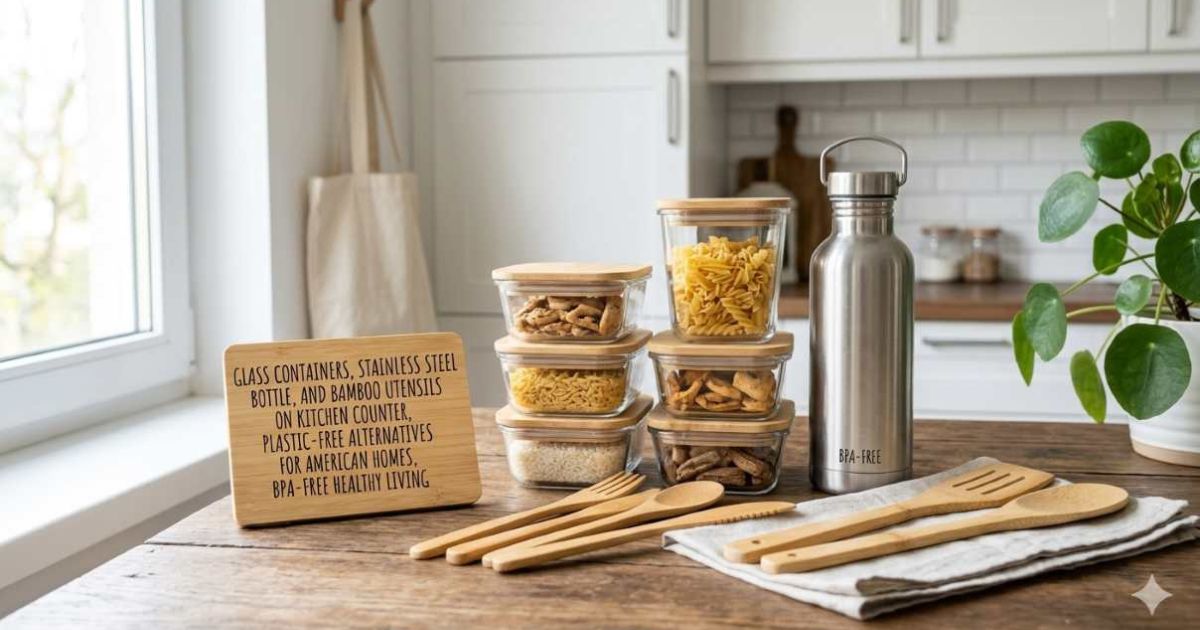
Beyond the environment, living zero waste protects our own bodies. In reality, many plastic food containers and disposable products contain harmful chemicals linked to serious health issues.
Common toxins in American households include:
- BPA (Bisphenol A) : Found in plastic containers and receipts; linked to hormonal disruption
- Phthalates: Found in fragrances and soft plastics; associated with reproductive issues
- PFAS (Forever Chemicals) : Found in food packaging; linked to cancer and immune suppression
- Styrene: Found in foam cups and containers; classified as a possible carcinogen
These toxins can leach into our food and water, leading to long-term health consequences. Specifically, choosing natural materials like glass, stainless steel, and organic cotton minimizes your exposure to these industrial pollutants.
As a result, a zero-waste home is often a much healthier home for your family. The American Academy of Pediatrics recommends reducing plastic food containers to protect children’s developing bodies .
Economic Benefits: How Zero Waste Saves American Families Money
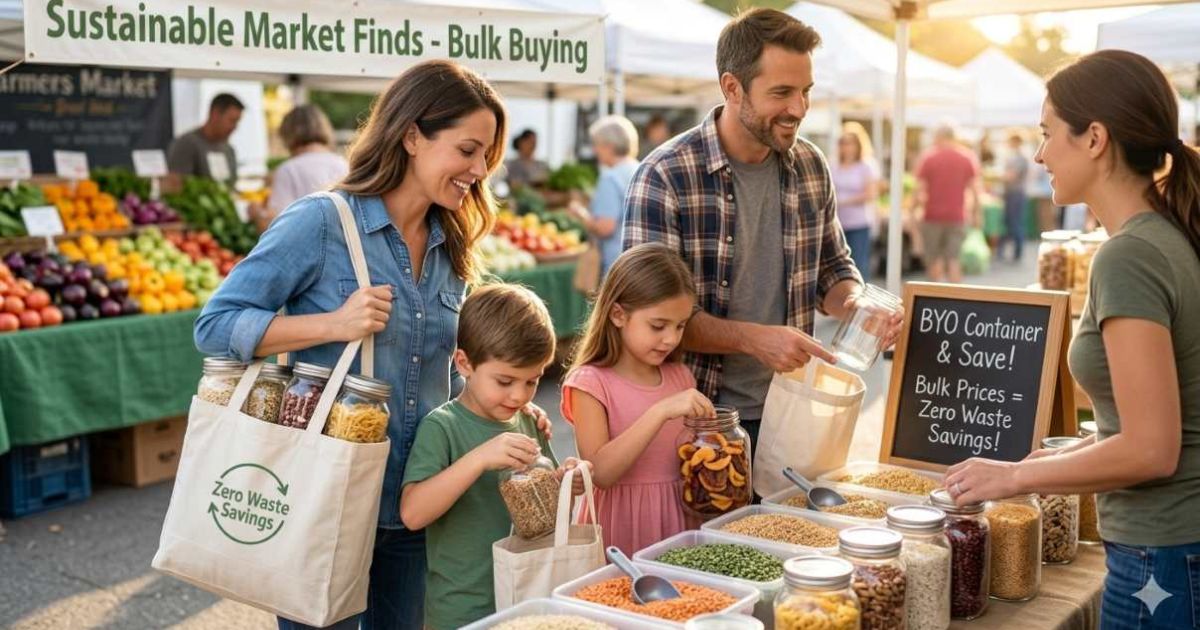
While the global benefits are clear, the importance of living zero waste also includes immediate personal financial advantages.
| Zero Waste Habit | Annual Savings for American Families |
| Reusable water bottle instead of bottled water | $500-1,000 |
| Cloth napkins instead of paper towels | $80-100 |
| Meal planning to reduce food waste | $1,500 |
| Safety razor instead of disposable razors | $200-300 over 5 years |
| Reusable shopping bags | $50-80 (bag taxes/fees) |
| Buying in bulk with reusable containers | $300-500 |
According to the EPA, food waste alone costs the average American family $1,500 annually . A family of four could save up to $56 weekly by simply planning meals and using what they buy .
Additionally, a zero-waste home focuses on quality over quantity, leading to:
- Reduced clutter and less time cleaning
- Higher quality goods that last for decades
- Lower stress from constant consumption and decision fatigue
- Support for local economies through farmers markets and local artisans
American Policy and Community Innovation in 2027
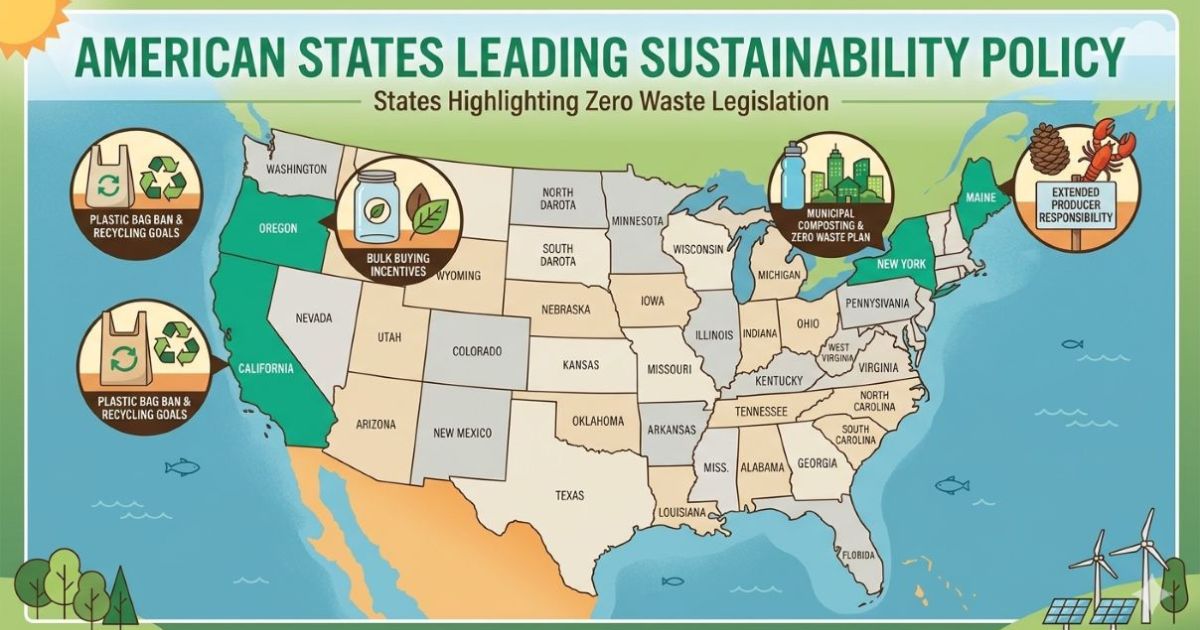
Looking toward 2027, the movement is evolving beyond individual action into systemic change across the United States.
State-Level Policy Progress
Several American states are now leading the way with ambitious legislation:
| State | Key Zero Waste Policy |
| California | Extended Producer Responsibility (EPR) laws for packaging |
| Maine | First state to pass EPR for packaging |
| Oregon | Expanded bottle bill covering more containers |
| New York | Single-use plastic bag ban |
| Massachusetts | Right to Repair laws for electronics |
| Minnesota | Electronics recycling requirements |
| Vermont | Universal recycling law |
These initiatives prove that the importance of living zero waste is recognized at the highest levels of American governance. Specifically, EPR laws shift responsibility from consumers to producers, requiring companies to manage their packaging waste.
Technological Innovation Making Zero Waste Easier
Innovations in technology are also making it easier for Americans to live sustainably:
- Refill-on-the-Go apps help you find water refill stations anywhere in your city
- AI-powered sorting systems improve recycling accuracy
- Seaweed-based packaging replaces plastic in many industries
- Mycelium (mushroom) inserts protect fragile items during shipping
- Digital Product Passports let you scan QR codes to see a product’s lifecycle
This combination of ancient wisdom and modern tech is the key to our success. For deeper context, revisit our [zero waste living definition and 2026 guide] to understand how these innovations connect to core principles.
Case Study: California Restaurants Save Thousands
A 2025 study of 50 small restaurants in California found that switching from disposable to reusable food service ware saved the average establishment $3,200 per year.
Specifically, even after accounting for the extra labor of washing dishes, the reduction in procurement costs was massive. One restaurant owner shared, “We stopped buying thousands of disposable containers and started investing in quality reusables. Our customers love it, and our bottom line improved within months.”
This data point proves that sustainability is not just good for the earth—it is excellent for the American economy.
Frequently Asked Questions for Americans
Why is zero waste more important now than 10 years ago?
In the last decade, American waste production has increased while recycling systems have struggled to keep up. China’s National Sword policy (2018) stopped accepting most U.S. recyclables, exposing the flaws in our system. Specifically, we have reached a tipping point where the amount of plastic in the ocean is predicted to outweigh fish by 2050 if we do not act now .
Can one American really make a difference?
Yes, absolutely. The average American generates over 4.9 pounds of trash daily. By reducing your waste, you save nearly one ton of trash from landfills every decade. Moreover, your purchasing choices send powerful signals to corporations. When millions of Americans choose reusable options, markets shift.
What is the most important zero waste swap I can make?
While every swap counts, the most important one is the one you will actually stick with. Specifically, many Americans start with:
- A reusable water bottle (eliminates 167 plastic bottles annually)
- Reusable grocery bags (eliminates 500+ plastic bags yearly)
- A stainless steel travel mug (saves 365 disposable cups per coffee drinker)
The key is consistency, not perfection.
Is zero waste realistic for rural Americans?
Absolutely. Even without bulk stores, rural Americans can:
- Choose larger cardboard packaging over small plastic containers
- Compost at home in simple backyard bins
- Shop secondhand at local thrift stores or online
- Order from plastic-free online retailers like Package Free Shop and EarthHero
- Grow food in gardens to eliminate packaging entirely
What about recycling? Isn’t that enough?
Recycling alone is not enough. While important, recycling is the last resort in the 5 R’s hierarchy. Many plastics are downcycled into lower-quality materials or exported overseas. The EPA emphasizes that reducing and reusing have far greater environmental impact than recycling alone .
Conclusion: Your American Legacy of Responsibility
The importance of living zero waste lies in the legacy we leave behind. In 2026, we are the stewards of the future, and our choices today determine the world of 2050.
By choosing to live with less waste, you are sending a powerful message to corporations and governments that you value the planet over temporary convenience. Your voice, amplified by millions of other Americans, creates the political will for systemic change.
Remember these key truths:
- Every reusable bag saves hundreds of plastic bags
- Every repaired item keeps waste out of landfills
- Every bulk purchase reduces packaging demand
- Every composted scrap returns nutrients to soil
- Every shared habit inspires others to join
Your journey does not need to be perfect to be impactful. Start today by identifying one single-use item in your life and finding a permanent replacement. Notice how that one small choice ripples outward, inspiring others and protecting the world we all share.
For more inspiration, revisit our zero waste living definition and 2026 guide whenever you need reinforcement.
explore the Environmental Protection Agency’s sustainable materials management resources.