

Introduction: The Staggering Scale of American Food Waste
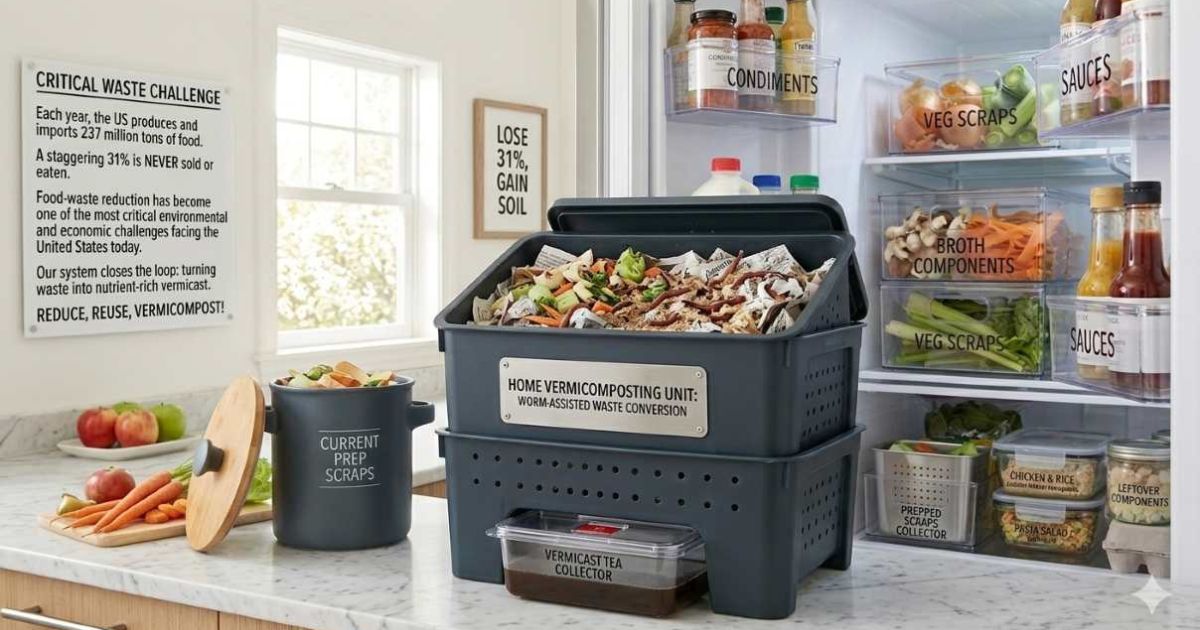
Food waste reduction has become one of the most critical environmental and economic challenges facing the United States today. Each year, the U.S. produces and imports 237 million tons of food, but a staggering 31 percent is never sold or eaten .
The cost is astronomical—more than $440 billion is spent annually to produce and dispose of food that never reaches anyone’s plate . For the average American family, this translates to $1,500 wasted every year on food that ends up in the trash .
Beyond the financial impact, food waste drives climate change. When food decomposes in landfills, it releases methane—a greenhouse gas 80 times more powerful than carbon dioxide . In fact, food is the largest component of U.S. landfills, responsible for 58% of landfill methane emissions .
The good news? Reducing food waste is the single-best strategy for fighting climate change, according to Project Drawdown . This guide provides practical, actionable strategies for American households to cut waste, save money, and protect the planet.
For foundational knowledge about sustainable living, explore ourZero Waste Living Definition (2026 to 2027): Complete Beginner’s Guide to a Waste-Free Life to understand how food waste reduction fits into your eco-friendly lifestyle.
Why Reducing Food Waste Matters Now More Than Ever
Environmental Impact
Food loss and waste accounts for 8-10% of annual global greenhouse gas emissions . To put this in perspective, if food waste were a country, it would be the third-highest emitter of greenhouse gases after the U.S. and China .
The water footprint is equally alarming. Sending uneaten food to landfills uses up more than 20 trillion liters of water annually—equivalent to the yearly water use of 50 million homes .
Economic and Social Costs
The financial burden touches every American household. The average individual loses $728 annually to food waste, while a family of four throws away nearly $3,000 each year .
Meanwhile, 47 million Americans, including 14 million children, experience food insecurity . Just one-third of the food currently wasted could feed every one of them .
Smart Shopping and Meal Planning Strategies
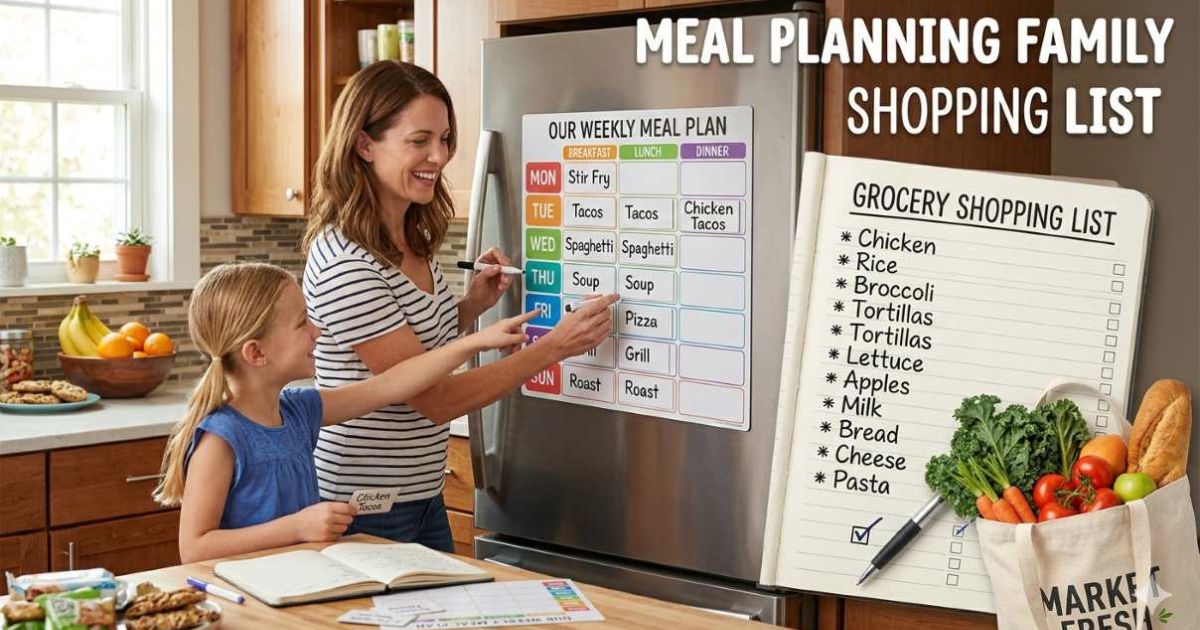
The most effective food waste reduction happens before food ever enters your home. These proven strategies can slash your household waste by up to 50%.
Master the Art of Meal Planning
According to the World Resources Institute, planning meals is the single most impactful action households can take . Follow these steps:
- Check your pantry and fridge first – Build meals around what you already have
- Create a detailed shopping list – Stick to it to avoid impulse purchases
- Plan for leftovers – Cook once, eat twice (or three times)
- Use a “meal prep Sunday” approach – Prepare ingredients for the week ahead
Smart Shopping Habits
Retailers and experts agree that how you shop determines how much you waste . Try these techniques:
- Shop more frequently for smaller amounts rather than massive weekly hauls
- Buy “imperfect” produce – Those blemished apples taste just as sweet
- Understand date labels – “Best by” indicates quality, not safety
- Avoid bulk bins for items you don’t use regularly
- Use the “first in, first out” rule – rotate older items to the front
Proper Food Storage Techniques
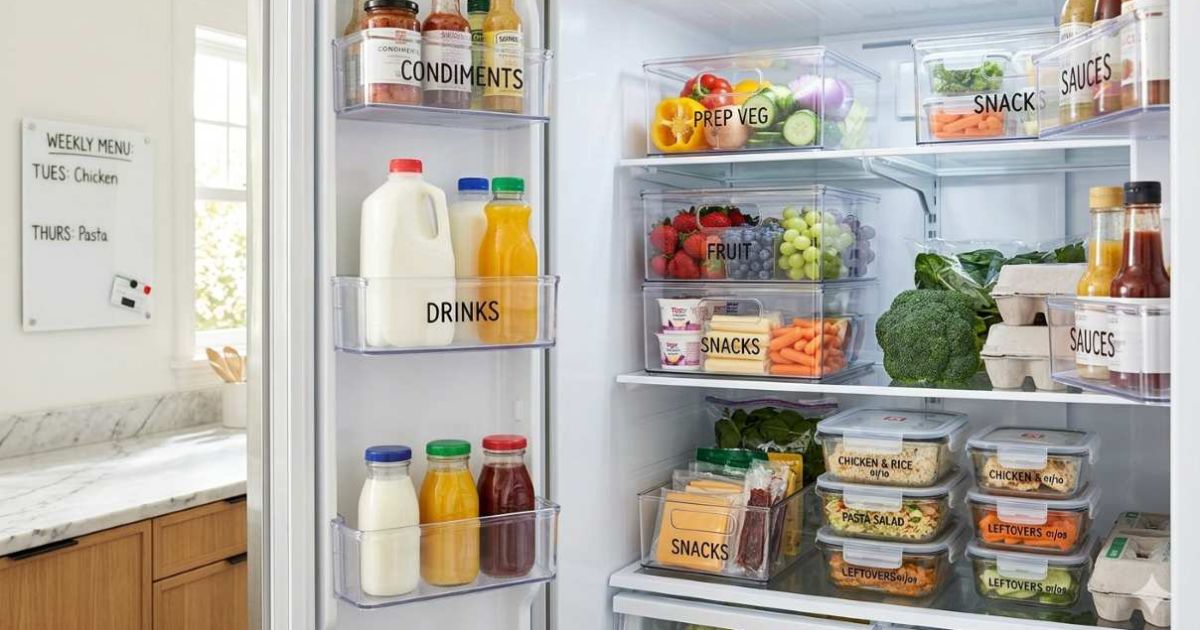
How you store food dramatically affects its lifespan. These storage tips can extend freshness by days or even weeks.
Refrigerator Organization
The optimal fridge temperature is 37-40°F (3-4°C) . Organize strategically:
| Food Type | Where to Store | Why |
| Dairy, eggs | Main shelves (not door) | Consistent temperature |
| Leafy greens | High humidity drawer | Prevents wilting |
| Fruits (apples, pears) | Low humidity drawer | Ethylene gas can spoil others |
| Meat, fish | Bottom shelf | Prevents cross-contamination |
| Leftovers | Visible, front and center | So you remember to eat them |
Pantry and Counter Storage
Not all foods belong in the fridge . Store these items at room temperature:
- Tomatoes, potatoes, onions – refrigeration ruins texture
- Bananas, citrus fruits – room temperature is ideal
- Bread – refrigerating actually speeds staleness
- Hard squash, garlic – cool, dark pantry is perfect
For longer life, many items freeze beautifully. Bread, milk, cheese, herbs, and even eggs can be frozen for months .
Creative Ways to Use Leftovers and Scraps
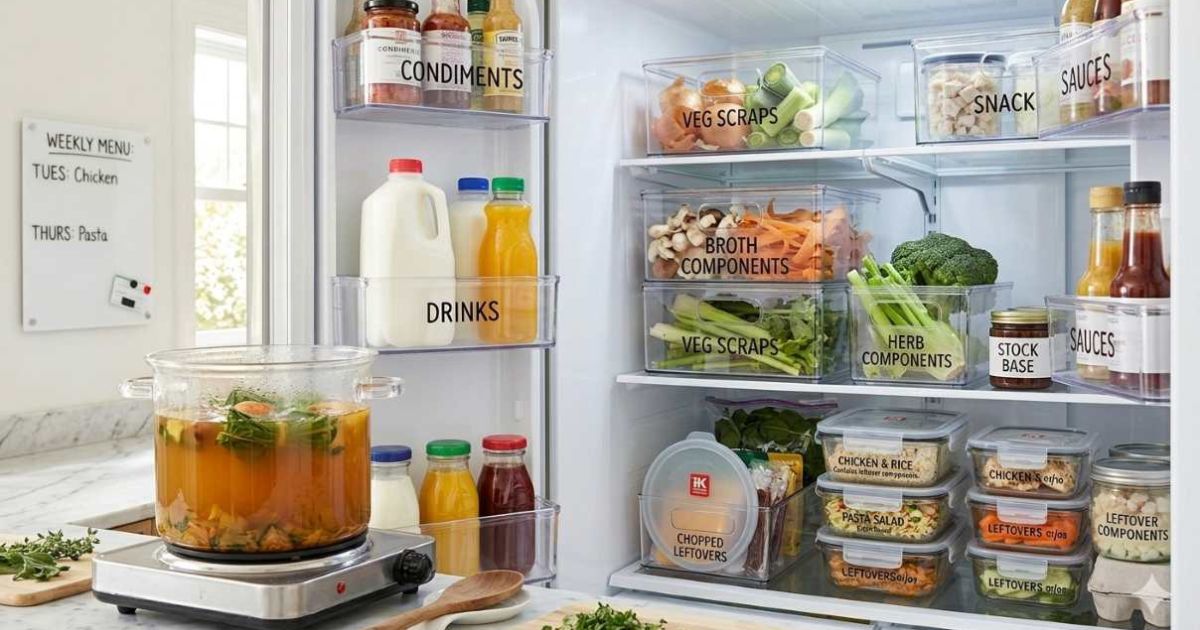
Getting creative with what you have prevents waste and saves money.
The “Eat Me First” Container
Designate one visible container in your fridge for items that need to be eaten soon. Check it daily and plan meals around its contents .
Repurpose Common Scraps
Vegetable peels, stems, and ends can become flavorful stock. Stale bread transforms into croutons, breadcrumbs, or panzanella salad. Overripe fruit makes delicious smoothies, baked goods, or freezer jam.
Batch Cooking and Freezing
Cook large quantities of soups, stews, and casseroles, then freeze in portion-sized containers. This strategy ensures you always have a meal ready, reducing takeout temptation and food waste simultaneously.
Composting: The Ultimate Food Waste Solution
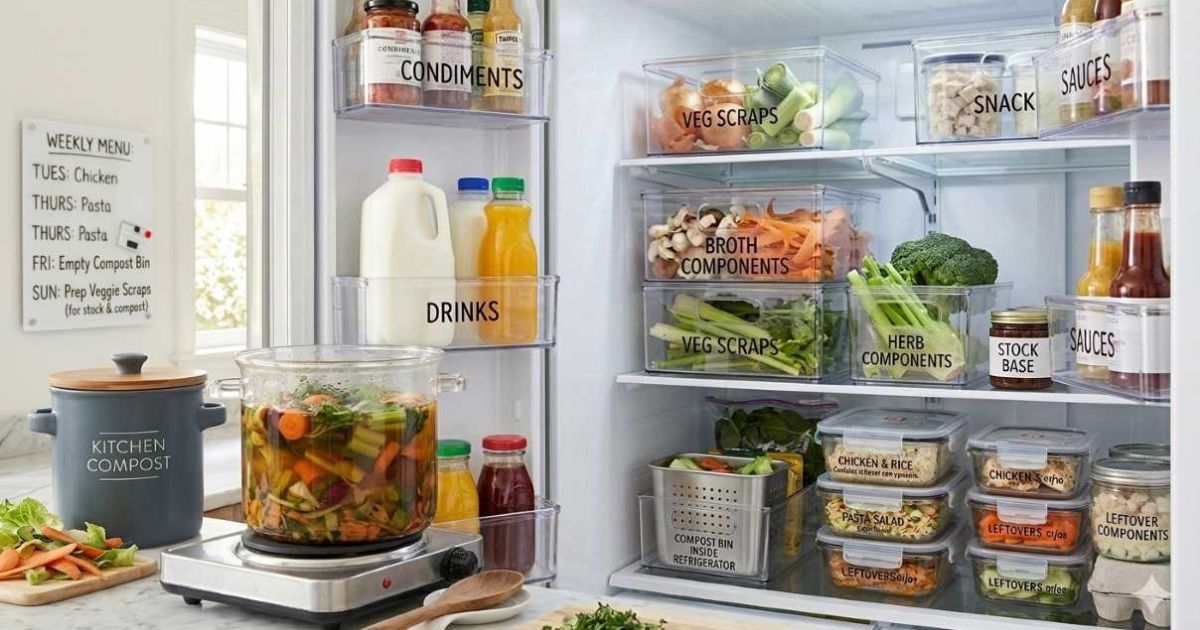
Even with perfect planning, some food waste is inevitable. Composting ensures those scraps nourish the earth rather than polluting it.
The EPA’s Food Recovery Hierarchy
The EPA prioritizes food waste solutions in this order :
- Source reduction – Prevent waste in the first place
- Feed hungry people – Donate excess food
- Feed animals – Use scraps for livestock
- Industrial uses – Convert to bioenergy
- Composting – Return nutrients to soil
- Landfill/incineration – Last resort
Composting Options for Every Home
According to the EPA, food scraps and yard waste make up 30% of what Americans throw away . Yet only 5% is currently composted .
| Composting Method | Best For | Key Feature |
| Backyard bin | Homes with yard space | Handles yard waste + kitchen scraps |
| Worm bin (vermicomposting) | Apartments, small spaces | Worms do the work; no odor |
| Bokashi | Small spaces | Ferments all food, including meat/dairy |
| Electric composter | Countertop convenience | Turns scraps into compost in hours |
| Curbside pickup | Cities with programs | Check if your city offers this |
EPA’s New Tools and Initiatives
The EPA recently launched the “Feed It Onward” initiative, connecting farms, restaurants, and military bases with communities in need . The agency also released the Avoided Landfill Food Waste Methane Emissions Calculator, allowing households and businesses to estimate their methane savings from composting .
Community and National Resources
Federal Action: The National Strategy
The USDA, EPA, and FDA jointly released the National Strategy for Reducing Food Loss and Waste and Recycling Organics . Its four objectives:
- Prevent food loss
- Prevent food waste
- Increase organic waste recycling
- Support policies that incentivize these actions
The goal is to halve food loss and waste and achieve a 50% recycling rate by 2030, aligning with UN Sustainable Development Goal 12.3 .
Bipartisan Legislative Efforts
Sens. Chuck Grassley (R-Iowa) and Dick Durbin (D-Ill.) introduced the Reduce Food Loss and Waste Act in March 2025 . This legislation would create a “Food Loss and Waste Reduction Certification” similar to ENERGY STAR, helping consumers identify businesses committed to reducing waste .
State and Local Programs
Organizations like the Natural Resources Defense Council (NRDC) work with cities nationwide through initiatives like Food Matters, helping municipalities develop food waste reduction policies and programs . Cities from Baltimore to Seattle are implementing comprehensive strategies, from public education campaigns to mandatory composting ordinances .
Frequently Asked Questions
How much money can I save by reducing food waste?
The average American family saves $1,500–$3,000 annually by eliminating food waste . Individual savings average $728 per year .
What’s the difference between “best by” and “use by” dates?
“Best by” dates indicate quality, not safety. Food is still safe to eat after this date. “Use by” dates are the manufacturer’s recommended date for peak quality. Only infant formula has federally regulated date labels .
Can I compost in an apartment?
Yes! Vermicomposting (worm bins) work beautifully in small spaces with no odor. Bokashi composting ferments all food waste in a sealed bucket. Electric composters sit on your countertop and process scraps within hours .
What foods should never be composted at home?
Avoid composting meat, bones, dairy, oily foods, and pet waste in backyard bins—they attract pests. Bokashi systems can handle these items, but standard composting cannot .
How do I find food donation programs near me?
Contact local food banks, shelters, and religious organizations. Apps like Olio and Too Good To Go connect neighbors to share surplus food. The EPA’s “Feed It Onward” program provides resources for food recovery .
What is dynamic pricing for fresh food?
Apps like those highlighted by the World Economic Forum use dynamic pricing to mark down perishable items as they near expiration. Retailers using this system have reduced food waste by 39% while offering consumers bargains .
Conclusion: Your Role in Solving the Food Waste Crisis
Food waste reduction is not just an environmental issue—it’s a personal finance strategy, a community service opportunity, and a climate action all in one.
The numbers speak for themselves: cutting household food waste by even 20-25% by 2030 could save the world $120–300 billion annually . For American families, that’s real money staying in your pocket.
Start with one change this week. Maybe it’s meal planning before grocery shopping. Perhaps it’s finally starting that compost bin. Whatever you choose, know that your actions ripple outward—saving resources, reducing emissions, and building a more sustainable food system for everyone.
For more guidance on sustainable living, revisit our Zero Waste Living Definition (2026 to 2027): Complete Beginner’s Guide to a Waste-Free Life for additional tips and inspiration.
explore the EPA’s food waste reduction resources and the NRDC’s Food Matters initiative .