

Introduction: Why Reducing Consumption Matters Now
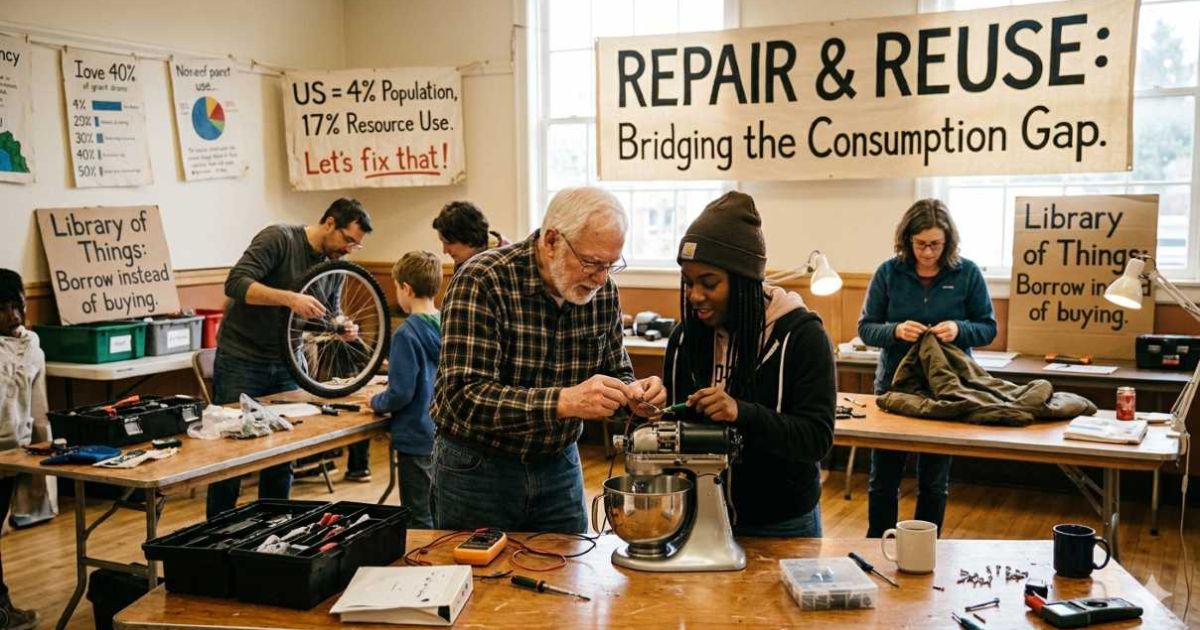
Reduce consumption – it sounds simple, but for most Americans, it represents a fundamental shift in how we think about our daily lives. The United States makes up just 4% of the world’s population yet consumes 17% of its resources . The average American’s ecological footprint is more than five times what the planet can sustain .
The financial picture is equally stark. The typical U.S. household spends over $60,000 annually on consumption-related expenses . Yet studies show that beyond a certain point, more stuff doesn’t equal more happiness. In fact, clutter and debt often lead to stress, not satisfaction.
This guide provides practical, actionable strategies for American households to reduce consumption across all areas of life—saving money, reducing stress, and lightening your environmental footprint all at once.
For foundational knowledge about sustainable living, explore our zero waste living definition and 2026 guideto understand how consumption reduction fits into your eco-friendly lifestyle.
The Mindset Shift: From More to Enough

Understanding Your “Why”
Before changing habits, it helps to understand why you want to consume less. Common motivations include:
| Motivation | Why It Matters |
| Financial freedom | Less spending means more savings, less debt |
| Environmental concern | Lower footprint helps combat climate change |
| Reduced stress | Less clutter, fewer decisions, more peace |
| More time | Less shopping, cleaning, organizing |
| Better health | Fewer processed goods, more whole foods |
Research from the American Psychological Association shows that experiences bring more lasting happiness than possessions . Shifting focus from acquiring things to creating experiences is the foundation of sustainable consumption reduction.
The 30-Day Rule
One of the most effective tools is the 30-day rule. When you feel the urge to buy something non-essential, wait 30 days. After a month, you’ll likely find you don’t need or even want it anymore .
This simple practice eliminates impulse purchases and helps distinguish genuine needs from momentary wants.
Reduce Consumption in Food and Groceries

Meal Planning and Smart Shopping
Food waste costs the average American family $1,500 annually . Reducing food waste is one of the quickest ways to cut consumption and save money.
Effective strategies include:
- Plan weekly meals before shopping – build menus around what you already have
- Shop with a list and stick to it – avoid impulse purchases
- Buy in bulk for staples you use regularly – reduces packaging waste
- Shop at farmers markets – less packaging, fresher food, supports local
- Use the “first in, first out” rule – rotate pantry items to prevent spoilage
Reduce Meat and Dairy Consumption
Livestock production requires enormous resources. Producing a single pound of beef requires nearly 1,800 gallons of water . Cutting meat consumption by just one day per week reduces your food footprint significantly.
Try these approaches:
- Meatless Mondays – one plant-based day weekly
- Reduce portion sizes – smaller meat portions, more vegetables
- Choose plant-based proteins – beans, lentils, tofu cost less and have lower impact
Reduce Consumption of Energy
Electricity and Heating
Home energy use accounts for a major portion of household consumption. Simple changes yield significant savings.
| Strategy | Potential Savings |
| LED lighting | $200 annually per household |
| Smart thermostat | 10-15% on heating/cooling |
| Sealing air leaks | 20% on energy bills |
| Energy Star appliances | 20-30% per appliance |
| Unplugging electronics | 5-10% on electricity |
The Department of Energy offers free resources and calculators to help households identify energy-saving opportunities .
Transportation
Transportation is the largest source of U.S. greenhouse gas emissions . Reducing fuel consumption saves money and the planet.
Practical steps:
- Combine errands into single trips
- Use public transit when available
- Walk or bike for short trips
- Keep tires properly inflated – improves gas mileage by 3%
- Consider a fuel-efficient vehicle when it’s time to replace
Reduce Consumption of Material Goods

The Secondhand First Rule
Before buying anything new, check if you can get it used. Thrift stores, Facebook Marketplace, Craigslist, and Freecycle offer everything from furniture to electronics at a fraction of retail cost.
Benefits of buying secondhand:
- 50-90% savings compared to new
- No packaging waste – reduces environmental impact
- Unique finds – vintage and one-of-a-kind items
- Supports local – money stays in community
The One-In-One-Out Rule
For every new item you bring home, remove one similar item. This simple habit prevents accumulation and forces conscious decisions about what you truly need.
Repair Before Replacing
According to the U.S. Public Interest Research Group, 75% of household appliances discarded in the USA were repairable with simple parts . Learning basic repair skills extends the life of your possessions and saves money.
Where to learn:
- YouTube tutorials for everything from sewing to appliance repair
- Local repair cafés – free community repair events
- iFixit – free repair guides for electronics
- Community classes at libraries and community centers
Reduce Consumption of Water
Indoor Water Conservation
The average American family uses over 300 gallons of water daily . Simple fixes dramatically reduce usage.
| Action | Water Saved |
| Fix leaks | 10,000 gallons/year per household |
| Low-flow showerheads | 2.5 gallons per minute saved |
| Turn off tap while brushing | 4 gallons per day |
| Full dishwasher loads only | 5-10 gallons per load |
| Shorter showers | 2.5 gallons per minute |
Outdoor Water Conservation
Landscape irrigation accounts for nearly one-third of residential water use . Smart landscaping reduces this significantly:
- Plant native species – adapted to local rainfall
- Use mulch – reduces evaporation by 70%
- Water early morning – minimizes evaporation loss
- Install rain barrels – capture free water for gardens
The Financial Benefits of Reduced Consumption
The Latte Factor and Beyond
Small daily savings add up to significant annual totals:
| Daily Saving | Monthly | Yearly |
| $3 (coffee) | $90 | $1,080 |
| $5 (lunch out) | $150 | $1,800 |
| $10 (impulse buys) | $300 | $3,600 |
The average American household could save $5,000-10,000 annually by consciously reducing consumption across food, energy, and goods .
Debt Reduction and Savings
Money saved by consuming less can transform your financial health:
- Pay down high-interest debt
- Build emergency savings – 3-6 months of expenses
- Invest for retirement – compound interest multiplies savings
- Fund experiences – travel, education, time with loved ones
Community and Sharing Economy

Borrow Instead of Buy
Why own something you use once a year? Community resources let you borrow:
- Tool libraries – borrow drills, saws, ladders
- Kitchen libraries – borrow specialty bakeware, appliances
- Seed libraries – free seeds for gardening
- Toy libraries – rotate children’s toys without buying new
Sharing and Swapping
Buy Nothing groups on Facebook connect neighbors to give away items for free . Clothing swaps with friends refresh your wardrobe without spending . Community gardens share tools, knowledge, and harvests.
Frequently Asked Questions
How do I start reducing consumption without feeling deprived?
Start small. Pick one area—food, energy, or shopping—and focus there. Celebrate savings rather than focusing on what you’re giving up. Remember that experiences, not things, bring lasting happiness.
What’s the single most impactful way to reduce consumption?
For most Americans, transportation offers the biggest opportunity. Driving less, combining trips, and choosing fuel-efficient vehicles reduces both emissions and expenses significantly .
Does buying secondhand really make a difference?
Absolutely. Extending the life of a piece of clothing by just nine months reduces its carbon, water, and waste footprint by 20-30% . Every secondhand purchase displaces demand for new production.
How can I reduce consumption when I have children?
Children don’t need as much as marketers suggest. Embrace hand-me-downs, borrow from friends, and focus on experiences rather than toys. Kids often prefer time with parents over new possessions.
Is reducing consumption just for wealthy people?
Actually, the opposite. Lower-income households often practice resourcefulness out of necessity. Reducing consumption saves money—it’s a strategy for financial freedom, not a luxury.
Conclusion: The Freedom of Enough
Reduce consumption isn’t about deprivation—it’s about freedom. Freedom from debt, from clutter, from the constant pressure to acquire. Freedom to focus on what truly matters: health, relationships, experiences, and peace of mind.
Start with these priorities:
- Track your spending for one month – identify where your money goes
- Implement the 30-day rule for non-essential purchases
- Make secondhand your first choice
- Reduce food waste through meal planning
- Cut energy use with simple efficiency measures
The result is a life with less stress, more savings, and a lighter footprint on the planet.
For more guidance on sustainable living, revisit our zero waste living definition and 2026 guide for additional tips and inspiration.
reduce consumption, explore the EPA’s sustainable materials management and the Center for a New American Dream .