

Introduction — The Powerful Connection Between Design and Energy Savings
When most homeowners think about energy efficiency, they imagine solar panels, LED bulbs, or smart thermostats. But long before any technology is installed, the very shape and structure of your home determines how much energy you’ll need in the first place .
Architecture and energy efficiency are inseparable partners. The way a building is oriented, the materials used in its walls, the size and placement of windows—all these architectural decisions fundamentally shape energy consumption for decades to come . Unlike appliances that can be upgraded later, the architectural foundation of efficiency is permanent.
This guide explores how thoughtful architectural design creates homes that stay comfortable naturally, require less mechanical heating and cooling, and ultimately cost less to own. Whether you’re building new or renovating, understanding these principles helps you make smarter decisions that pay back year after year
Why Building Shape Matters for Energy Performance
The geometric form of a building—its shape, volume, and proportions—significantly impacts how much energy it consumes .
The Science of Form and Energy Use
Research comparing different building geometries reveals dramatic differences in performance. A study analyzing Cask, Sphere, and Cube shapes found that spherical forms reduced environmental impact by 30.81% compared to other shapes, primarily due to their reduced surface area relative to volume .
This principle is straightforward: compact shapes with less exterior surface area lose less heat in winter and gain less heat in summer. Every protrusion, wing, or complex angle creates additional surface area where energy transfers between inside and out .
Optimizing Building Shape for Efficiency
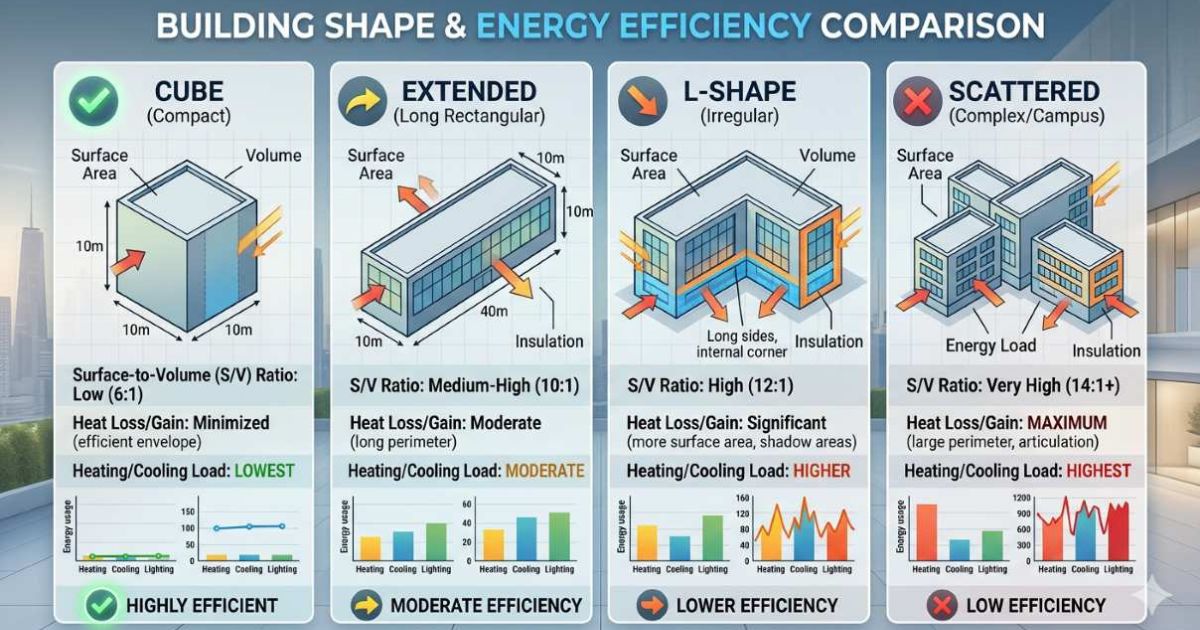
For residential design, this doesn’t mean homes must be perfect spheres or cubes. Rather, it suggests that simple, compact forms typically outperform highly articulated designs. Key considerations include:
- Surface-to-volume ratio: Minimize exterior wall area relative to floor space
- Avoiding unnecessary complexity: Each wing and offset increases energy loss
- Solar orientation: Elongated shapes should face south for passive solar gain
Research on zero-energy buildings confirms that one-story designs with compact footprints achieve net-positive energy performance more easily than multi-story or sprawling layouts .
Passive Design Strategies That Work With Nature
Passive design uses the natural environment—sun, wind, and shade—to maintain comfortable indoor temperatures with minimal mechanical intervention .
Solar Orientation and Window Placement
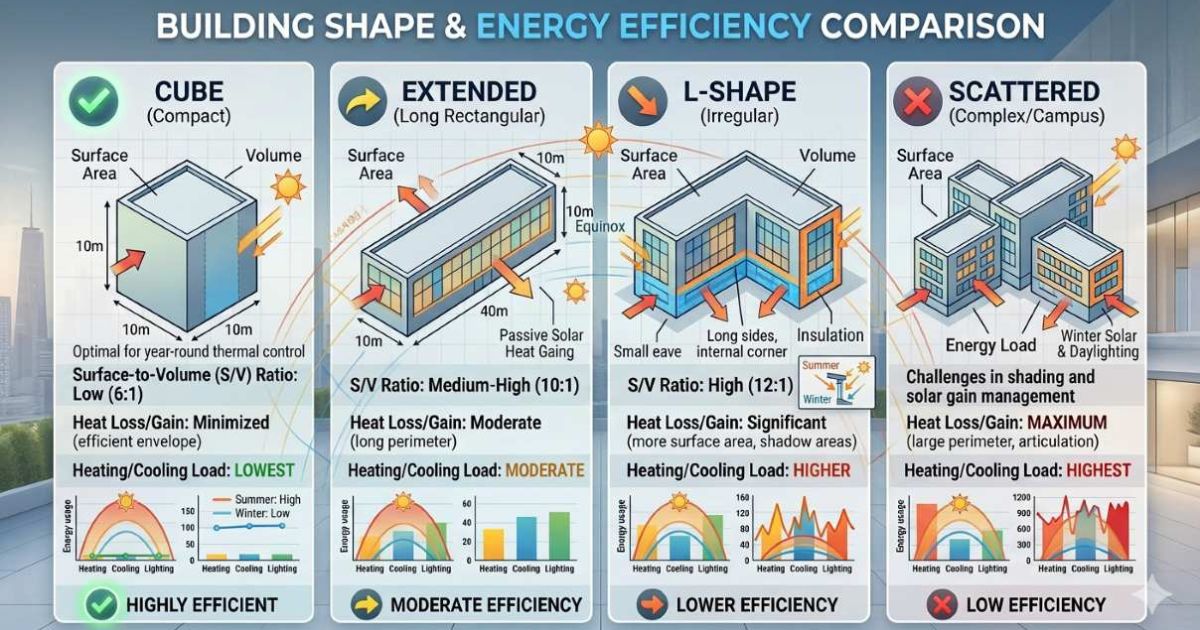
Proper building orientation is the foundation of passive design. In northern climates, maximizing south-facing windows captures free solar heat during winter months. In hot climates, minimizing east and west glazing reduces unwanted morning and afternoon heat gain .
Window-to-wall ratio (WWR) matters tremendously. Studies show that optimizing this single parameter significantly impacts overall energy use, with ideal ratios varying by climate zone . Too much glass overheats; too little wastes free solar gain.
Thermal Mass for Temperature Stability
Thermal mass—materials like concrete, masonry, or tile that absorb and store heat—acts as a thermal battery inside the home . During the day, mass absorbs excess heat, keeping rooms cooler. At night, it releases stored warmth, reducing heating needs.
Research in hot-dry climates demonstrates that combining thermal mass with proper insulation and glazing can reduce indoor temperatures by up to 35°C (95°F) when outdoor temperatures reach 44°C . This dramatic effect shows how architectural choices outperform mechanical systems.
Natural Ventilation Strategies
Thoughtful window placement creates natural airflow that cools homes without air conditioning. Cross-ventilation—placing openings on opposite sides of rooms—draws breezes through living spaces . Stack ventilation uses warm air’s natural tendency to rise, drawing cool air through lower openings as hot air exits higher windows.
The most effective designs consider prevailing wind directions and incorporate operable windows positioned to capture and channel breezes through occupied areas.
The Building Envelope: Walls, Windows, and Insulation
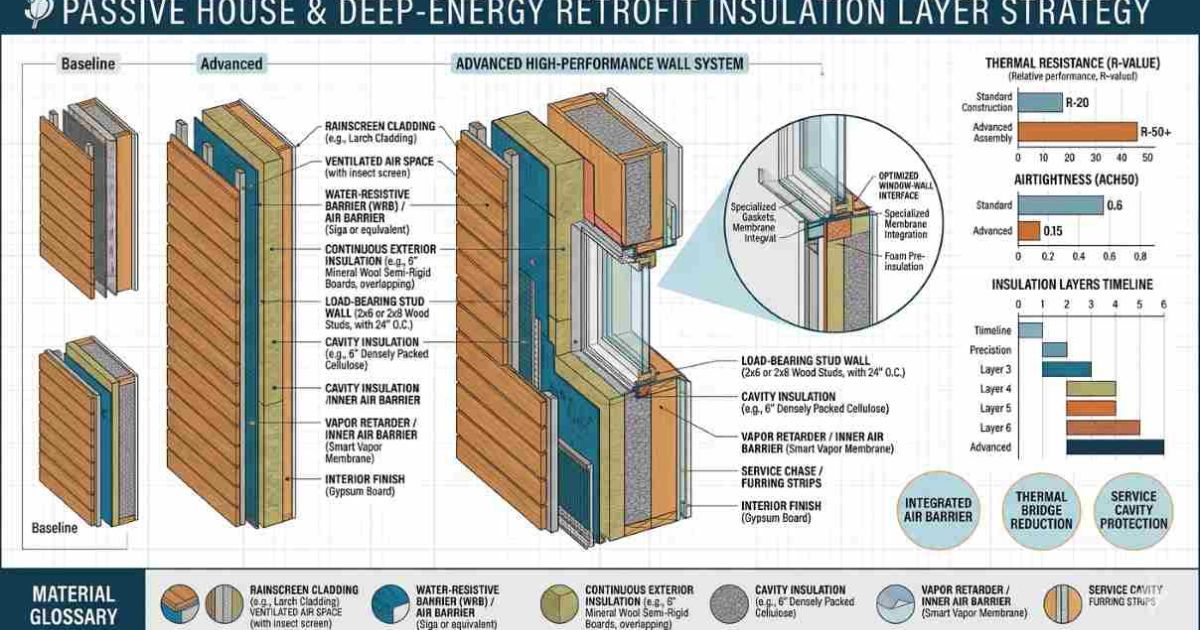
The building envelope—the physical separator between interior and exterior—determines how much energy your home requires for heating and cooling .
High-Performance Wall Systems
Wall construction dramatically affects energy performance. Studies comparing different wall types show that insulated concrete forms (ICF), structural insulated panels (SIPs), and advanced wood-framed walls with continuous insulation outperform standard construction by significant margins .
Key variables include:
- Insulation R-value: Higher values mean better thermal resistance
- Continuous insulation: Eliminates thermal bridging through framing
- Air sealing: Prevents uncontrolled air leakage
Window Technology and Placement
Windows represent both opportunity and challenge. While they provide light, views, and passive solar heat, they also transfer energy far more readily than insulated walls.
Modern high-performance windows feature:
- Double or triple glazing with low-emissivity coatings
- Gas fills (argon or krypton) between panes
- Insulated frames with thermal breaks
- Appropriate solar heat gain coefficients for each climate
Research demonstrates that window specifications must be tailored to climate—what works in cold regions may overheat buildings in warm zones .
Roof Design and Attic Insulation
Roofs experience extreme temperature swings, making them critical for energy performance. Cool roofs with reflective surfaces reduce cooling loads in hot climates, while well-insulated attics preserve heat in cold regions .
Advanced strategies include:
- Radiant barriers that reflect heat away from living spaces
- Ventilated attics that remove trapped hot air
- Green roofs with vegetation that provide insulation and stormwater management
Climate-Specific Design Approaches
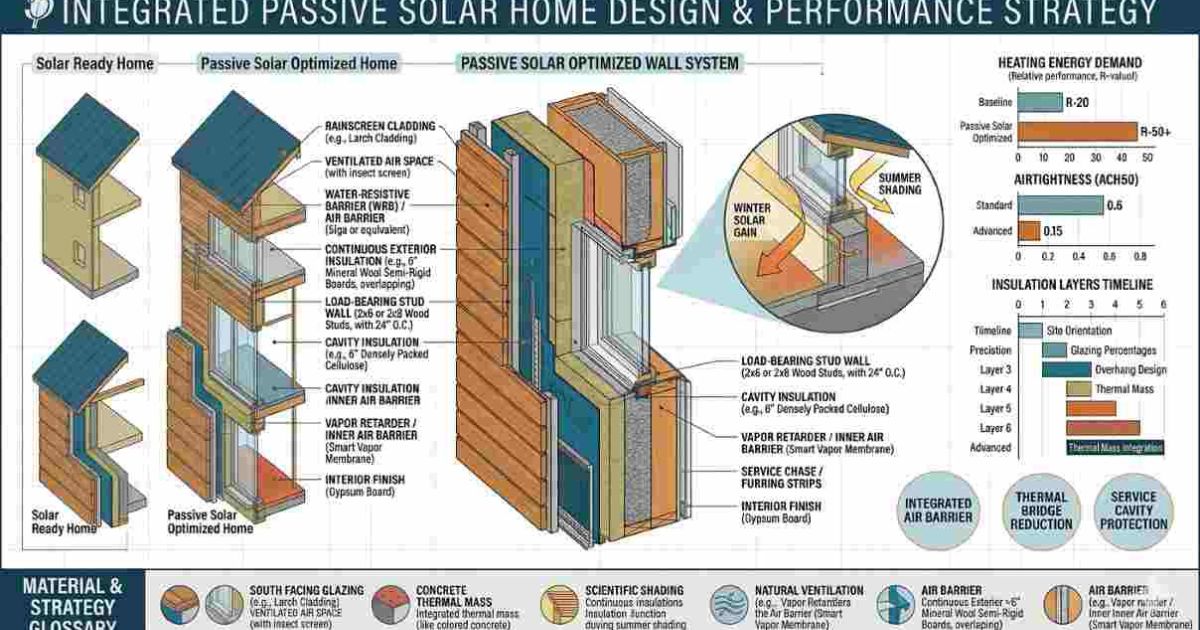
Effective architectural design must respond to local climate conditions—what works in one region may fail in another .
Cold Climate Strategies
In heating-dominated climates, architecture should:
- Maximize south-facing glazing for passive solar gain
- Prioritize extremely high insulation levels throughout the envelope
- Use compact forms to minimize surface area
- Include airlocks or mudrooms to reduce infiltration
- Consider earth sheltering on north exposures
Research shows that cold climate optimizations can reduce energy use by 50% compared to standard designs .
Hot Climate Strategies
In cooling-dominated regions, effective architecture features:
- Shading devices (overhangs, louvers, pergolas) that block high summer sun
- Light-colored exterior surfaces that reflect solar radiation
- Strategic window placement that minimizes east-west glazing
- Night-flush ventilation that cools thermal mass overnight
Studies in hot-dry climates demonstrate that passive design strategies can reduce operational energy consumption by 60% annually .
Mixed and Temperate Climate Approaches
Regions with both heating and cooling seasons require balanced strategies:
- Adjustable shading (deciduous trees, awnings) that provides summer shade but admits winter sun
- Moderate insulation levels appropriate for both seasons
- Operable windows that capture beneficial breezes
- Thermal mass that moderates daily temperature swings
Integrating Renewable Energy Through Architecture
True energy-efficient architecture doesn’t stop at conservation—it also accommodates renewable energy generation seamlessly .
Building-Integrated Photovoltaics (BIPV)
Solar panels need no longer be afterthoughts bolted onto finished roofs. Building-integrated photovoltaics (BIPV) incorporate solar generation directly into building materials—roof tiles, facade panels, even windows .
Research on BIPV shows that thoughtful integration during design—considering roof orientation, tilt, and shading—maximizes energy generation while maintaining architectural integrity . The building form itself becomes part of the energy solution.
Solar-Ready Design
Even without immediate solar installation, homes designed as “solar ready” include:
- Roof orientation and pitch optimized for future panels
- Structural capacity to support added weight
- Conduit and electrical panel space pre-installed
- Unshaded roof areas reserved for collection
This forward-thinking approach ensures that when homeowners are ready for solar, their architecture supports rather than hinders it.
Economic Benefits of Energy-Efficient Architecture
The financial case for energy-efficient architectural design grows stronger each year as energy prices rise .
Long-Term Operating Savings
While high-performance design may increase initial construction costs, the operating savings compound over time. Research on green building renovations demonstrates energy reductions of 25% overall, with heating and cooling loads dropping 30% and 20% respectively .
These savings translate directly to lower utility bills year after year, for the entire life of the building.
Property Value Premium
Homes designed for energy efficiency command higher resale values. Buyers recognize that efficient homes cost less to own and provide superior comfort. Research confirms that green building certifications and documented energy performance increase property values .
Incentives and Certification
Many jurisdictions offer incentives for energy-efficient design. Programs like LEED (Leadership in Energy and Environmental Design), Passive House, and ENERGY STAR for Homes provide frameworks for achieving and documenting performance .
Meeting standards like Architecture 2030—which aims for carbon-neutral buildings by 2030—often qualifies homeowners for tax credits, rebates, and reduced permitting fees .
Frequently Asked Questions
Does energy-efficient architecture cost more upfront?
Typically yes, but the premium varies widely—from 0–10% for basic efficiency to higher for advanced passive design. These costs are recovered through lower utility bills, often within 5–10 years .
Can I make my existing home more energy-efficient through architectural changes?
Absolutely. Window replacements, added insulation, air sealing, and even additions can improve efficiency. A home energy audit identifies the most effective improvements .
What’s the single most important architectural feature for energy efficiency?
The building envelope—walls, roof, windows, and insulation working together as a system. No single component matters more than the whole .
How does building shape affect energy use?
Compact shapes with less exterior surface area lose less energy. Complex shapes with many corners and wings have more area for heat transfer, increasing both construction costs and energy bills .
Are energy-efficient homes more comfortable?
Yes. Proper insulation eliminates drafts, high-performance windows reduce cold spots, and thermal mass moderates temperature swings. Efficient homes maintain consistent temperatures with fewer hot and cold zones .Q6: What certifications should I look for?
LEED, Passive House (PHIUS), ENERGY STAR, and Net Zero Energy certifications all indicate verified performance. Choose based on your goals and budget .
Conclusion — Architecture as the Foundation of Energy Efficiency
The relationship between architecture and energy efficiency is fundamental. Before any mechanical system operates, before any solar panel generates power, the building itself determines how much energy will be needed .
Thoughtful architectural design—optimizing building shape, orientation, envelope, and passive strategies—creates homes that work with nature rather than against it. These homes cost less to operate, provide superior comfort, maintain healthier indoor environments, and retain higher value .
Whether building new or renovating, start with architecture. Let the building itself be the first and most important energy efficiency measure. Then add efficient systems and renewable generation to create a home that’s truly