

Introduction: More Than a Modern American Trend
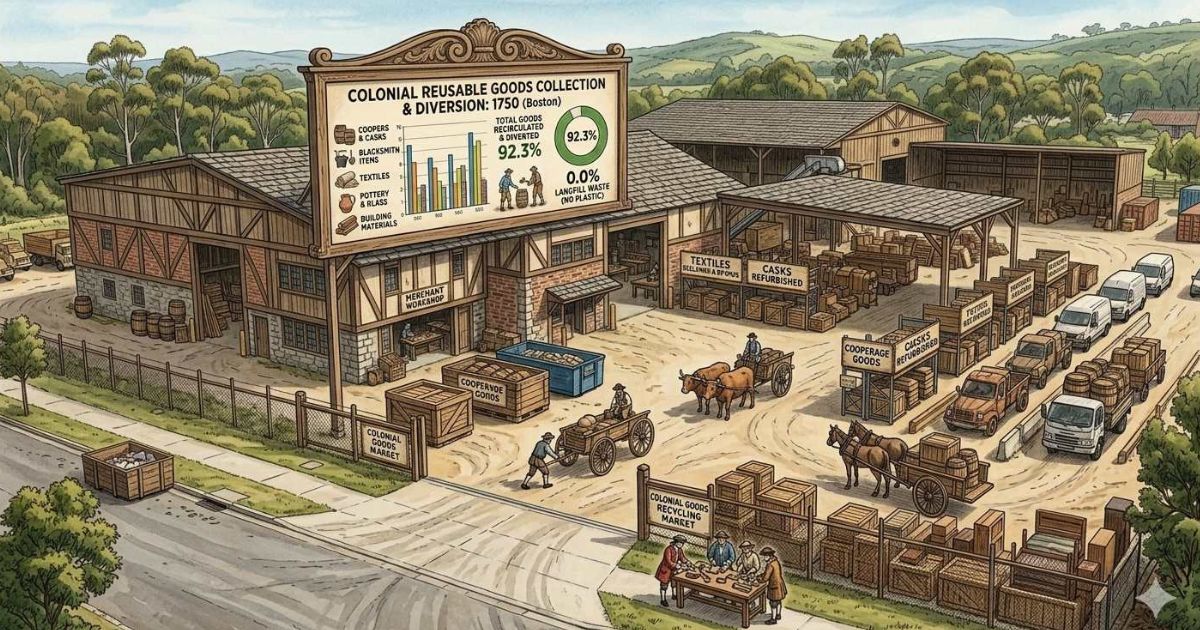
The history of zero waste living is often misunderstood as a new lifestyle fad born on social media. In reality, humans lived without creating trash for thousands of years out of pure necessity.
This journey follows the evolution from resource scarcity in ancient times to the intentional minimalism we see today across the United States. By looking back, we can find the blueprints for a cleaner and more sustainable American future.
Specifically, understanding our past helps us recognize that zero waste is not about deprivation. Instead, it is about returning to a respectful relationship with resources that our ancestors understood intuitively.
For foundational knowledge, explore our comprehensive zero waste living definition and 2026 guideto see how these historical lessons apply to modern American households.
Ancestral Frugality: The Original Zero Waste Era in America
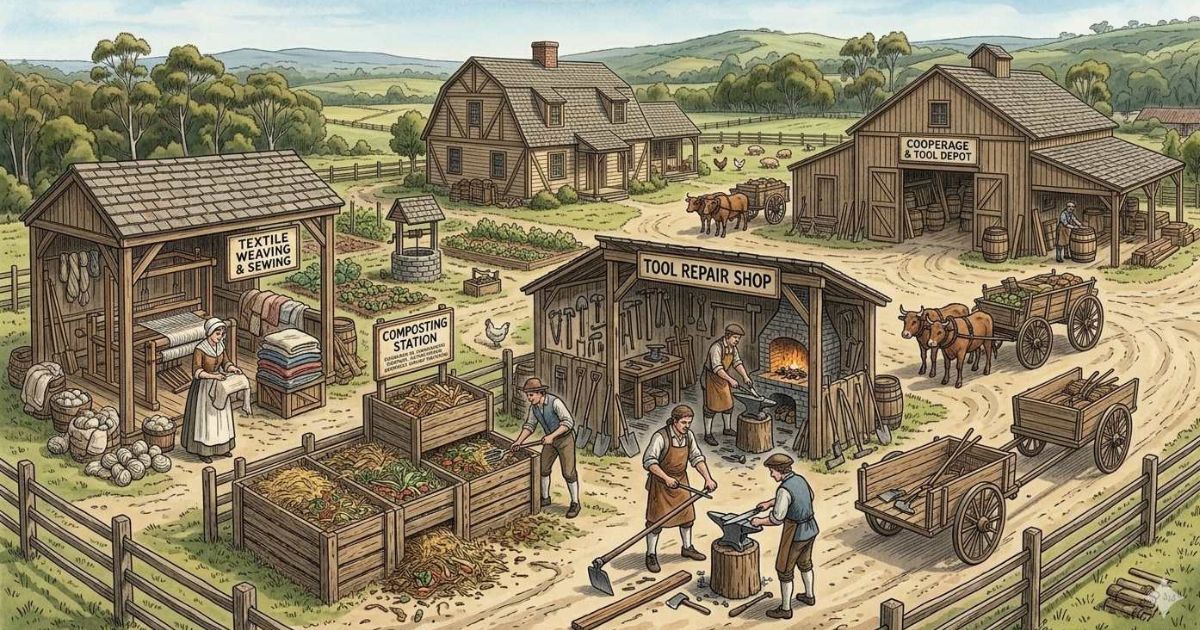
Before the industrial revolution, waste was a foreign concept to most American households. Specifically, everything had value, and nothing was truly “disposable.”
In colonial America, families repurposed worn-out clothing into quilts and rag rugs. Food scraps always fed the livestock or returned to the soil through composting. Broken tools were repaired, not replaced.
During the early 1900s, this “make do and mend” attitude remained the standard across the United States. Furthermore, communities operated on a local circular economy without even knowing the term.
Milk was delivered in reusable glass bottles that were washed and refilled. Dry goods came in bulk burlap sacks that became clothing and towels. Vegetables arrived without plastic wrapping.
Consequently, the carbon footprint of an average American family was naturally low because plastic had not yet entered the mainstream market. This wasn’t virtue—it was simply how life worked.
The Shift to Throwaway Culture in Post-War America
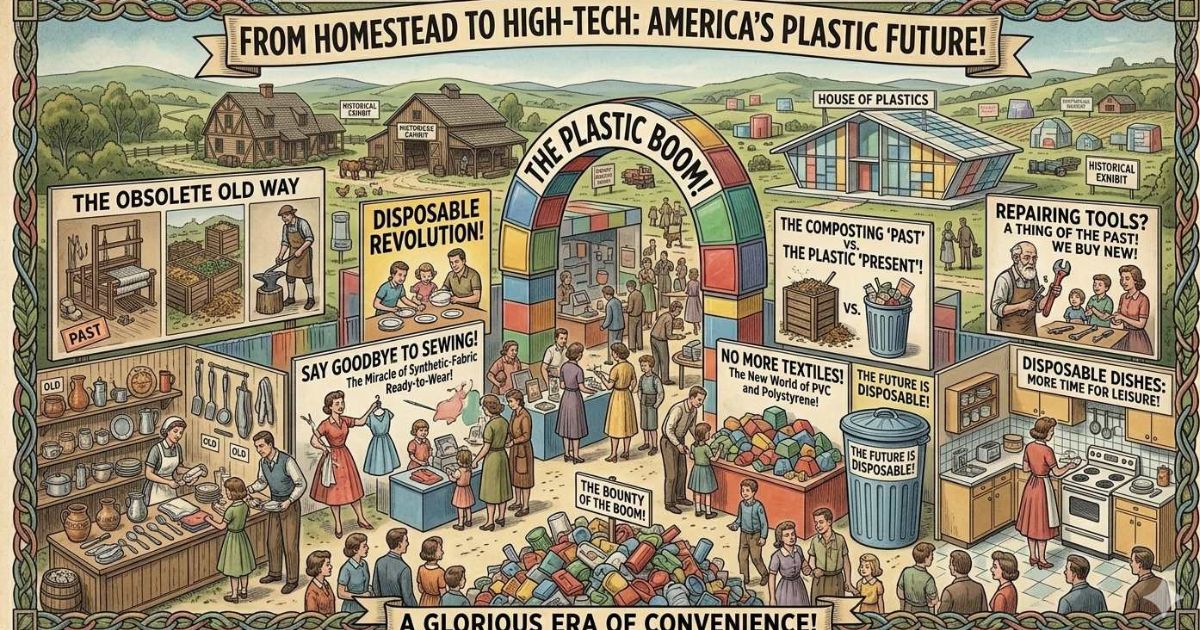
The mid-20th century marked a dramatic turning point in the history of zero waste living. Following World War II, a massive surge in plastic production transformed American life.
Specifically, marketers began promoting the convenience of “single-use” items as a sign of progress and wealth. Disposable cups, plates, and razors symbolized modern freedom from tedious chores.
Suddenly, the durable glass, metal, and wooden tools of previous generations were replaced by cheap, throwaway alternatives. Plastic packaging appeared on everything, from bread to vegetables.
As a result, the amount of municipal solid waste in the United States skyrocketed. Between 1950 and 2000, American waste production tripled, even as the population only doubled.
By the 1970s, the environmental consequences of this shift became impossible to ignore. The Cuyahoga River caught fire in Ohio. Smog choked major cities. Landfills overflowed.
This crisis birthed the first Earth Day in 1970 and the modern environmental movement that continues today.
Dr. Paul Palmer and the Birth of “Zero Waste” in California
The actual term “Zero Waste” did not appear until the mid-1970s. In fact, a chemist named Dr. Paul Palmer founded Zero Waste Systems Inc. in Oakland, California in 1974.
Initially, his goal was practical rather than philosophical. He sought to find new uses for chemicals produced by the emerging Silicon Valley electronics industry. Instead of dumping valuable compounds, he created a marketplace for industrial byproducts.
Palmer’s work shifted the focus from merely managing trash to preventing it at the source. Specifically, he argued that waste is a design flaw rather than an inevitable byproduct of manufacturing.
This shift in logic provided the intellectual foundation for the global movement we recognize today in 2026 and 2027. Palmer’s insight—that waste only exists when we fail to value materials—remains central to zero waste philosophy.
The Rise of Modern Zero Waste Influencers in America
The movement moved from industrial circles to the household level in the early 2000s. Specifically, individuals like Bea Johnson and Lauren Singer popularized the idea of a “trash jar.”
Bea Johnson, a French woman living in California, published “Zero Waste Home” in 2013. Her family’s annual trash fit inside a single quart-sized jar. This visual stunned readers worldwide.
Lauren Singer, a young New Yorker, launched her blog “Trash is for Tossers” around the same time. She famously saved four years of trash in one mason jar. Her TEDx talk has been viewed millions of times.
By showing that an entire year’s worth of waste could fit in a single container, they inspired millions to rethink their consumption.
In the USA, this led to the creation of the first package-free grocery stores:
- In.gredients opened in Austin, Texas in 2012
- Precycle launched in Brooklyn, New York
- Package Free Shop was founded by Lauren Singer herself
Additionally, the movement integrated with social media, making sustainability look both beautiful and achievable. Consequently, zero waste became a lifestyle aspiration rather than just a technical policy.
Lessons from History: How to Live Zero Waste in 2027
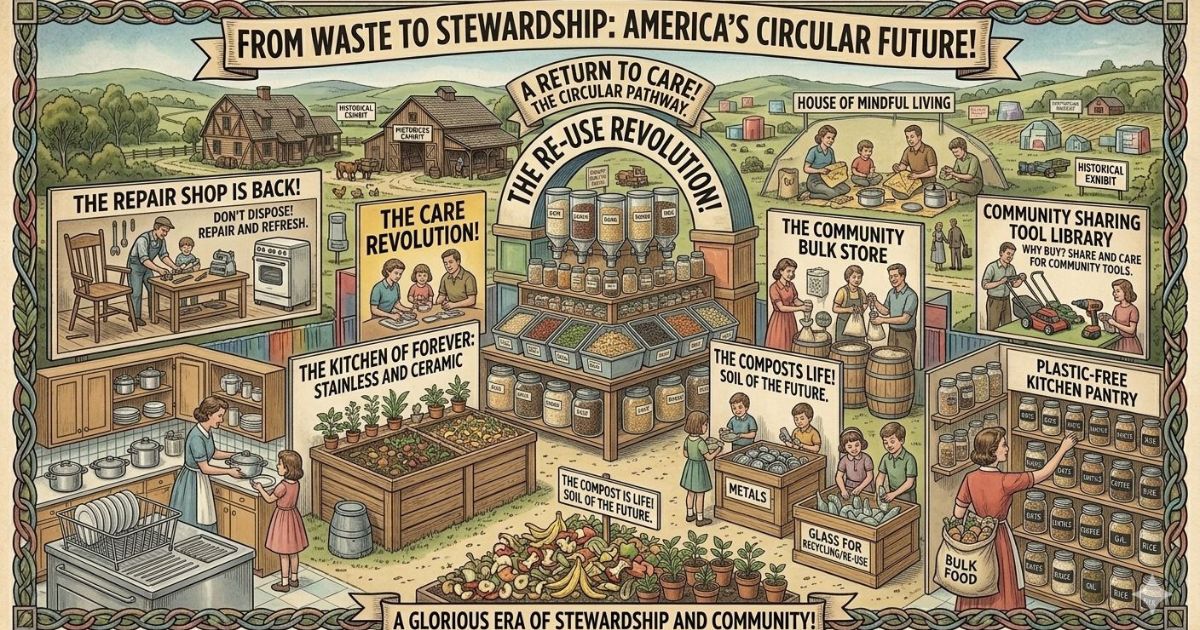
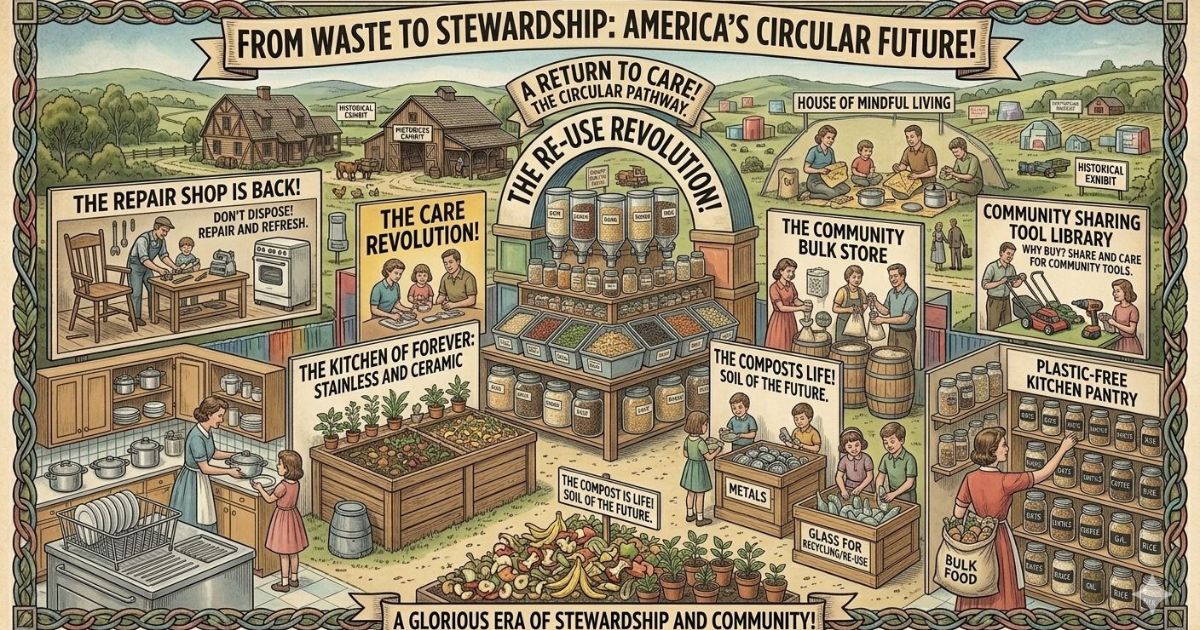
We can learn a great deal from the history of zero waste living to improve our modern American habits. Specifically, looking at how our grandparents lived offers practical solutions for our 2027 challenges.
| Historical Practice | Modern 2027 Application | Benefit |
| Repairing clothes | Learn basic sewing; support local tailors | Extends garment life by years |
| Mending tools | Visit repair cafes; watch YouTube tutorials | Keeps items out of landfills |
| Bulk shopping | Bring jars to bulk sections or co-ops | Eliminates packaging waste |
| Composting scraps | Start backyard or countertop compost | Returns nutrients to soil |
| Cooking from scratch | Meal plan and prep at home | Reduces processed food packaging |
| Using cloth rags | Replace paper towels with old t-shirts | Saves $80-100 annually |
According to the Environmental Protection Agency (EPA) , reducing and reusing are the most effective ways to save natural resources . These historical practices align perfectly with current agency recommendations.
The Role of American Government and Policy
In recent years, the history of zero waste living has moved into the halls of American government. For instance, several U.S. states have passed significant legislation:
- California enacted sweeping Extended Producer Responsibility (EPR) laws
- Maine followed with its own packaging regulations
- Oregon expanded its bottle bill to include more containers
- Over 10 states now ban single-use plastic bags
- Right to Repair laws have passed in Massachusetts, New York, and Minnesota
These policies reflect a growing understanding that individual action must be supported by systemic change.
The Environmental Protection Agency (EPA) has increasingly focused on Sustainable Materials Management , which examines the entire lifecycle of products. Specifically, this aligns with the historical view that resources should be kept in use for as long as possible.
As we move into 2027, we expect to see more “circular economy” policies that hold companies accountable for their packaging and products from design through disposal.
H4: Data Point: The Plastic Explosion in America
To understand the urgency, consider these striking numbers:
| Year | Global Plastic Production | U.S. Plastic Waste Generated |
| 1950 | 2 million tons | Less than 1 million tons |
| 2000 | 200 million tons | 30 million tons |
| 2025 | 400+ million tons | 40+ million tons |
In contrast, the world produced only about 2 million tons of plastic in 1950. This data point highlights why returning to historical zero-waste principles is no longer optional but essential for survival.
The United States is the world’s largest generator of plastic waste, producing more than all European Union countries combined . Every American generates nearly 5 pounds of municipal solid waste daily .
Frequently Asked Questions
When did zero waste become a global movement?
While the term was coined in the 1970s by Dr. Paul Palmer in California, it truly became a global household movement between 2008 and 2015. This was driven by viral social media stories, Bea Johnson’s book, and growing awareness of the Great Pacific Garbage Patch.
Is zero waste living just for the wealthy?
Historically, zero waste was the lifestyle of the poor because they could not afford to throw anything away. In 2027, the movement is returning to those roots by focusing on frugality, repair, and community sharing rather than expensive “eco-friendly” gadgets. Many American households save $500-1,200 annually through zero waste practices .
How did the USA contribute to the history of zero waste?
The USA was the birthplace of the industrial “Zero Waste Systems” concept through Dr. Paul Palmer in Oakland. Additionally, American activists have been leaders in the “Right to Repair” movement, which is vital to zero waste philosophy. States like California and Maine now lead the nation in packaging legislation .
What was American life like before disposable culture?
Before the 1950s, most Americans:
- Bought milk in returnable glass bottles
- Shopped at butcher shops and bakeries with their own containers
- Repaired shoes, clothing, and appliances
- Composted kitchen scraps for gardens
- Burned paper for heating or used it for kindling
This wasn’t idealized—it was simply normal life before plastic.
Conclusion: Rewriting America’s Future Through the Past
The history of zero waste living shows us that a trash-free life is not a radical new experiment. Instead, it is a return to a more sensible, respectful way of living with our resources that Americans understood for centuries.
By combining the wisdom of the past with the technology and policy of 2027, we can create a world where waste no longer exists. The circular economy our ancestors practiced intuitively can become intentional and widespread.
Your next step is simple. Start today by refusing one single-use item and replacing it with a durable alternative. Notice how a small change connects you to a long history of human resilience and care for the earth.
For more inspiration, revisit our zero waste living definition and 2026 guidewhenever you need historical perspective or modern application tips.
External Resource: For scientifically-validated guidance on sustainable materials management, explore the Environmental Protection Agency’s resources .
The past holds the keys to our sustainable future. Learn from it, apply its wisdom, and become part of the next chapter in zero waste history.