

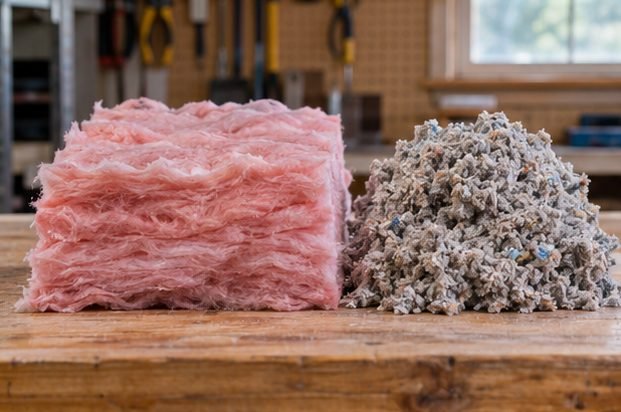
Attic cellulose insulation is loose paper fiber treated for use as insulation. It can cover irregular joist bays and frame tops in a dry, vented attic. To decide whether to use it, check the existing insulation, the condition of the ceiling and the manufacturer’s settled coverage chart before you set a depth or order material.
For help choosing between the attic floor and roofline, see the Attic & Roof Insulation pillar.
Where attic cellulose insulation works well
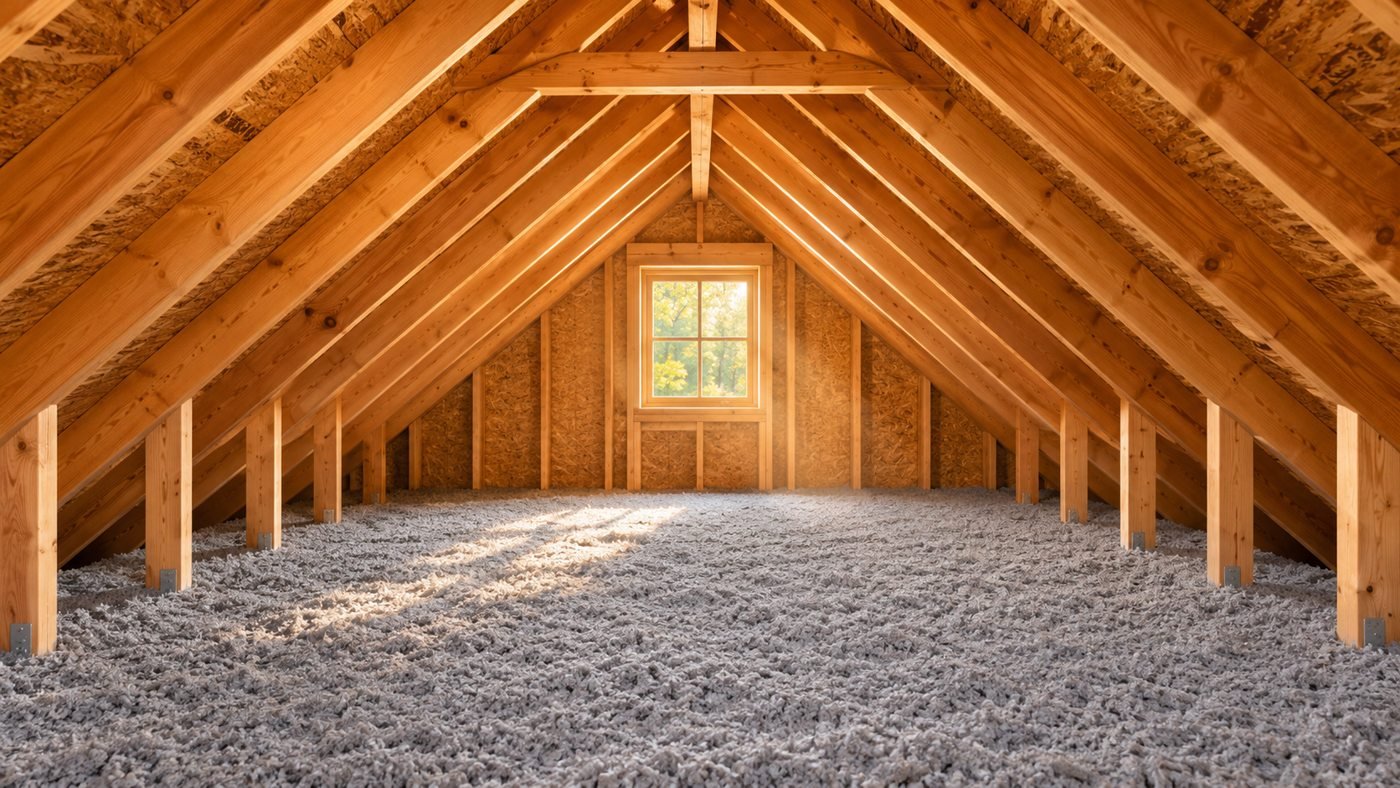
Cellulose is often a good fit for open attic floors where old framing, short bays and minor obstructions would make cutting batts slow. The installer can use a hose to distribute it around those shapes and build coverage above framing when the attic allows it. It suits a ceiling plane below a vented attic. A roof slope, closed cavity or finished room needs an insulation method designed for that location.
Look at the attic floor and the route from the hatch before comparing bids. A hose may reach an awkward bay, but the crew still needs to check depth there. Ask how the installation will reach the perimeter and behind ducts. If an area under storage decking cannot be assessed, request a distinct scope for that section.
How much attic cellulose insulation do you need?
Select an added R-value using your climate, existing insulation and applicable requirements. Use the cellulose product’s coverage chart for that target. Some charts distinguish the depth you should see at installation from the depth expected once it settles. Keep those numbers separate when checking the crew’s work. Your local supplier may offer different products with different coverage.
For example, if your product specifies at most 28 square feet per bag for the desired added resistance and the planned coverage is 920 square feet, divide 920 by 28 and round up to 33 bags. Check the chart’s required thickness as well. The example is math, not a coverage claim for a particular product. Base the order on actual packaging.
Know what settling means for the finished layer
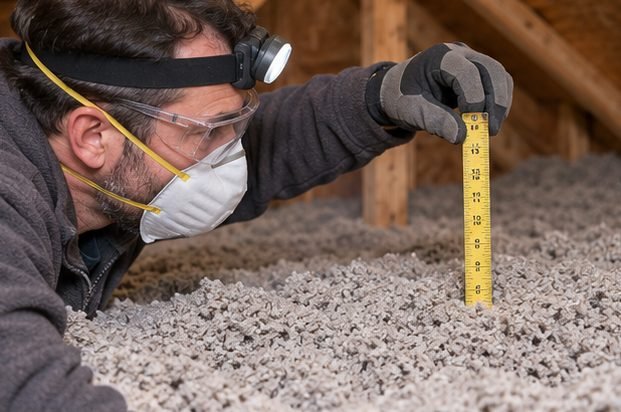
An initial pile of loose fibers can settle toward a lower depth over time. A product chart that accounts for this helps you plan a layer that meets the stated target once it has settled. Ask the installer to record the planned initial and settled thickness, or explain the chart when it uses different terms. A depth marker beside the hatch gives you one point to inspect, while markers farther in let you check the rest.
When comparing a later depth reading, remember that repair work, airflow near eaves and storage can move material. A thin strip at the edge may reflect installation or displacement rather than normal settling across the whole floor. Check the roof and vent layout before choosing a correction.
Decide what to do with old insulation
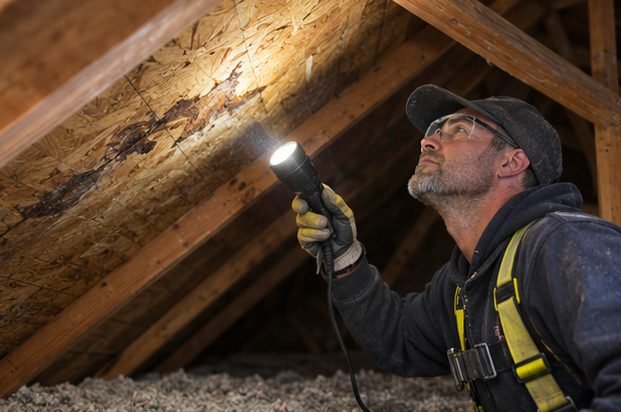
Dry existing cellulose may be able to stay when the assembly can receive a top-up. First identify the old material and look for moisture, stains, pests, displaced piles or areas that need access for sealing. If the material is unfamiliar or could be vermiculite, leave it undisturbed and arrange professional advice. Avoid assuming everything loose and gray in the attic is cellulose.
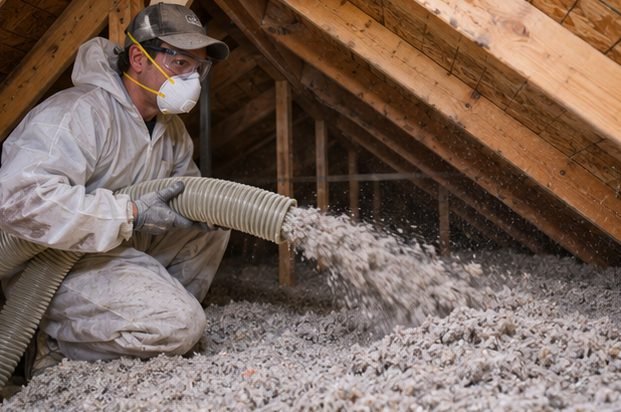
If the old layer is fiberglass, get a quote that explains why cellulose on top is compatible with the assembly. Ask how the installer will account for the existing depth and shape. Discuss material weight if the framing or ceiling appears unusual. Removing dry material solely to start with a uniform color may add labor without solving the reason you wanted the upgrade.
Control moisture before installing
Cellulose should be installed as part of a dry, suitable assembly. Stains near a plumbing vent could point to water entry. Frost or broad dampness may point to indoor moisture entering through gaps or a bath fan discharging into the space. Have the cause checked before covering the ceiling. The treatment used in cellulose does not make it suitable for regular wetting.
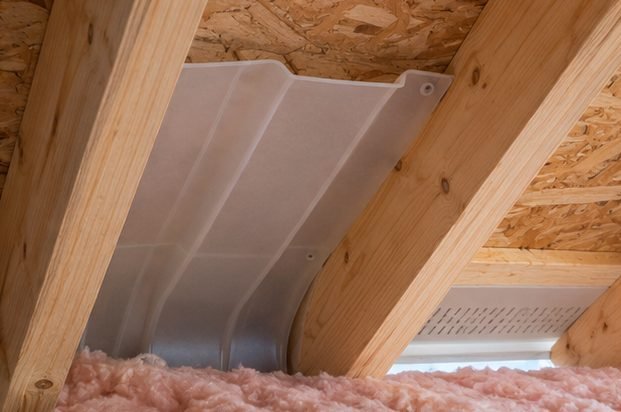
In a vented attic, ask how the crew will air-seal accessible openings and keep the intended ventilation path clear. Fixtures and chimneys require appropriate clearances and approved details. Ask who will handle those details, where the photos will be taken and how the hatch will remain insulated and usable once the loose layer is in place.
Compare quotes for attic cellulose insulation
Ask the installer for the brand, target, bag count, area, installed depth and any exclusion. If one quote includes ceiling sealing and the other only includes material and blowing, compare the services individually. Ask whether it will place depth markers, protect the eaves and show how it will work around service paths. Get a written explanation of any required removal.
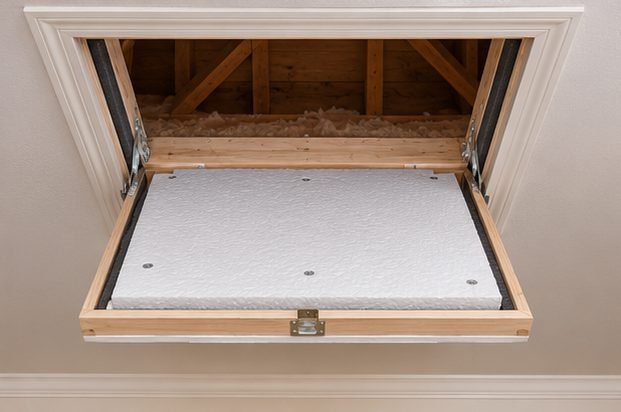
After the job, save photos, labels and the invoice. If the attic gets wet later, have the leak and affected insulation assessed before adding more. If you see a change in depth near an edge, compare photos and inspect how the baffles protect the existing intake route. These records make it easier to diagnose a specific problem instead of paying to redo the entire attic.
Set a baseline before topping up cellulose
Ask for several depth measurements and a simple sketch showing where the existing layer is thin. Mark any paths that contractors use to access wiring or ducts. When old cellulose has moved, check whether the pattern follows service traffic, a floorboard or an eave. Addressing the cause of displaced fill can make a localized repair more effective.

Record the starting material separately from what the crew adds. An installer may have to estimate the existing performance if the old product is unknown. Keep that estimate separate from the R-value the new product is rated to add. Ask how it will handle areas where old fill is missing entirely. Those locations may need a different depth so that the completed ceiling has more even coverage.
For a small repair, take photos from the same safe viewing point before and after the work. Include a visible reference such as a depth marker or the edge of a framed bay. Compare later photos after any repairs so you can see if another trade shifted the cellulose.
For attic cellulose insulation, retain the product name and coverage chart with the final invoice so future work can use the same baseline. Read U.S. Department of Energy’s home insulation guide for more background on materials and installation.
See how cellulose fits among other loose-fill attic insulation products, and compare it with fiberglass attic insulation options before choosing a bid.
For related guidance, see Blanket Insulation for Attics.
Frequently asked questions
Is cellulose a substitute for air sealing?
Loose cellulose resists heat flow. Use an appropriate continuous air barrier and seal openings in the ceiling separately.
Can I see settling immediately?
Use the product chart’s installation-depth requirement during the work and compare later readings with its settled-depth guidance.
Does cellulose have one universal R-value per inch?
Use the chart for the specific product and application. Installed density, settled depth and coverage affect the rated result.