

The main types of lighting in interior design are ambient, task, and accent lighting, with decorative fixtures also contributing visual character. These describe the jobs light performs rather than fixed categories of fixtures. One lamp can serve more than one role. Plan the activities first, then decide which layers the room needs.
Our principles of interior design guide explains light’s relationship with emphasis, contrast, and balance. This guide focuses on practical lighting layers and a room review rather than electrical installation instructions.
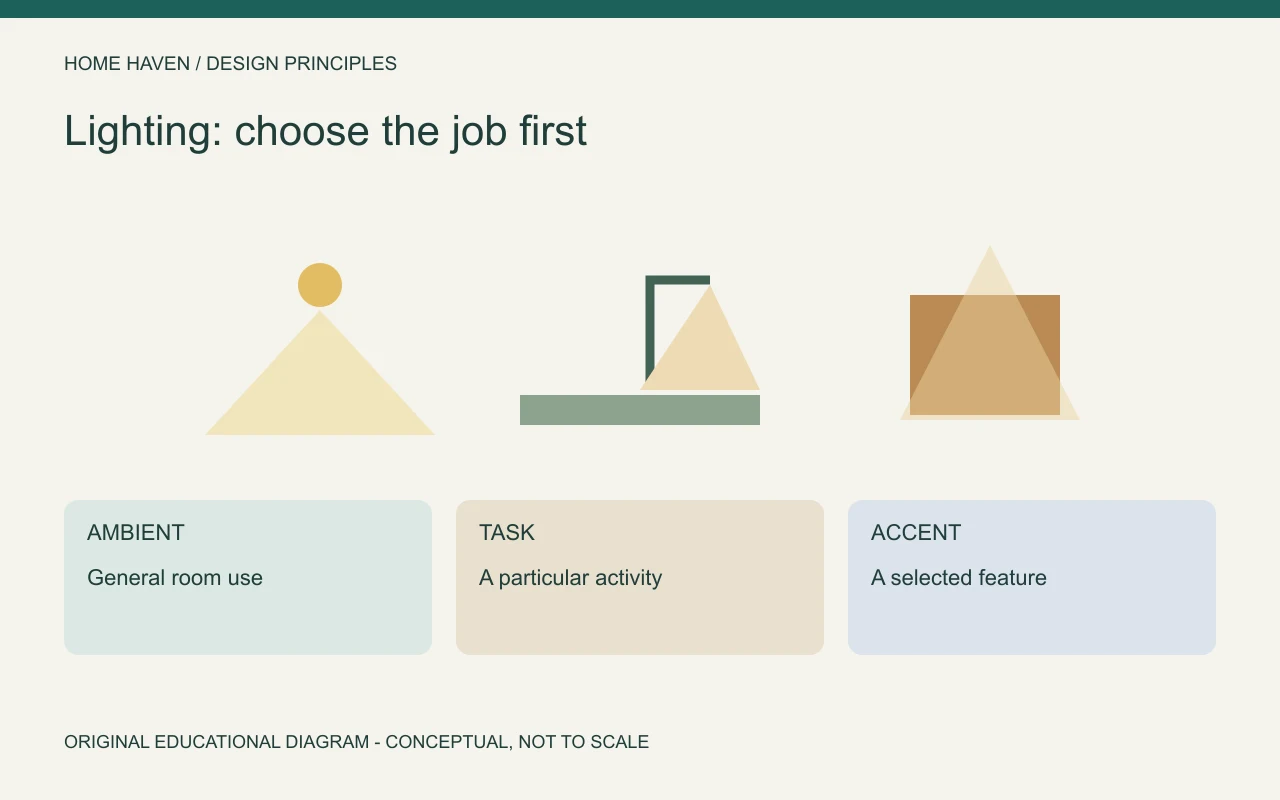
Ambient lighting: support general use
Ambient light provides the room’s general illumination. Depending on the space, it may come from ceiling fixtures, wall lighting, reflected light, or a combination. Daylight can contribute during the day, but evening use needs its own review.
Do not assume one central fixture must do every job. A room may need a more distributed approach to avoid a bright center with uncomfortable darker areas. The useful arrangement depends on the room, surfaces, activities, and users.
Task lighting: put light where the activity happens
Task lighting supports a particular activity, such as reading, preparing food, or working at a desk. Position and light direction matter as well as the amount of light. Check the actual work surface and the person’s normal position.
The GSA’s lighting guidance distinguishes task lighting and discusses coordinating light with surfaces and controls. Its building guidance supplies general context; it is not a ready-made residential lighting plan.
Accent lighting: give a feature attention
Accent lighting makes an artwork, object, texture, or architectural detail more visible. Use it where the feature deserves emphasis. Lighting every display equally strongly can weaken the hierarchy.
Review the result from seated and standing positions. An exposed bright source or reflection may distract from the intended feature. Use fixtures within their intended adjustment and product requirements, and do not assume decorative aiming establishes a technical lighting design.
Decorative lighting: consider the object and its output
A pendant or table lamp can contribute shape, material, and visual interest. It may also provide ambient or task light. Judge both the fixture as an object and the light it actually delivers.
A striking shade does not guarantee useful illumination. Check how it directs or diffuses light and whether the source remains comfortable to look toward. Choose a decorative fixture with a role instead of expecting appearance alone to solve the room.
Types of lighting in interior design work as layers
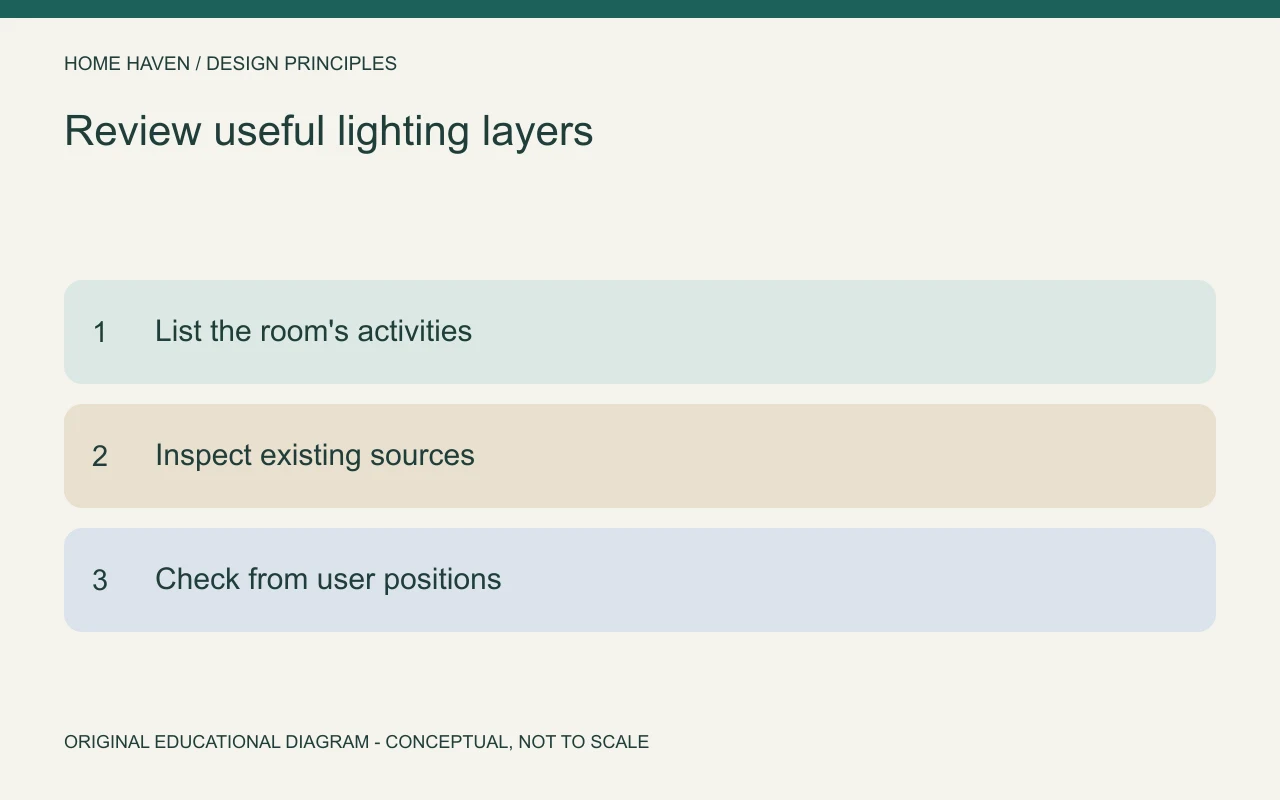
List the room’s activities and the light each activity needs. Then identify which existing sources already serve them. Add or adjust a layer only where the review reveals a real gap.
A living room may need general evening light, a reading source, and a modest accent on art. The same household might use different combinations for television, conversation, and cleaning. Separate control can make the arrangement more flexible when the equipment supports it.
- General use: identify how the room remains comfortably usable.
- Specific tasks: check the actual surface and user position.
- Visual focus: light selected features deliberately.
- Control: consider which sources should operate together or separately.
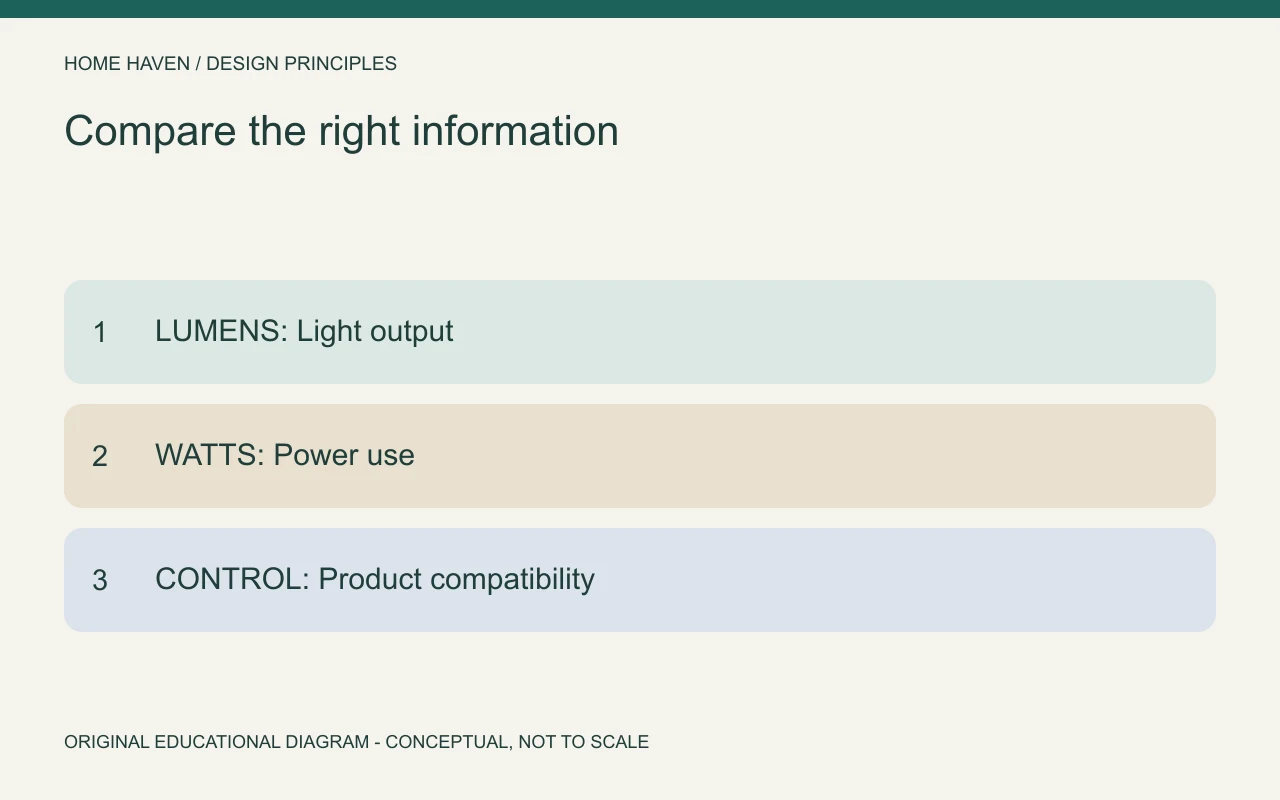
Compare brightness using the right information
Lumens describe light output, while watts describe power use. ENERGY STAR’s brightness guidance recommends comparing light output when selecting bulbs. A wattage number alone does not tell you how bright different technologies will appear.
The room result also depends on the fixture, direction, surfaces, and placement. Do not promise a universal number of bulbs for every room of a given size. Use suitable product information and professional assessment where a detailed lighting design is needed.
Review color appearance and consistency
Check the stated color temperature and how the selected sources look together in the actual room. Compare finish samples under the lighting you intend to use. A palette can appear different when the light changes.
Do not confuse a color-temperature label with a guarantee that every material will look identical across products. Review the relevant color-rendering information and the actual combination. Keep the comparison consistent instead of judging one sample in daylight and another under a different lamp.
Look for glare and reflections
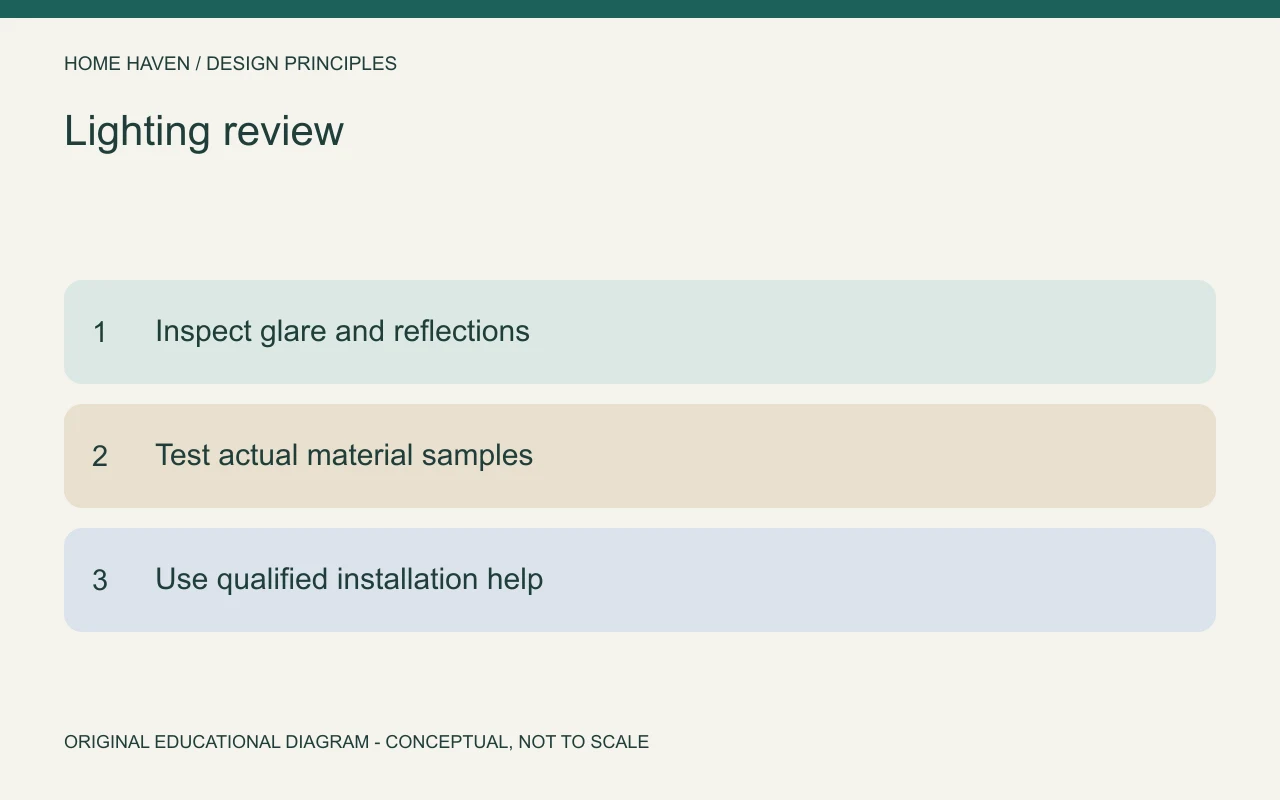
Sit where you read, work, or watch television and inspect visible sources and reflections. A light that looks unobtrusive from the doorway may reflect in a screen from the sofa. The user’s position should guide the review.
Try appropriate adjustments to portable or adjustable fixtures before assuming the room needs more light. More brightness can increase an existing glare problem. For permanent wiring, new fittings, or uncertain installations, use the appropriate qualified professional and product guidance.
A hypothetical living-room lighting plan
Imagine a room with one ceiling fixture, a sofa, a reading chair, and artwork. The household finds the room bright enough for cleaning but uncomfortable for reading and evening conversation. Raising the central fixture’s output alone may not address those separate needs.
Review a suitable reading lamp at the chair, a softer general evening combination, and limited accent lighting if the art needs it. Check controls and compatibility before purchasing. The example illustrates roles, not a specification of fixture positions or output.
Check controls and product compatibility
Confirm the intended bulb, fixture, dimmer, and control compatibility using current manufacturer information. Do not assume every LED product works correctly with every existing dimmer. A connected or smart feature adds another compatibility question rather than removing the basic checks.
Keep the user experience straightforward. The household should understand how to create the lighting combinations it needs. A complex control arrangement can become inconvenient even when the individual products perform as described.
Lighting questions
Can one fixture provide more than one lighting type?
Yes. A fixture’s role depends on how it directs light and how the room uses it. Evaluate the output and placement rather than assigning the role from the fixture’s shape alone.
Should every room include accent lighting?
No. Add it when a feature or activity benefits from it. A room does not need another layer simply to complete a decorating checklist.
Review the activity, then the light
Map the tasks, inspect the existing sources, and test the room from real user positions. Use suitable products and clear controls. The strongest lighting plan makes daily activities easier while supporting the room’s visual priorities.