

Introduction
Farmers today face rising costs, climate pressure, and strict supply chain standards. Therefore, every decision matters more than ever before. One smart shift involves packaging and storage methods. So, why choose agricultural reusable containers?
Simply put, agricultural reusable containers offer durability, efficiency, and long-term savings. Unlike single-use packaging options, they actively support sustainable farming and modern logistics operations. As a result, farms improve productivity while simultaneously reducing environmental impact. Furthermore, these containers align with growing consumer demand for responsible agricultural practices.
What Are Agricultural Reusable Containers?
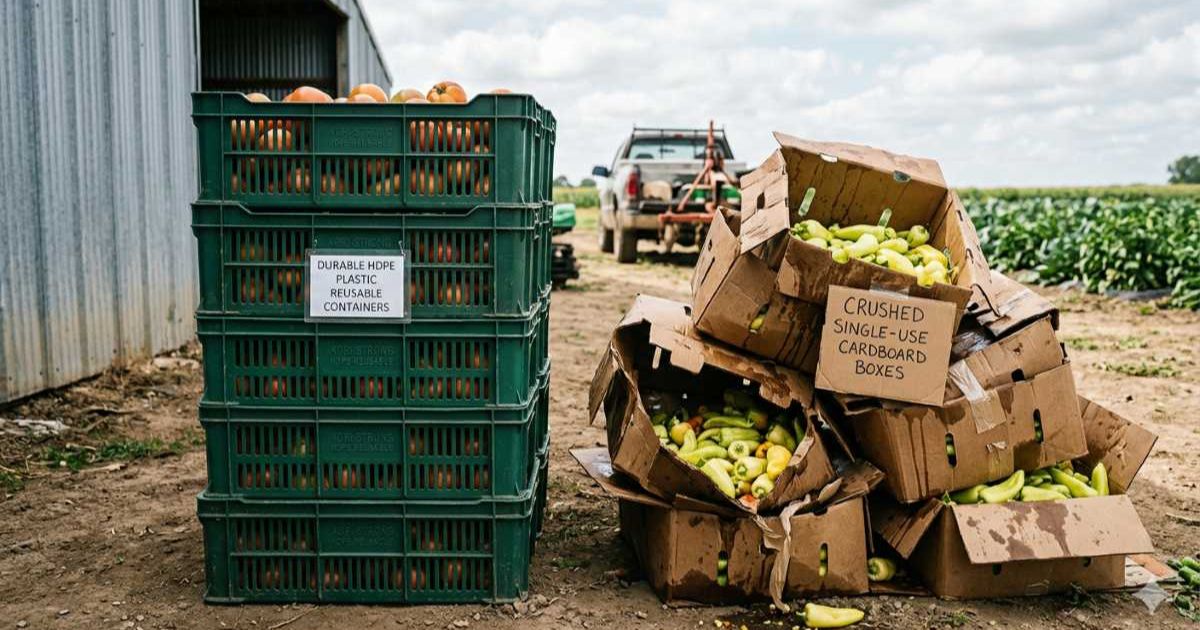
Let’s start with the basics. Agricultural reusable containers are durable storage units specifically designed for repeated use throughout the supply chain. Farmers rely on them to transport, harvest, wash, and store crops across multiple growing seasons.
Most come from strong materials like high-density polyethylene (HDPE) or reinforced plastic compounds. Industry leaders such as IFCO Systems and CHEP produce reusable crates and pallet systems for global agricultural supply chains. These containers stack securely, protect delicate produce, and move efficiently through complex distribution networks.
Unlike cardboard boxes that weaken and degrade, reusable containers resist moisture, pests, and compression damage. Consequently, they maintain consistent product quality from farm field to retail shelf. Moreover, their standardized dimensions simplify palletization and warehouse storage.
Reusable Produce Containers vs Single-Use Packaging
At first glance, single-use cardboard boxes seem cheaper upfront. However, they quickly weaken in humid conditions and collapse under heavy loads. As a result, farmers often replace them after just one trip through the supply chain.
Reusable containers, on the other hand, last for years of continuous service. They handle rough transport conditions and frequent commercial washing without deteriorating. Therefore, growers significantly reduce recurring packaging costs over time.
In addition, reusable bins improve airflow around fresh produce. Better ventilation keeps fruits and vegetables fresher for longer periods. Consequently, farms experience less spoilage and reduced shrinkage losses. This translates directly to higher profitable yield from every harvest.
Supporting the Circular Economy in Agriculture
Modern agriculture increasingly embraces circular economy principles. Organizations like the Ellen MacArthur Foundation actively promote systems that reuse materials instead of discarding them after single use.
Reusable containers fit this regenerative model perfectly. Farmers use them repeatedly across multiple seasons. Logistics teams collect empties, clean them thoroughly, and redistribute them to new locations. Thus, valuable materials stay in productive circulation much longer.
Moreover, this approach dramatically reduces landfill waste and lowers carbon emissions from manufacturing new packaging constantly. So, farms align with sustainability goals while strengthening brand reputation with environmentally conscious consumers.
Key Benefits of Agricultural Reusable Containers
Farmers choose reusable containers for highly practical reasons. The benefits extend far beyond simple sustainability claims.
Here’s why they make sense for modern operations:
- Lower Long-Term Costs
Although initial investment may appear higher upfront, reusable containers eliminate repeated purchases season after season. Over time, farms save thousands of dollars compared to disposable alternatives. - Improved Crop Protection
Strong walls and ventilated designs prevent bruising during transport. Therefore, delicate produce arrives in consistently better condition. - Enhanced Food Safety
Reusable containers undergo controlled washing and commercial sanitation processes. This significantly reduces contamination risks compared to single-use boxes. - Efficient Storage and Transport
Stackable and foldable designs save valuable space in trucks and warehouses. As a result, transportation becomes more cost-effective per unit moved. - Environmental Responsibility
Farms cut packaging waste dramatically year after year. According to the Food and Agriculture Organization, sustainable agricultural practices help reduce global food loss and environmental strain.
Example: Cost Comparison Over Time
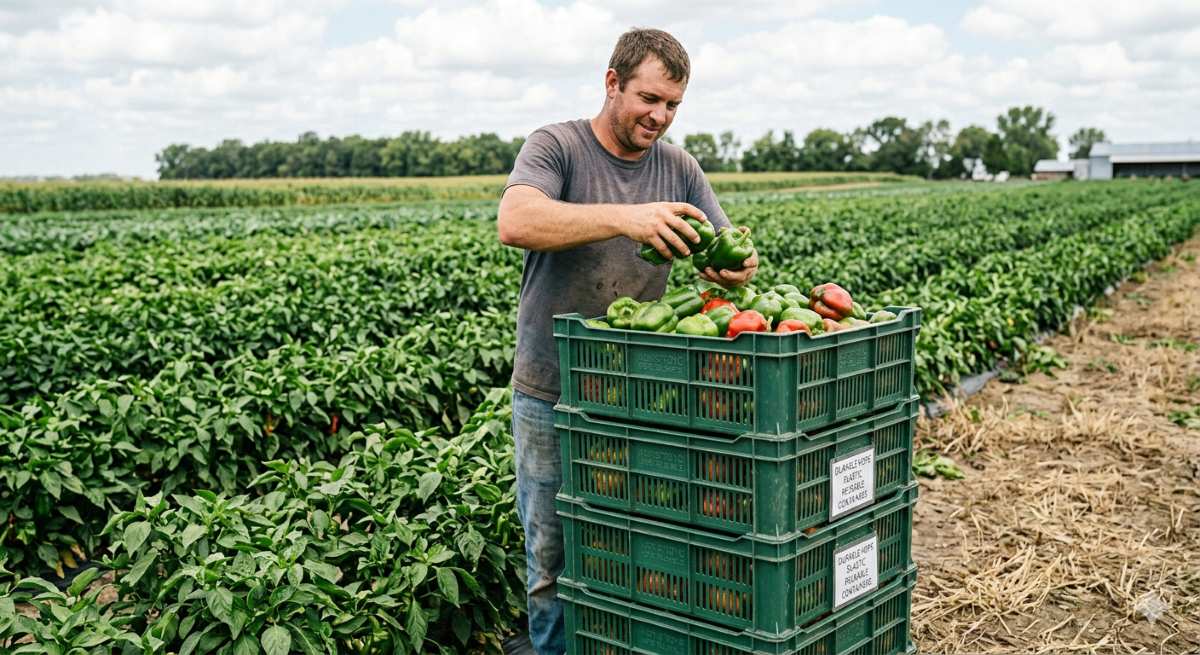
Consider a mid-sized vegetable farm that ships 50,000 units annually. They may spend thousands on disposable boxes each season without realizing the cumulative cost. However, after switching to reusable containers, packaging expenses drop significantly over several years.
Additionally, reduced spoilage increases sellable yield substantially. Therefore, profit margins improve without expanding farmland acreage. This real-world example demonstrates why smart farmers make the switch.
How Reusable Containers Improve Supply Chain Efficiency
Modern agriculture depends on speed and reliability. Retailers demand consistent quality and full traceability from their suppliers. Reusable containers help farms meet those exacting expectations.
First, standardized sizes streamline palletization processes dramatically. Workers load and unload trucks faster with uniform containers. Consequently, labor costs decrease while throughput increases.
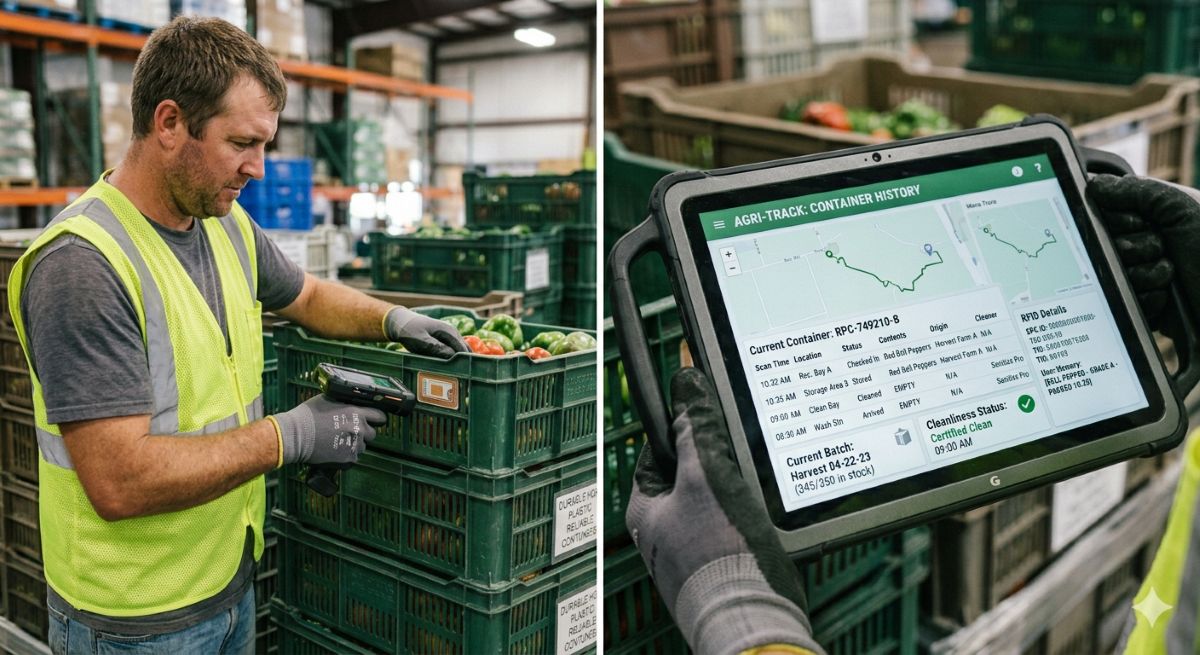
Second, many reusable container systems integrate advanced tracking technology. Some use RFID tags for real-time location data. Others employ barcode systems for inventory management. These tools improve visibility and dramatically reduce loss rates.
Furthermore, large retailers increasingly prefer standardized reusable packaging. Companies like Walmart and Tesco actively encourage sustainable supply chain solutions. Therefore, farms using reusable systems may gain stronger retail partnerships and preferred supplier status.
Practical Tips for Choosing the Right Reusable Containers
Not all containers suit every farm operation. So, carefully consider these factors before making investment decisions:
- Crop Type: Soft fruits require ventilated, smooth interiors. Root vegetables may need heavy-duty bins with reinforced walls.
- Load Capacity: Choose containers that handle expected weight without bending or cracking during transport.
- Stackability: Ensure stable stacking configurations to maximize truck space and warehouse efficiency.
- Cleaning Process: Confirm access to proper sanitation facilities before committing to reusable systems.
- Supplier Reliability: Work with established providers offering consistent quality and logistics support.
Additionally, test a small batch before full adoption across your operation. This reduces risk and allows meaningful performance evaluation.
For deeper exploration of broader sustainable farming practices, read our guide on sustainable farm packaging solutions .
For authoritative insight into sustainable packaging systems, review research from the World Economic Forum .
Common Questions About Agricultural Reusable Containers
Are reusable containers expensive?
Initially, yes—the upfront investment exceeds disposable options. However, long-term savings quickly offset these costs through repeated use and dramatically reduced waste.
Do reusable containers improve food safety?
Absolutely. Controlled cleaning systems and durable non-porous materials significantly reduce contamination risks compared to cardboard.
Can small farms use reusable containers?
Yes, definitely. Many suppliers now offer scalable programs suitable for small and mid-sized farms, not just large industrial operations.
Conclusion
So, why choose agricultural reusable containers? The answer grows clearer with every passing season.
Because they reduce costs, protect valuable crops, and support sustainable agriculture simultaneously. Moreover, they strengthen supply chain efficiency and improve food safety standards. As consumer demand for responsible farming grows steadily, reusable systems provide a clear competitive advantage.
Ultimately, smart farms focus on long-term value, not short-term convenience. By investing in reusable agricultural containers, you protect both your harvest and the planet for future generations. The choice today shapes tomorrow’s success