

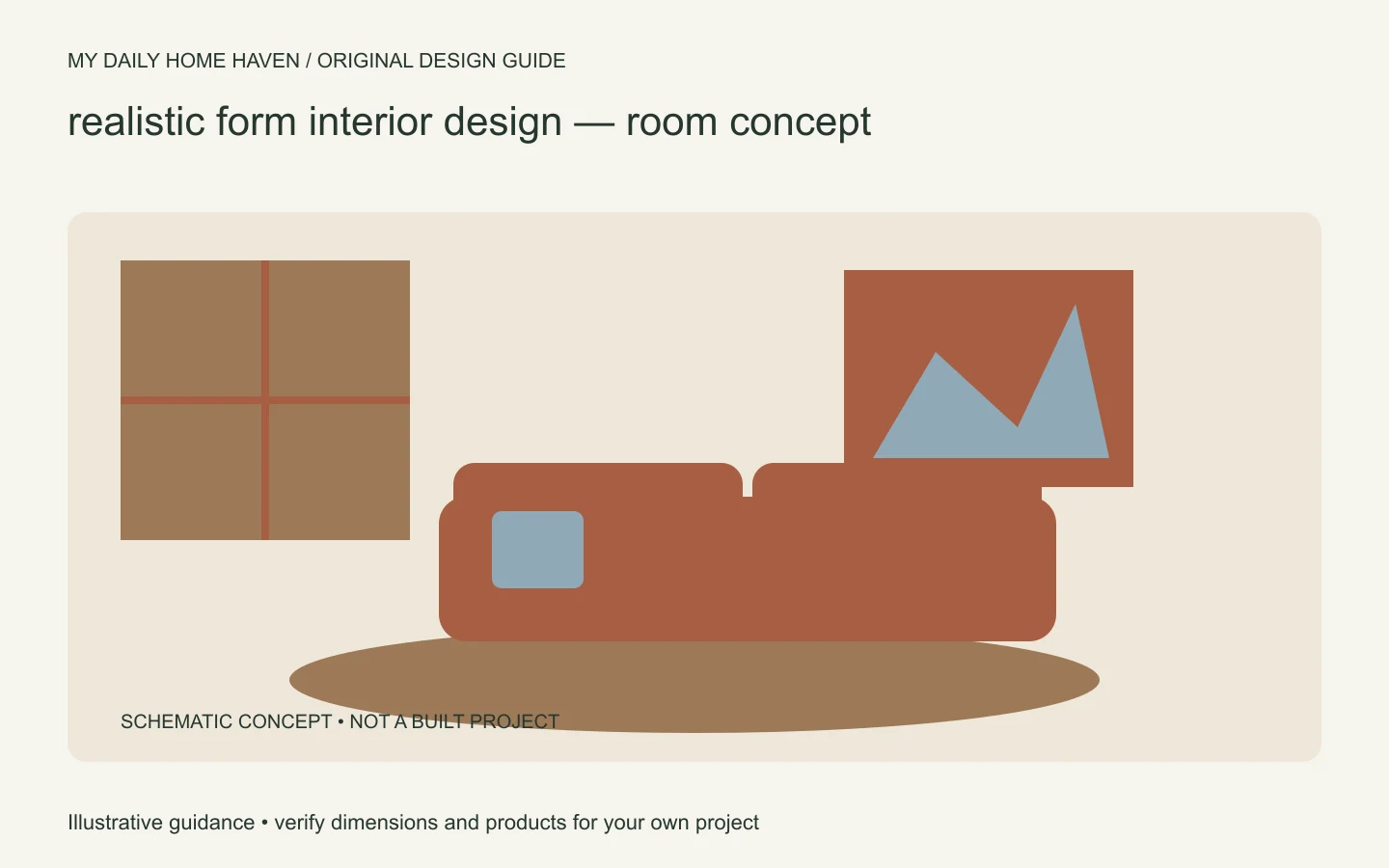
“Realistic form in interior design” is not a universally standardized name for one formal design principle. In this guide, it means using recognizable, object-like shapes and forms—such as a chair that reads clearly as a chair—rather than heavily abstracted forms. That distinction can help when comparing furniture and decor. See our principles of interior design guide.
Realistic Form Interior Design: Start with the Plan
Separate form from decoration
A shape is a two-dimensional outline; form describes a three-dimensional object occupying space. In a room, a table has a recognizable top and supporting structure, while a sculptural object may deliberately obscure its intended use. Utah State University Extension’s design elements material distinguishes shape and form in visual design.
Realistic form does not mean a room must look traditional or literal. It can include contemporary furniture with clear silhouettes, natural-looking materials, and recognizable proportions. Abstract form can be present too. The useful distinction is how directly the shape communicates what an object is or how it might be used.
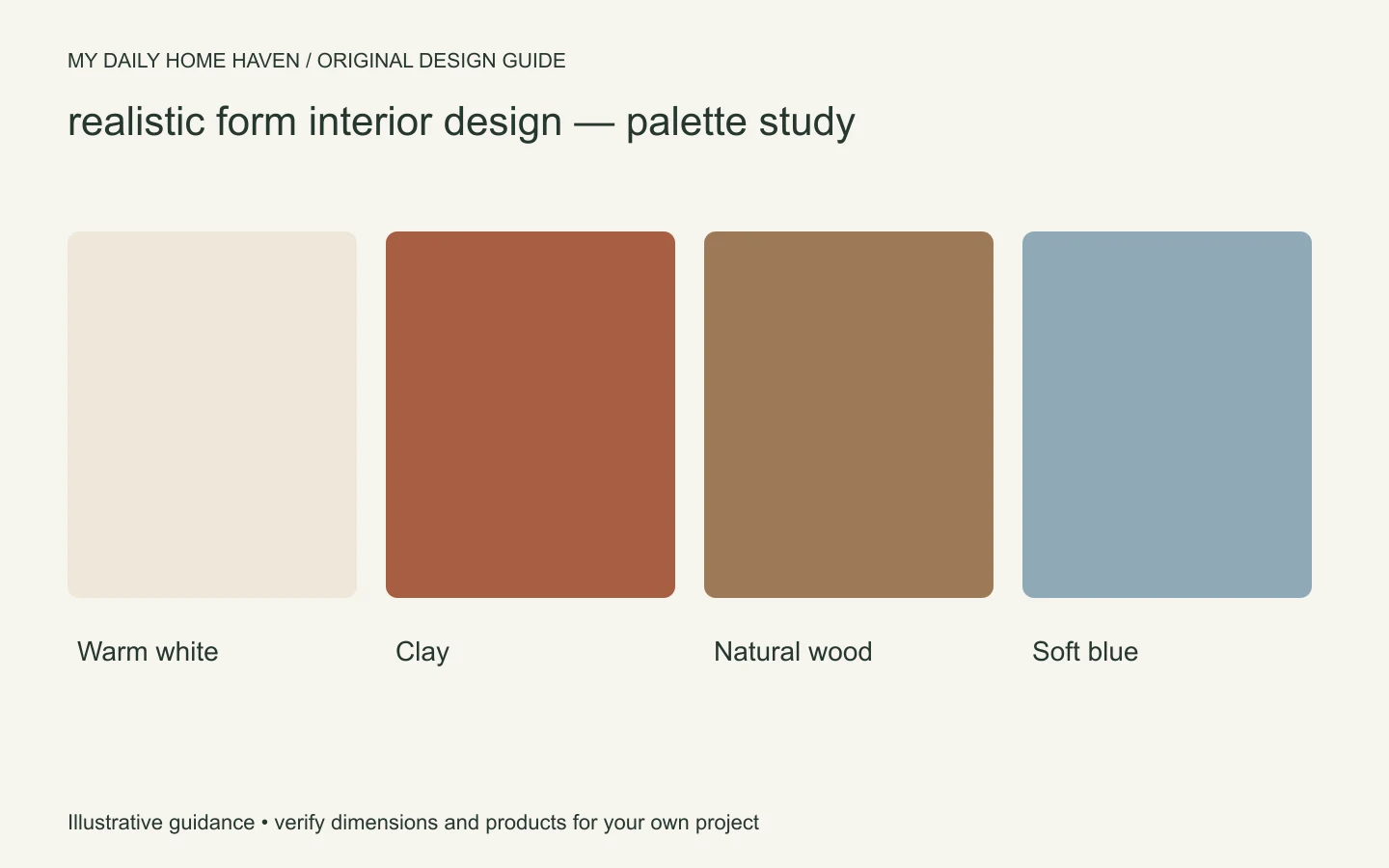
Look at silhouette and proportion
Compare the outline of the object with its size and function. A chair needs a seat and back that support the intended posture. A table needs a useful surface and a stable base. A realistic-looking form can still be uncomfortable or poorly scaled, so appearance cannot substitute for checking dimensions.
View furniture from the front, side, and seated position. Arms, legs, back height, and visual weight can change how the piece relates to nearby objects. A bulky realistic form may overwhelm a compact room, while a slim outline can make a similar function feel lighter.
Choose how literal the room should feel
A room can pair recognizable furniture with abstract art, geometric lighting, or sculptural accessories. These elements contrast in how clearly they represent familiar objects. Decide which surfaces should support daily use and where visual experimentation can take the lead.
An expressive object can work as a focal point if the rest of the arrangement gives it room. Avoid placing multiple unusual forms so close that their outlines compete. One abstract lamp, one organic table, or a recognizable sculptural chair may be easier to appreciate than a room full of disconnected silhouettes.
Connect form to material and construction
The same form can look different in wood, metal, fabric, glass, or molded materials. Consider how material affects weight, light, touch, cleaning, and durability. A photograph may not reveal a finish or edge detail clearly, so check samples and product specifications before buying.
Inspect joinery, stability, edges, and intended load. For a vintage or sculptural piece, ask whether it is designed for sitting, display, or another use. Do not treat a decorative object as functional furniture without confirming its construction and safety.
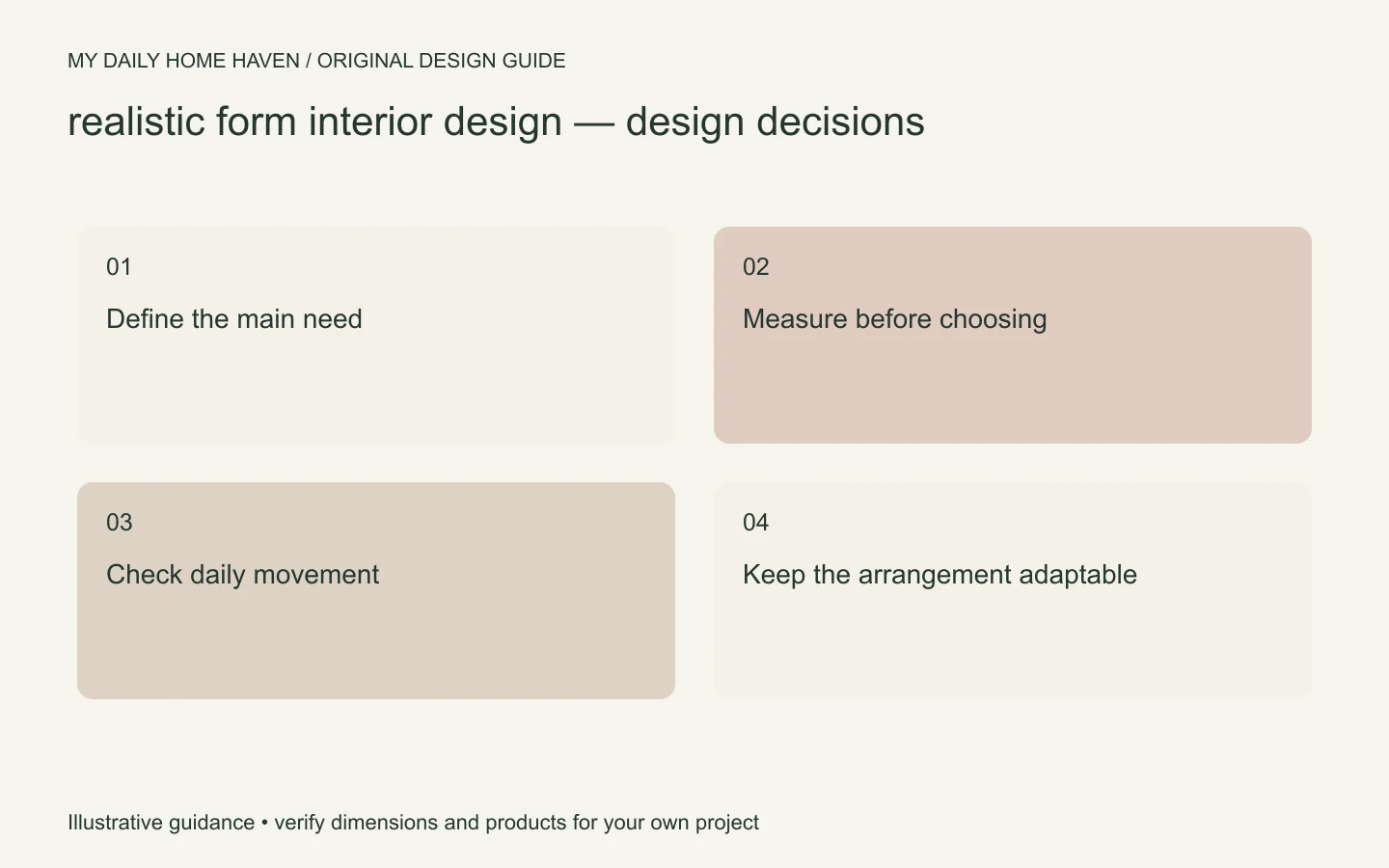
Use form to support the room’s purpose
The shapes you choose should suit the activities in the space. Rounded corners may be useful where circulation is tight; a clear rectangular desk may provide a practical work surface. The right form depends on reach, comfort, and the route around the object, not just its visual category.
Place a paper template on the floor to judge a furniture footprint. Check door swings and passage width, then mark chair positions. This allows you to assess the form’s spatial effect before it arrives. If an object blocks a route, a different silhouette or size may solve the problem.
Avoid treating “realistic” as a rigid rule
Design language varies across education, product categories, and search terms. A reader searching for realistic form may be asking about lifelike objects, practical furniture, or the element of form. State which meaning you are using. Do not claim that every design curriculum recognizes it as a named principle.
If you are creating a room, decide whether you want objects to look familiar, sculptural, or a mixture. Use clear descriptions when discussing the result: “recognizable furniture silhouettes” is more precise than treating “realistic form” as a universal rule. This keeps the discussion helpful without overclaiming.
A practical selection exercise
Choose three objects in the room and label each as familiar, stylized, or abstract in shape. Then ask which one should draw attention and whether each supports its intended task. If everything is visually literal, a sculptural accent may add interest; if the room already feels complex, recognizable simple forms may create calm.
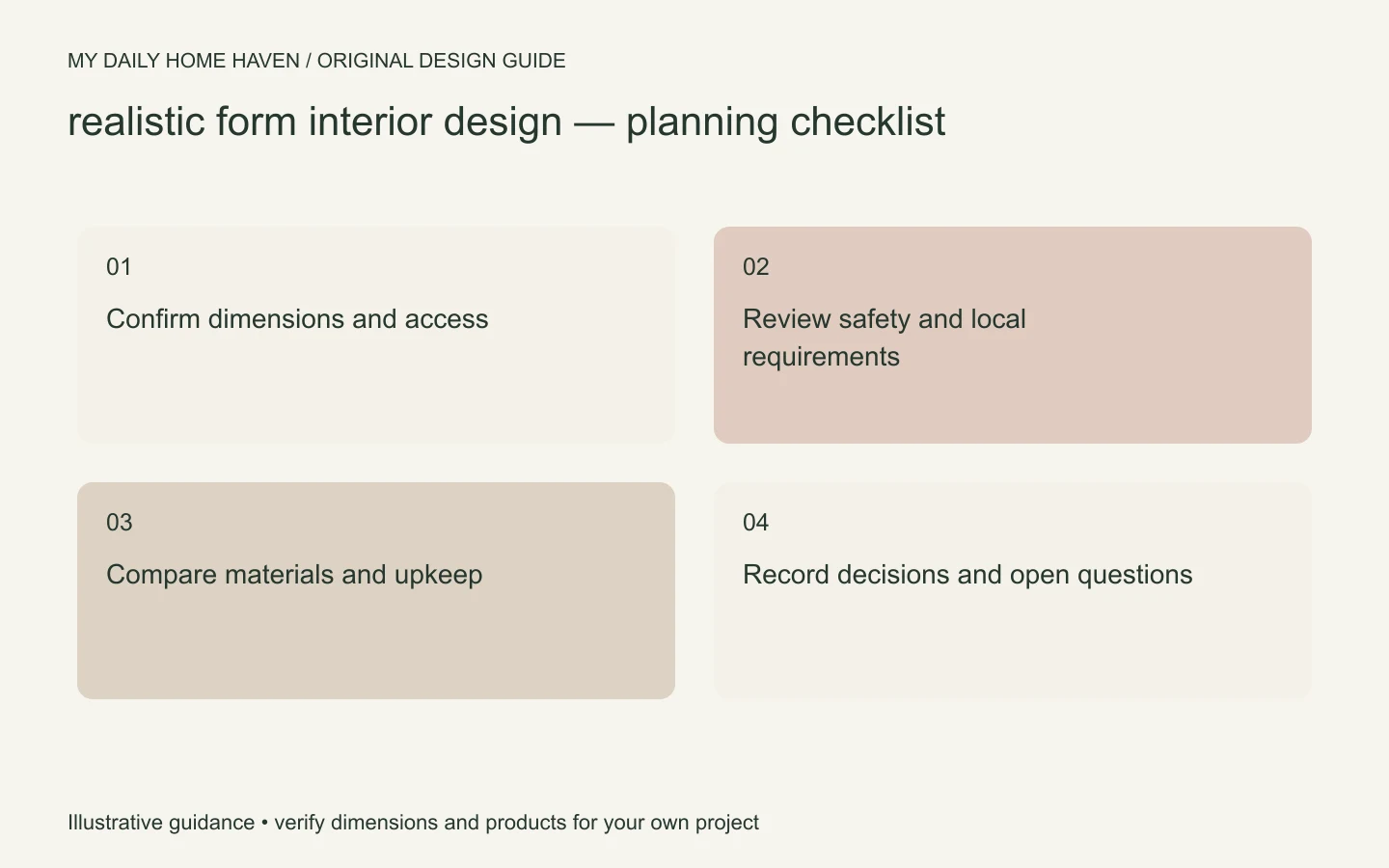
Finally, evaluate comfort, fit, care, and repair. The principles pillar explains how form relates to other visual concepts such as line, pattern, unity, and contrast. Use the concepts together, while letting real measurements and the household’s routine guide purchases.
Frequently asked questions
Is realistic form an official interior design principle?
The phrase is not a universal formal category. This article uses it descriptively for recognizable, lifelike object forms and distinguishes that usage from broader concepts of shape and form.
What is the difference between form and shape?
Shape generally describes a two-dimensional outline; form describes a three-dimensional object or volume. Design sources sometimes use the terms with context-specific nuance.
Can realistic and abstract forms be mixed?
Yes. Pair recognizable functional furniture with abstract art or sculptural accents, then use scale, color, or material to connect them.
A Practical Planning Example
A shopper is choosing a chair for a compact reading corner. One option has a sculptural outline that looks striking online; another has a clearly recognizable seat, back, and arms. The shopper compares seat depth, height, support, and the footprint beside the bookcase. The more literal form is easier to judge for the task, but comfort still needs to be tested.
The shopper then pairs the practical chair with abstract artwork and a rounded lamp. This mix shows that recognizable and abstract forms can coexist. The phrase “realistic form” is used here descriptively because it is not a standard named principle across all interior design references. When writing about a specific object, describe its silhouette, intended use, dimensions, and material rather than making unsupported claims about what the form represents.
A Final Practical Check
When describing a finished room, identify what is observable: the chair has a rounded back, the table uses a visible pedestal, or the lamp is an abstract sculptural form. This language is clearer than treating an informal search phrase as a fixed rule. It also helps readers compare real objects by silhouette, dimensions, material, and use. Keep product claims tied to specifications, and explain uncertainty whenever a form’s history or intended function is not documented.