

Introduction
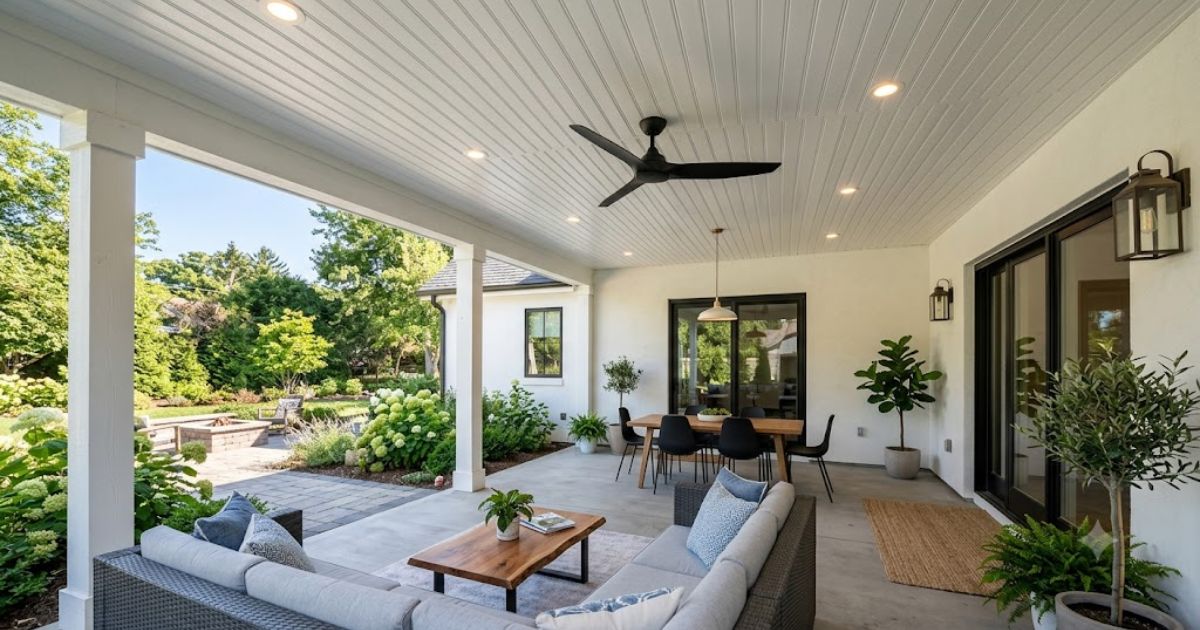
Your home’s exterior ceiling often goes unnoticed, yet it plays a vital role in protecting outdoor living spaces. Porches, patios, and covered entryways all require durable materials that can withstand harsh weather while maintaining curb appeal. Choosing the wrong material can lead to rot, peeling paint, and expensive repairs every few years.
Conversely, making a smart, climate-conscious selection prevents moisture damage, minimizes upkeep, and saves thousands of dollars over time. This guide explores the top exterior ceiling materials to help you make the best decision for your project.
Why Your Exterior Ceiling Material Matters
The ceiling of a porch, patio, or covered entry is one of the most exposed surfaces on your home. It constantly faces ambient moisture, humidity, driven rain, and severe temperature swings that cause building materials to expand and contract.
When moisture penetrates an unprotected exterior ceiling, it triggers a chain reaction of rot, mold, and structural compromise. Wood ceilings can warp or split if not properly sealed, while low-grade metal ceilings can rust if their protective coatings fail. Matching your material to your specific regional climate—whether navigating brutal freeze-thaw cycles or dealing with constant coastal humidity—is essential to ensuring long-term structural integrity.
Top Exterior Ceiling Materials Compared
PVC Ceilings – The Low-Maintenance Champion
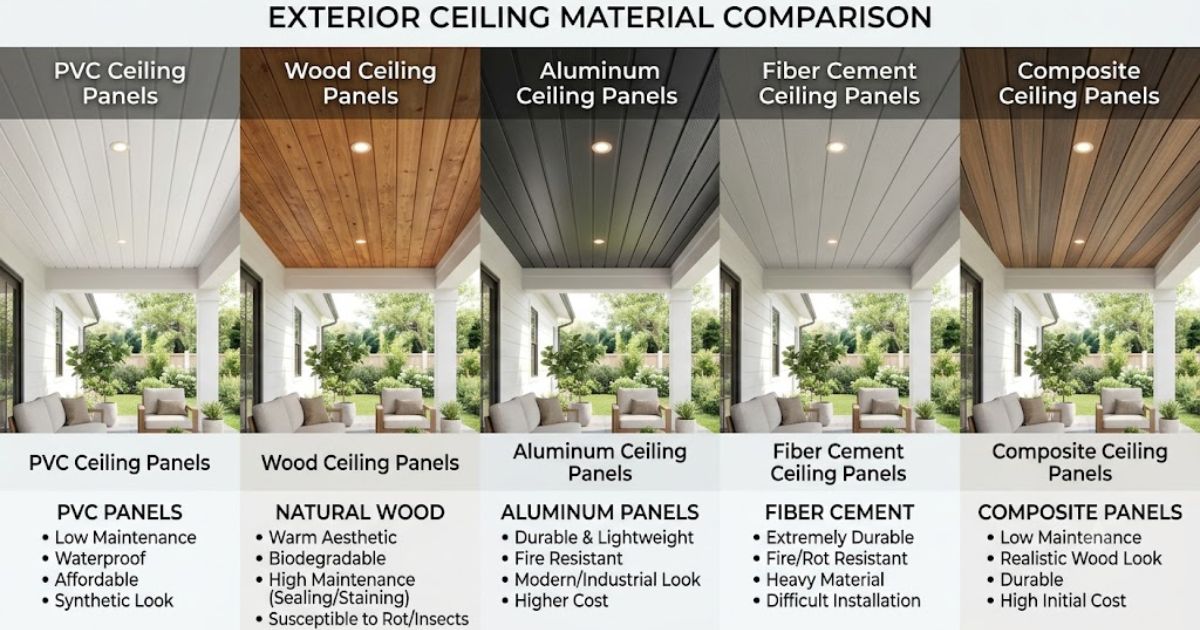
Cellular PVC has become one of the most popular exterior ceiling materials for modern porches and patios. It offers the crisp look of painted wood without the structural headaches.
- Pros: Completely waterproof, insect-proof, and highly resistant to cracking or splitting. It never rots or warps.
- Design Options: Brands like Royal® Trim, Kleer®, and Skytrim™ offer popular profiles, including beadboard, shiplap, nickel gap, and V-groove. For a warmer aesthetic, options like the Grove Collection™ mimic wood-stained finishes without the need for sanding, sealing, or staining.
- Installation Note: PVC expands and contracts significantly with temperature changes. Runs over 12 feet require specialized shiplap joints or expansion details. If painting is desired, you must use vinyl-safe 100% acrylic latex paint; dark colors require solar-reflective coatings to prevent heat deformation.
Wood Ceilings – Timeless, Natural Beauty
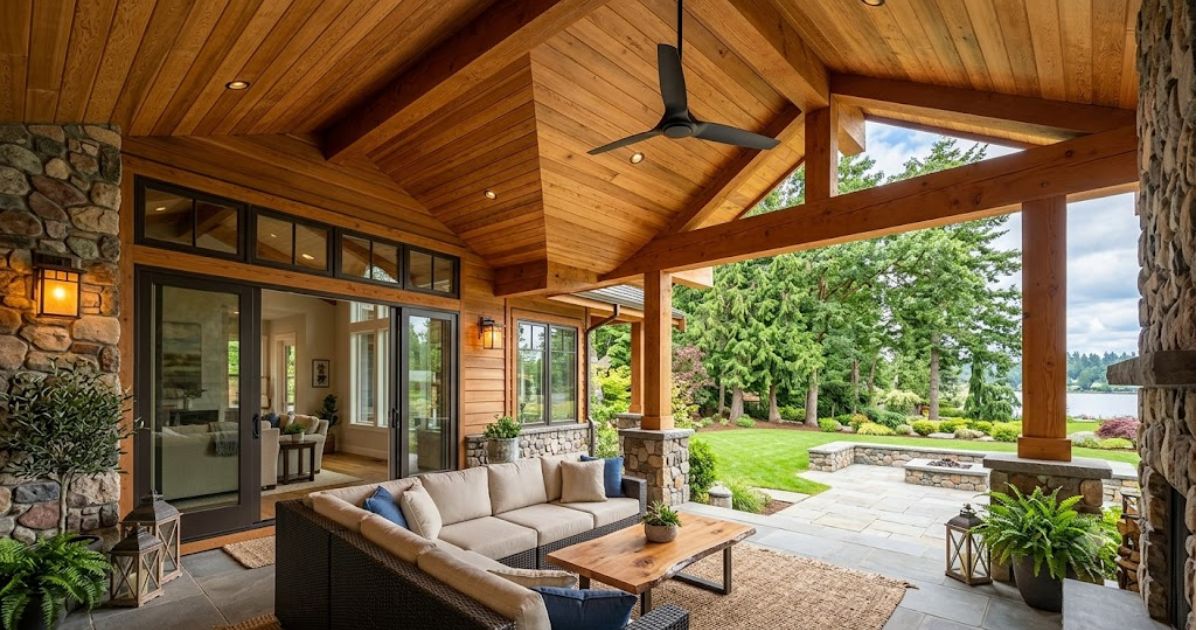
Wood remains the gold standard for homeowners seeking natural warmth, authentic character, and high-end design appeal.
- Pros: Provides an unmatched, authentic sensory experience and organic beauty. It is a highly sustainable, 100% natural material choice.
- Design Options: Available in a wide variety of species, grains, and tones. Popular options include white American oak, grey eucalyptus, and classic cedar. It can be installed as rustic exposed beams or clean tongue-and-groove paneling.
- Installation Note: Wood panels are intended for suspended ceilings in protected areas (like deep porches and overhangs) rather than direct exposure to torrential rain. It requires rigorous upkeep, including restaining or resealing every 2–4 years, to prevent rot and fading.
Aluminum and Metal Ceilings – Sleek and Weatherproof
Aluminum is a premier commercial-grade choice that has successfully transitioned into modern residential architecture due to its lightweight durability.
- Pros: Highly resistant to corrosion, rust, and severe weather conditions (wind, snow, heavy rain, and intense UV light). It also features a high percentage of recycled content, making it an eco-friendly choice.
- Design Options: Linear metal ceilings offer a clean, contemporary look. Open-grid or “screen” systems create a distinct sense of architectural depth, shifting from open to closed appearances depending on the viewing angle. Premium systems utilize advanced coatings, like the Luxacote® paint system, to resist scratches and environmental corrosion.
Fiber Cement Ceilings – Superior Structural Strength
Fiber cement is a heavy-duty composite composed of cement, sand, and cellulose fibers, offering an incredibly tough defense against the elements.
- Pros: Non-combustible, impervious to rot, wood-boring insects, and mold. It boasts an exceptional lifespan of at least 50 years with virtually zero ongoing maintenance.
- Design Options: Preferred by architects for its premium, dense finish. It can be manufactured to realistically emulate the textures of stone, natural wood, or smooth concrete at a fraction of the cost. It is ideal for external cladding, eaves, and enclosure soffit linings.
Composite Options – The Modern Engineered Blend
Wood-plastic composites (WPC) bridge the gap between the organic look of natural wood and the durability of synthetics by blending wood fibers with plastics or resins.
- Pros: Resists rot, decay, and insects while requiring minimal maintenance.
- Design Options: Innovative profiles, such as the Annapurna 50 from Tarimatec, utilize sustainable eco-fiber composites (like rice husks, limestone, and PVC). These materials are highly impact-resistant, 100% recyclable, and frequently used to earn LEED or BREEAM green building certifications.
Quick Comparison Table
| Material | Maintenance Level | Moisture Resistance | Fire Resistance | Best Architectural Style |
| PVC | Very Low | Excellent (Waterproof) | Solid / Melts in high heat | Classic, Traditional, Modern |
| Wood | High | Moderate (Requires sealing) | Low (Combustible) | Rustic, Craftsman, Warm Contemporary |
| Aluminum | Low | Excellent (Rust-proof) | High (Non-combustible) | Sleek, Minimalist, Modern |
| Fiber Cement | Low | Excellent (Rot-proof) | Highest (Non-combustible) | Universal, Premium, Modern |
| Composite | Low | High (Rot-resistant) | Moderate | Contemporary, Transitional |
How to Choose the Right Material
Consider Your Climate
Your local weather patterns should be the primary factor guiding your material selection:
- Humid and Coastal Areas: PVC and fiber cement are excellent choices because they resist moisture, salt air, and rot. Aluminum is ideal near coastlines because it is entirely rust-proof.
- Freeze-Thaw Climates: PVC and fiber cement hold up best to extreme temperature swings. Avoid natural wood in these areas, as shifting moisture levels cause it to warp, check, and crack.
- Dry, Arid Climates: Natural wood performs beautifully here if properly shielded from direct UV exposure. Stucco is another regional classic that matches dry environments well.
- Wildfire-Prone Zones: Fiber cement is completely non-combustible, making it the safest option to protect your home’s eaves and soffits from flying embers.
Match Your Architectural Style
Ensure your ceiling choice seamlessly complements your home’s existing design language:
- Classic and Traditional: Beadboard, shiplap, and cellular PVC ceilings finished in a clean, crisp white create a timeless American porch look.
- Modern and Contemporary: Linear metal patterns or open-grid aluminum ceilings offer a sleek, minimalist, and industrial aesthetic.
- Rustic and Warm: Tongue-and-groove natural wood planks paired with exposed structural beams are ideal for cabins, modern farmhouse designs, and craftsman homes.
Conclusion
Selecting the perfect exterior ceiling material requires balancing your visual goals, local climate realities, and long-term maintenance expectations. PVC delivers an unbeatable mix of zero-maintenance durability and design flexibility. Natural wood offers an organic, timeless beauty that elevates covered porches. Aluminum brings a sleek, contemporary style packed with rugged weather defense, while fiber cement offers top-tier fire resistance and durability for maximum home protection.
Evaluate your local climate, match your home’s architectural lines, and decide how much time you want to spend on upkeep. For more expert guidance on selecting exterior materials—including siding, trim, and entry systems—explore our comprehensive exterior home renovation guide to ensure smart investments that boost your home’s value.