

Introduction
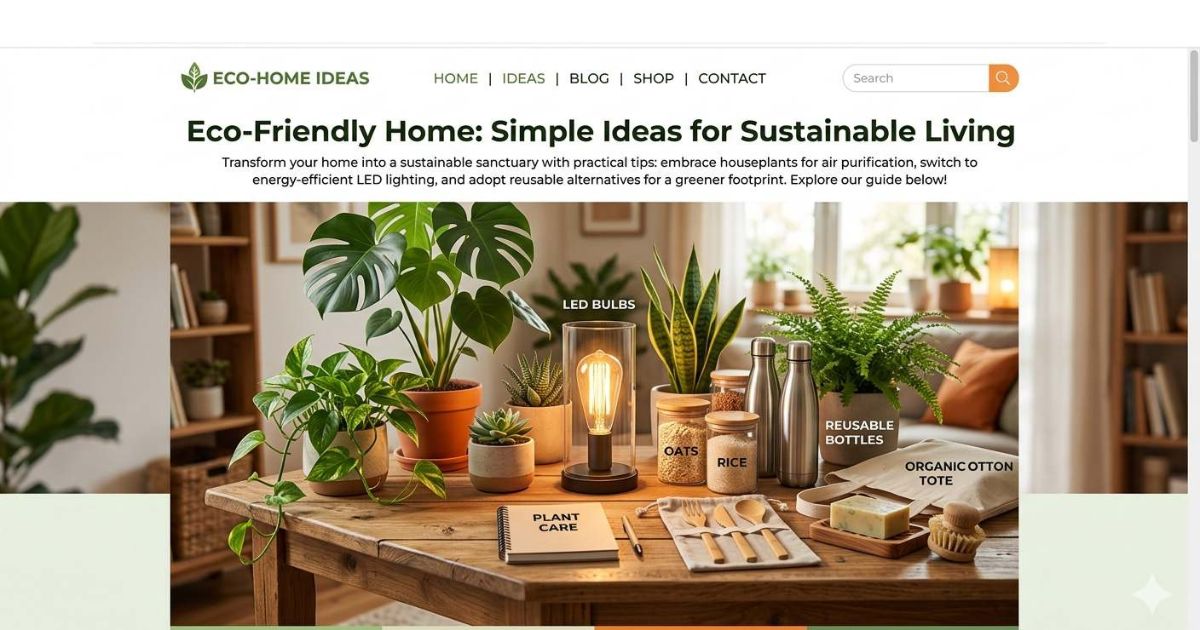
Living an eco-friendly home ideas lifestyle starts right at home. You don’t need a massive budget or a complete house renovation to make a difference. Small, consistent changes can lead to significant environmental benefits and personal savings. This guide shares practical eco-friendly home ideas that are simple, affordable, and effective for everyone.
Whether you rent a small apartment or own a large house, these eco-friendly home ideas fit your life. Let’s explore how small daily choices—inspired by the best eco-friendly home ideas—create a big impact over time.
What Makes a Home Truly Eco-Friendly?
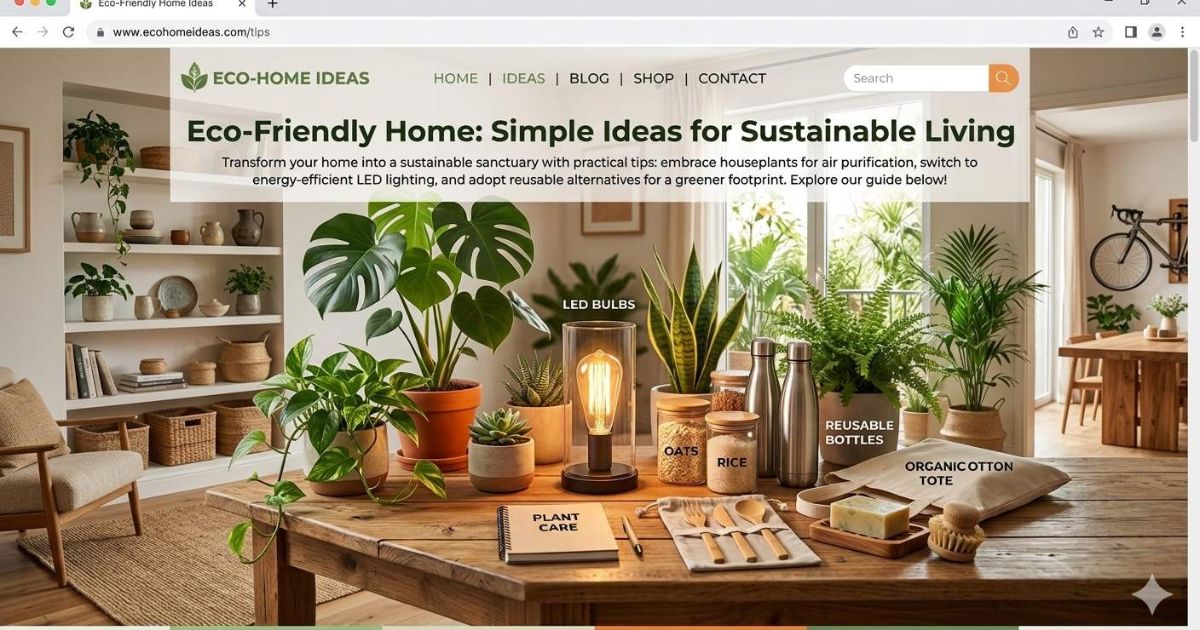
An eco-friendly home reduces waste, conserves natural resources, and improves indoor health. It’s not about perfection but about making smarter daily choices. For example, using less plastic or saving electricity are great first steps.
A truly green home also focuses on non-toxic materials and energy efficiency. These efforts together create a safer space for your family and the planet. Moreover, an eco-friendly home often costs less to maintain each month. Lower utility bills and fewer disposable products mean more money in your pocket.
The Core Principles of Sustainable Living
Sustainable living relies on three main actions: reduce, reuse, and recycle. First, reducing means buying only what you truly need. This stops waste before it starts. Second, reusing involves choosing durable products over disposable ones. A glass water bottle used for five years replaces thousands of plastic ones. Third, recycling turns old items into new resources.
However, recycling should be your last resort after reducing and reusing. Moreover, adding composting and water conservation strengthens these principles. Transitioning to these habits feels natural once you start small. Pick just one principle to focus on this week.
Why Your Home’s Indoor Air Quality Matters
Many people forget that indoor air can be more polluted than outdoor air. Common paints, cleaners, and furniture release harmful chemicals into your lungs. Therefore, choosing low-VOC paints and natural materials protects your family’s health. Additionally, indoor plants like snake plants and peace lilies filter the air naturally.
These plants absorb toxins and release fresh oxygen. Better air quality leads to fewer allergies, better sleep, and higher energy levels. Children and elderly family members benefit the most from cleaner indoor air. Open your windows for ten minutes daily to let stale air escape.
How to Assess Your Home’s Current Eco-Friendliness
Before making changes, take a honest look at your home’s habits. Walk through each room and ask simple questions. Do you see plastic water bottles in the kitchen? Are lights on in empty rooms? Does your bathroom faucet drip? Write down these small problems on a notepad. Then prioritize the easiest fixes first.
A leaking faucet wastes hundreds of gallons yearly, so fix that immediately. Next, replace one disposable habit with a reusable option. This assessment takes only twenty minutes but guides your whole sustainability journey.
Practical Eco-Friendly Interior Ideas
Your home’s interior offers many opportunities to go green without major construction. Focus on lighting, furniture, and daily habits first. These changes are often the most affordable and rewarding. Remember, you don’t need to do everything at once. Choose two or three ideas that excite you most. Master those habits, then add more over time.
Switch to Energy-Efficient Lighting
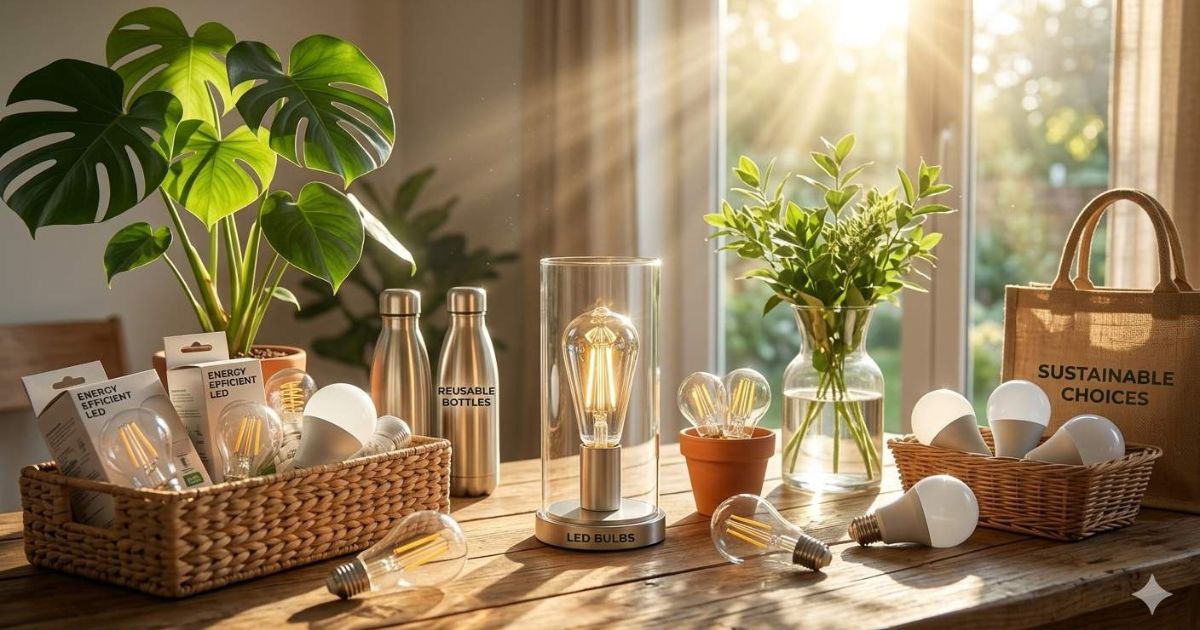
LED bulbs use up to 75% less energy than traditional incandescent bulbs. They also last significantly longer, which means less waste in landfills. A single LED bulb can shine for 25,000 hours or more. For best results, combine LED bulbs with natural daylight. Open your curtains during the day to reduce artificial lighting needs.
Also, install dimmer switches to control brightness and save even more power. Transition words like “furthermore” help connect these benefits clearly. Consider motion sensor lights for closets, garages, and bathrooms. These lights turn off automatically when nobody is inside.
Choose Sustainable Furniture and Decor
When buying furniture, look for FSC-certified wood, bamboo, or reclaimed materials. Bamboo grows quickly and regenerates without replanting, making it highly sustainable. Some bamboo species grow three feet in just twenty-four hours. Reclaimed wood adds unique character while saving trees from being cut down. Secondhand furniture is another excellent choice.
Thrift stores and online marketplaces offer high-quality pieces at low prices. This approach also keeps usable items out of landfills. Before buying anything new, check Facebook Marketplace, Craigslist, or local buy-nothing groups. You will be surprised by the beautiful items people give away for free.
Example: Upcycling Old Furniture into Treasure
Instead of throwing away an old wooden ladder, turn it into a bookshelf. Sand it down, add a natural oil finish, and mount it horizontally on your wall. This DIY project costs little money but creates a beautiful, functional decor piece. Similarly, old glass jars become storage containers for dry foods in your kitchen. An outdated dresser becomes a bathroom vanity with a new coat of low-VOC paint. Wine crates transform into wall shelves for plants or books. These projects take a few hours but save money and reduce waste.
Add Indoor Plants for Natural Air Purification
Indoor plants do more than look beautiful. They actively clean your air while boosting your mood. Spider plants remove formaldehyde and xylene from indoor spaces. Peace lilies target ammonia and benzene commonly found in household cleaners.
Snake plants release oxygen at night, making them perfect for bedrooms. Pothos vines grow in low light and need very little water. Aloe vera heals minor burns while filtering the air. Start with just two or three easy plants. Water them only when the soil feels dry. Most houseplants die from overwatering, not neglect.
Use Non-Toxic Paints and Finishes
Traditional paints release volatile organic compounds for months after application. These VOCs cause headaches, dizziness, and long-term respiratory issues. Low-VOC and zero-VOC paints offer the same beautiful colors without the health risks. Many major brands now offer eco-friendly paint lines at similar prices.
For wood finishes, choose natural oils like tung or linseed instead of polyurethane. These oils penetrate deeply and protect without toxic fumes. When painting a nursery or bedroom, non-toxic options are especially important. Children and pets are more vulnerable to chemical exposure.
Sustainable Kitchen Ideas That Cut Waste
The kitchen is often the heart of the home, but it also produces the most waste. Fortunately, small changes here create a huge positive impact. Your kitchen is also where you save the most money by reducing waste. Let’s look at practical, everyday changes that work.
Ditch Single-Use Plastics for Good
Replace plastic wrap with beeswax wraps or silicone lids. Use glass containers instead of plastic bags for leftovers. Stainless steel water bottles and cloth shopping bags are must-haves. These reusable products save money over time because you buy them once. Furthermore, they keep harmful microplastics out of your food and the environment.
A single family can prevent over 1,000 plastic bags from entering landfills each year. Store produce in reusable mesh bags instead of plastic produce bags. Bring your own containers to bulk bins for rice, pasta, and nuts.
Start Composting Your Food Scraps
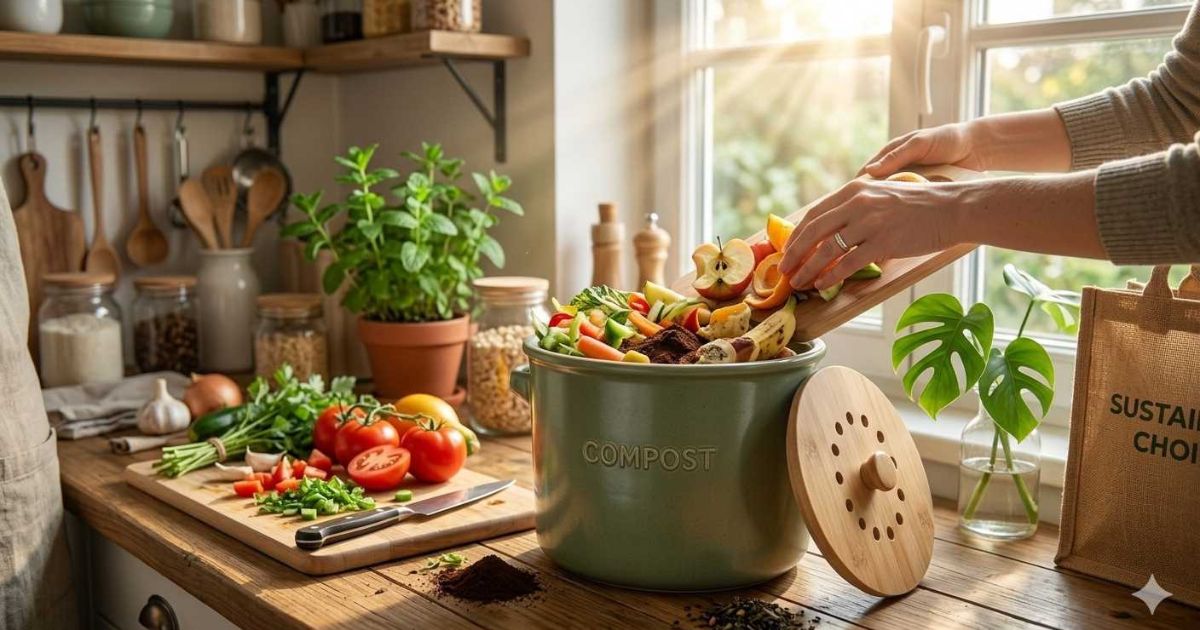
Composting turns fruit peels, coffee grounds, and vegetable ends into rich soil. You don’t need a big backyard to compost. Indoor compost bins or worm composters work perfectly for apartments. This habit reduces landfill methane emissions significantly.
Food waste in landfills creates methane, a greenhouse gas twenty-five times more potent than carbon dioxide. Plus, the finished compost feeds your indoor or outdoor garden naturally. It’s a win-win for your plants and the planet. Countertop compost pails with charcoal filters prevent any bad smells. Empty them into an outdoor bin or community compost drop-off once weekly.
Choose Energy-Efficient Kitchen Appliances
Older appliances consume much more electricity and water than modern ones. When an appliance breaks, replace it with an Energy Star-certified model. Refrigerators made before 2000 use four times more energy than new efficient models. Induction cooktops heat faster and waste less energy than gas or electric coils.
Dishwashers with soil sensors adjust water use based on how dirty the dishes are. An energy-efficient refrigerator saves enough electricity to power a television for ten years. Look for the yellow Energy Guide label comparing operating costs. The upfront price matters, but lifetime energy bills matter more.
Reduce Food Waste Through Smart Meal Planning
Nearly forty percent of food in America goes uneaten. That wasted food also wastes the water, energy, and labor used to produce it. Meal planning stops this waste before it starts. Every Sunday, plan your dinners for the coming week. Write a shopping list based on those meals.
Stick to your list at the grocery store. Store fruits and vegetables correctly to make them last longer. Keep potatoes and onions separate, as they speed each other’s spoilage. Use your freezer for leftovers and extra produce. Label everything with a date so you know what needs eating first.
Easy DIY Eco-Friendly Projects for Any Budget
DIY projects make sustainable living fun and personal. They also save money and reduce reliance on mass-produced goods. You don’t need special skills or expensive tools. Most of these projects take under an hour to complete.
Make Your Own Natural Cleaning Products
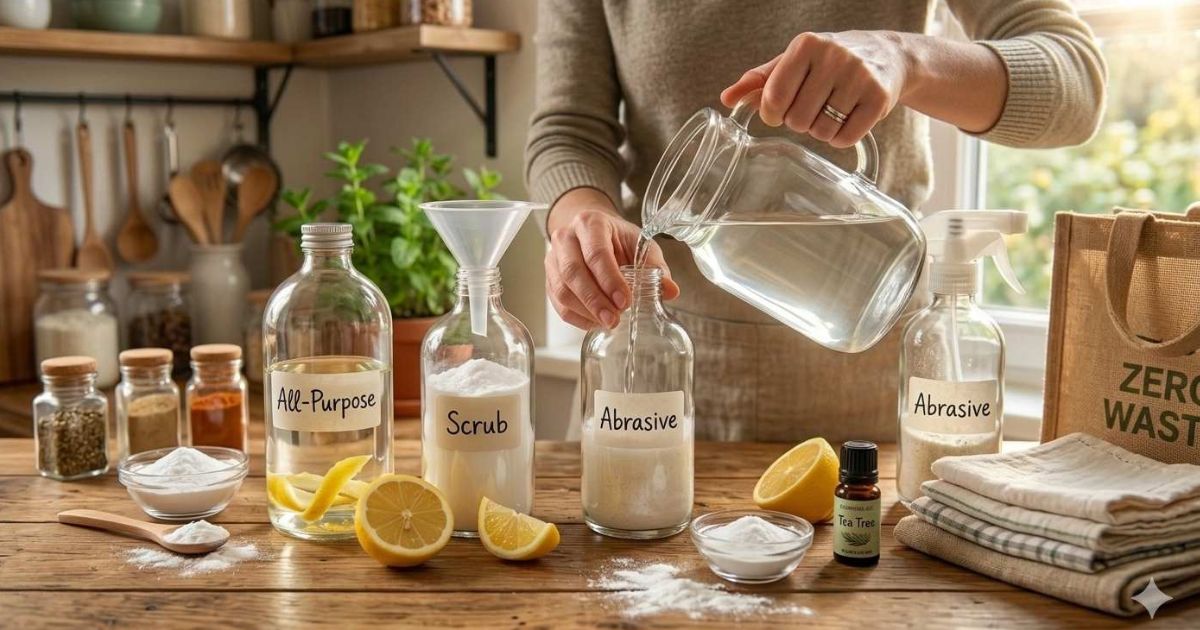
Commercial cleaners often contain harsh chemicals and come in plastic bottles. You can make effective cleaners with just vinegar, baking soda, and lemon juice. For example, mix equal parts water and white vinegar for a great glass cleaner. Add a few drops of essential oil like tea tree or lavender for a fresh scent. Baking soda paste cleans sinks and tubs without scratching.
Sprinkle baking soda on carpets, wait fifteen minutes, then vacuum to remove odors. These homemade solutions are safe for children and pets too. A spray bottle of vinegar water costs pennies and works on most surfaces.
Build a Simple Rainwater Collection System
Collecting rainwater is easier than you think. Place a barrel under your gutter’s downspout to capture runoff. Use this water for your garden, lawn, or even washing your car. This reduces your municipal water bill and conserves treated water for essential uses.
Always check local regulations before installing a rain barrel. Some areas have restrictions or offer rebates for rainwater collection. A fifty-gallon barrel can water a small vegetable garden for weeks. Cover your barrel with a fine mesh screen to prevent mosquitoes from breeding. Install a spigot at the bottom for easy access to the water.
Create Reusable Cloth Napkins and Bags
Paper napkins and plastic bags create unnecessary waste. Turn old cotton sheets or towels into reusable cloth napkins. Cut the fabric into squares, hem the edges with a needle and thread, and you’re done. One set of cloth napkins lasts for years. Similarly, old t-shirts become produce bags for grocery shopping. Sew a simple drawstring at the top for easy closure.
These DIY projects take basic sewing skills or even no-sew fabric glue. Wash your cloth napkins with your regular laundry. They become softer and more absorbent with each wash.
Make Beeswax Food Wraps
Beeswax wraps replace plastic wrap for covering bowls and wrapping sandwiches. You can make them at home with fabric, beeswax pellets, and an oven. Cut cotton fabric into squares or rectangles. Place them on a baking sheet and sprinkle with beeswax pellets. Heat in a 200-degree oven for five minutes until the wax melts. Spread the melted wax evenly with a brush.
Let cool, and your wraps are ready. The warmth of your hands softens the wax so you can mold the wrap over a bowl. Wash them in cool water with mild soap. One set of beeswax wraps lasts a full year.
Eco-Friendly Bathroom Ideas That Save Water
Bathrooms consume more water than any other room in your home. Toilets, showers, and faucets account for nearly seventy percent of indoor water use. Small upgrades and habit changes make a huge difference here.
Install Low-Flow Fixtures
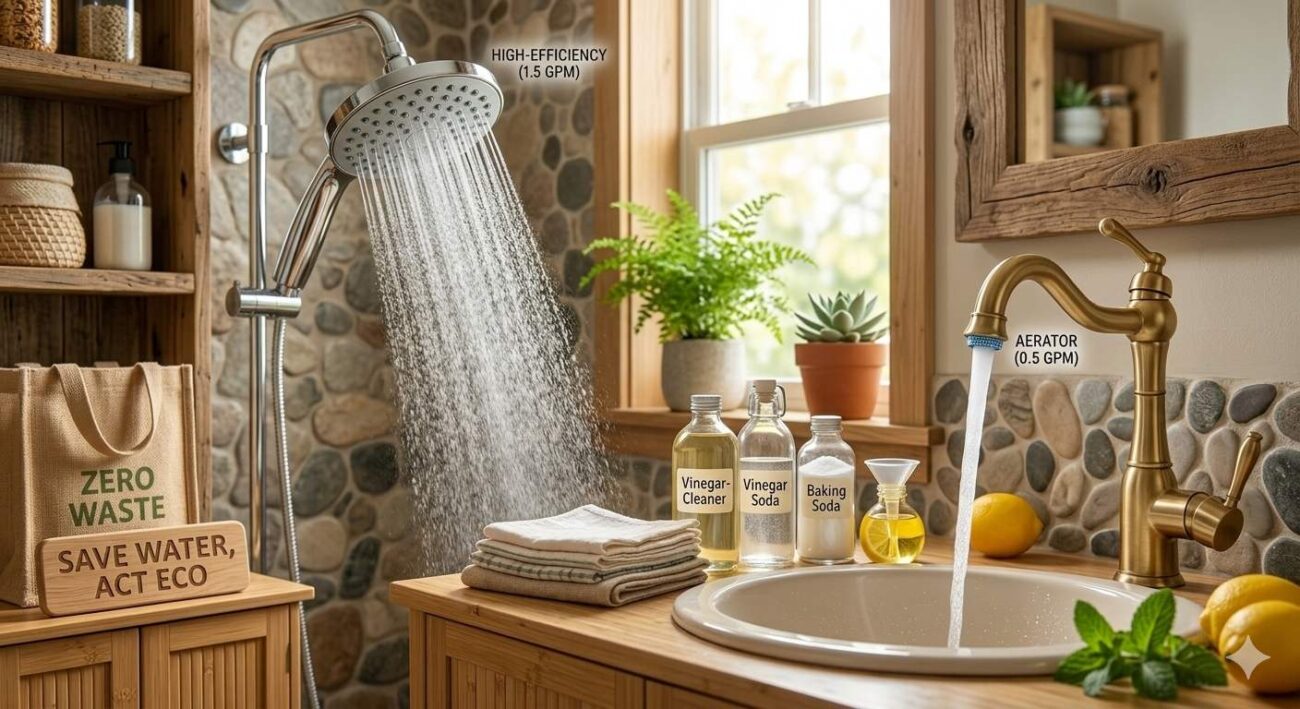
Low-flow showerheads use 2.5 gallons per minute or less. Older models use five gallons or more. That’s a massive difference for the same shower experience. Low-flow faucet aerators screw onto your existing faucets for just a few dollars. They mix air with water to maintain pressure while using less. Dual-flush toilets offer two flushing options.
The half-flush uses less water for liquid waste, and the full-flush handles solid waste. Many areas offer water utility rebates for installing these fixtures. Check with your local water department before buying.
Switch to Plastic-Free Personal Care Products
Bathrooms fill with plastic shampoo bottles, toothbrushes, and soap containers. Shampoo bars work exactly like liquid shampoo but without the plastic bottle. One shampoo bar lasts as long as two or three liquid bottles. Bamboo toothbrushes decompose naturally,
unlike plastic ones that last forever. Safety razors use replaceable metal blades and a permanent metal handle. Refillable soap dispensers let you buy hand soap in bulk or make your own. Cotton rounds made from washable fabric replace disposable cotton balls. These switches cost similar or less money over time.
Take Shorter Showers and Turn Off Taps
Simple habits save thousands of gallons of water yearly. A ten-minute shower uses twenty-five gallons of water. Cutting that to five minutes saves twelve gallons daily. That’s over four thousand gallons saved yearly. Turn off the tap while brushing your teeth or shaving.
A running faucet wastes two gallons per minute. Keep a bucket in the shower to catch water while it warms up. Use that water for plants or flushing the toilet. Fix dripping faucets immediately, as one drip per second wastes five gallons daily.
Eco-Friendly Exterior Upgrades for Your Home
Your outdoor space plays a big role in sustainable living. Smart landscaping and material choices save water and support local wildlife. These upgrades also increase your property’s beauty and value.
Plant a Native Pollinator Garden
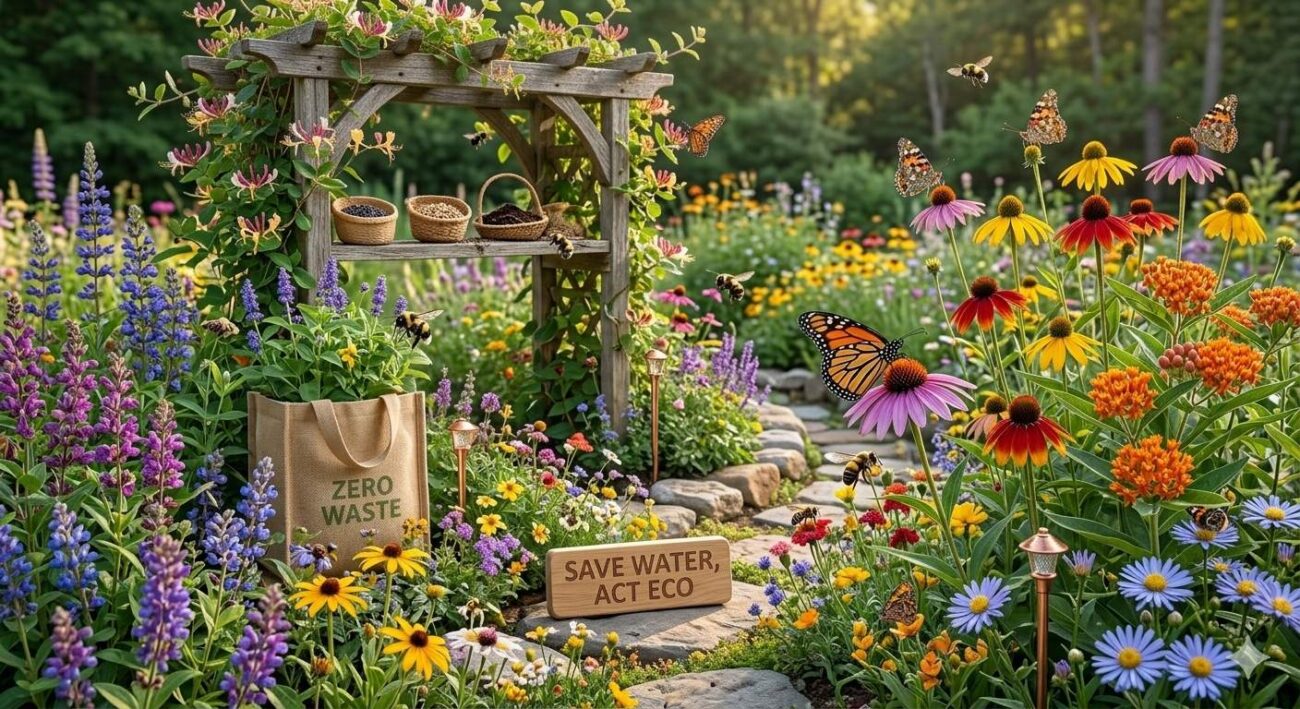
Native plants naturally adapt to your local rainfall and soil conditions. Therefore, they require less watering and no chemical fertilizers. Flowers like coneflowers, milkweed, and black-eyed Susans attract bees and butterflies. These pollinators are essential for a healthy ecosystem.
A native garden also looks beautiful and changes with the seasons. Native plants have deep root systems that prevent erosion and absorb stormwater. They provide food and shelter for local birds. Contact your county extension office for a list of native plants in your area.
Install Solar Pathway Lights
Solar lights absorb sunlight during the day and glow at night. They require no wiring and use zero electricity from the grid. Place them along walkways, driveways, or garden edges for safety and beauty. Modern solar lights are brighter and more reliable than older versions.
They are also very affordable, with many options under twenty dollars. Look for lights with lithium-ion batteries for better performance. Place them in direct sunlight for the brightest nighttime glow. Solar lights automatically turn on at dusk and off at dawn.
Create a Vegetable Garden
Growing your own food reduces packaging waste and transportation emissions. A tomato from your backyard travels zero miles to reach your plate. Start small with just a few pots on a patio or balcony. Leafy greens like lettuce and spinach grow quickly in shallow containers. Herbs like basil, mint, and rosemary thrive on a sunny windowsill.
Cherry tomatoes produce abundantly even in small spaces. Peppers and cucumbers also grow well in containers. Use your homemade compost to feed your vegetable garden naturally. Nothing tastes better than a tomato you grew yourself.
Use Permeable Hardscaping Materials
Traditional concrete and asphalt prevent rainwater from soaking into the ground. This creates runoff that carries pollution to local waterways. Permeable pavers allow water to filter through to the soil below. Gravel pathways also absorb rainwater naturally.
Decomposed granite creates a beautiful, permeable surface for patios and walkways. These materials reduce flooding risks and recharge groundwater supplies. They also eliminate the need for complicated drainage systems. Permeable surfaces stay cooler than solid concrete on hot summer days.
Energy-Saving Habits That Lower Bills
You don’t always need new technology to save energy. Sometimes, the best tool is a good habit. These simple actions cost nothing but save real money every month.
Unplug Electronics When Not in Use
Many devices draw “phantom” power even when turned off. Phone chargers, toasters, coffee makers, and televisions all consume energy while idle. This phantom load accounts for five to ten percent of residential electricity use. Unplug devices completely when you leave for vacation. Use power strips to cut power to multiple items with one switch. Smart power strips automatically turn off peripheral devices when your main device shuts down. Make unplugging the coffee maker part of your morning routine.
Wash Laundry in Cold Water
Heating water for laundry uses ninety percent of the washing machine’s energy. Modern detergents clean perfectly well in cold water. Cold water also protects your clothes from shrinking and fading. Always run full loads rather than partial ones.
Your machine uses similar energy whether half full or completely full. Clean your dryer’s lint filter before every load. A clogged filter restricts airflow and wastes energy. Consider air-drying delicate items on a folding drying rack.
Improve Your Home’s Insulation
Heat escapes through gaps around windows, doors, and attics. Weatherstripping around doors costs very little but stops drafts immediately. Caulk gaps around window frames to prevent air leaks. Add insulation to your attic if it has less than twelve inches.
Proper insulation keeps your home warmer in winter and cooler in summer. This reduces the workload on your heating and cooling systems. Many utility companies offer free energy audits to find your home’s weak spots. Some even provide rebates for insulation upgrades.
FAQ About Eco-Friendly Home Living
Q1: Do eco-friendly home upgrades cost a lot of money?
No, many changes are very affordable. Switching to LED bulbs, using reusable bags, and fixing leaky faucets cost little to nothing. Over time, these small actions save more money than they cost. Start with free habits like turning off lights and taking shorter showers.
Q2: Can I live sustainably in a small apartment?
Absolutely. Apartment dwellers can compost with small indoor bins, use natural lighting, and buy secondhand furniture. Vertical gardens on balconies also work well. Space is not a barrier to sustainable living. Focus on reducing waste and conserving water and electricity.
Q3: What is the single most impactful eco-friendly change?
Reducing food waste is one of the most powerful actions. When food rots in landfills, it releases methane, a potent greenhouse gas. Meal planning and composting solve this problem effectively. The second most impactful change is reducing plastic use.
Q4: Are bamboo products really sustainable?
Yes, when sourced responsibly. Bamboo grows incredibly fast without pesticides or fertilizer. It regenerates from its own roots, so planting happens only once. Look for FSC-certified bamboo to ensure responsible harvesting. Avoid bamboo fabrics processed with harsh chemicals.
Q5: How do I recycle items my local program doesn’t accept?
Check Earth911.com for specialized recyclers in your area. Many grocery stores collect plastic bags and films separately. Best Buy and Staples accept electronics and batteries. Terracycle offers mail-in recycling for hard-to-recycle items like toothpaste tubes.
Conclusion
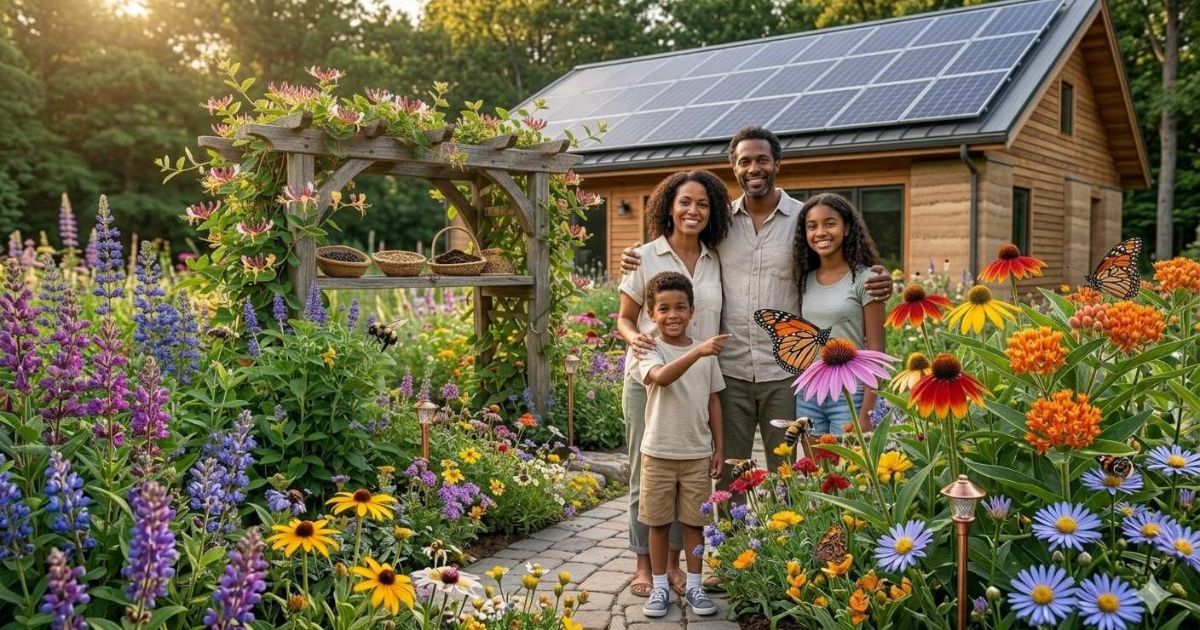
Building an eco-friendly home is a journey, not a final destination. Start with one or two ideas from this guide that feel easy for you. Maybe you switch to LED bulbs this week. Next week, you might start composting. Over time, these small habits become automatic. You will enjoy lower bills, a healthier family, and the satisfaction of protecting our planet.
Remember that perfection is not the goal. Every reusable bag you use and every shower you shorten makes a real difference. Share your journey with friends and family to inspire them too. Small actions multiplied by millions of people create massive change.
For more inspiration, check out our related guide onsustainable gardening tips for beginners. Additionally, the United States Environmental Protection Agency offers excellent resources on reducing household waste. Your journey to a greener home starts right now. Pick one tip from this article and try it today. Future you will thank you.