

Introduction
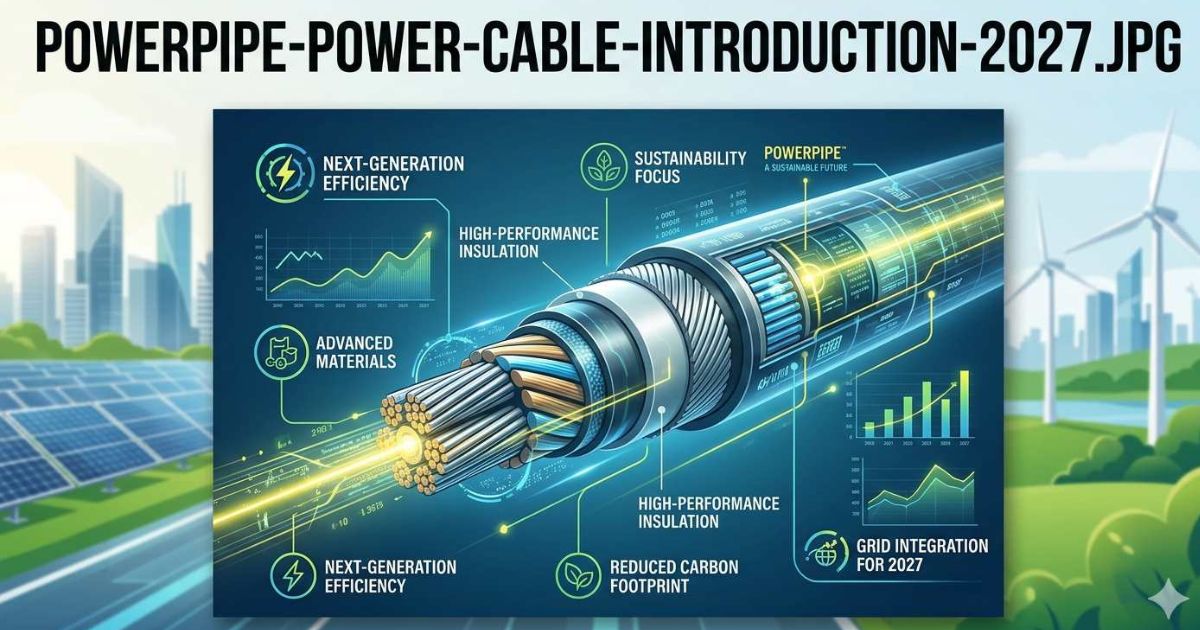
If you work in smart buildings, data centers, or industrial automation, you’ve probably heard the buzz about PowerPipe™ power cables. But what exactly are they? And why is everyone suddenly talking about them?
Here’s the simple truth: PowerPipe™ is changing how we think about electricity. It combines the safety of a low-voltage data cable with the power delivery of traditional high-voltage AC wiring. Think of it as Power over Ethernet (PoE) — but on massive steroids.
In this guide, I’ll explain what PowerPipe™ is, how it works, and why the industry is rapidly switching to this technology in 2027. No fluff. Just practical, useful information.
What Is a PowerPipe™ Power Cable?
PowerPipe™ is an advanced power and data cable designed for Class 4 fault-managed power (FMP) technology. It delivers safe, efficient, and scalable energy distribution alongside data transmission — all through a single cable.
Developed by manufacturers like Remee Wire & Cable, PowerPipe™ is often called “PoE on steroids.” While standard PoE maxes out at 90 watts, PowerPipe™ can carry up to 450 volts DC while remaining touch-safe.
Key Features of PowerPipe™:
| Feature | What It Means For You |
|---|---|
| Fault-Managed Power | Shuts off automatically during faults — touch-safe |
| 450V Rating | Delivers nearly 20x more power than standard PoE |
| Long Distance | Works over 2,000 meters without signal loss |
| Single Cable | Carries both power and data together |
| UL Certified | Meets UL 1400-2 and NEC Article 726 standards |
How Does PowerPipe™ Work?
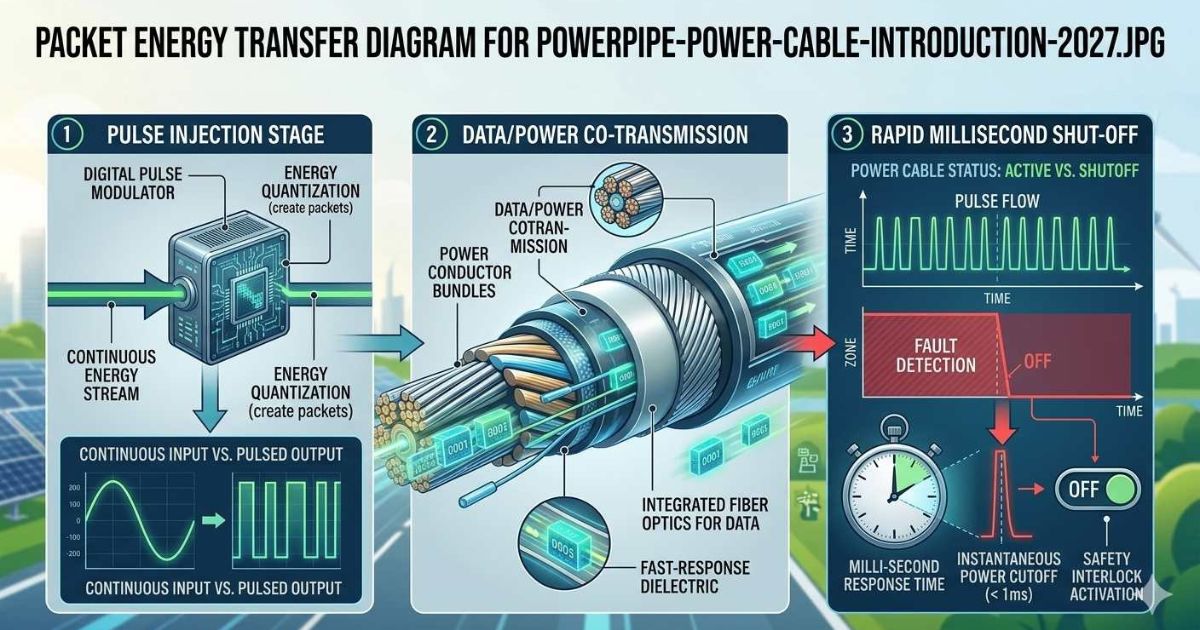
This is where the magic happens. Traditional electrical wiring continuously flows current through cables. If you cut or touch a live wire, you risk electrocution or fire. Simple as that.
PowerPipe™ works completely differently. It uses Packet Energy Transfer (PET) technology. Here’s the simple breakdown:
- Pulse Transmission — Power is sent in tiny, discrete packets, not a continuous stream
- Constant Monitoring — The transmitter and receiver talk to each other constantly
- The 10-Millisecond Rule — If any fault is detected (like a person touching the wire), power shuts off in less than 10 milliseconds
- Touch-Safe Result — The system is faster than a human heartbeat, making high-voltage transmission safe for the first time
Think of it like this: Traditional wiring is like leaving your garden hose running 24/7. PowerPipe™ is like a smart sprinkler that only turns on when needed and shuts off immediately if something blocks the spray.
This “clean power” also eliminates voltage sags and surges, protecting sensitive electronics automatically.
Why Is PowerPipe™ Becoming So Popular?
Great question. The short answer: it solves expensive, frustrating problems that have plagued electricians, engineers, and building owners for decades.
Let me break down the top 5 reasons for its rapid adoption in 2027.
1. Unmatched Safety
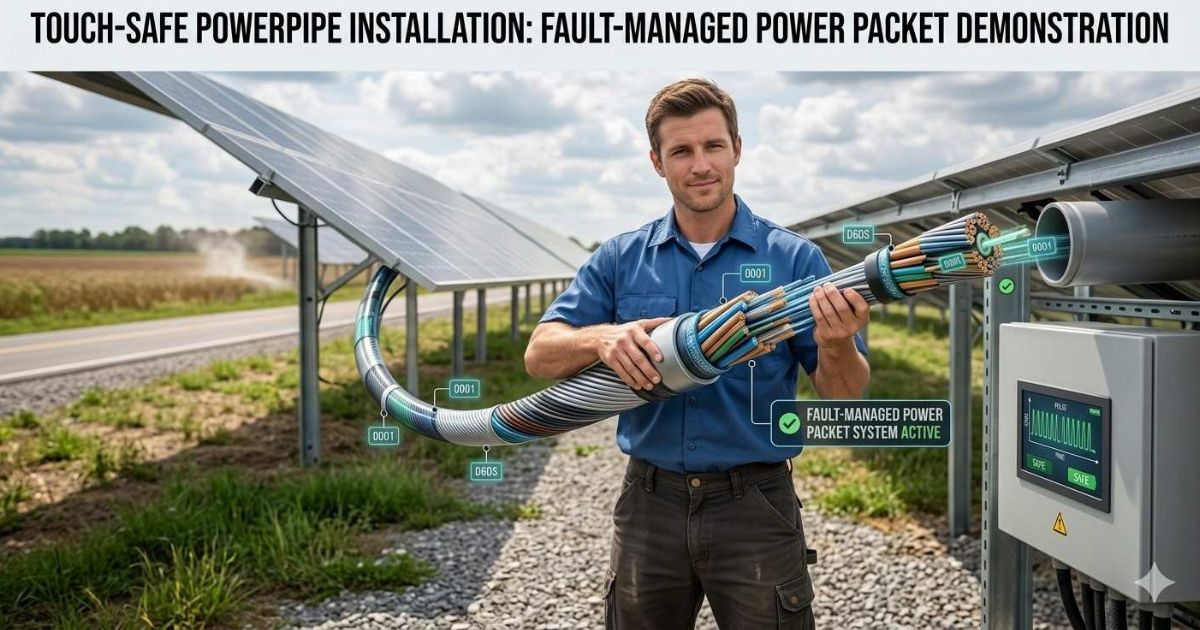
This is the biggest driver. PowerPipe™ using Class 4 fault-managed power is inherently safer than traditional electrical systems.
Traditional high-voltage wiring requires:
- Heavy insulation
- Strict conduit requirements
- Licensed electricians for installation
- UL 1400-2
PowerPipe™ can be installed like low-voltage data cable — but with much higher power delivery. In commercial buildings, data centers, and smart homes, this reduces fire risks and electrical hazards significantly.
2. Massive Cost Savings
Money talks. PowerPipe™ reduces costs in three clear ways:
Lower Material Costs — Less copper is needed compared to traditional power wiring. One PowerPipe™ cable can replace multiple conventional cables.
Cheaper Installation — Because it follows low-voltage wiring practices, installation is faster and doesn’t always require a licensed electrician. One cable pull does both power and data. You can run it in open J-hooks or cable trays right next to your data lines.
Reduced Energy Loss — PowerPipe™ delivers power efficiently over long distances with minimal heat loss, lowering energy bills month after month.
3. Long Distance Without Headaches
Standard Power over Ethernet (PoE) typically maxes out around 100 meters (328 feet). Beyond that, you need expensive mid-span injectors or IDF closets.
PowerPipe™ changes the game. It delivers over 2,000 watts of power at distances up to 2 kilometers (1.2 miles) .
This makes it perfect for:
- Large campuses and warehouses
- Outdoor security camera installations
- Rooftop equipment
- Remote sensors and IoT devices
4. Future-Proof for Smart Buildings and IoT
We’re living in the age of smart everything. Smart buildings need both power and data at every endpoint. PowerPipe™ delivers both through a single, unified cable infrastructure.
This simplifies:
- LED lighting systems
- Wireless access points (WAPs)
- Security cameras
- Building automation systems (BAS)
- IoT sensors across factories
5. The Sustainability Advantage
Companies are desperate to reduce their carbon footprints. PowerPipe™ helps by:
- Minimizing energy usage during transmission
- Reducing copper consumption
- Cutting out inefficient AC-to-DC conversions (saving up to 40% energy)
In a world where “Green Building” certifications are mandatory, PowerPipe™ is an easy win.
PowerPipe™ vs. Traditional PoE vs. AC Wiring
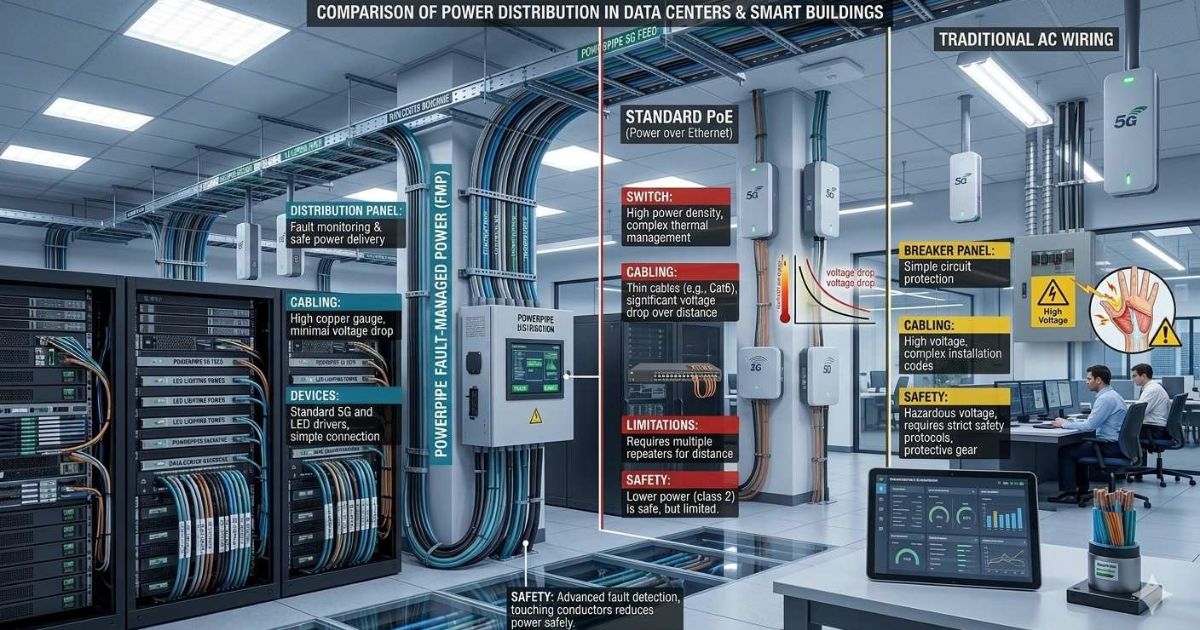
Let me make this crystal clear:
| Feature | Traditional AC Wiring | Standard PoE | PowerPipe™ (Class 4) |
|---|---|---|---|
| Safety | High risk (shock/fire) | Safe | Touch-safe (PET tech) |
| Max Power | High | 90W max | 2,000W+ |
| Max Distance | Limited by voltage drop | 100 meters | 2,000 meters |
| Installation | Heavy conduit required | Easy | Easy (no conduit) |
| Best For | Whole buildings | Cameras, phones, APs | Lighting, DAS, 5G, industrial |
Standard PoE is great for low-power devices. But for applications requiring serious power over serious distances, PowerPipe™ is the answer.
Common Applications of PowerPipe™ Cables
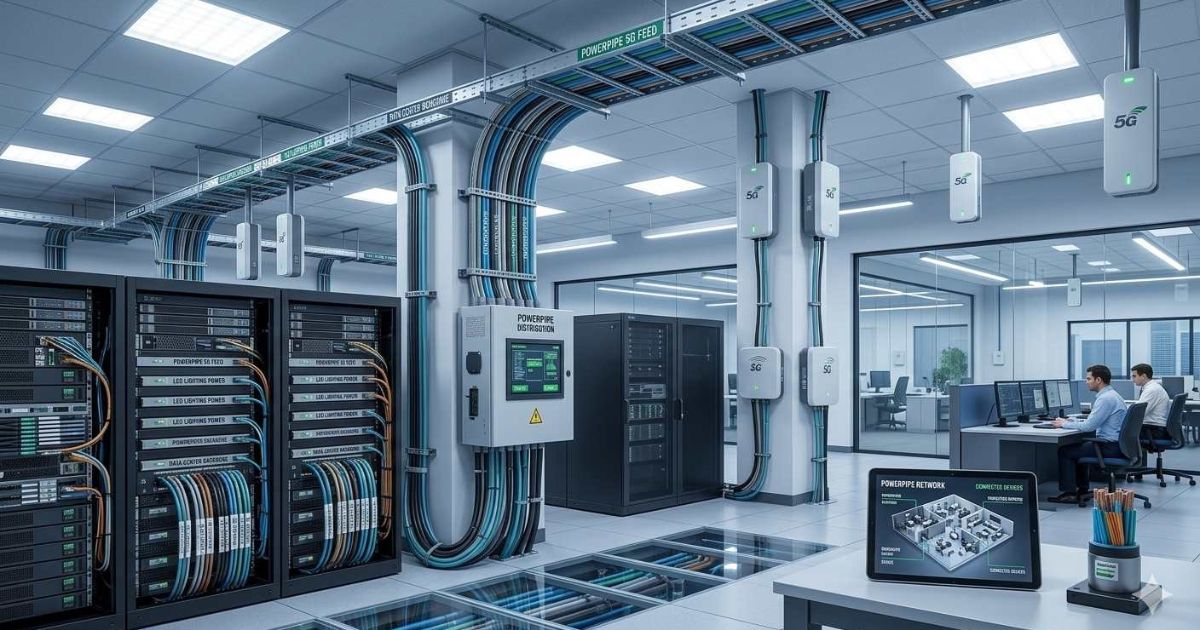
You’ll find PowerPipe™ being adopted across many industries right now. Here are the most common use cases:
- Distributed Antenna Systems (DAS) — Powering cellular reinforcement systems in stadiums and malls
- Small Cell Networks — 5G infrastructure needs power exactly where data is
- LED Lighting Systems — Smart building lighting with centralized control
- Security Cameras — Long-distance outdoor surveillance without power drops
- Data Centers — Efficient power distribution to remote equipment. Learn more about Modern Data Centers: Energy-Efficient Infrastructure to understand how facilities use smart power and cooling
- Wireless Access Points — High-power WiFi in large facilities
- Building Automation — HVAC, lighting, and access control together
- Industrial IoT — Factory and warehouse sensor networks
Is PowerPipe™ Code Compliant?
Absolutely. PowerPipe™ is fully recognized under NEC Article 726 and meets UL 1400-2 standards for Fault-Managed Power.
Now that the standards are locked in, manufacturers like Remee and Panduit are rapidly scaling production to meet growing demand. This isn’t experimental technology anymore — it’s ready for mainstream adoption
A Quick Note on Other “PowerPipe” Products
Quick clarification to avoid confusion: “PowerPipe” is also a brand name for:
- James Loudspeaker PowerPipe subwoofers — Disappearing in-wall bass systems
- Power-Pipe drain water heat recovery — Energy-saving shower drainage systems
These are completely different products. For this article, we’re focused on PowerPipe™ power cables from Remee Wire & Cable using Class 4 fault-managed power technology.
Conclusion
PowerPipe™ power cables represent a genuine leap forward in power distribution technology. By combining the safety of low-voltage systems with the power delivery of traditional AC wiring, they solve real problems for real projects.
The popularity boom makes perfect sense:
- Safer than traditional wiring with touch-safe PET technology
- Cheaper to install and operate with lower labor costs
- Longer reach than standard PoE — up to 2 kilometers
- Ready for the future of smart buildings, 5G, and IoT
Whether you’re an electrical engineer, a facilities manager, or a tech enthusiast, PowerPipe™ is worth understanding. It’s not just another cable — it’s a new way of thinking about how we power our world.
If you’re planning a smart building, a 5G rollout, or an industrial IoT project, PowerPipe™ isn’t just an option — it’s likely your most cost-effective path forward.
FAQ
What is PowerPipe™?
PowerPipe™ is an advanced power and data cable using Class 4 fault-managed power technology. It delivers safe, efficient power over long distances using packet energy transfer that shuts off instantly when faults are detected.
Why is it becoming so popular?
PowerPipe™ is gaining popularity because it’s safer than traditional wiring, costs less to install, delivers 20x more power than PoE over hundreds of meters, and supports smart building and IoT applications.
Is PowerPipe™ safe to touch?
Yes. PowerPipe™ systems continuously monitor transmission lines. If a person touches the line or a short circuit occurs, power shuts off in less than 10 milliseconds — making it touch-safe despite carrying high power levels.
How is PowerPipe™ different from regular PoE?
Standard PoE maxes out around 90 watts at 100 meters. PowerPipe™ delivers nearly 20 times more power over 2,000 meters while using similar low-voltage installation practices.
Does PowerPipe™ replace fiber optics?
Actually, they work together. Many PowerPipe™ cables are “hybrid,” meaning they have copper for power and fiber for data in one jacket. One pull gives you total connectivity.
Where can I buy PowerPipe™ cables?
PowerPipe™ cables are manufactured by Remee Wire & Cable and available through electrical and low-voltage distributors. Check their website for authorized dealers.