

Introduction
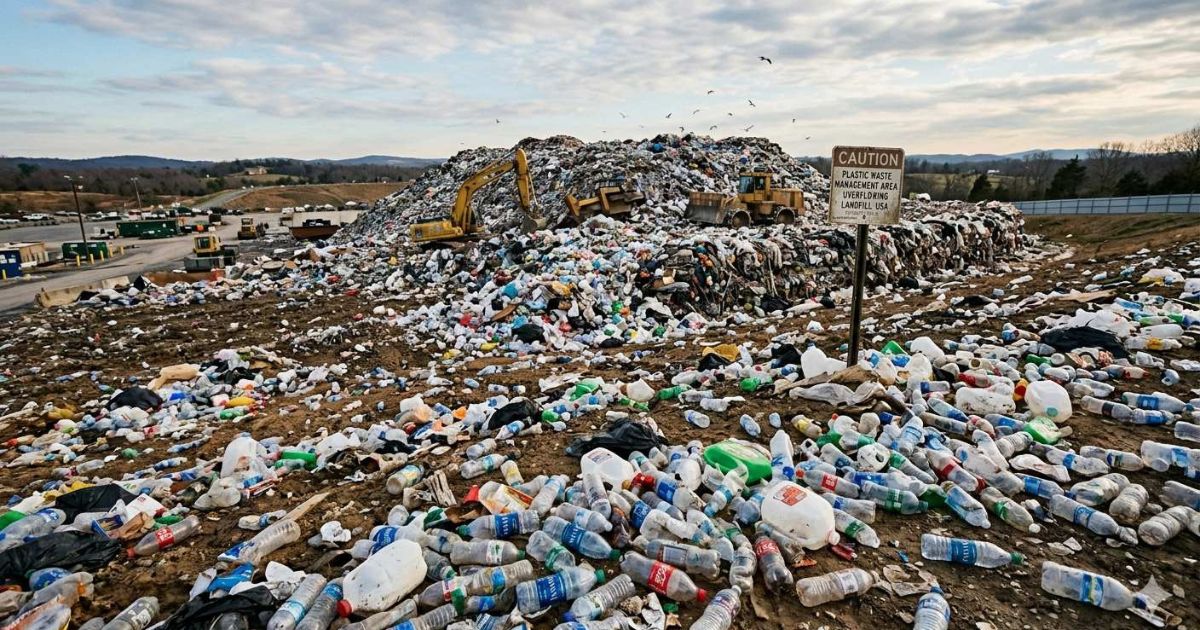
Plastic waste management in USA is a growing concern in 2027. The country produces millions of tons of plastic each year. While recycling systems exist, they are simply not enough. That’s why the focus is now shifting toward plastic waste reduction and smarter, sustainable waste practices.
You might wonder: does my individual effort really matter? The answer is yes. People just like you are looking for better ways to manage waste. If you’re new to this journey, start by understanding the basics — check out our complete guide on Zero Waste Living Definition 2026-2027
At the same time, governments and big companies are finally taking action. But there’s still a long way to go.
Let’s break down what’s working, what’s not, and how you can be part of the solution..
Understanding Plastic Waste Management in USA
Plastic waste management sounds technical, but it’s really about three things: collection, recycling, and safe disposal. Unfortunately, the system in the USA has major gaps. Not all plastic gets recycled. In fact, a large amount ends up in landfills, incinerators, or even in oceans and rivers.
According to the Environmental Protection Agency (EPA), reducing plastic at the source is far more effective than relying only on recycling. Why? Because most plastic is difficult to recycle, and many items never make it to a recycling facility.
Challenges in Recycling Systems USA
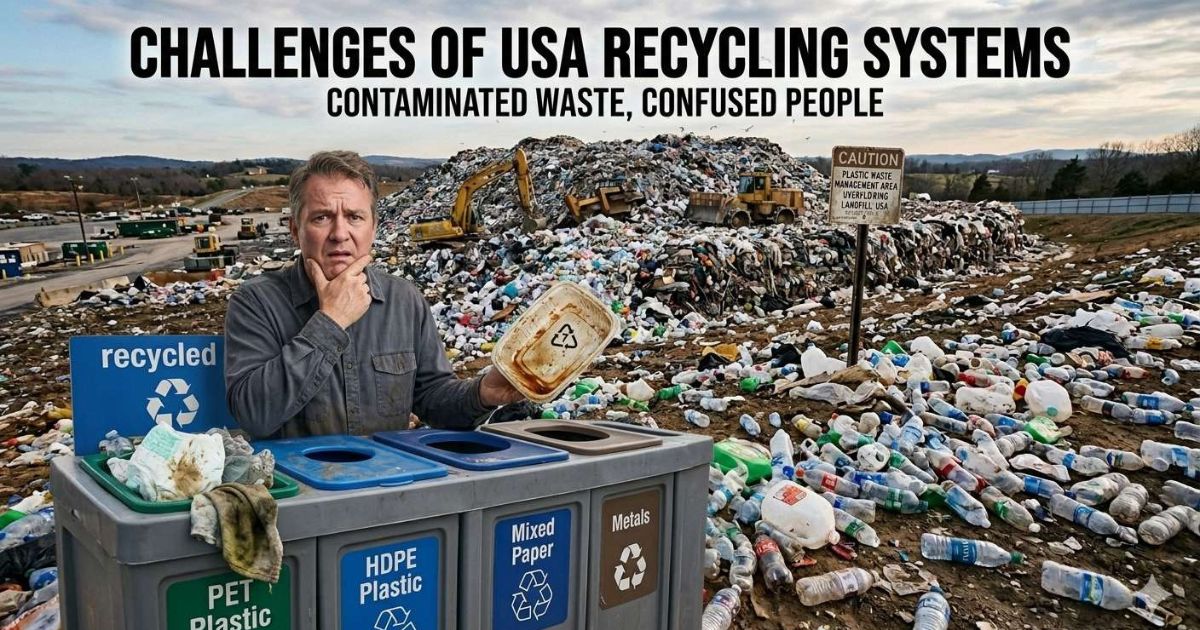
Recycling systems in the USA struggle for several reasons. Let’s be honest—it’s frustrating for many households.
- Contamination: When you put a greasy pizza box or a half-filled soda bottle in the recycling bin, it can spoil an entire batch.
- Lack of infrastructure: Many towns still don’t have proper sorting facilities. Some don’t recycle at all.
- Confusing rules: What’s recyclable in New York might not be in Texas. This inconsistency confuses people.
As a result, a huge amount of plastic waste is not processed correctly. According to recent data, only about 5-6% of plastic waste in the USA is actually recycled. The rest is landfilled, burned, or lost to the environment.
Role of Waste Management Policies
Government policies are slowly catching up. Many states have introduced bans on single-use plastics like bags, straws, and Styrofoam containers. Others are promoting recycling programs and public awareness campaigns.
California, for example, passed landmark legislation requiring all packaging to be recyclable or compostable by 2032. These policies support long-term sustainable waste practices. However, experts agree that policy alone isn’t enough without public participation.
Shift Toward Plastic Waste Reduction
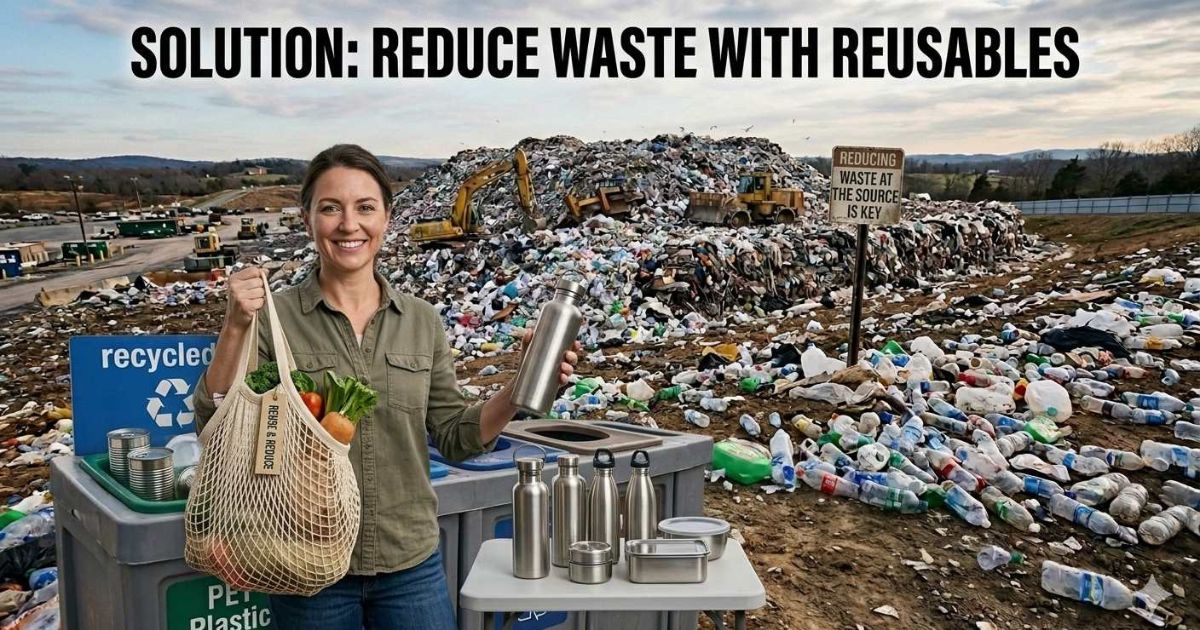
Instead of only managing waste after it’s created, the smartest approach is to reduce it from the start. This shift is essential for real, lasting impact.
Plastic waste reduction includes:
- Avoiding single-use plastics like cutlery, cups, and straws
- Using reusable alternatives like metal bottles and cloth bags
- Supporting brands that use eco-friendly packaging
Here’s a real-world example: Starbucks and McDonald’s are testing reusable cup programs in select US cities. When big brands change their habits, it normalizes reduction for everyone.
You don’t have to be perfect. But every time you refuse a plastic straw or bring your own bag, you’re part of the solution.
Sustainable Waste Practices for Everyday Life
You don’t need to wait for government action. Here are simple, sustainable waste practices you can start today:
- Carry reusable shopping bags (keep them in your car so you never forget)
- Use a refillable water bottle instead of buying bottled water
- Avoid plastic packaging when possible—buy loose fruits and vegetables
- Choose products made from recycled materials
- Say no to plastic produce bags (bring your own or skip them)
These actions may seem small, but they create a big difference over time. Imagine if 100 people in your neighborhood did the same. That’s thousands of plastic items saved every month.
Example: Reducing Plastic in Daily Routine
Let’s make it personal. Switching from bottled water to a reusable bottle can reduce hundreds of plastic bottles each year. Similarly, using cloth bags instead of plastic grocery bags cuts down waste instantly—no more guilt about that pile of plastic bags under your sink.
Another easy win: bring your own container for takeout food. Many restaurants now accept them, especially after COVID restrictions eased. Just ask politely.
Economic Impact of Plastic Waste Management
Let’s talk money. Poor plastic waste management costs the USA billions each year.
- Cleaning costs: Cities spend millions removing plastic litter from streets and waterways.
- Lost value: Plastic contains energy and materials that could be reused. When we landfill it, we literally throw away value.
- Tourism damage: Polluted beaches and parks drive away tourists, hurting local businesses.
On the flip side, investing in better waste management creates jobs. Recycling facilities, composting centers, and reuse programs all need workers. A 2021 study found that recycling and reuse activities in the USA支持 over 500,000 jobs. So this isn’t just an environmental issue—it’s an economic opportunity.
Community Action and What You Can Do
Individual action is powerful, but community action is unstoppable.
Here are ways to multiply your impact:
- Join or start a local cleanup group (rivers, parks, beaches)
- Talk to your workplace about reducing plastic in break rooms and kitchens
- Ask your favorite cafes to accept reusable cups
- Attend city council meetings and support plastic reduction policies
Real story: A small town in New Jersey banned plastic bags after a group of high school students collected 2,000 signatures. If they can do it, so can you.
Future Trends in Plastic Waste Management
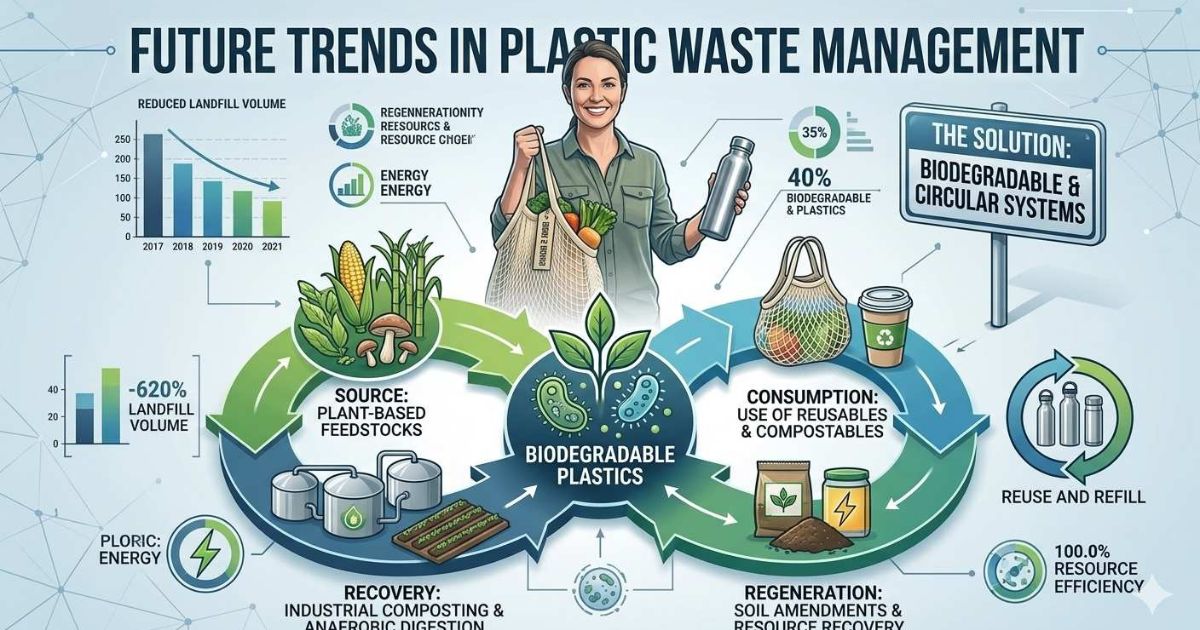
Plastic waste management in USA is evolving quickly. Here’s what’s coming next:
- Biodegradable plastics: New materials break down faster and more safely.
- Circular economy models: Products are designed to be reused, repaired, or recycled—not thrown away.
- Chemical recycling: Advanced technology breaks plastic down to its molecular level so it can be remade forever.
Organizations like the World Economic Forum emphasize that reducing plastic production globally is the only long-term answer. As innovation grows, waste management systems will finally catch up.
Conclusion
Plastic waste management in USA is moving toward a more sustainable future. But let’s be real—recycling alone is not enough. Instead, reducing plastic use and adopting sustainable waste practices are essential.
Many states are introducing new policies, and companies are shifting toward eco-friendly packaging. That’s progress.
However, real change also depends on you. By making small changes—like carrying reusable bags, avoiding single-use plastics, and choosing products with less packaging—you can help reduce plastic waste and protect the environment. Start today, stay consistent, and contribute to a cleaner future. Every small step matters.
FAQ
Are recycling systems in the USA effective?
They help manage waste, but they are not perfect. Reducing plastic use is more effective than relying only on recycling.
Is plastic waste management only about recycling?
No, it includes reduction, reuse, and disposal. However, reducing plastic at the source is the most sustainable solution.
Can individuals really make a difference in plastic waste reduction?
Yes, small actions add up. Choosing reusable products and avoiding single-use plastics significantly lowers overall waste.
What is the biggest challenge in US plastic waste management?
Contamination of recyclables and lack of uniform recycling rules across states are the top challenges.