

.
Introduction — Two Paths to Lower Energy Bills
When homeowners set out to reduce their electricity bills, two terms consistently appear: energy efficiency and energy conservation. While often used interchangeably, they represent fundamentally different approaches to using less energy.
Understanding the distinction matters because it directly impacts your wallet, your comfort, and your environmental footprint. One involves technology and upgrades. The other involves behavior and habits. Together, they form a powerful combination that can slash your utility bills far more effectively than either approach alone.
This guide explains what is the difference between energy efficiency and energy conservation, provides concrete examples of each, and shows you how to leverage both for maximum savings in your home.
Defining Energy Efficiency
click here for complete guidanesEnergy efficiency means using less energy to perform the same task. It is a technological approach that focuses on doing the same job with less waste.
How Energy Efficiency Works
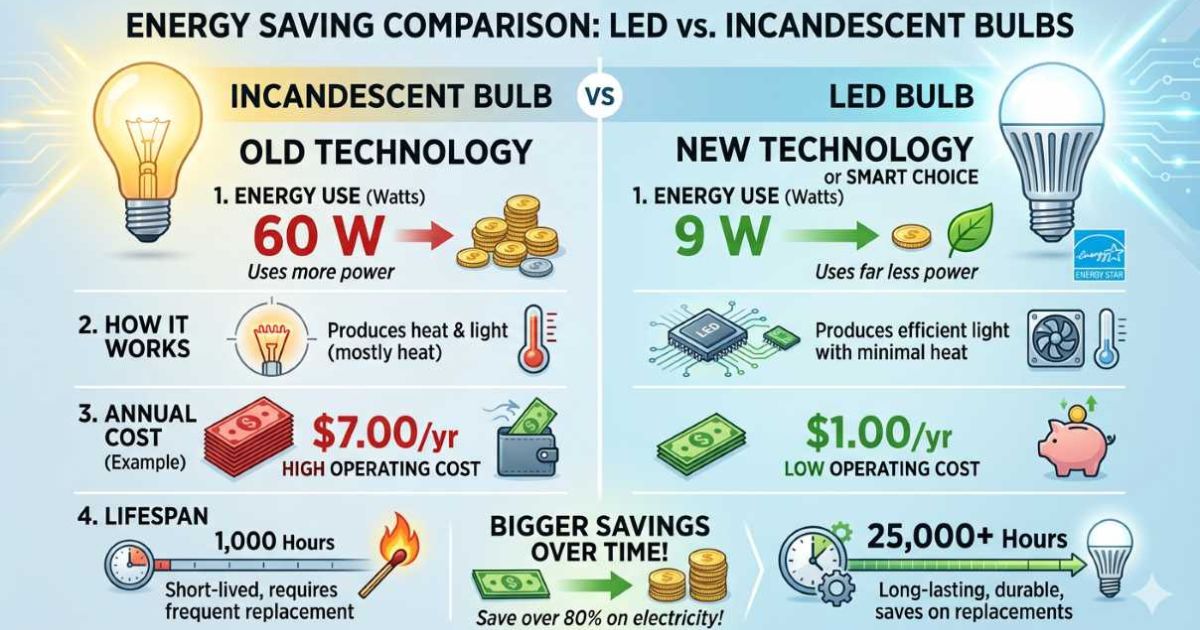
Think of energy efficiency as upgrading your tools. When you replace an old incandescent light bulb with an LED, you still get the same amount of light—but the LED uses 75% less electricity to produce it. You haven’t changed your behavior; you’ve changed the technology .
Similarly, an Energy Star-rated refrigerator keeps your food just as cold as an older model, but it might use 40% less energy to do so. A high-efficiency air conditioner cools your home to the same comfortable temperature while drawing significantly less power .
The key characteristic of energy efficiency is that it delivers the same service or outcome with less energy input. You don’t sacrifice comfort or convenience. You simply let better technology do the heavy lifting .
Common Examples of Energy Efficiency
- LED lighting replacing incandescent or CFL bulbs
- Energy Star appliances (refrigerators, washing machines, dishwashers)
- High-efficiency HVAC systems with higher SEER ratings
- Smart thermostats that optimize heating and cooling patterns
- Proper insulation and air sealing that reduce heat transfer
- Double-pane or triple-pane windows that minimize thermal loss
- Solar panels that generate clean electricity efficiently
Each of these upgrades requires an upfront investment but delivers ongoing savings through reduced energy consumption. The savings accumulate month after month, year after year .
Defining Energy Conservation
Energy conservation means reducing or eliminating energy use by changing behaviors. It is a behavioral approach that focuses on using less energy by doing less or doing things differently.
How Energy Conservation Works
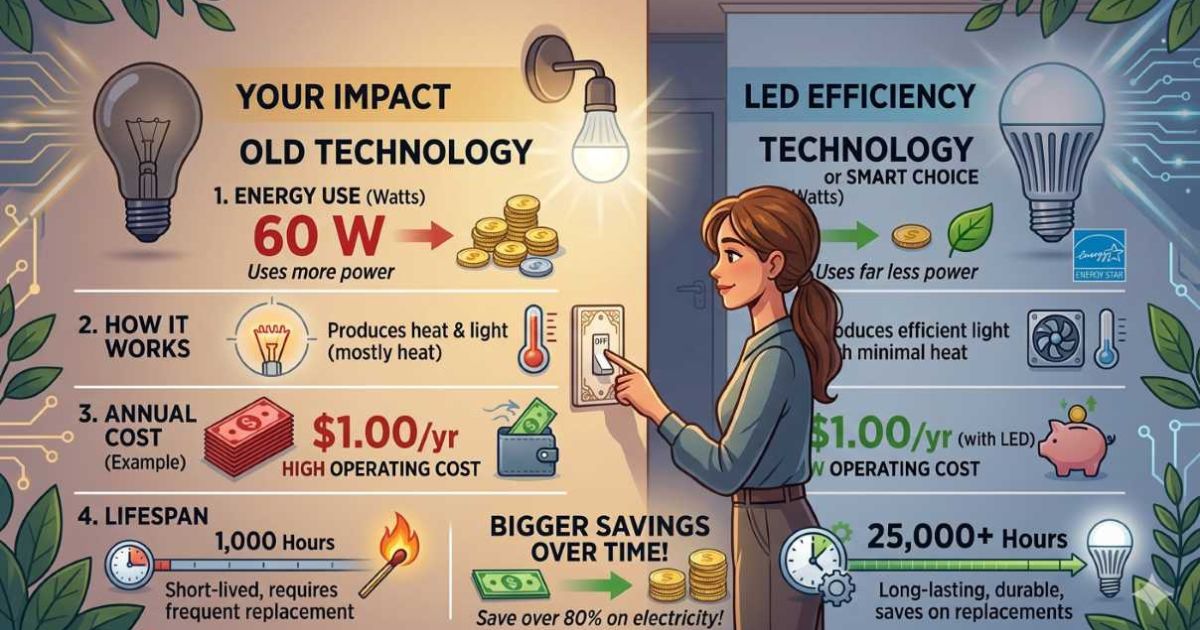
Energy conservation involves choices and habits. When you turn off lights in an empty room, you’re conserving energy. At the time you hang laundry to dry instead of using the dryer, you’re conserving energy. Whenever you set your thermostat lower in winter and wear a sweater, you’re conserving energy .
Unlike efficiency, conservation often involves some level of sacrifice or behavior modification. You might endure a slightly warmer house in summer or a cooler house in winter. You might wait to run your dishwasher until it’s fully loaded. These actions reduce energy use by reducing the service demanded .
The key characteristic of energy conservation is that it changes how and when you use energy through conscious decisions rather than technological upgrades .
Common Examples of Energy Conservation
- Turning off lights when leaving a room
- Unplugging electronics when not in use to eliminate phantom loads
- Air-drying clothes instead of using a dryer
- Taking shorter showers to reduce water heating
- Setting thermostats lower in winter and higher in summer
- Using natural light during daytime instead of artificial lighting
- Walking or biking instead of driving short distances
- Running full loads in dishwashers and washing machines
These actions cost nothing to implement but require consistent effort and mindfulness. Their effectiveness depends entirely on human behavior .
The Core Difference: Technology vs Behavior
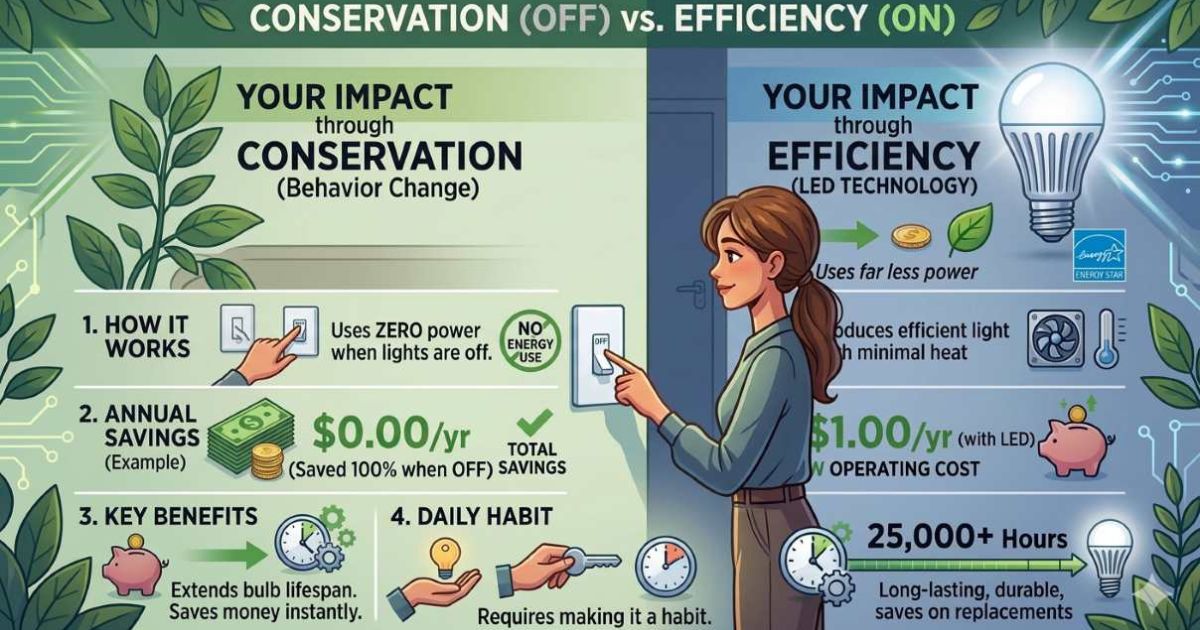
Now that we’ve defined both terms, let’s answer the central question directly: what is the difference between energy efficiency and energy conservation?
| Aspect | Energy Efficiency | Energy Conservation |
|---|---|---|
| Approach | Technological | Behavioral |
| Mechanism | Better equipment doing same job with less energy | Reducing or changing energy-using activities |
| Requirement | Upfront investment | Ongoing effort and mindfulness |
| Sacrifice | None—same comfort, less energy | Potential lifestyle adjustments |
| Examples | LED bulbs, Energy Star appliances, insulation | Turning off lights, shorter showers, lower thermostats |
| Longevity | Permanent savings from one-time upgrade | Requires continuous habit maintenance |
Think of it this way: efficiency is about doing the same thing better. Conservation is about doing less or doing things differently .
Why Both Matter for Homeowners
Understanding the distinction matters because the most effective energy reduction strategy combines both approaches. They are complementary, not competing .
The Synergy Effect
When you upgrade to energy-efficient LED bulbs, you’ve already reduced lighting energy by 75%. But if you also develop the habit of turning lights off in empty rooms, you multiply those savings further. The efficient bulb uses less power when on, and conservation ensures it’s on less often .
Similarly, a high-efficiency water heater uses less energy to heat water, but taking shorter showers reduces how much hot water you need in the first place. Efficiency reduces the per-unit cost of the service; conservation reduces how much service you demand .
This synergy creates compounding savings that exceed what either approach could achieve alone .
Cost Considerations
Energy efficiency typically requires upfront investment. A new HVAC system might cost thousands of dollars. Energy Star appliances cost more than standard models. Insulation installation requires paying contractors .
Energy conservation costs nothing or very little. Changing your thermostat settings, turning off lights, and air-drying laundry are free actions that start saving immediately .
For homeowners with limited budgets, conservation provides an immediate path to savings while they save up for efficiency upgrades. For those who can invest, efficiency delivers deeper, long-term reductions .
Efficiency First: The Smart Homeowner’s Strategy
While both approaches matter, most energy experts recommend prioritizing efficiency upgrades before relying solely on conservation
Why Efficiency Comes First
Efficiency improvements are permanent. Once you install LED bulbs or upgrade your insulation, those savings continue automatically without any effort on your part. You don’t have to remember to be efficient; the technology handles it .
Conservation, by contrast, requires constant vigilance. It’s easy to forget to turn off lights or let thermostat discipline slip during extreme weather. Human behavior is variable; technology is consistent .
Additionally, efficiency often enables deeper conservation. A well-insulated home stays comfortable longer, making it easier to accept thermostat adjustments. Efficient appliances reward conservation habits with even greater proportional savings .
The One-Two Punch for Maximum Savings
The optimal approach combines both strategies:
- Start with low-cost or no-cost conservation habits while you research efficiency upgrades
- Invest in efficiency improvements that deliver the best return for your home
- Reinforce both with smart technology like programmable thermostats and monitoring apps
- Continue conservation habits to maximize the value of your efficient equipment
This integrated approach typically reduces household energy use by 25–40% or more, depending on starting point and investment level .
Real-World Examples for Common Home Systems
Let’s examine how efficiency and conservation apply to specific home systems, showing the practical difference between the two approaches .
Heating and Cooling
Efficiency examples:
- Upgrading to a high-SEER air conditioner or heat pump
- Adding attic insulation and air sealing
- Installing a programmable or smart thermostat
- Replacing old windows with double-pane, low-E models
Conservation examples:
- Setting thermostat lower in winter (68°F vs 72°F)
- Setting thermostat higher in summer (78°F vs 72°F)
- Closing blinds during hot afternoons
- Using ceiling fans to extend comfort range
- Wearing warmer clothes indoors in winter
An efficient HVAC system uses less energy to heat or cool your home. Conservation reduces how much heating or cooling you demand .
Lighting
Efficiency examples:
- Replacing all bulbs with LEDs
- Installing dimmers and motion sensors
- Using task lighting instead of whole-room lighting
Conservation examples:
- Turning off lights when leaving a room
- Opening curtains to use natural daylight
- Avoiding decorative lighting when not needed
LEDs use 75% less energy than incandescents for the same light output. Turning them off when not needed eliminates the remaining 25% entirely .
Water Heating
Efficiency examples:
- Installing a heat pump water heater
- Adding insulation to your water heater and pipes
- Upgrading to low-flow showerheads and faucets
Conservation examples:
- Taking shorter showers
- Washing clothes in cold water
- Fixing leaky faucets promptly
- Running dishwashers only when full
Efficient water heating equipment heats water more effectively. Conservation reduces how much hot water you use .
Appliances and Electronics
Efficiency examples:
- Choosing Energy Star-rated appliances
- Replacing old refrigerators with modern efficient models
- Using laptops instead of desktop computers
Conservation examples:
- Running full loads only
- Air-drying dishes instead of using heat-dry cycles
- Unplugging electronics when not in use
- Enabling power-saving modes on devices
Efficient appliances use less energy per cycle. Conservation reduces how many cycles you run .
The Role of Renewable Energy
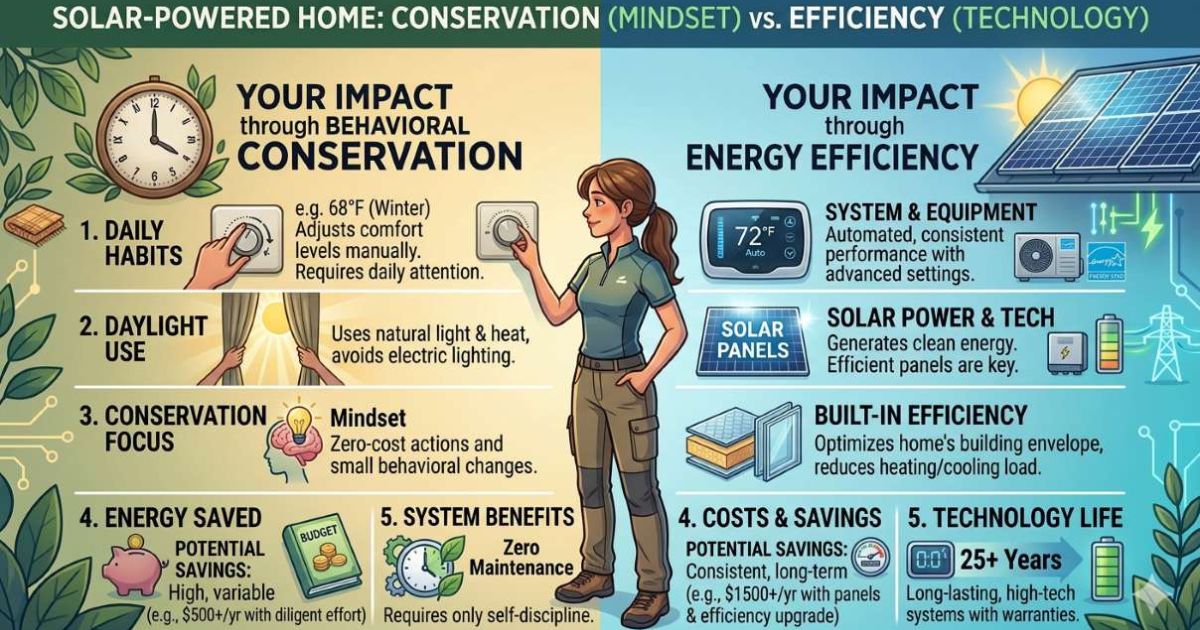
Solar panels and other renewable energy sources add a third dimension to the efficiency vs conservation discussion .
Where Solar Fits In
Solar energy generation doesn’t fit neatly into either category. It’s not about using less energy—it’s about producing your own clean energy to offset what you use .
However, solar pairs perfectly with both efficiency and conservation. An energy-efficient home needs a smaller, less expensive solar system to cover its needs. Conservation habits ensure you’re not wasting the valuable solar electricity you generate .
The ideal sustainable home combines:
- Energy efficiency to reduce waste
- Energy conservation to optimize usage
- Solar generation to supply remaining needs cleanly
This three-part strategy delivers the lowest possible bills and smallest carbon footprint .
Common Misconceptions
Several myths persist about energy efficiency and conservation. Let’s clear them up .
Myth: They’re the Same Thing
As we’ve established, efficiency is technological while conservation is behavioral. Confusing them leads to missed opportunities. You might invest in efficient appliances but leave them running unnecessarily, or you might conserve diligently while wasting energy through inefficient equipment .
Myth: Efficiency Is Always Expensive
While some efficiency upgrades require significant investment, many are surprisingly affordable. LED bulbs cost just a few dollars each and pay for themselves in months. Weatherstripping and caulk cost pennies but stop significant air leakage. Many utilities offer rebates that slash the cost of efficient equipment .
Myth: Conservation Means Being Uncomfortable
Smart conservation doesn’t require suffering. Programmable thermostats adjust temperatures automatically when you’re asleep or away. Closing blinds on sunny windows keeps rooms comfortable naturally. These small adjustments maintain comfort while reducing energy use .
Myth: You Must Choose One Approach
This is the most damaging myth. Some advocates push efficiency as the only real solution, while others champion conservation as the purest path. In reality, homeowners benefit most from combining both strategies strategically .
Frequently Asked Questions
Q1: What is the difference between energy efficiency and energy conservation in simple terms?
Efficiency means using better technology to do the same job with less energy. Conservation means changing your behavior to use less energy. Efficiency is about how you use energy; conservation is about how much you use .
Which saves more money, efficiency or conservation?
Efficiency typically delivers larger, more permanent savings because it reduces waste continuously without effort. However, conservation provides immediate savings at zero cost. The combination saves more than either alone .
Can I practice conservation without efficiency?
Absolutely. Turning off lights, adjusting thermostats, and changing habits cost nothing and start saving immediately. However, without efficient equipment, you’re still wasting energy whenever you do use appliances .
Do energy-efficient appliances really pay off?
Yes. Energy Star appliances typically use 10–50% less energy than standard models. Over their 10–15 year lifespan, the savings usually exceed the higher upfront cost, especially with utility rebates .
How do I know which approach is right for my home?
Start with a home energy audit. It will identify your biggest energy waste sources and show where efficiency upgrades will deliver the best returns. Meanwhile, adopt basic conservation habits immediately .
Does solar count as efficiency or conservation?
Neither, exactly. Solar is energy generation, not reduction. However, it works best when combined with both efficiency and conservation to minimize the system size needed .
Conclusion — Two Tools, One Goal
Understanding what is the difference between energy efficiency and energy conservation transforms how you approach your home energy use. Efficiency upgrades your tools; conservation changes your habits. Both lead to the same destination: lower bills, reduced environmental impact, and greater energy independence.
The smartest homeowners don’t choose between them. They use efficiency to eliminate waste automatically and conservation to avoid unnecessary usage. Together, these strategies create a home that costs less to run, feels more comfortable, and contributes less to climate change.
Start today. Replace a few bulbs with LEDs. Turn off lights when you leave a room. Research rebates for efficient appliances. Each step, whether technological or behavioral, moves you toward a more sustainable, affordable energy future.
Rey to go further? Explore our Complete Guide Find efficiency rebates at the Database of State Incentives for Renewables & Efficiency (DSIRE).