

Every business dreams of producing its goods or services at the lowest possible cost. But how do you plan for that ideal future? Economists and savvy business leaders use a powerful mental model: they assume the most efficient production technology is available. This isn’t about today’s reality, but about strategic planning for tomorrow. It’s a forward-looking approach that helps you map out your path to maximum efficiency. Let’s break down what this means and why it’s a game-changer for your strategy.
What Does “The Most Efficient Production Technology” Actually Mean?
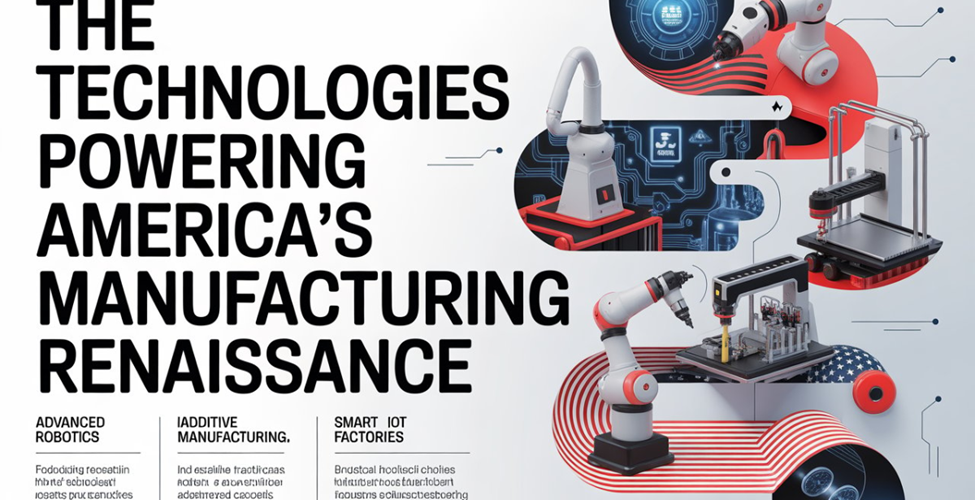
At its core, this concept is about optimal planning. When a company decides to scale up its operations, it isn’t limited by its current, possibly outdated, machinery or processes. Instead, it asks: “If we could choose any technology available today, what would give us the lowest cost per unit at our new, larger scale?”
This assumption is the foundation of the long-run average cost (LRAC) curve. In the long run, all inputs are variable. A business can build a bigger factory, invest in state-of-the-art automation robotics, or redesign its entire supply chain using AI-driven logistics platforms. By assuming the best technology, the LRAC curve shows the minimum possible cost for any given level of output.
It’s a Model, Not a Instant Solution
Think of this as a business blueprint. An architect doesn’t design a building based on the tools currently in their garage. They specify the best possible materials and equipment for the job. Similarly, assuming the most efficient technology allows a company to create a strategic plan. This plan identifies the target—the lowest cost structure—and then outlines the necessary investments in things like advanced manufacturing equipment or enterprise resource planning (ERP) software to get there.
The Role of Economies of Scale
This concept is deeply intertwined with economies of scale. As you produce more, you can often spread fixed costs (like a factory or a software license) over more units, reducing the cost per unit. The most efficient technology unlocks these economies of scale. For example, a small bakery might use a standard oven, but a large industrial bakery would assume the use of a tunnel oven—a highly efficient technology that dramatically lowers the cost per loaf of bread at high volumes.
How This Assumption Drives Smarter Business Decisions
Using this principle isn’t just an academic exercise. It directly influences critical strategic choices that determine a company’s competitiveness and profitability.
Strategic Planning and Investment
Before committing millions to a new facility, a company will model its costs based on the best available technology. This financial modeling helps secure funding from investors who want to see a clear path to efficiency. It answers the question, “What is our ultimate cost potential?” This forward-thinking is a hallmark of industry leaders like Tesla, which plans its Gigafactories around the most advanced and scalable battery production technology from the outset.
A Reality Check for Your Current Operations
Perhaps the most immediate benefit is that it serves as a powerful diagnostic tool. By comparing your current costs to the costs you could have with the most efficient technology, you identify gaps and inefficiencies. This analysis might reveal that your warehouse management system is outdated or that your production line suffers from bottlenecks that modern computer-integrated manufacturing (CIM) systems could solve.
Putting the Concept into Practice: A Step-by-Step Guide

How can you, as a business owner or manager, actively use this principle? Follow this actionable framework.
1. Benchmark and Research: Start by investigating the current state of technology in your industry. What are your competitors using? What emerging technologies, like predictive maintenance sensors or collaborative robots (cobots), are becoming the new standard? Resources from institutions like the National Institute of Standards and Technology (NIST) can provide valuable insights into advanced manufacturing practices.
2. Model Your “Ideal” Costs: Create a financial model that projects your production costs at different scales, assuming you have adopted the technologies you identified. This will give you your target LRAC curve.
3. Analyze the Gap: Compare your ideal costs to your current actual costs. Where is the difference the largest? These are your priority areas for investment and improvement.
4. Create a Phased Adoption Plan: You likely can’t buy all the new technology at once. Develop a phased plan for implementation. Maybe you start by upgrading your customer relationship management (CRM) software to improve sales efficiency before moving on to a full production line overhaul.
Real-World Example: From Small Workshop to Scalable Business
Imagine “Artisan Wood Crafts,” a small company making handmade tables. Their current cost is high due to slow, manual labor. To grow, the owner assumes the most efficient technology. This doesn’t mean firing all the artisans. It means strategically integrating technology—like using Computer Numerical Control (CNC) routers for precise, repeatable cuts on table legs, freeing up skilled workers for complex custom inlays.
This hybrid approach leverages efficient technology for scalability while preserving the unique, high-value handcrafted elements. For more on balancing automation with craftsmanship, check out our internal article on [How to Scale a Handmade Product Business Without Losing Its Soul].
Common Pitfalls to Avoid When Planning for Efficiency
While this strategic model is powerful, missteps can lead to wasted resources or failed initiatives. Being aware of these common traps will help you navigate your planning more effectively.
Analysis Paralysis: It’s easy to get stuck in endless research, constantly chasing the “next big thing” and never taking action. Remember, the goal is to plan with the best available technology, not a hypothetical future technology. Set a deadline for your research phase and move decisively to the modeling and implementation stages.
Ignoring Your Team’s Input: The people who work with your current processes every day have invaluable insights. Imposing a new technology from the top-down without consulting your engineers, line managers, and operators can lead to resistance and poor adoption. Include them in the benchmarking and planning process.
Underestimating Implementation Costs: The price tag of a new machine is only part of the cost. You must also budget for training, maintenance, potential downtime during installation, and system integration. A full cost-benefit analysis that includes these hidden expenses is crucial for an accurate model.
Chasing Technology for Its Own Sake: Not every shiny new tool is right for your business. The “most efficient” technology must be appropriate for your specific scale, product, and operational needs. A small startup doesn’t need the same multi-million-dollar ERP system as a global corporation. Always tie technology choices back to your specific strategic and cost-reduction goals.
Conclusion:
Build Your Future, Don’t Just Manage Your Present
Stop letting your current equipment and processes dictate your company’s potential. Assuming the most efficient production technology is the strategic shift that separates market leaders from the rest. It transforms your planning from reactive budgeting to proactive, visionary growth mapping.
By adopting this blueprint, you gain more than just a cost model. You gain:
- Clarity: A clear vision of your operational endgame.
- Confidence: The data-driven assurance to make bold investments.
- Competitive Edge: The ability to outmaneuver rivals stuck in short-term thinking.
This approach is the cornerstone of modern strategic planning. For a deeper dive into how leading companies build strategic advantage, the Harvard Business Review offers a foundational resource on its explanation of the Value Chain, a concept developed by Michael Porter, which directly relates to optimizing production activities.
Your blueprint starts with a single question. Don’t wait for a competitor to answer it first. Identify one inefficient process in your business this week and research the single most effective technology available to fix it. This simple act is the first step toward building the efficient, scalable, and dominant business of your future.